Institute of Cognitive Neuroscience, University College London, 17 Queen Square, London WC1N 3AR, UK.
Wellcome Trust Centre for Neuroimaging, University College London, 12 Queen Square, London WC1N 3BG, UK.
Nat Commun. 2017 Jul 5;8:16048. doi: 10.1038/ncomms16048.
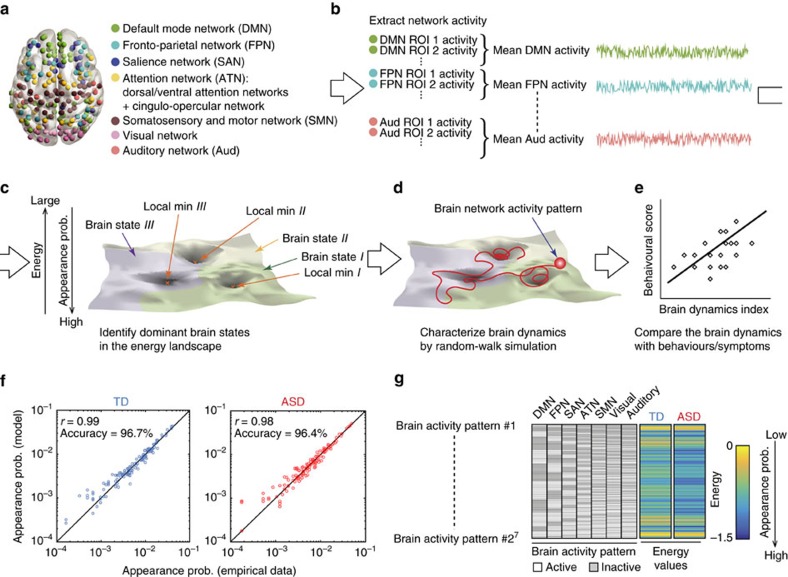
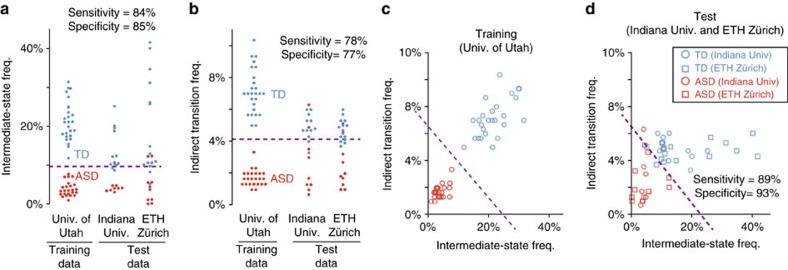
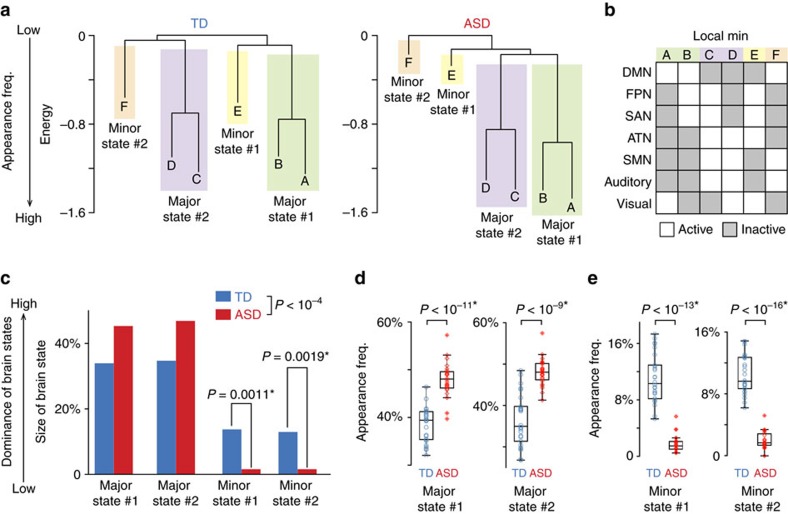
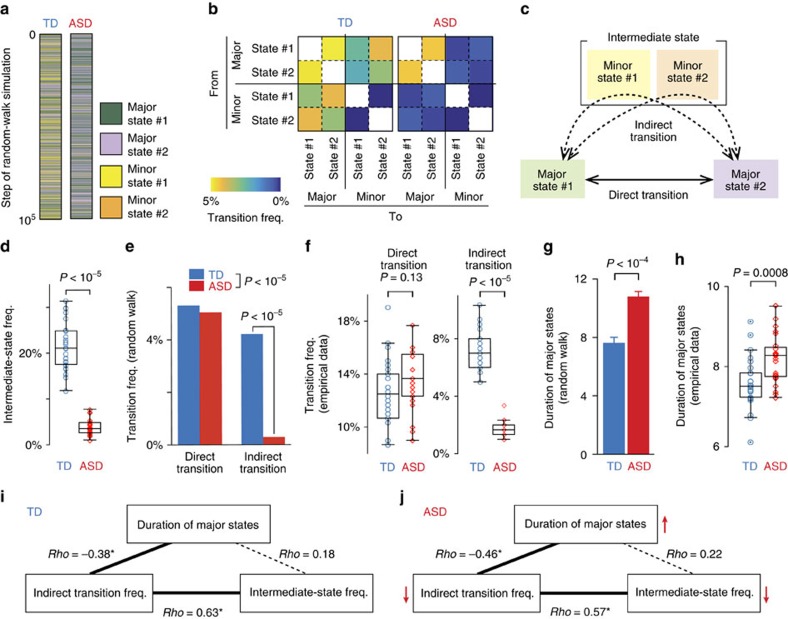
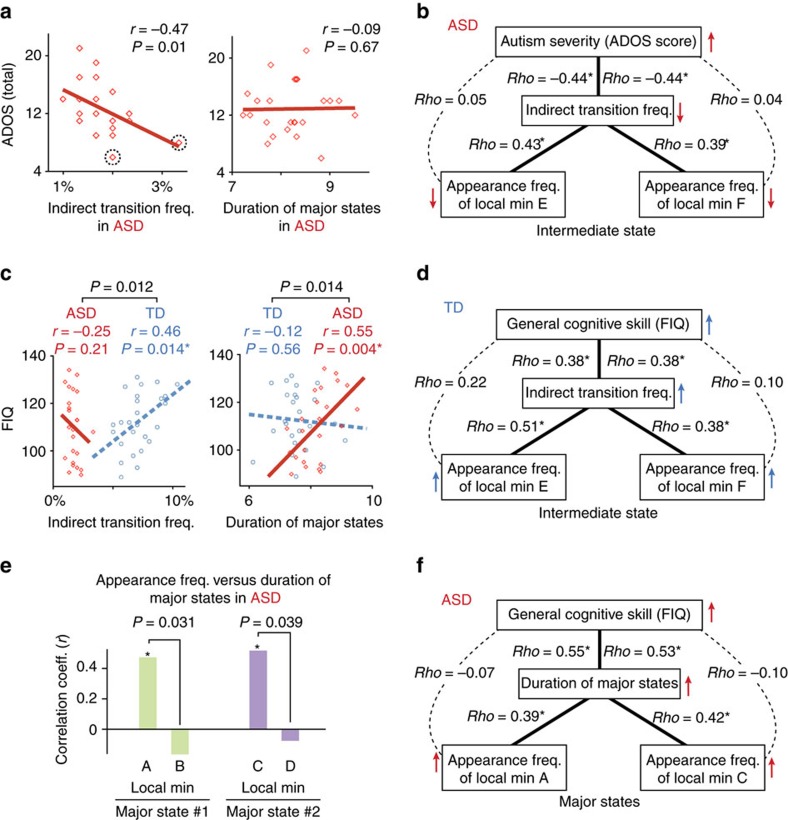
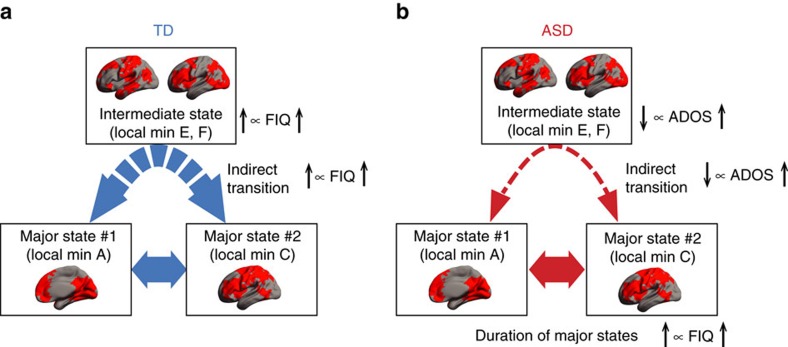
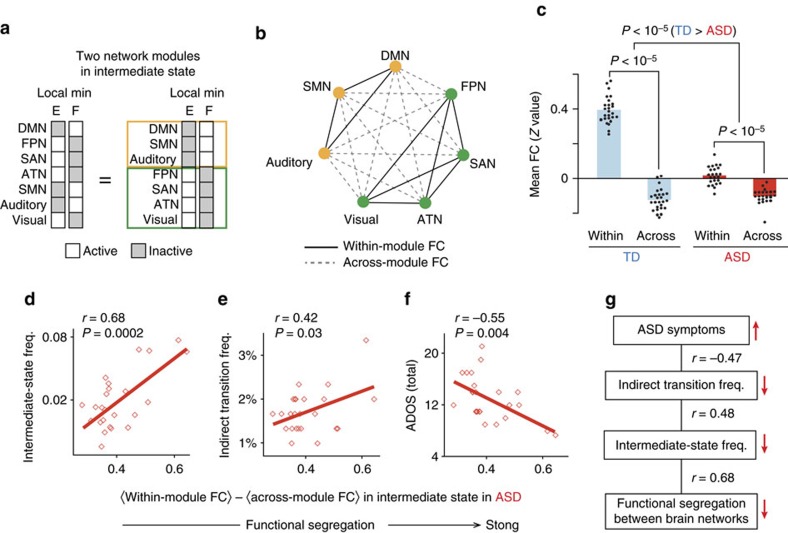
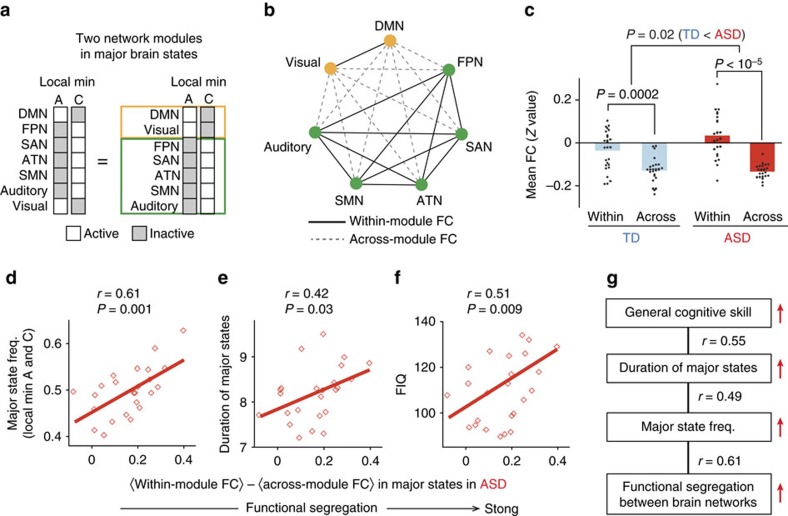
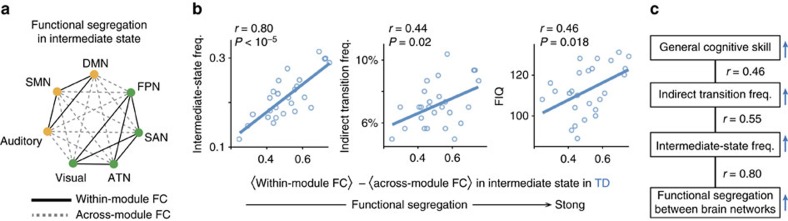
Theoretically, autism should be underpinned by aberrant brain dynamics. However, how brain activity changes over time in individuals with autism spectrum disorder (ASD) remains unknown. Here we characterize brain dynamics in autism using an energy-landscape analysis applied to resting-state fMRI data. Whereas neurotypical brain activity frequently transits between two major brain states via an intermediate state, high-functioning adults with ASD show fewer neural transitions due to an unstable intermediate state, and these infrequent transitions predict the severity of autism. Moreover, in contrast to the controls whose IQ is correlated with the neural transition frequency, IQ scores of individuals with ASD are instead predicted by the stability of their brain dynamics. Finally, such brain-behaviour associations are related to functional segregation between brain networks. These findings suggest that atypical functional coordination in the brains of adults with ASD underpins overly stable neural dynamics, which supports both their ASD symptoms and cognitive abilities.
从理论上讲,自闭症应该由异常的大脑活动所支撑。然而,自闭症谱系障碍(ASD)患者的大脑活动随时间如何变化仍不清楚。在这里,我们使用基于静息态 fMRI 数据的能量景观分析来描述自闭症中的大脑活动。虽然神经典型的大脑活动经常通过中间状态在两个主要的大脑状态之间转换,但功能较高的自闭症患者由于中间状态不稳定,显示出较少的神经转换,并且这些不频繁的转换预测了自闭症的严重程度。此外,与控制组的情况相反,其 IQ 与神经转换频率相关,而 ASD 患者的 IQ 分数则由其大脑动力学的稳定性来预测。最后,这种大脑-行为的关联与大脑网络之间的功能分离有关。这些发现表明,ASD 患者大脑中异常的功能协调支持了过度稳定的神经动力学,这既支持了他们的 ASD 症状,也支持了他们的认知能力。