Yang Hong, Huang Fei, Tao Yulong, Zhao Xinbin, Liao Lina, Tao Xia
Department of Pharmacy, Shanghai Changzheng Hospital, Second Military Medical University, Shanghai 200003, P.R. China.
School of Pharmaceutical Sciences Medicine, Tsinghua University, Beijing 100084, P.R. China.
Int J Mol Med. 2017 Sep;40(3):762-770. doi: 10.3892/ijmm.2017.3047. Epub 2017 Jul 3.
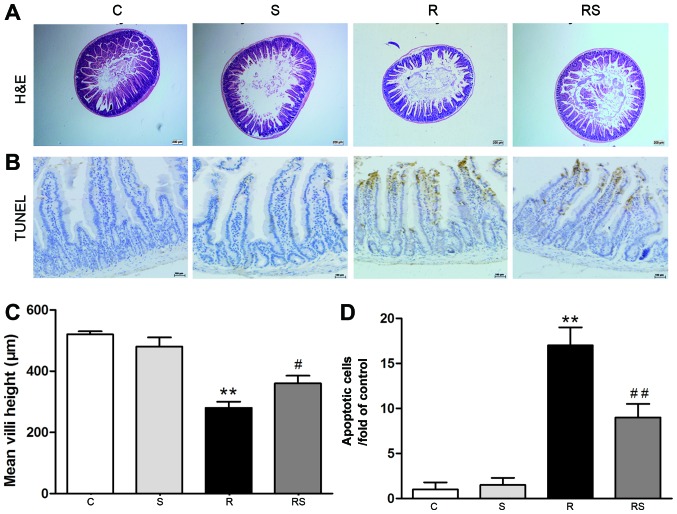
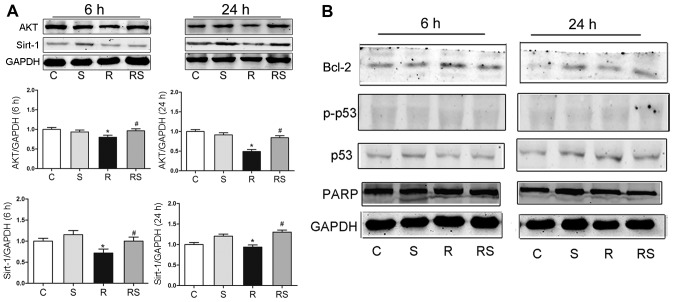
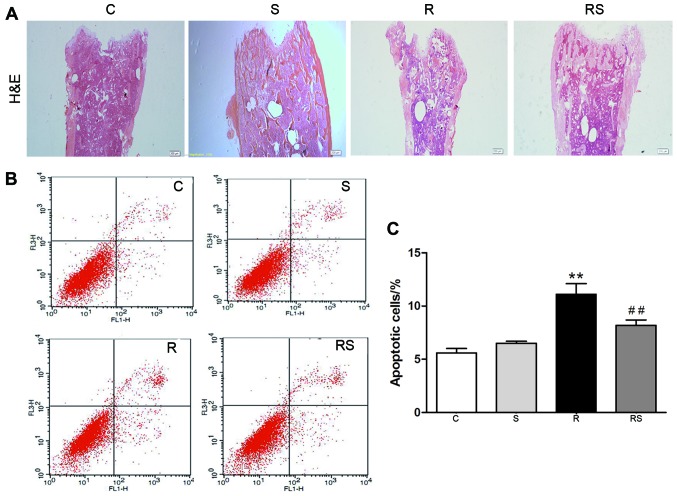
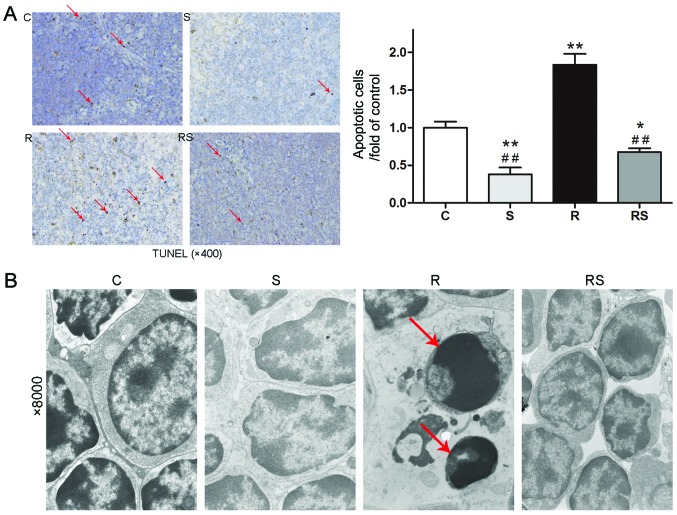
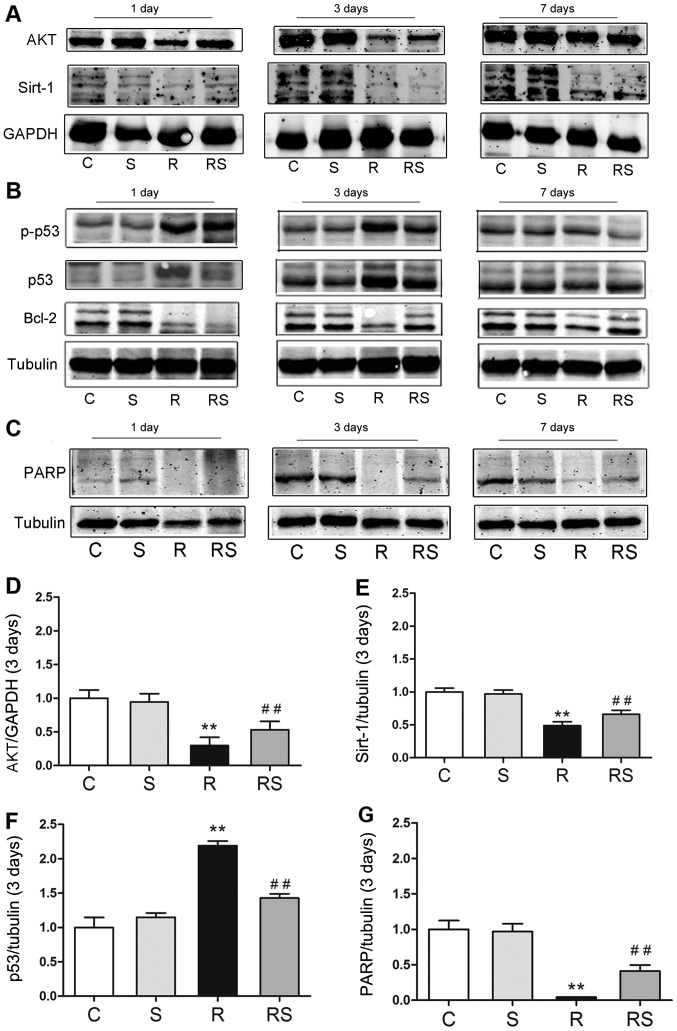
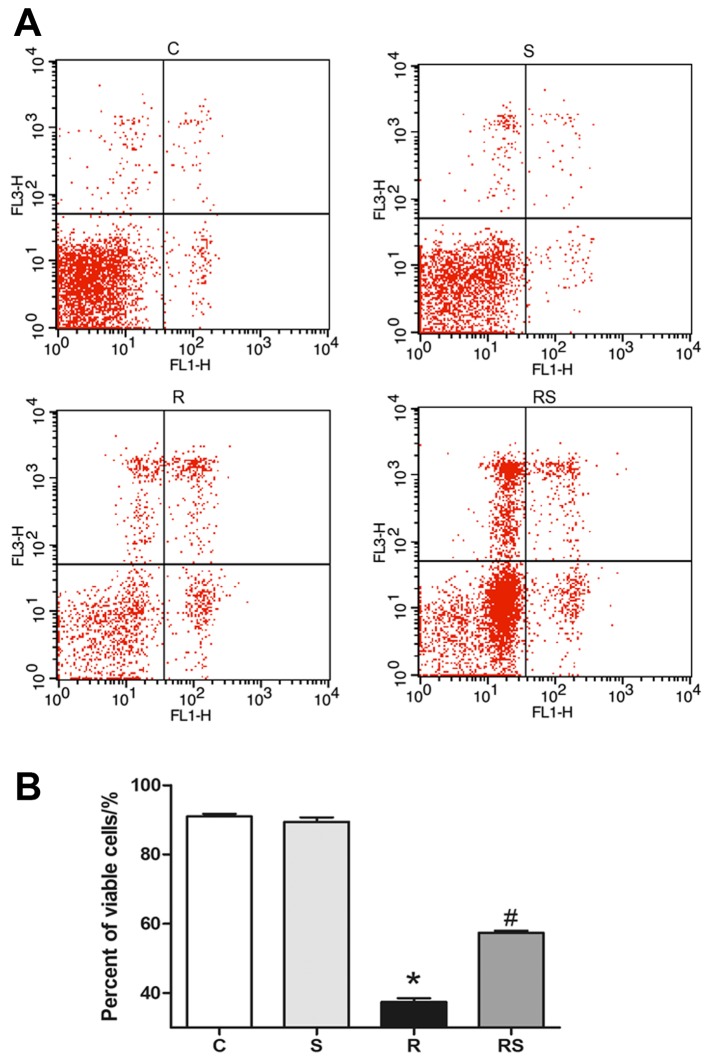
Simvastatin is a HMG-CoA reductase inhibitor widely used to lower plasma cholesterol and to protect against cardiovascular risk factors. The aim of this study was to investigate whether simvastatin attenuates ionizing radiation-induced damage in the mouse thymus and to elucidate the possible mechanisms invovled. For this purpose, male C57BL/6J mice aged 6 weeks were used and exposed to 4 Gy 60Co γ-radiation with or without simvastatin (20 mg/kg/day, for 14 days). Apoptosis was determined by terminal deoxynucleotidyltransferase-mediated dUTP nick-end labeling (TUNEL) assay or transmission electron microscopy (TEM) examination. Thymocytes were also isolated and incubated in DMEM supplemented with 10% FBS at 37˚C and exposed to 8 Gy 60Co γ-radiation with or without simvastatin (20 µM). The expression levels of Bcl-2, p53, p-p53, AKT, sirtuin 1 and poly(ADP-ribose) polymerase (PARP) were determined by western blot analysis. TUNEL and TEM examination revealed that simvastatin treatment significantly mitigated ionizing radiation-induced apoptosis in the mouse thymus. It was also found that simvastatin treatment increased AKT/sirtuin 1 expression following exposure to ionizing radiation in vivo and in vitro. In the in vivo model, but not in the in vitro model, Bcl-2 and PARP expression was augmented and that of p53/p-p53 decreased following treatment with simvastatin. On the whole, our findings indicate that simvastatin exerts a protective effect against ionizing radiation-induced damage in the mouse thymus, which may be partially attributed to the activation of the AKT/sirtuin 1 pathway.
辛伐他汀是一种HMG-CoA还原酶抑制剂,广泛用于降低血浆胆固醇和预防心血管危险因素。本研究的目的是调查辛伐他汀是否能减轻电离辐射对小鼠胸腺的损伤,并阐明其可能的作用机制。为此,选用6周龄的雄性C57BL/6J小鼠,给予4 Gy 60Co γ射线辐射,同时或不同时给予辛伐他汀(20 mg/kg/天,共14天)。通过末端脱氧核苷酸转移酶介导的dUTP缺口末端标记(TUNEL)法或透射电子显微镜(TEM)检查来确定细胞凋亡情况。还分离出胸腺细胞,在补充有10%胎牛血清的DMEM中于37˚C孵育,并给予8 Gy 60Co γ射线辐射,同时或不同时给予辛伐他汀(20 μM)。通过蛋白质印迹分析来测定Bcl-2、p53、p-p53、AKT、沉默调节蛋白1和聚(ADP-核糖)聚合酶(PARP)的表达水平。TUNEL和TEM检查显示,辛伐他汀治疗可显著减轻电离辐射诱导的小鼠胸腺细胞凋亡。还发现,辛伐他汀治疗可增加体内和体外电离辐射暴露后AKT/沉默调节蛋白1的表达。在体内模型中,而非体外模型中,辛伐他汀治疗后Bcl-2和PARP的表达增加,p53/p-p53的表达降低。总体而言,我们的研究结果表明,辛伐他汀对电离辐射诱导的小鼠胸腺损伤具有保护作用,这可能部分归因于AKT/沉默调节蛋白1通路的激活。