Miller Tyler E, Liau Brian B, Wallace Lisa C, Morton Andrew R, Xie Qi, Dixit Deobrat, Factor Daniel C, Kim Leo J Y, Morrow James J, Wu Qiulian, Mack Stephen C, Hubert Christopher G, Gillespie Shawn M, Flavahan William A, Hoffmann Thomas, Thummalapalli Rohit, Hemann Michael T, Paddison Patrick J, Horbinski Craig M, Zuber Johannes, Scacheri Peter C, Bernstein Bradley E, Tesar Paul J, Rich Jeremy N
Department of Stem Cell Biology and Regenerative Medicine, Lerner Research Institute, Cleveland Clinic, Cleveland, Ohio 44195, USA.
Department of Molecular Medicine, Cleveland Clinic Lerner College of Medicine, Case Western Reserve University, Cleveland, Ohio 44195, USA.
Nature. 2017 Jul 20;547(7663):355-359. doi: 10.1038/nature23000. Epub 2017 Jul 5.
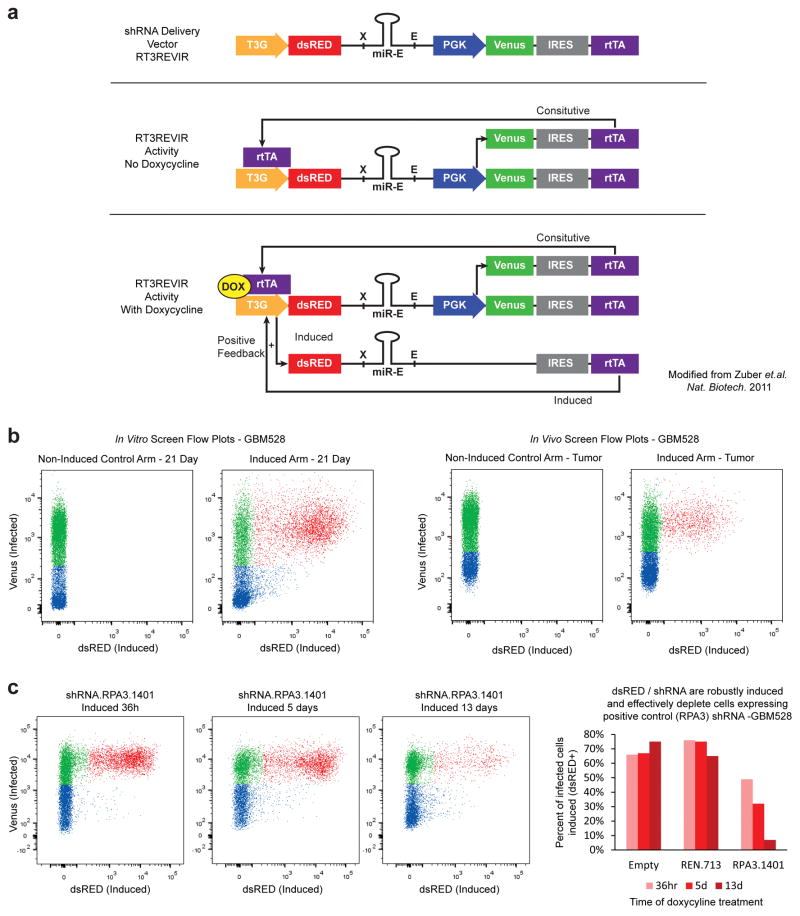
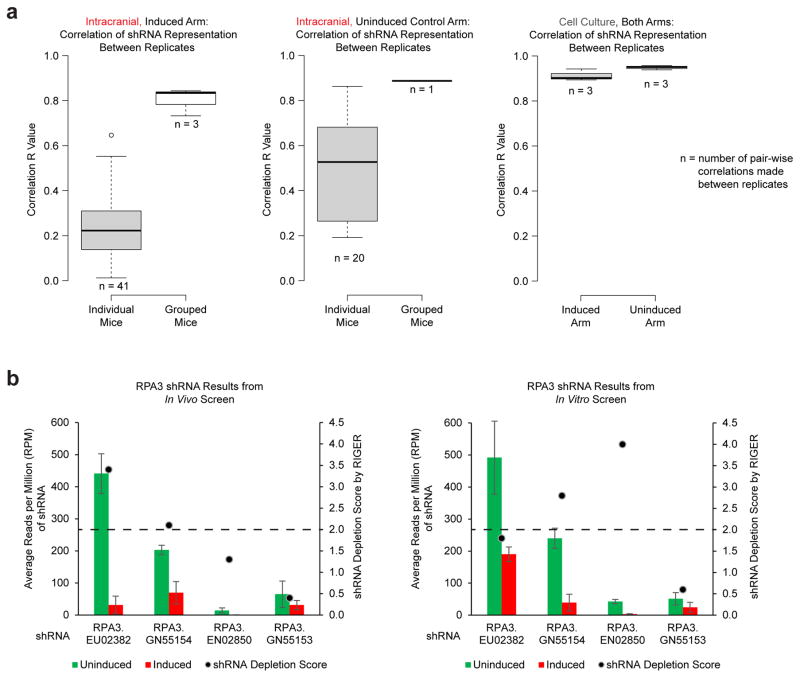
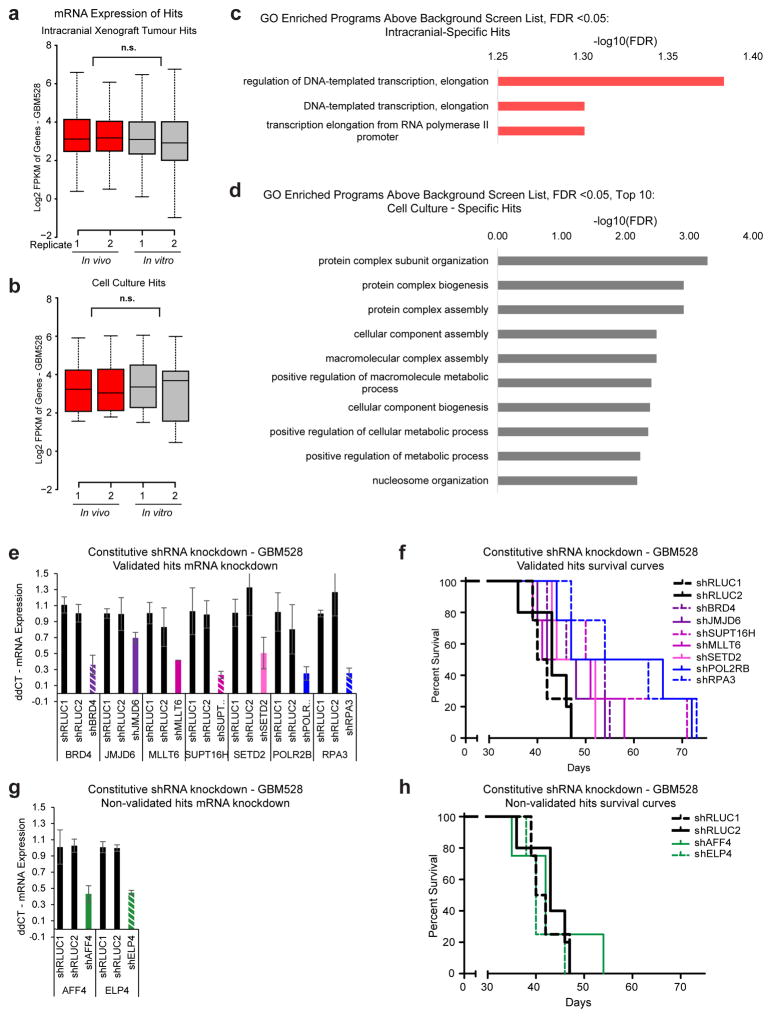
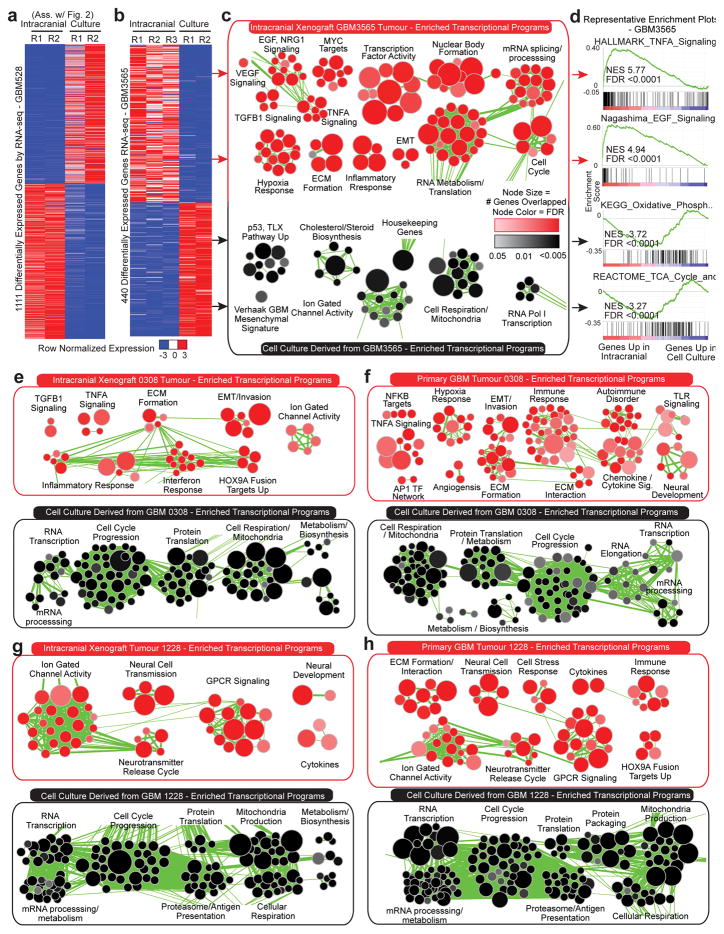
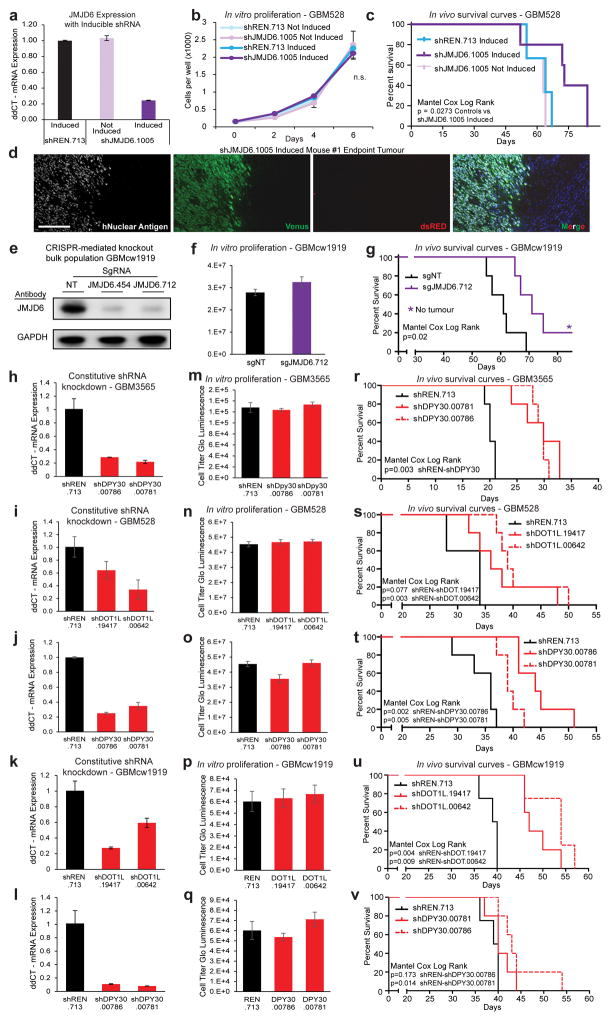
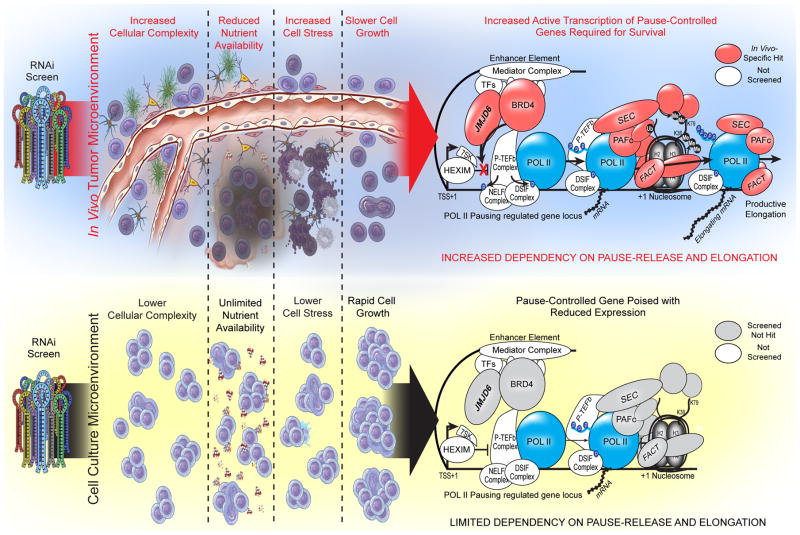
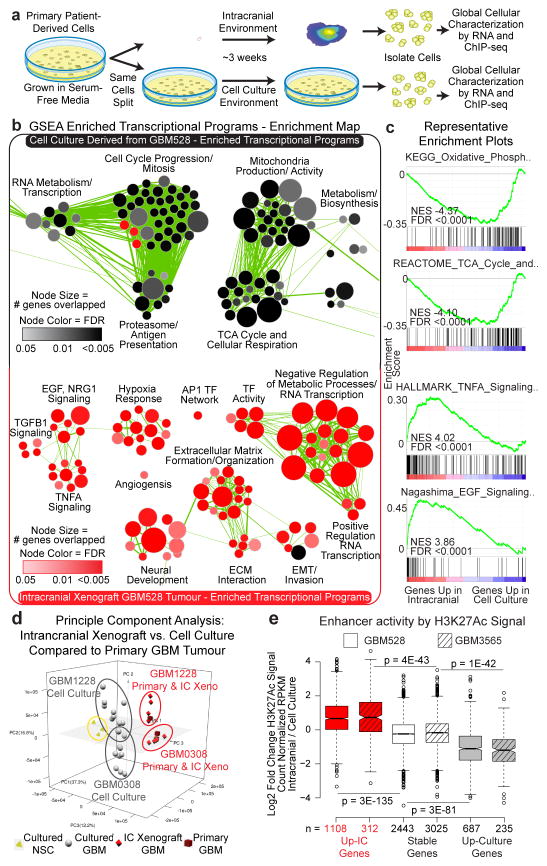
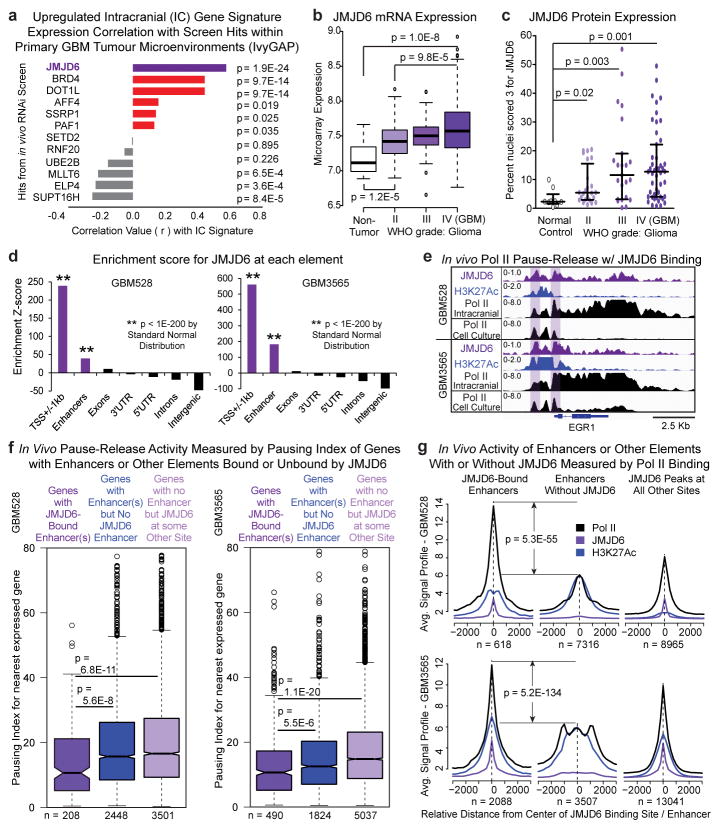
Glioblastoma is a universally lethal cancer with a median survival time of approximately 15 months. Despite substantial efforts to define druggable targets, there are no therapeutic options that notably extend the lifespan of patients with glioblastoma. While previous work has largely focused on in vitro cellular models, here we demonstrate a more physiologically relevant approach to target discovery in glioblastoma. We adapted pooled RNA interference (RNAi) screening technology for use in orthotopic patient-derived xenograft models, creating a high-throughput negative-selection screening platform in a functional in vivo tumour microenvironment. Using this approach, we performed parallel in vivo and in vitro screens and discovered that the chromatin and transcriptional regulators needed for cell survival in vivo are non-overlapping with those required in vitro. We identified transcription pause-release and elongation factors as one set of in vivo-specific cancer dependencies, and determined that these factors are necessary for enhancer-mediated transcriptional adaptations that enable cells to survive the tumour microenvironment. Our lead hit, JMJD6, mediates the upregulation of in vivo stress and stimulus response pathways through enhancer-mediated transcriptional pause-release, promoting cell survival specifically in vivo. Targeting JMJD6 or other identified elongation factors extends survival in orthotopic xenograft mouse models, suggesting that targeting transcription elongation machinery may be an effective therapeutic strategy for glioblastoma. More broadly, this study demonstrates the power of in vivo phenotypic screening to identify new classes of 'cancer dependencies' not identified by previous in vitro approaches, and could supply new opportunities for therapeutic intervention.
胶质母细胞瘤是一种普遍致命的癌症,中位生存时间约为15个月。尽管在确定可药物靶向方面付出了巨大努力,但目前尚无显著延长胶质母细胞瘤患者寿命的治疗选择。虽然此前的工作主要集中在体外细胞模型上,但在此我们展示了一种在胶质母细胞瘤中发现靶点的更具生理学相关性的方法。我们将汇集RNA干扰(RNAi)筛选技术应用于原位患者来源的异种移植模型,在功能性体内肿瘤微环境中创建了一个高通量负选择筛选平台。使用这种方法,我们进行了平行的体内和体外筛选,发现体内细胞存活所需的染色质和转录调节因子与体外所需的因子并不重叠。我们确定转录暂停释放和延伸因子是一组体内特异性的癌症依赖性因素,并确定这些因子对于增强子介导的转录适应性是必需的,这种适应性使细胞能够在肿瘤微环境中存活。我们的主要命中靶点JMJD6通过增强子介导的转录暂停释放介导体内应激和刺激反应途径的上调,特异性地促进体内细胞存活。靶向JMJD6或其他已确定的延伸因子可延长原位异种移植小鼠模型的生存期,这表明靶向转录延伸机制可能是胶质母细胞瘤的一种有效治疗策略。更广泛地说,这项研究证明了体内表型筛选在识别以前体外方法未发现的新型“癌症依赖性”方面的强大作用,并可为治疗干预提供新的机会。