Chan Chim-Kei, Tan Loh Teng-Hern, Andy Shathiswaran N, Kamarudin Muhamad Noor Alfarizal, Goh Bey-Hing, Kadir Habsah Abdul
Biomolecular Research Group, Biochemistry Program, Institute of Biological Sciences, Faculty of Science, University of MalayaKuala Lumpur, Malaysia.
Novel Bacteria and Drug Discovery Research Group, School of Pharmacy, Monash University MalaysiaSubang Jaya, Malaysia.
Front Pharmacol. 2017 Jun 21;8:397. doi: 10.3389/fphar.2017.00397. eCollection 2017.
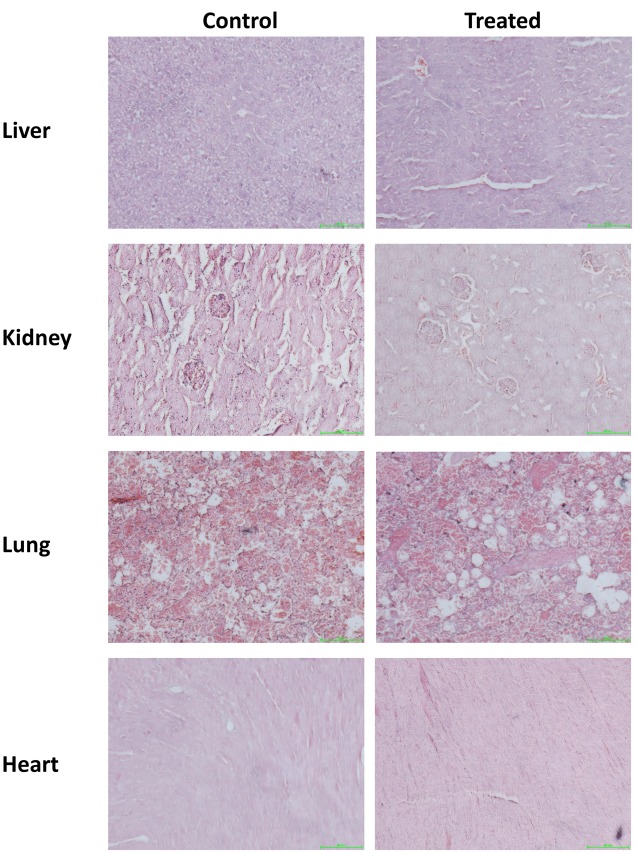
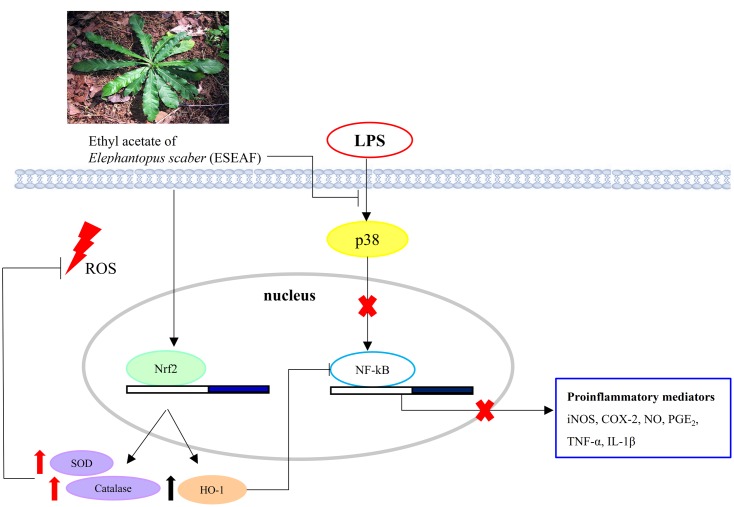
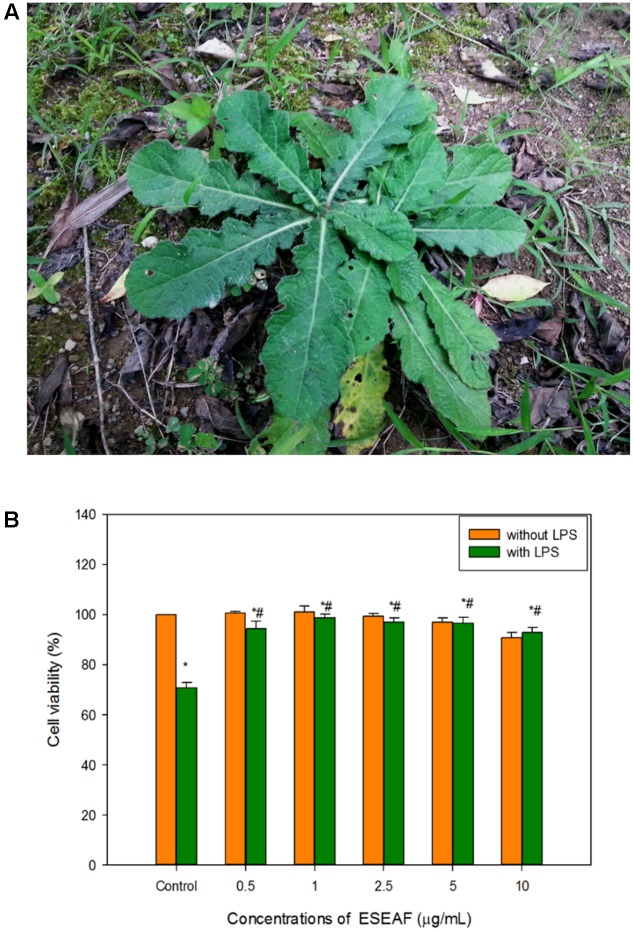
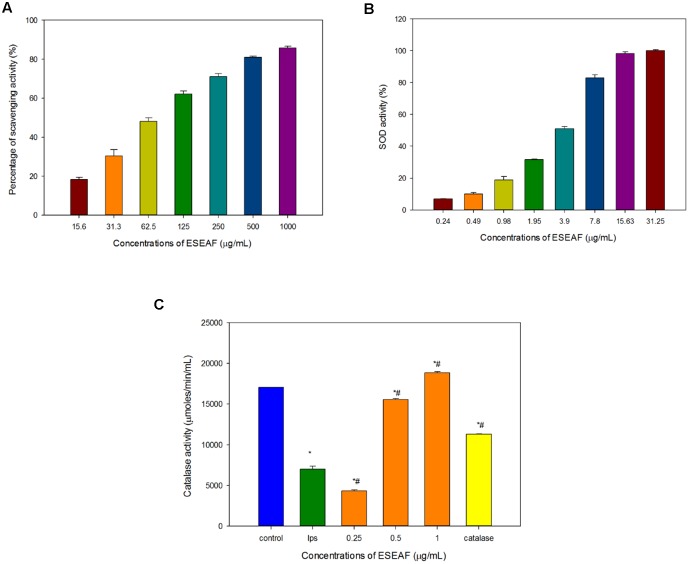
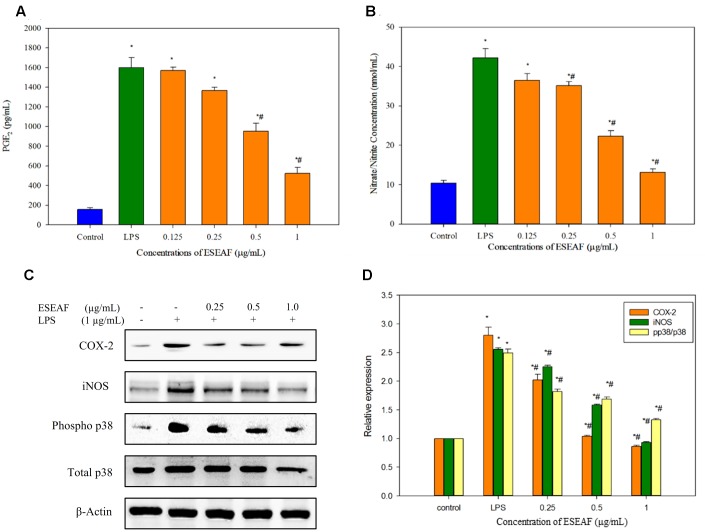
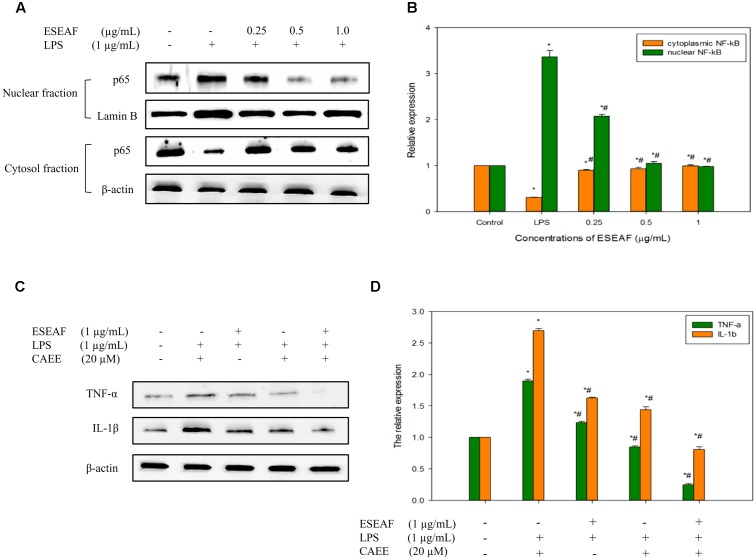
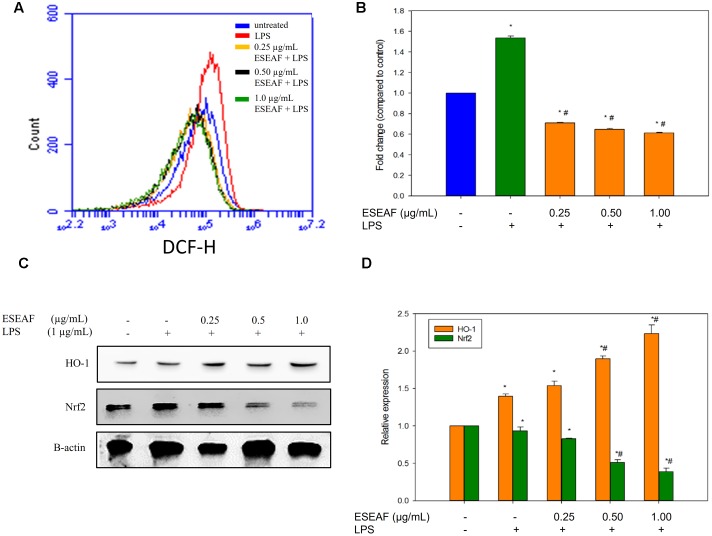
L. (family: Asteraceae) has been traditionally utilized as a folkloric medicine and scientifically shown to exhibit anti-inflammatory activities in various inflammatory models. Given the lack of study on the effect of in neuroinflammation, this study aimed to investigate the anti-neuroinflammatory effect and the underlying mechanisms of ethyl acetate fraction from the leaves of (ESEAF) on the release of pro-inflammatory mediators in lipopolysaccharide (LPS)-induced microglia cells (BV-2). Present findings showed that ESEAF markedly attenuated the translocation of NF-κB to nucleus concomitantly with the significant mitigation on the LPS-induced production of NO, iNOS, COX-2, PGE, IL-1β, and TNF-α. These inflammatory responses were reduced via the inhibition of p38. Besides, ESEAF was shown to possess antioxidant activities evident by the DPPH and SOD scavenging activities. The intracellular catalase enzyme activity was enhanced by ESEAF in the LPS-stimulated BV-2 cells. Furthermore, the formation of ROS induced by LPS in BV-2 cells was reduced upon the exposure to ESEAF. Intriguingly, the reduction of ROS was found in concerted with the activation of Nrf2 and HO-1. It is conceivable that the activation promotes the scavenging power of antioxidant enzymes as well as to ameliorate the inflammatory response in LPS-stimulated BV-2 cells. Finally, the safety profile analysis through oral administration of ESEAF at 2000 mg/kg did not result in any mortalities, adverse effects nor histopathologic abnormalities of organs in mice. Taken altogether, the cumulative findings suggested that ESEAF holds the potential to develop as nutraceutical for the intervention of neuroinflammatory disorders.
菊科植物L.传统上被用作民间药物,科学研究表明其在各种炎症模型中具有抗炎活性。鉴于缺乏关于其在神经炎症中作用的研究,本研究旨在探讨L.叶乙酸乙酯提取物(ESEAF)对脂多糖(LPS)诱导的小胶质细胞(BV-2)中促炎介质释放的抗神经炎症作用及其潜在机制。目前的研究结果表明,ESEAF显著减弱了NF-κB向细胞核的转位,同时显著减轻了LPS诱导的NO、iNOS、COX-2、PGE、IL-1β和TNF-α的产生。这些炎症反应通过抑制p38而减少。此外,通过DPPH和SOD清除活性表明ESEAF具有抗氧化活性。ESEAF增强了LPS刺激的BV-2细胞中的细胞内过氧化氢酶活性。此外,暴露于ESEAF后,LPS在BV-2细胞中诱导的ROS形成减少。有趣的是,发现ROS的减少与Nrf2和HO-1的激活相一致。可以想象,这种激活促进了抗氧化酶的清除能力,并改善了LPS刺激的BV-2细胞中的炎症反应。最后,通过口服给予2000mg/kg的ESEAF进行安全性分析,未导致小鼠死亡、不良反应或器官组织病理学异常。综上所述,累积的研究结果表明ESEAF有潜力开发成为用于干预神经炎症性疾病的营养保健品。