Department of Biomedical Sciences, Center for Creative Biomedical Scientists at Chonnam National University, Gwangju 61469, Republic of Korea.
Department of Food Science and Nutrition, Dong-A University, Brain Busan 21 Project, Busan 49315, Republic of Korea.
Oxid Med Cell Longev. 2017;2017:6051874. doi: 10.1155/2017/6051874. Epub 2017 Jun 7.
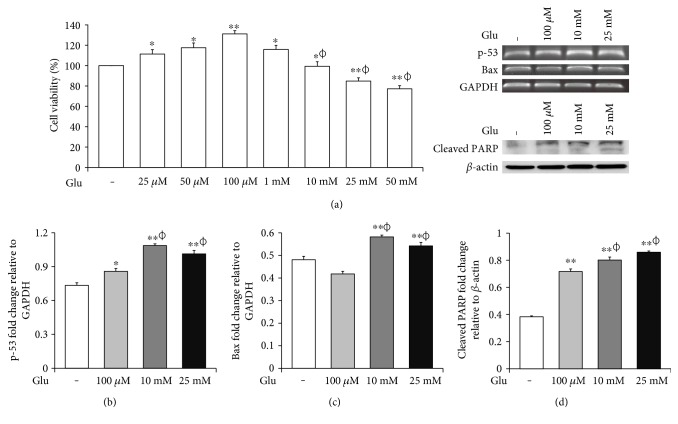
Hyperglycemia-induced stress in the brain of patients with diabetes triggers the disruption of blood-brain barrier (BBB), leading to diverse neurological diseases including stroke and dementia. Recently, the role of microRNA becomes an interest in the research for deciphering the mechanism of brain endothelial cell damage under hyperglycemia. Therefore, we investigated whether mircoRNA Let7A (miR-Let7A) controls the damage of brain endothelial (bEnd.3) cells against high glucose condition. Cell viability, cell death marker expressions (p-53, Bax, and cleaved poly ADP-ribose polymerase), the loss of tight junction proteins (ZO-1 and claudin-5), proinflammatory response (interleukin-6, tumor necrosis factor-), inducible nitric oxide synthase, and nitrite production were confirmed using MTT, reverse transcription-PCR, quantitative-PCR, Western blotting, immunofluorescence, and Griess reagent assay. miR-Let7A overexpression significantly prevented cell death and loss of tight junction proteins and attenuated proinflammatory response and nitrite production in the bEnd.3 cells under high glucose condition. Taken together, we suggest that miR-Let7A may attenuate brain endothelial cell damage by controlling cell death signaling, loss of tight junction proteins, and proinflammatory response against high glucose stress. In the future, the manipulation of miR-Let7A may be a novel solution in controlling BBB disruption which leads to the central nervous system diseases.
高血糖诱导的糖尿病患者大脑应激会触发血脑屏障 (BBB) 的破坏,导致多种神经疾病,包括中风和痴呆。最近,microRNA 的作用成为研究高血糖下脑内皮细胞损伤机制的热点。因此,我们研究了 microRNA Let7A (miR-Let7A) 是否控制脑内皮 (bEnd.3) 细胞对高葡萄糖环境的损伤。通过 MTT、逆转录-PCR、定量-PCR、Western blot、免疫荧光和 Griess 试剂测定,证实了细胞活力、细胞死亡标志物表达 (p-53、Bax 和 cleaved poly ADP-ribose polymerase)、紧密连接蛋白 (ZO-1 和 claudin-5) 的丢失、促炎反应 (白细胞介素-6、肿瘤坏死因子-α)、诱导型一氧化氮合酶和亚硝酸盐产生。miR-Let7A 的过表达显著防止了 bEnd.3 细胞在高葡萄糖条件下的细胞死亡和紧密连接蛋白的丢失,并减弱了促炎反应和亚硝酸盐的产生。总之,我们认为 miR-Let7A 可能通过控制细胞死亡信号、紧密连接蛋白的丢失和促炎反应来减轻高糖应激引起的脑内皮细胞损伤。在未来,miR-Let7A 的操纵可能是控制 BBB 破坏导致中枢神经系统疾病的一种新方法。