Langford Seth T, Wiggins Cody S, Santos Roque, Hauser Melinda, Becker Jeffrey M, Ruggles Arthur E
Department of Nuclear Engineering, University of Tennessee-Knoxville, Knoxville, Tennessee, United States of America.
Department of Physics and Astronomy, University of Tennessee-Knoxville, Knoxville, Tennessee, United States of America.
PLoS One. 2017 Jul 6;12(7):e0180503. doi: 10.1371/journal.pone.0180503. eCollection 2017.
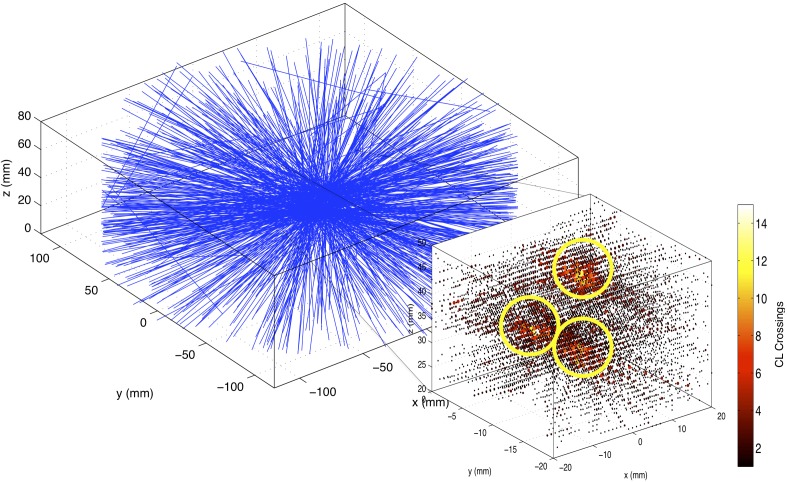
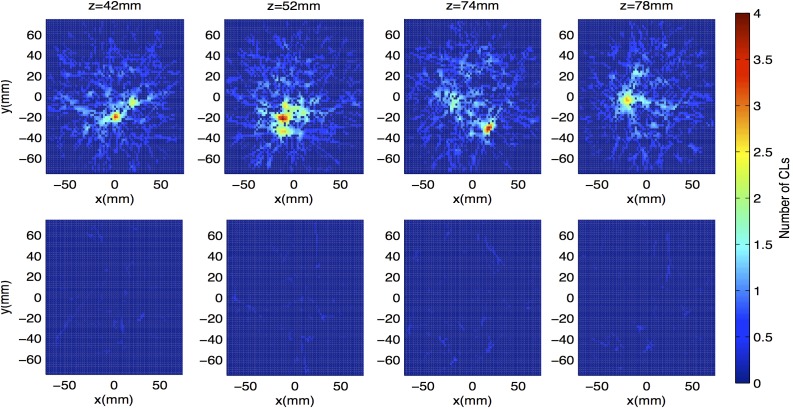
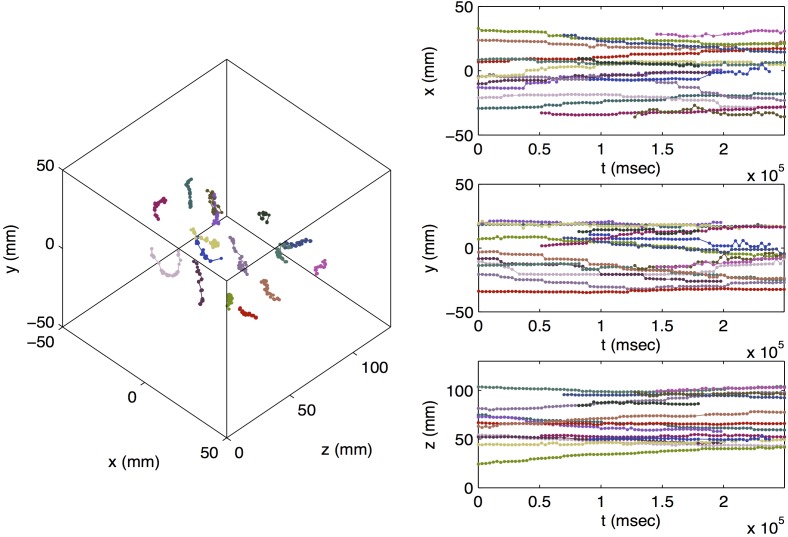
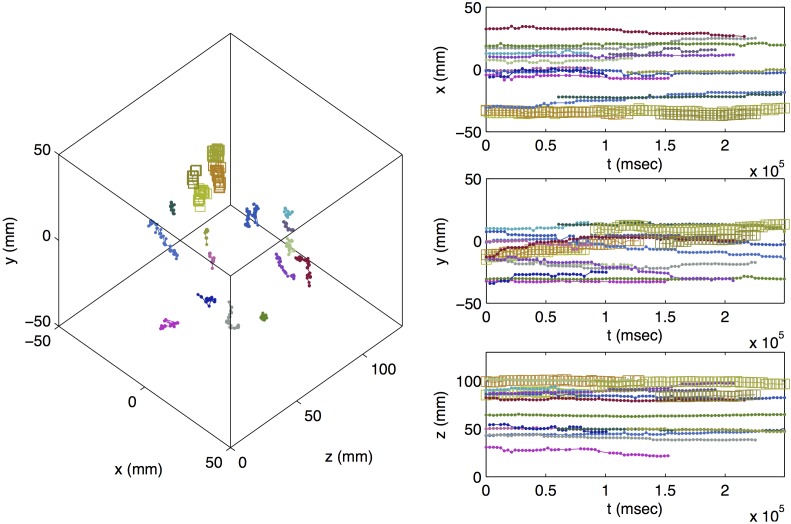
A method for Positron Emission Particle Tracking (PEPT) based on optical feature point identification techniques is demonstrated for use in low activity tracking experiments. A population of yeast cells of approximately 125,000 members is activated to roughly 55 Bq/cell by 18F uptake. An in vitro particle tracking experiment is performed with nearly 20 of these cells after decay to 32 Bq/cell. These cells are successfully identified and tracked simultaneously in this experiment. This work extends the applicability of PEPT as a cell tracking method by allowing a number of cells to be tracked together, and demonstrating tracking for very low activity tracers.
展示了一种基于光学特征点识别技术的正电子发射粒子跟踪(PEPT)方法,用于低活度跟踪实验。约125,000个酵母细胞群体通过摄取¹⁸F被激活至约55 Bq/细胞。在衰变至32 Bq/细胞后,对其中近20个细胞进行体外粒子跟踪实验。在该实验中,这些细胞被成功同时识别和跟踪。这项工作通过允许同时跟踪多个细胞,并证明对极低活度示踪剂的跟踪,扩展了PEPT作为细胞跟踪方法的适用性。