Graduate Program in Biophysical Sciences, The University of Chicago, Chicago, United States.
Department of Biochemistry and Molecular Biology, The University of Chicago, Chicago, United States.
Elife. 2017 Jul 7;6:e23539. doi: 10.7554/eLife.23539.
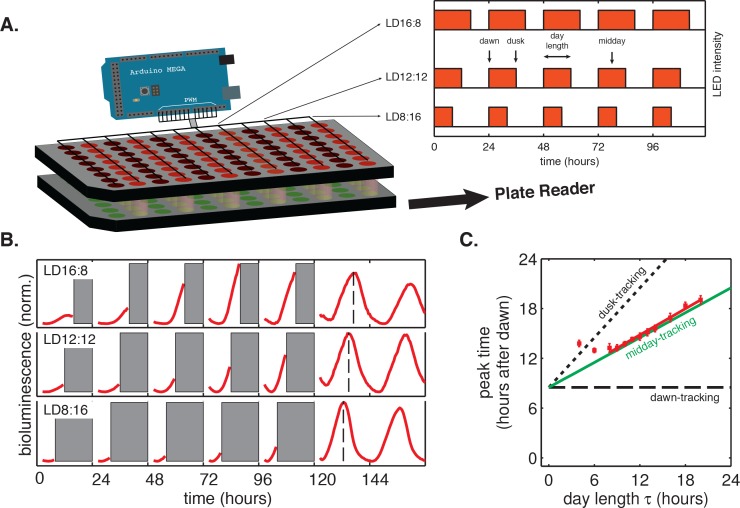
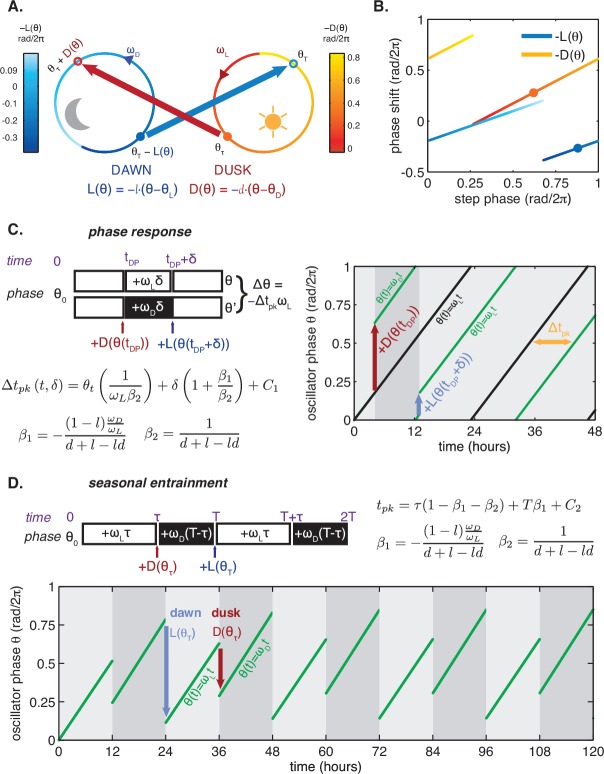
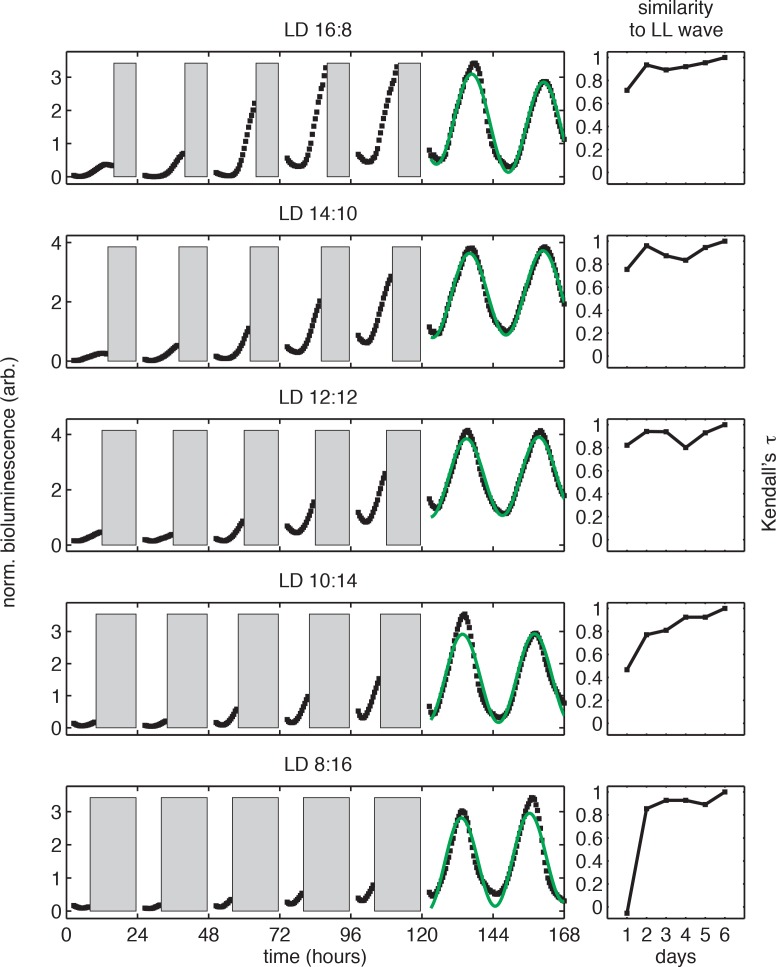
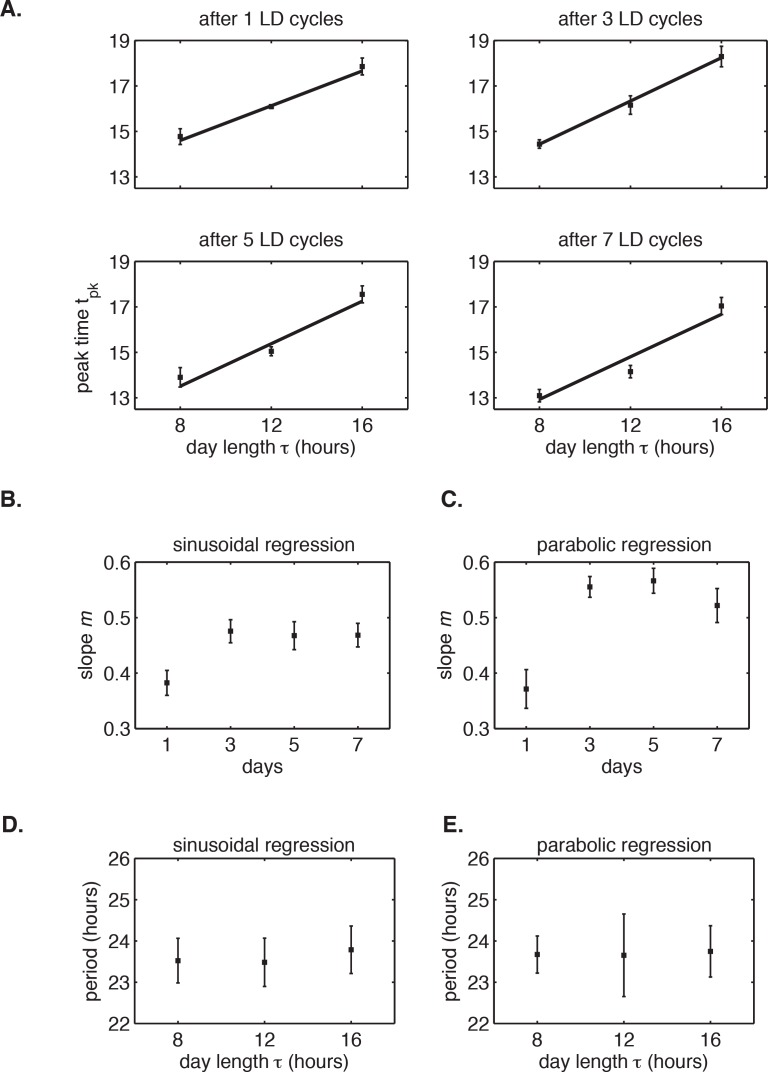
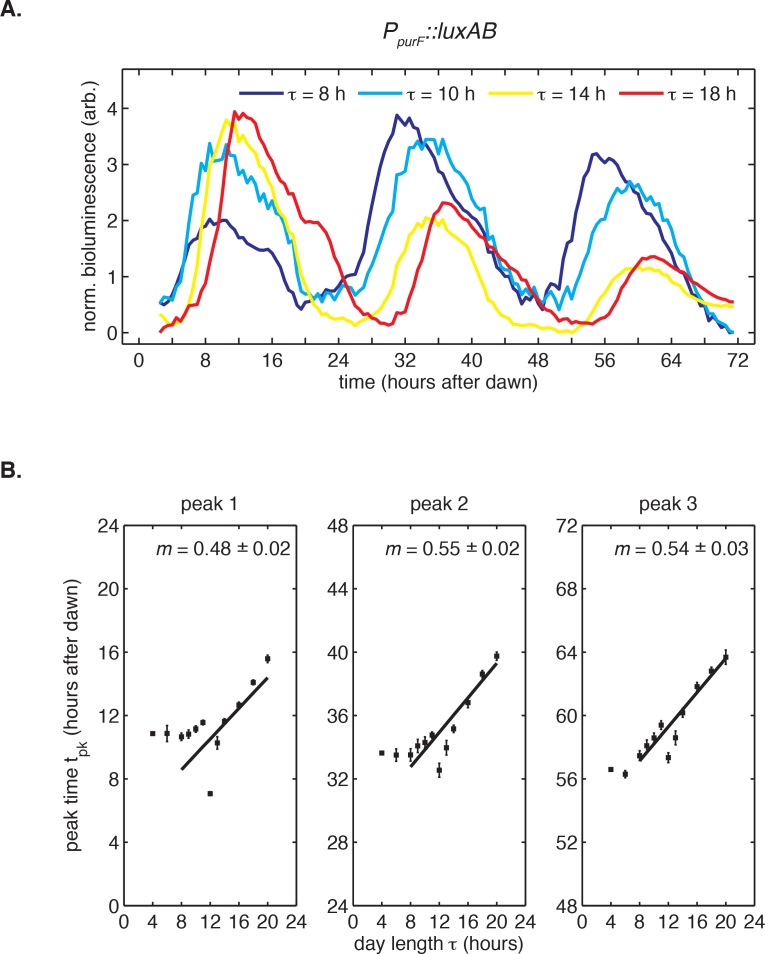
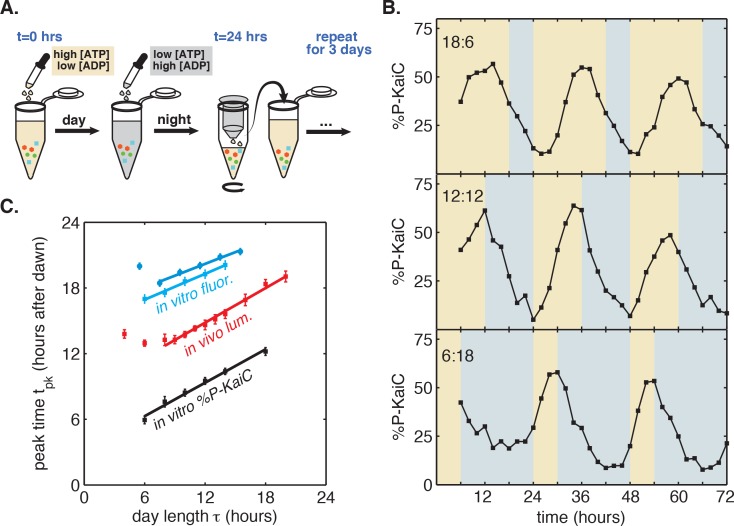
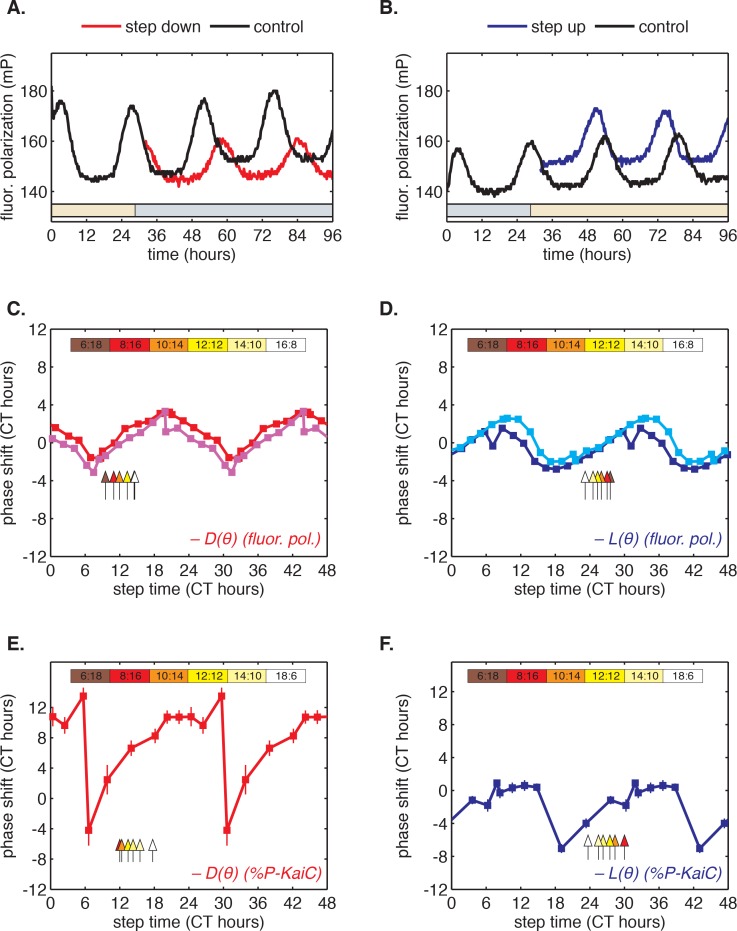
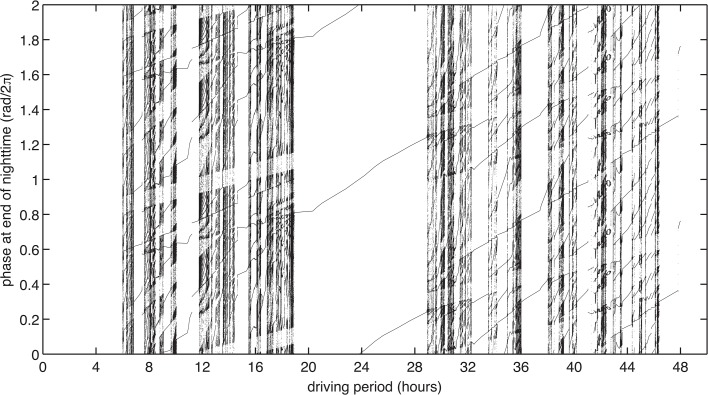
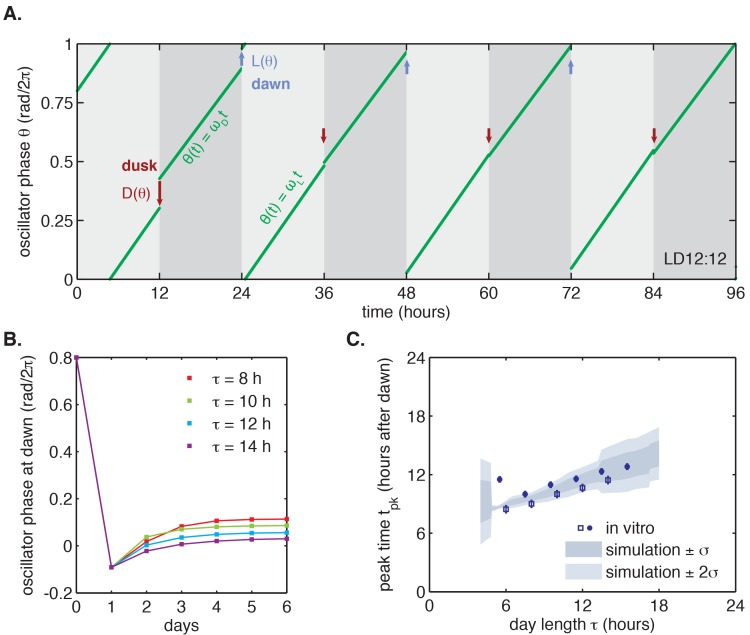
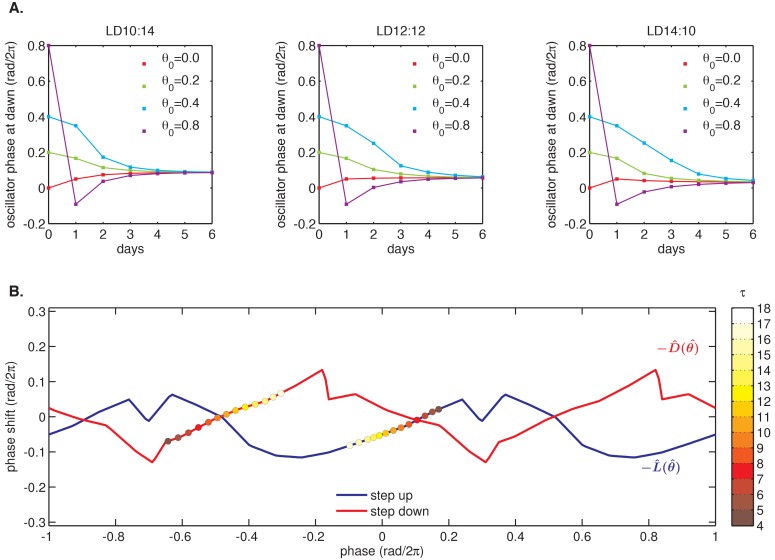
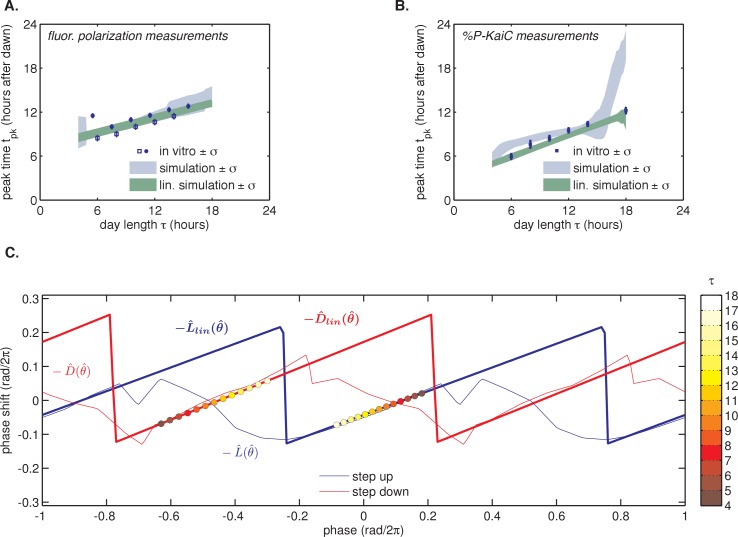
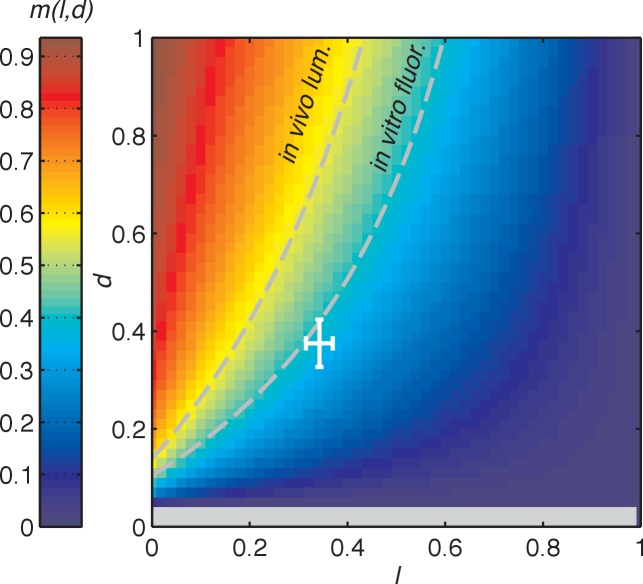
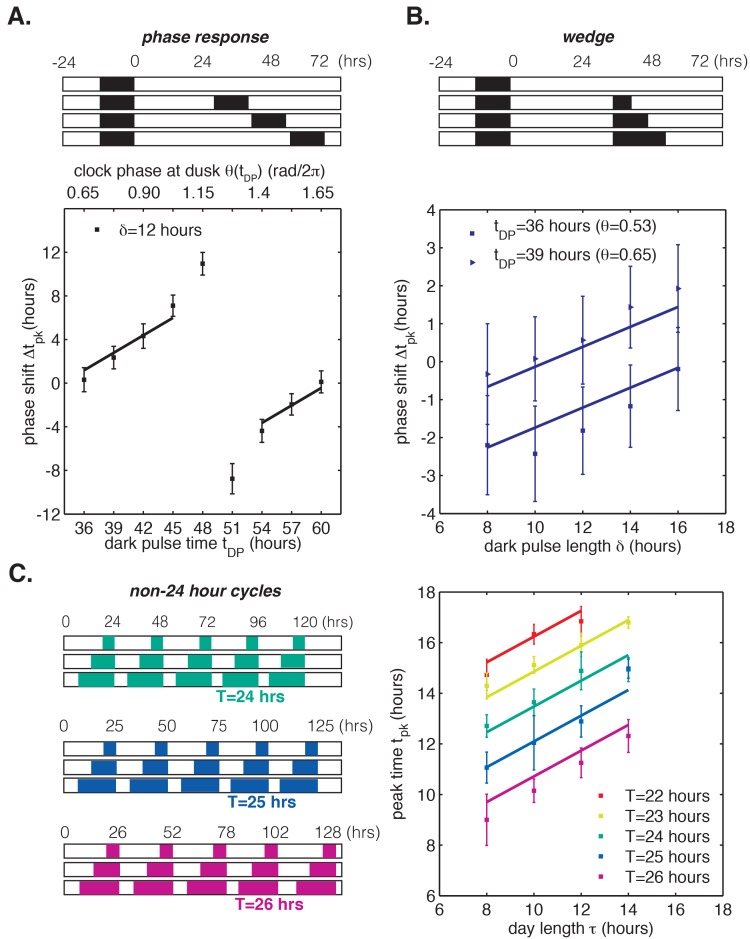
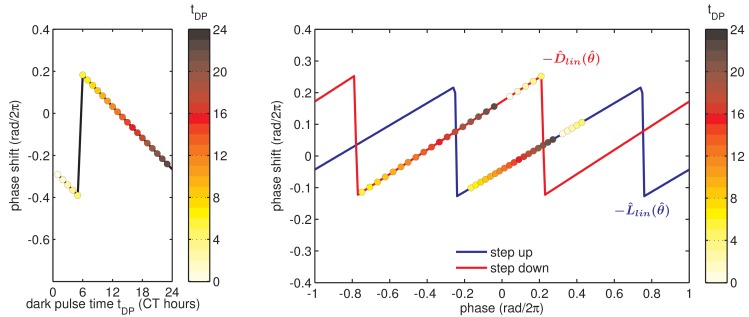
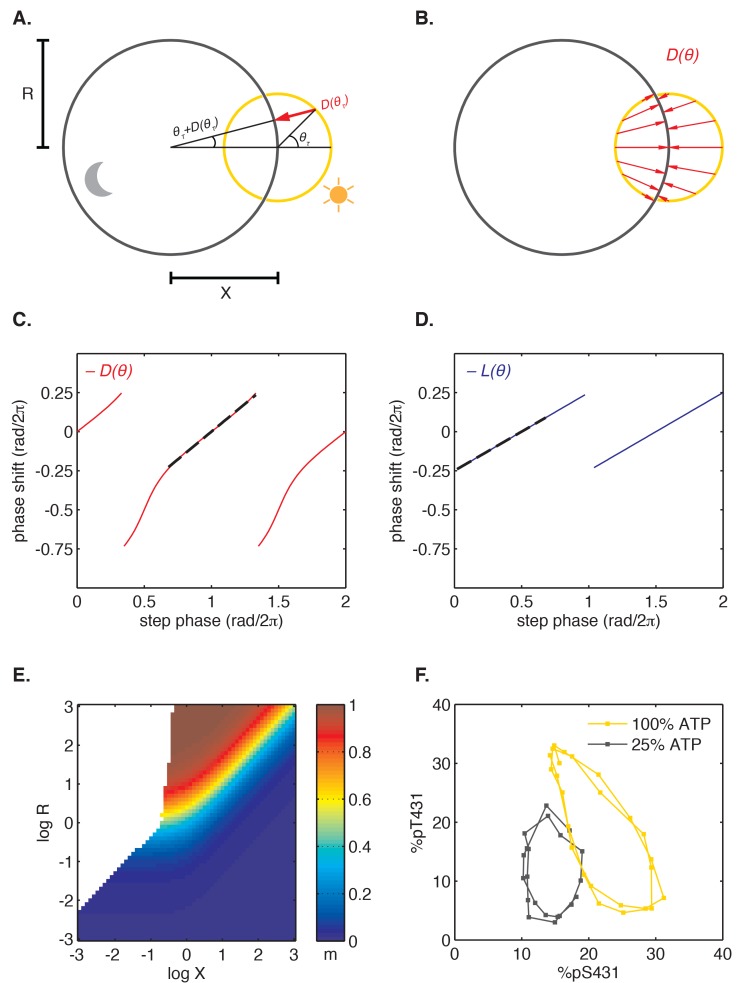
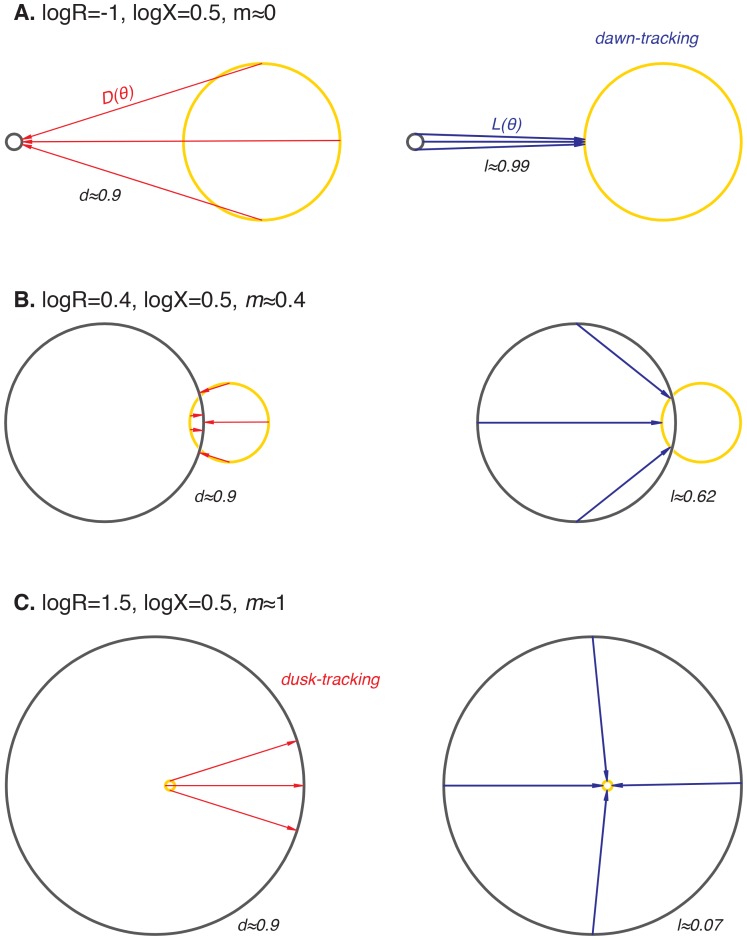
Circadian rhythms are biological oscillations that schedule daily changes in physiology. Outside the laboratory, circadian clocks do not generally free-run but are driven by daily cues whose timing varies with the seasons. The principles that determine how circadian clocks align to these external cycles are not well understood. Here, we report experimental platforms for driving the cyanobacterial circadian clock both in vivo and in vitro. We find that the phase of the circadian rhythm follows a simple scaling law in light-dark cycles, tracking midday across conditions with variable day length. The core biochemical oscillator comprised of the Kai proteins behaves similarly when driven by metabolic pulses in vitro, indicating that such dynamics are intrinsic to these proteins. We develop a general mathematical framework based on instantaneous transformation of the clock cycle by external cues, which successfully predicts clock behavior under many cycling environments.
昼夜节律是生物的周期性波动,安排着生理机能的日常变化。在实验室外,昼夜节律钟通常不是自由运行的,而是由每天的提示信号驱动,这些信号的时间随季节而变化。决定昼夜节律钟如何与这些外部周期对齐的原则还不是很清楚。在这里,我们报告了在体内和体外驱动蓝细菌昼夜节律钟的实验平台。我们发现,在光暗循环中,昼夜节律的相位遵循一个简单的比例定律,在不同的日照长度条件下跟踪中午。由 Kai 蛋白组成的核心生化振荡器在体外被代谢脉冲驱动时表现出相似的行为,这表明这些动力学是这些蛋白质固有的。我们开发了一个基于外部提示信号对时钟周期进行瞬时转换的通用数学框架,该框架成功地预测了许多循环环境下的时钟行为。