Huang Xinwu, Lu Guozhou, Li Guochun, Li Hua, Li Beihua, Yin Jiazhen, Cao Shousong
Department of Pharmacology, Southwest Medical UniversityLuzhou, China.
Department of Pharmacy, Xichang People's HospitalXichang, China.
Front Neurosci. 2017 Jun 23;11:359. doi: 10.3389/fnins.2017.00359. eCollection 2017.
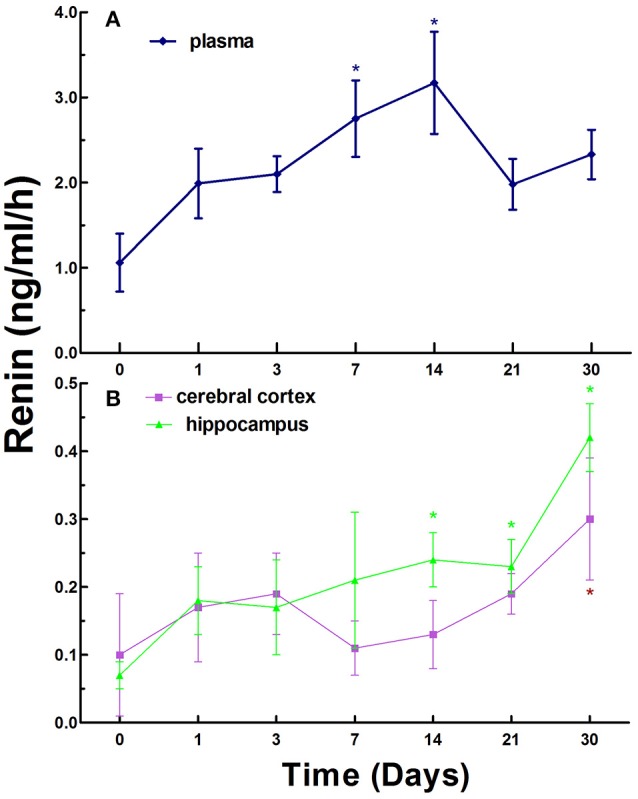
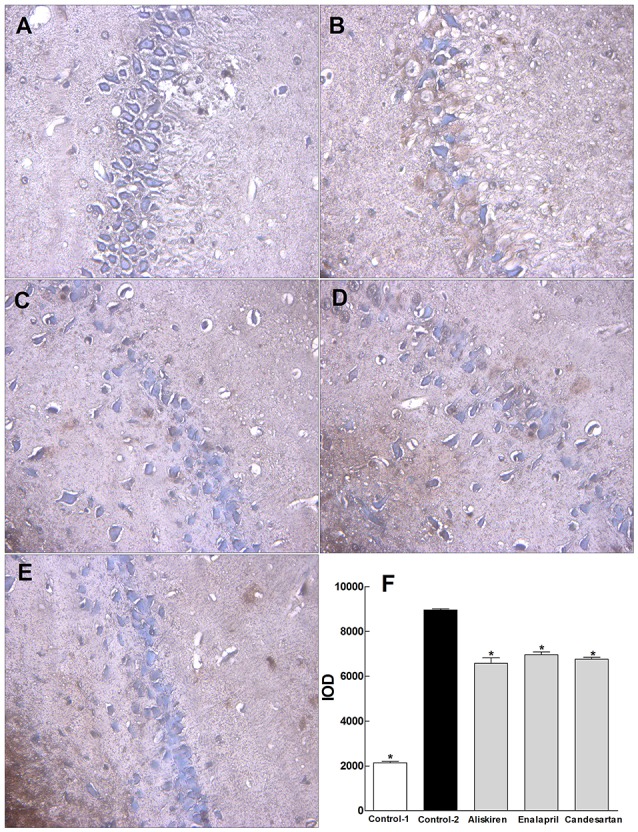
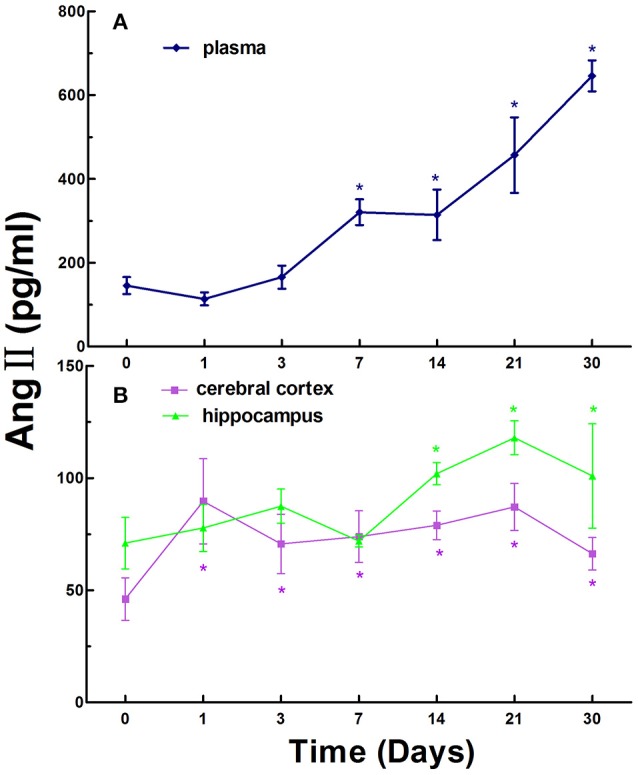
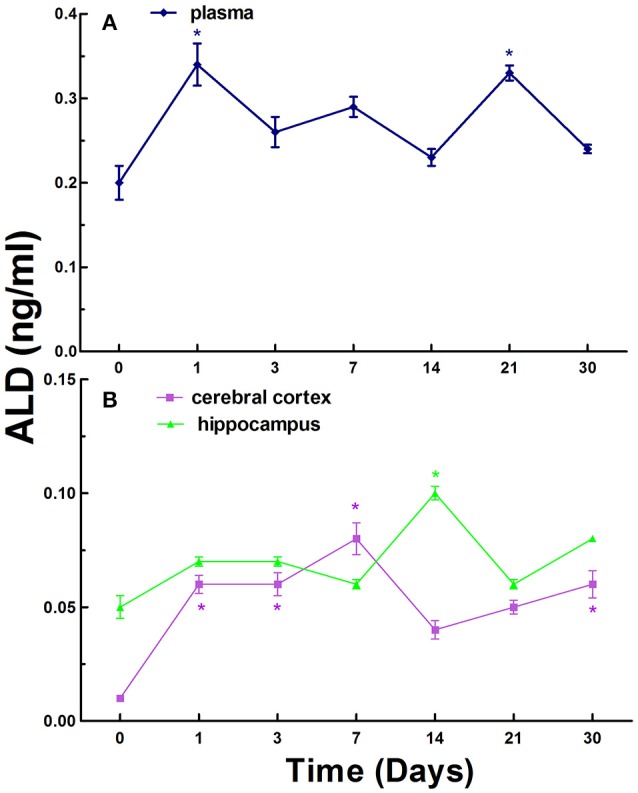
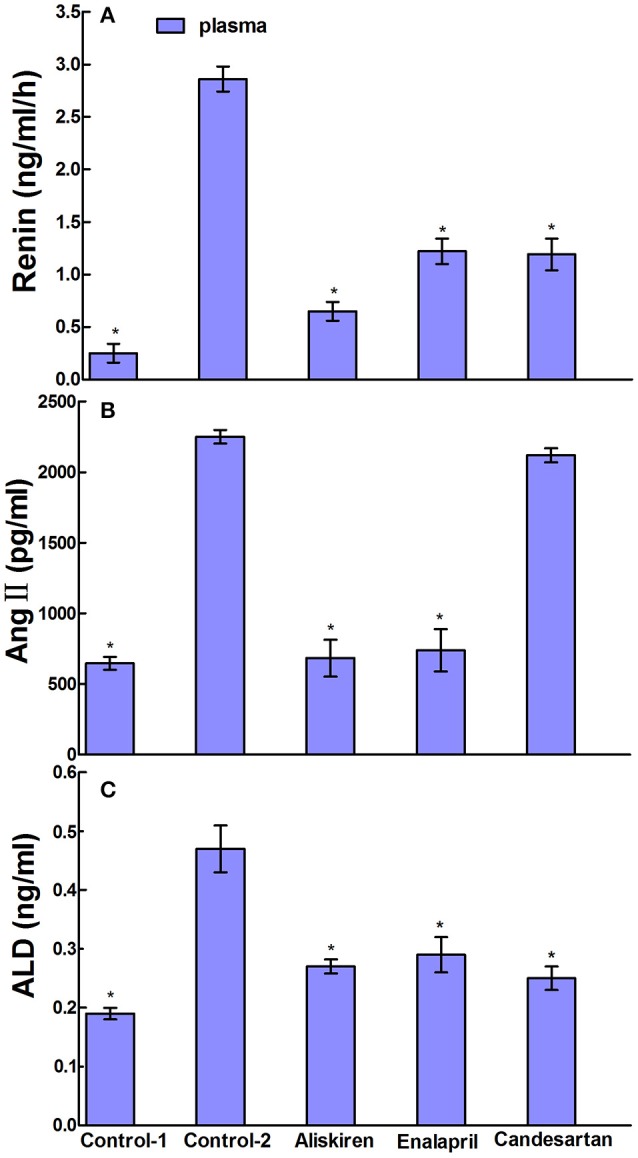
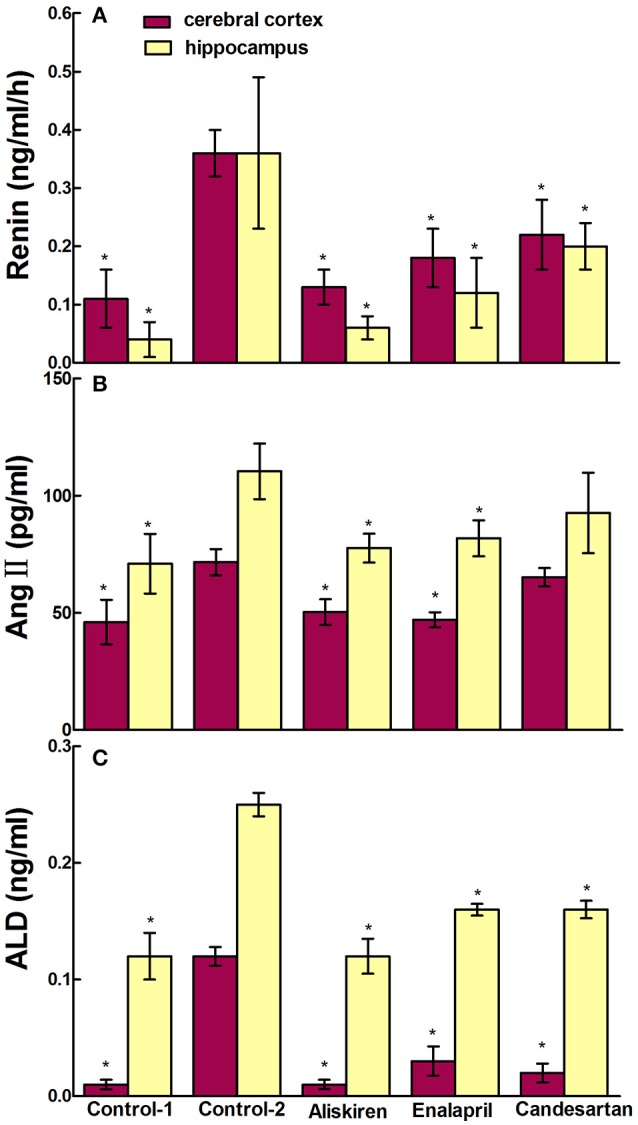
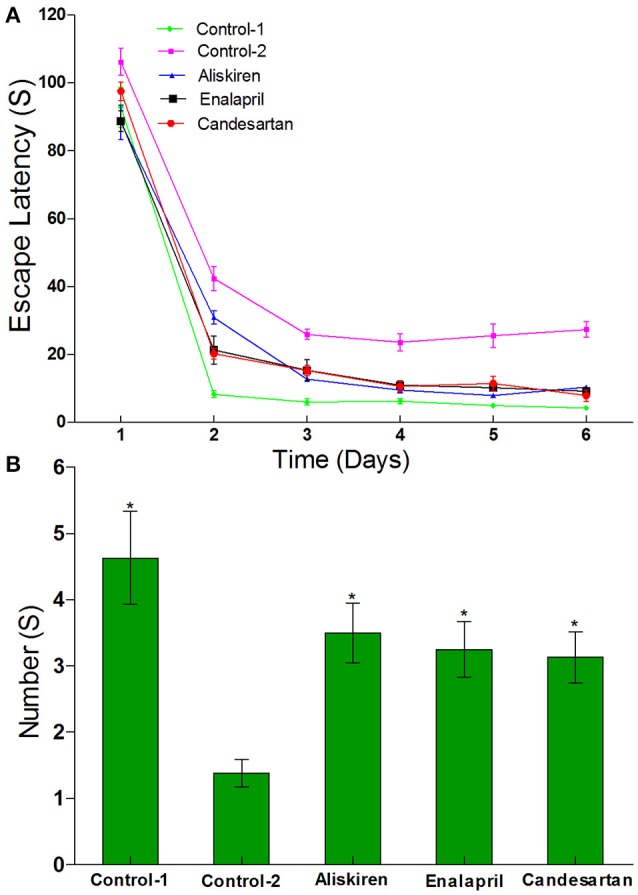
Renin-angiotensin-aldosterone system (RAAS) plays an important role in the regulation of blood pressure and brain function. Therefore, we studied the dynamic changes in the RAAS in the blood, cerebral cortex, and hippocampus and the effects of RAAS inhibitors on spatial learning and memory and hippocampal apoptosis in a rat model of chronic cerebral ischemia (CCI) established by bilateral ligation of the common carotid arteries of rats. The levels of renin, angiotensin II (Ang II), and aldosterone (ALD) in the plasma, and the homogenates of the left side of cerebral cortex and whole hippocampus of rats were detected on day 1, 3, 7, 14, 21, and 30 by radioimmunoassay. Spatial learning and memory and hippocampal apoptosis were evaluated on day 30 by Morris water maze test (navigation and space exploration tests) and terminal dexynucleotidyl transferase (TdT)-mediated dUTP nick end labeling (TUNEL) assay, respectively, after rats were orally administered with distilled water (DW), renin inhibitor aliskiren (30 mg/kg), Ang converting enzyme inhibitor enalapril (4 mg/kg), or Ang II receptor antagonist candesartan (2 mg/kg) daily for 30 days. The results showed that the levels of renin and Ang II were significantly higher but ALD fluctuated in the blood, cerebral cortex, and hippocampus in CCI rats compared to normal rats. However, aliskiren and enalapril could significantly decrease ( < 0.05) the levels of renin, Ang II and ALD in the blood, cerebral cortex, and hippocampus compared to DW treatment; while candesartan had similar effect on renin and ALD but no effect on Ang II in CCI rats. Furthermore, spatial learning and memory were significantly decreased but apoptosis in the hippocampus was obviously increased in CCI rats compared to normal rats ( < 0.05). However, aliskiren, enalapril, and candesartan were equally effective to improve spatial learning and memory and decrease apoptosis in the hippocampus. Therefore, RAAS plays an important role in the development of cerebral ischemia and RAAS inhibitors aliskiren, enalapril, and candesartan improve spatial learning and memory and protect brain injury by inhibiting hippocampal apoptosis in CCI rats.
肾素-血管紧张素-醛固酮系统(RAAS)在血压调节和脑功能方面发挥着重要作用。因此,我们研究了大鼠双侧颈总动脉结扎建立的慢性脑缺血(CCI)模型中,血液、大脑皮层和海马中RAAS的动态变化,以及RAAS抑制剂对空间学习记忆和海马细胞凋亡的影响。通过放射免疫分析法在第1、3、7、14、21和30天检测大鼠血浆、左侧大脑皮层匀浆和整个海马匀浆中肾素、血管紧张素II(Ang II)和醛固酮(ALD)的水平。在大鼠连续30天每日口服蒸馏水(DW)、肾素抑制剂阿利吉仑(30 mg/kg)、血管紧张素转换酶抑制剂依那普利(4 mg/kg)或血管紧张素II受体拮抗剂坎地沙坦(2 mg/kg)后,分别于第30天通过莫里斯水迷宫试验(导航和空间探索试验)和末端脱氧核苷酸转移酶(TdT)介导的dUTP缺口末端标记(TUNEL)法评估空间学习记忆和海马细胞凋亡。结果显示,与正常大鼠相比,CCI大鼠血液、大脑皮层和海马中的肾素和Ang II水平显著升高,但ALD水平波动。然而,与DW处理相比,阿利吉仑和依那普利可显著降低(<0.05)CCI大鼠血液、大脑皮层和海马中的肾素、Ang II和ALD水平;而坎地沙坦对CCI大鼠的肾素和ALD有类似作用,但对Ang II无作用。此外,与正常大鼠相比,CCI大鼠的空间学习记忆显著下降,但海马细胞凋亡明显增加(<0.05)。然而,阿利吉仑、依那普利和坎地沙坦在改善空间学习记忆和减少海马细胞凋亡方面同样有效。因此,RAAS在脑缺血的发生发展中起重要作用,RAAS抑制剂阿利吉仑、依那普利和坎地沙坦通过抑制CCI大鼠海马细胞凋亡来改善空间学习记忆并保护脑损伤。