Chen Ying, Crawford J D
Center for Vision Research, York University, TorontoON, Canada.
Departments of Psychology, Biology, and Kinesiology and Health Science, York University, TorontoON, Canada.
Front Syst Neurosci. 2017 Jun 23;11:44. doi: 10.3389/fnsys.2017.00044. eCollection 2017.
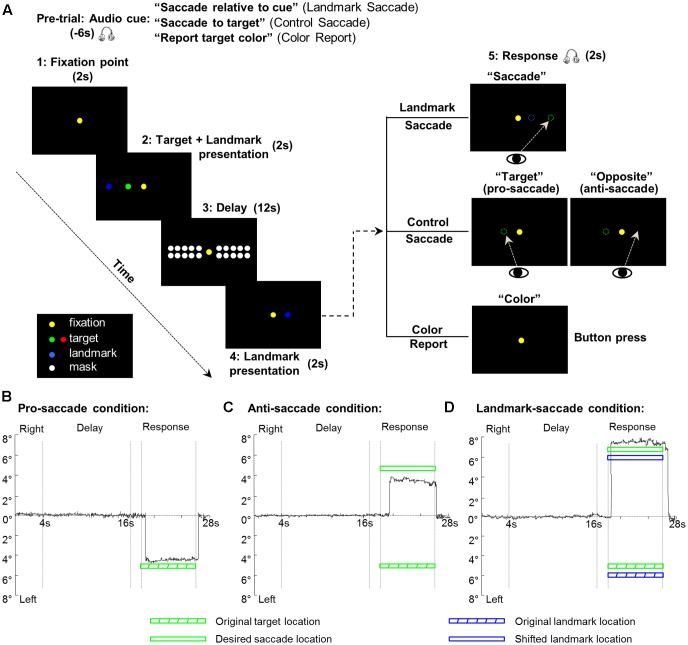
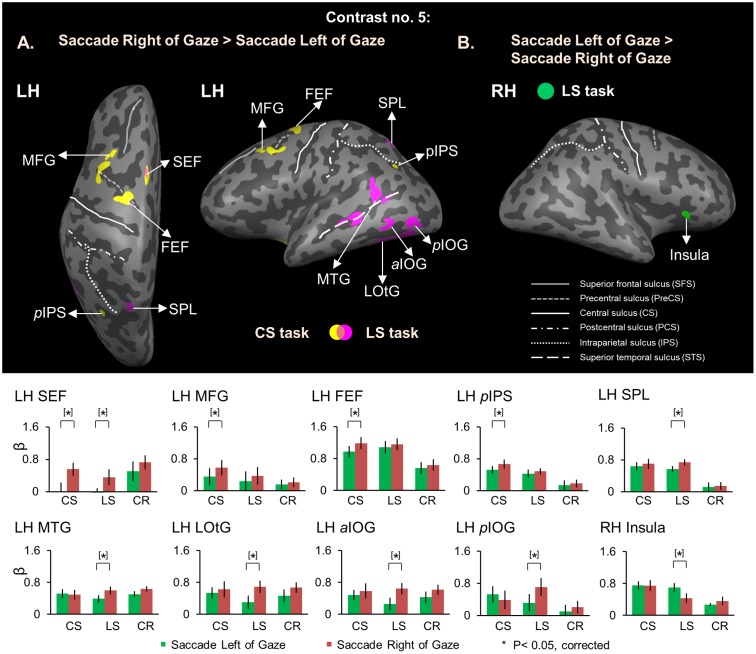
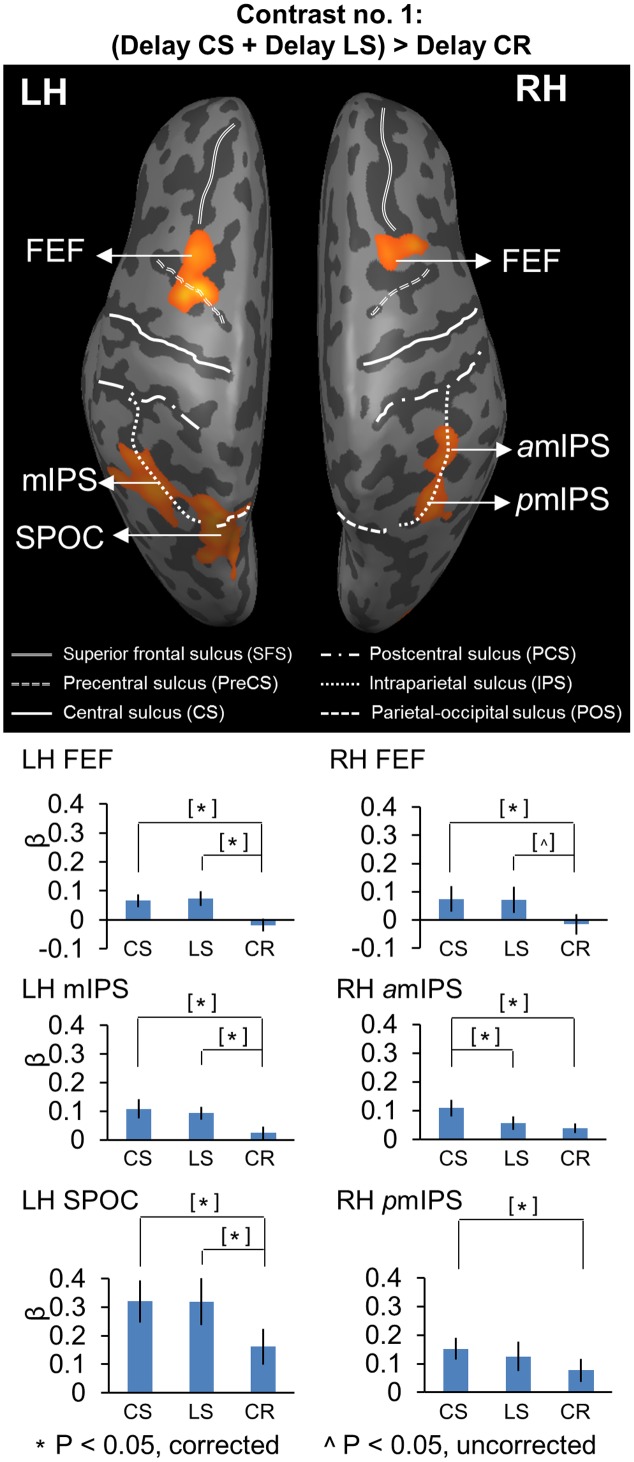
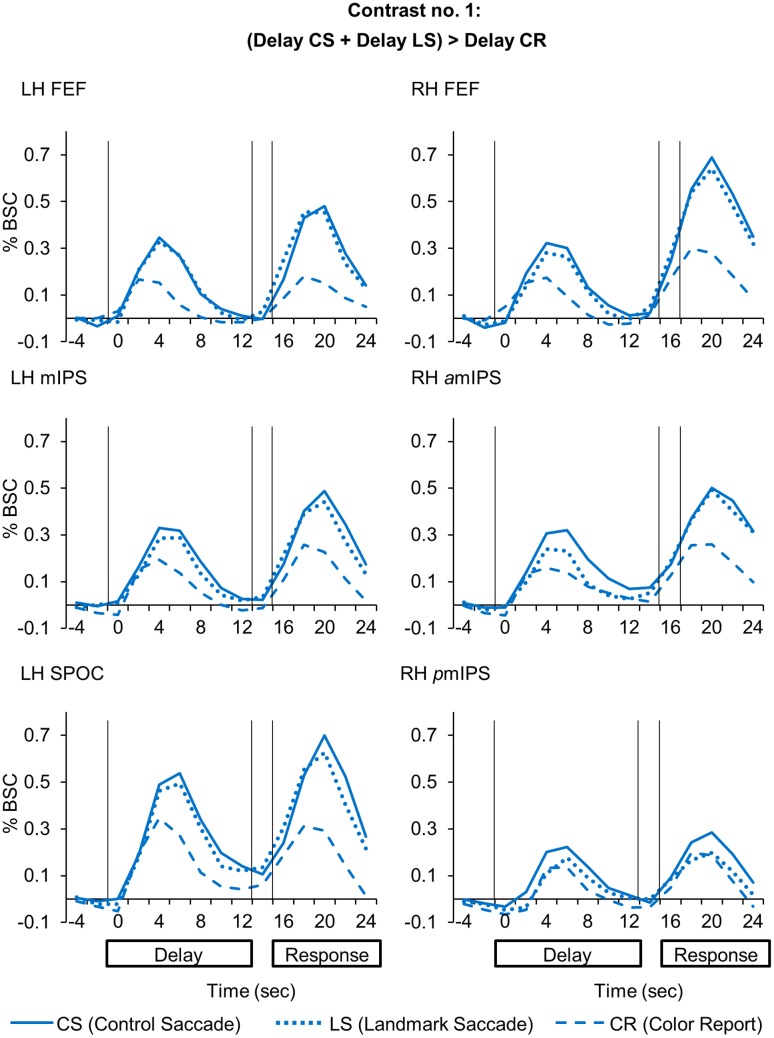
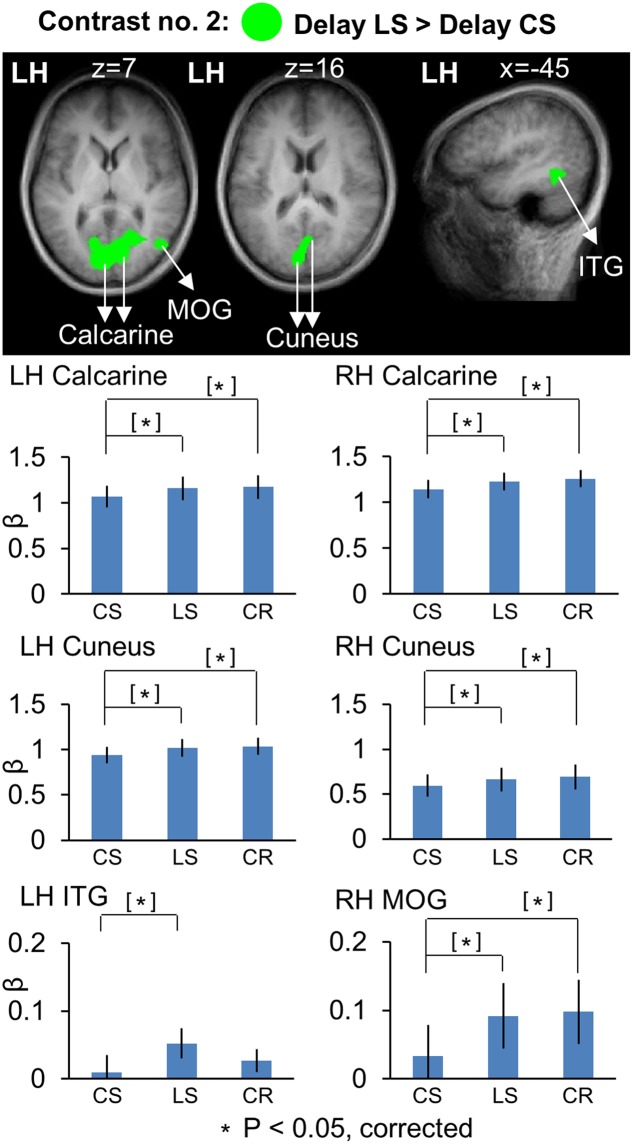
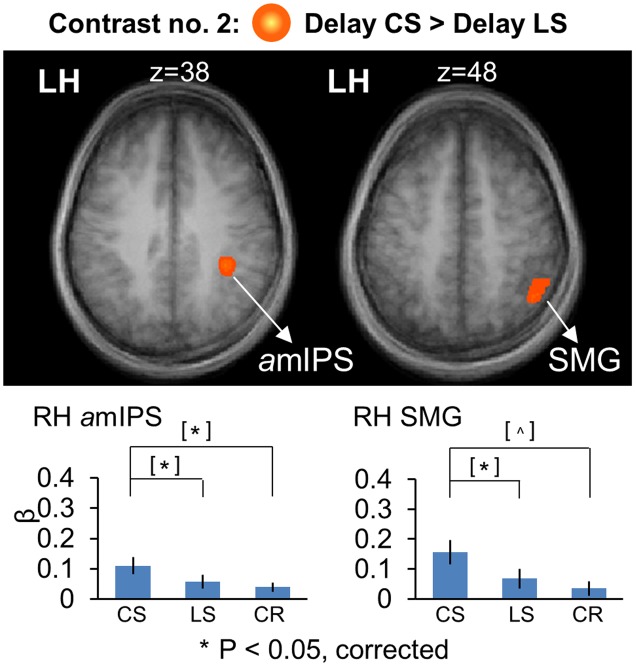
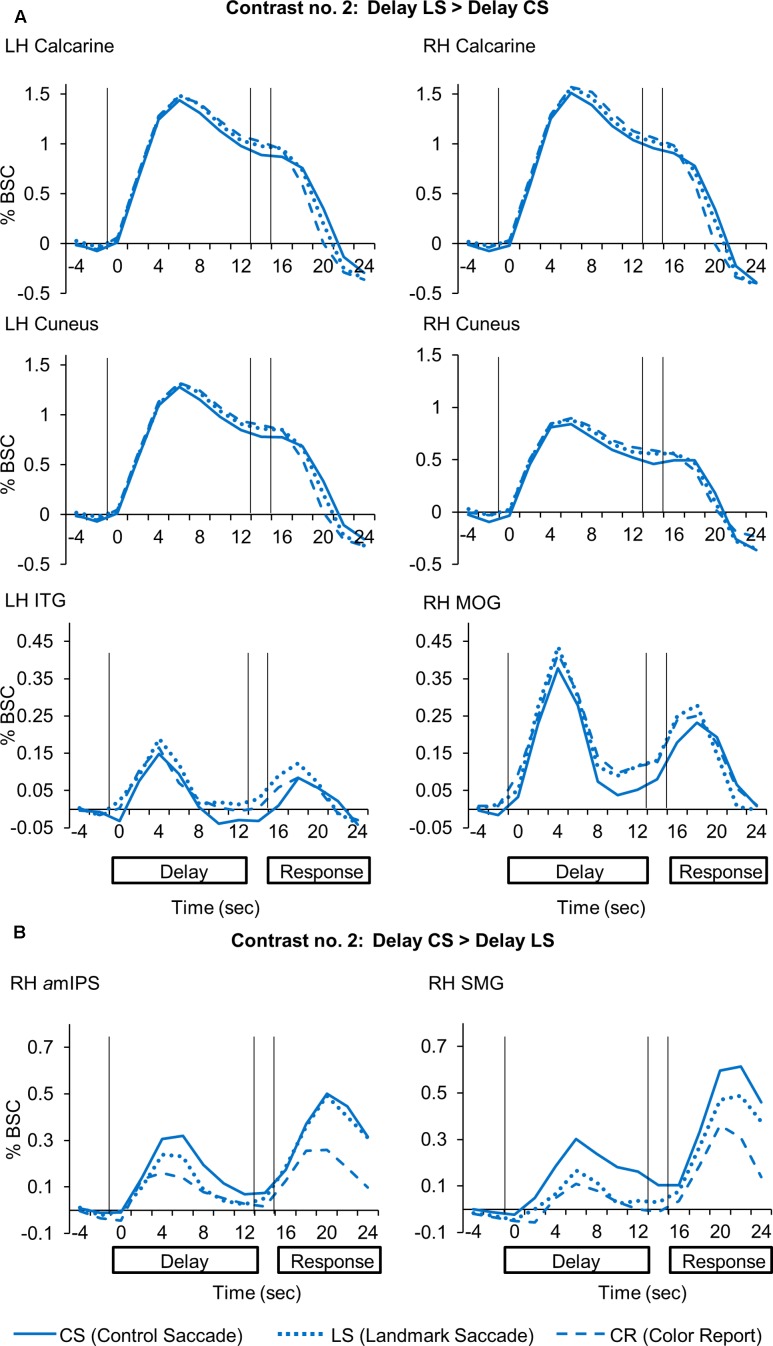
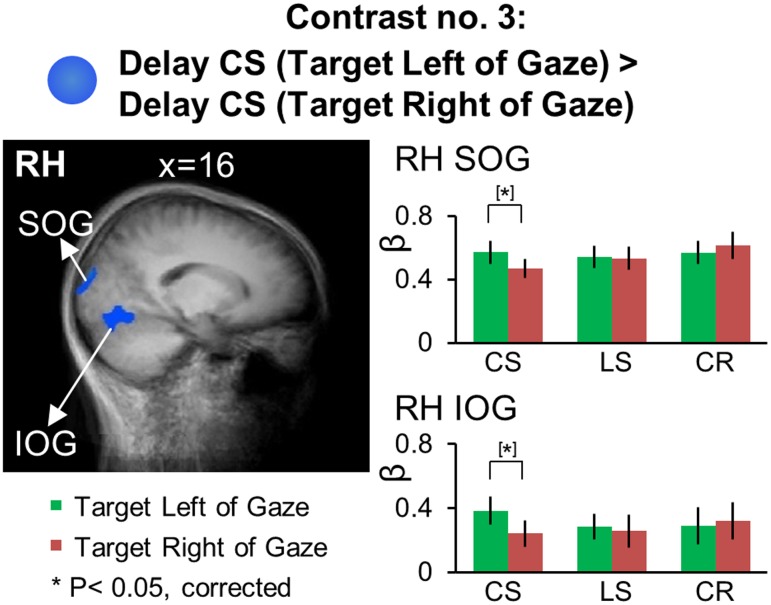
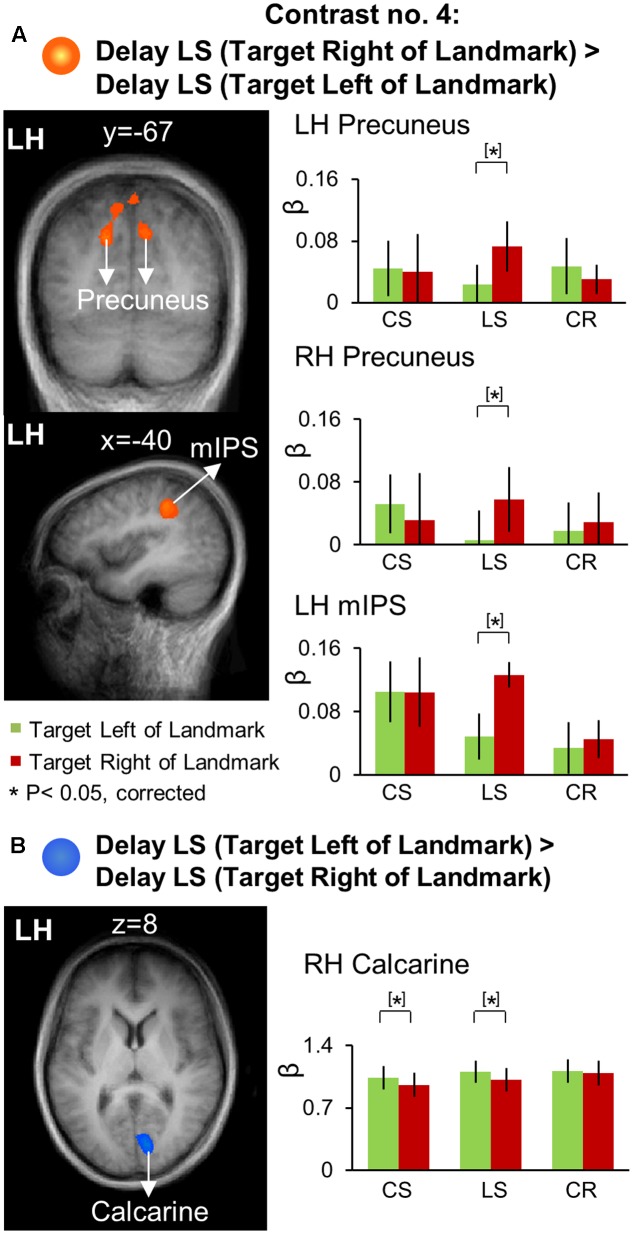
A remembered saccade target could be encoded in egocentric coordinates such as gaze-centered, or relative to some external allocentric landmark that is independent of the target or gaze (landmark-centered). In comparison to egocentric mechanisms, very little is known about such a landmark-centered representation. Here, we used an event-related fMRI design to identify brain areas supporting these two types of spatial coding (i.e., landmark-centered vs. gaze-centered) for target memory during the where only target location, not saccade direction, was specified. The paradigm included three tasks with identical display of visual stimuli but different auditory instructions: (remember target location relative to a visual landmark, independent of gaze), (remember original target location relative to gaze fixation, independent of the landmark), and a non-spatial control, (report target color). During the , the and tasks activated overlapping areas in posterior parietal cortex (PPC) and frontal cortex as compared to the color control, but with higher activation in PPC for target coding in the task and higher activation in temporal and occipital cortex for target coding in task. Gaze-centered directional selectivity was observed in superior occipital gyrus and inferior occipital gyrus, whereas landmark-centered directional selectivity was observed in precuneus and midposterior intraparietal sulcus. During the after saccade direction was specified, the parietofrontal network in the left hemisphere showed higher activation for rightward than leftward saccades. Our results suggest that cortical activation for coding saccade target direction relative to a visual landmark differs from gaze-centered directional selectivity for target memory, from the mechanisms for other types of allocentric tasks, and from the directionally selective mechanisms for saccade planning and execution.
被记住的扫视目标可以以自我中心坐标进行编码,比如以注视为中心,或者相对于某个独立于目标或注视的外部异心地标(以地标为中心)。与自我中心机制相比,对于这种以地标为中心的表征知之甚少。在这里,我们使用了一种事件相关功能磁共振成像设计,以识别在仅指定目标位置而非扫视方向的“哪里”任务期间,支持这两种类型空间编码(即以地标为中心与以注视为中心)用于目标记忆的脑区。该范式包括三项任务,视觉刺激显示相同但听觉指令不同:“地标任务”(记住相对于视觉地标的目标位置,与注视无关)、“注视任务”(记住相对于注视固定点的原始目标位置,与地标无关),以及一个非空间对照“颜色任务”(报告目标颜色)。在“哪里”任务期间,与颜色对照相比,“地标任务”和“注视任务”在后顶叶皮层(PPC)和额叶皮层激活了重叠区域,但在“地标任务”中PPC对目标编码的激活更高,在“注视任务”中颞叶和枕叶皮层对目标编码的激活更高。在枕上回和枕下回观察到以注视为中心的方向选择性,而在楔前叶和顶内沟中后部观察到以地标为中心的方向选择性。在指定扫视方向后的“哪里”任务期间,左半球的顶额网络对向右扫视的激活高于向左扫视。我们的结果表明,相对于视觉地标编码扫视目标方向的皮层激活不同于用于目标记忆的以注视为中心的方向选择性、不同于其他类型异心任务的机制,也不同于用于扫视计划和执行的方向选择性机制。