Wilkinson Toby J, Cowan A A, Vallin H E, Onime L A, Oyama Linda B, Cameron S J, Gonot Charlotte, Moorby J M, Waddams K, Theobald V J, Leemans D, Bowra S, Nixey C, Huws Sharon A
Institute of Biological, Environmental and Rural Sciences, Aberystwyth UniversityAberystwyth, United Kingdom.
Department of Surgery and Cancer, Faculty of Medicine, Imperial College LondonLondon, United Kingdom.
Front Microbiol. 2017 Jun 22;8:1089. doi: 10.3389/fmicb.2017.01089. eCollection 2017.
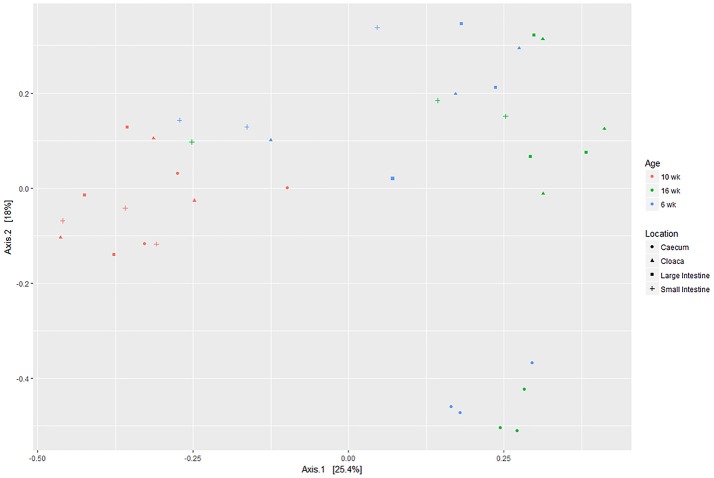
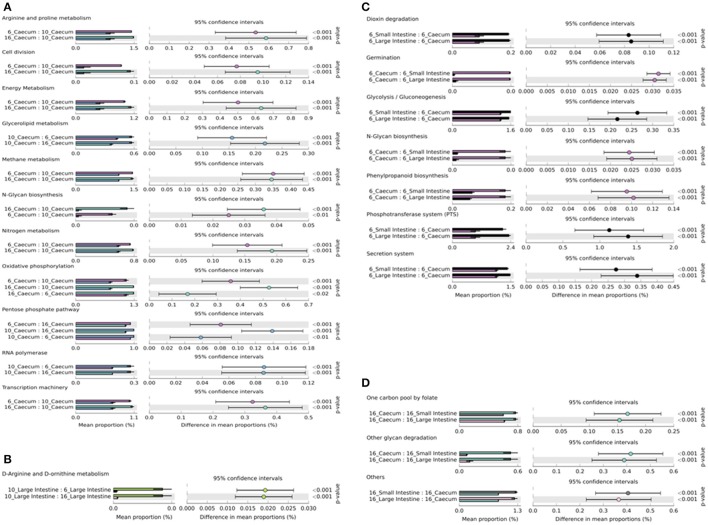
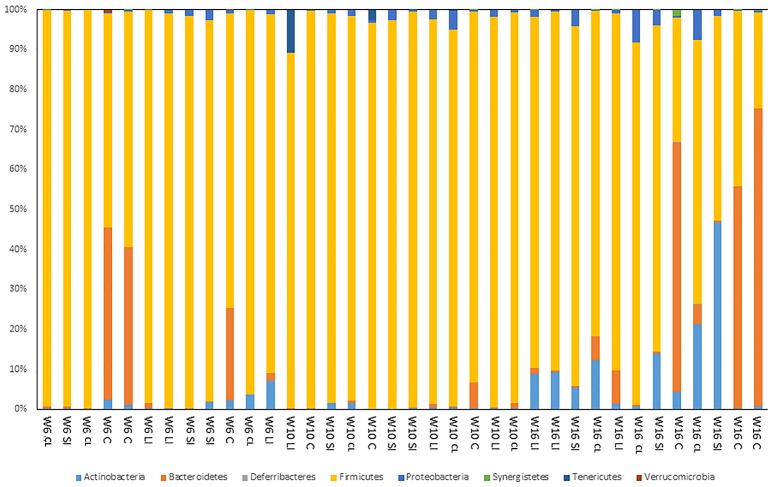
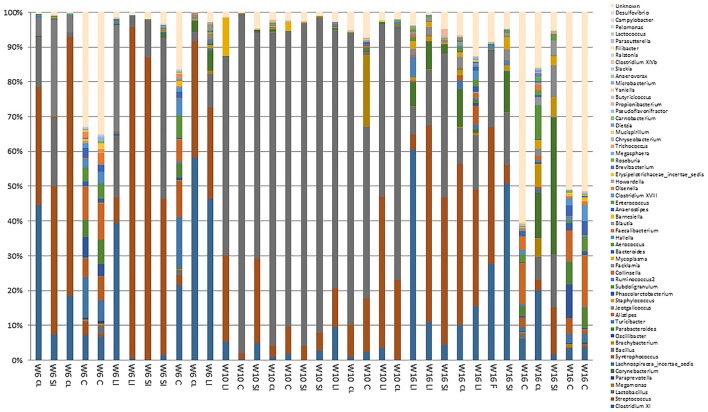
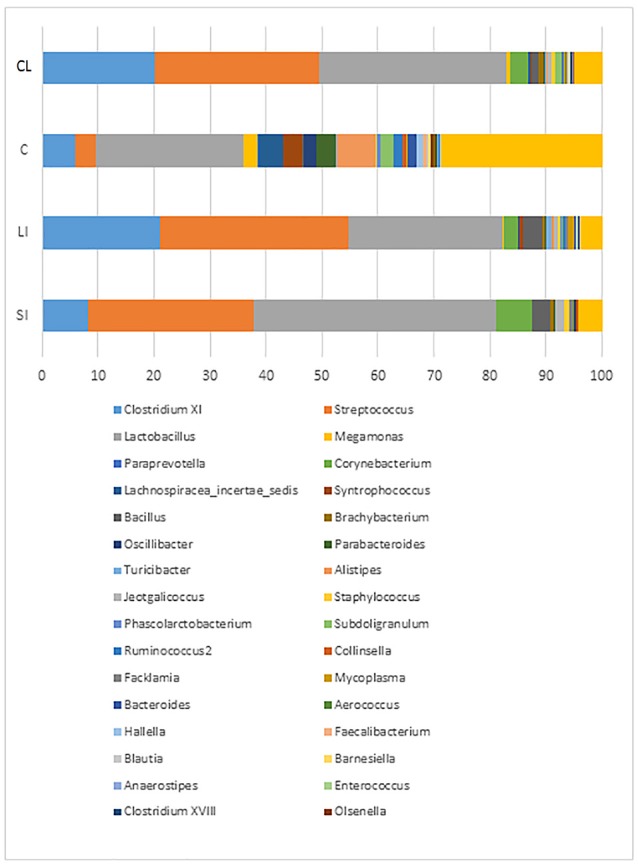
The turkey microbiome is largely understudied, despite its relationship with bird health and growth, and the prevalence of human pathogens such as spp. In this study we investigated the microbiome within the small intestine (SI), caeca (C), large intestine (LI), and cloaca (CL) of turkeys at 6, 10, and 16 weeks of age. Eight turkeys were dissected within each age category and the contents of the SI, C, LI, and CL were harvested. 16S rDNA based QPCR was performed on all samples and samples for the four locations within three birds/age group were sequenced using ion torrent-based sequencing of the 16S rDNA. Sequencing data showed on a genus level, an abundance of , and (38.2, 28.1, and 13.0% respectively) irrespective of location and age. The caeca exhibited the greatest microbiome diversity throughout the development of the turkey. PICRUSt data predicted an array of bacterial function, with most differences being apparent in the caeca of the turkeys as they matured. QPCR revealed that the caeca within 10 week old birds, contained the most spp. Understanding the microbial ecology of the turkey gastrointestinal tract is essential in terms of understanding production efficiency and in order to develop novel strategies for targeting spp.
尽管火鸡微生物群与禽类健康和生长以及诸如某些菌种等人类病原体的流行有关,但其研究仍非常有限。在本研究中,我们调查了6周龄、10周龄和16周龄火鸡的小肠(SI)、盲肠(C)、大肠(LI)和泄殖腔(CL)中的微生物群。每个年龄组解剖8只火鸡,并采集SI、C、LI和CL的内容物。对所有样本进行基于16S rDNA的定量PCR,并对三个鸟类/年龄组中四个部位的样本使用基于离子激流的16S rDNA测序进行测序。测序数据显示,在属水平上,无论位置和年龄如何, 、 和 的丰度分别为38.2%、28.1%和13.0%。在火鸡的整个发育过程中,盲肠表现出最大的微生物群多样性。PICRUSt数据预测了一系列细菌功能,随着火鸡成熟,大多数差异在盲肠中最为明显。定量PCR显示,10周龄鸟类的盲肠中含有最多的某些菌种。了解火鸡胃肠道的微生物生态学对于理解生产效率以及制定针对某些菌种的新策略至关重要。