Liu Qiang, Du Jianchao, Yu Xuezhong, Xu Jun, Huang Fengming, Li Xiaoyun, Zhang Cong, Li Xiao, Chang Jiahui, Shang Daozhen, Zhao Yan, Tian Mingyao, Lu Huijun, Xu Jiantao, Li Chang, Zhu Huadong, Jin Ningyi, Jiang Chengyu
Department of Biochemistry, State Key Laboratory of Medical Molecular Biology, Institute of Basic Medical Sciences, Chinese Academy of Medical Sciences, Peking Union Medical College, Beijing, China.
Department of Emergency, Peking Union Medical College Hospital, Chinese Academy of Medical Sciences, Beijing, China.
Cell Discov. 2017 Jun 27;3:17021. doi: 10.1038/celldisc.2017.21. eCollection 2017.
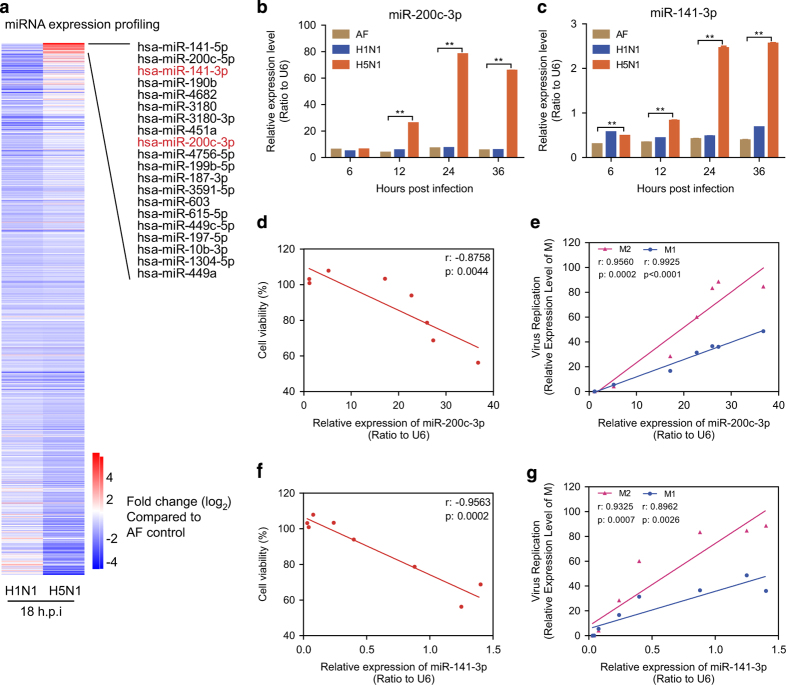
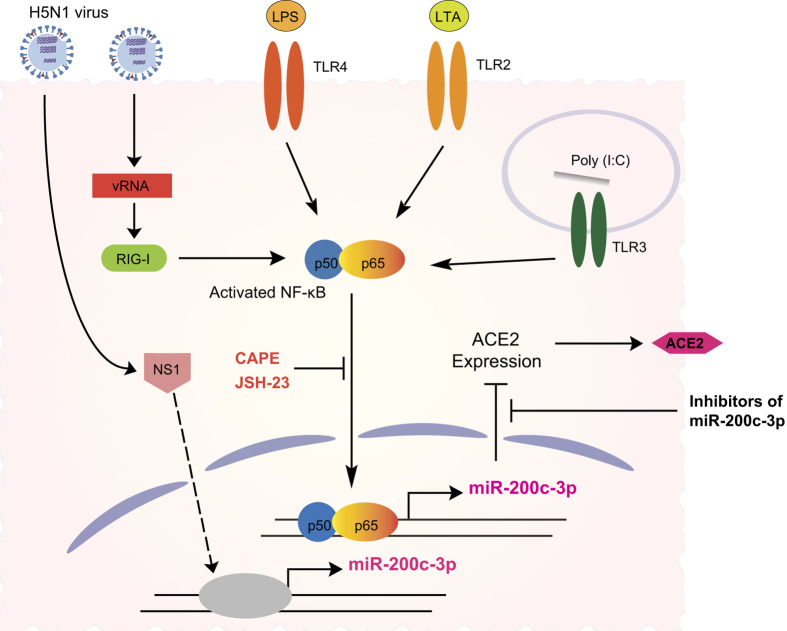
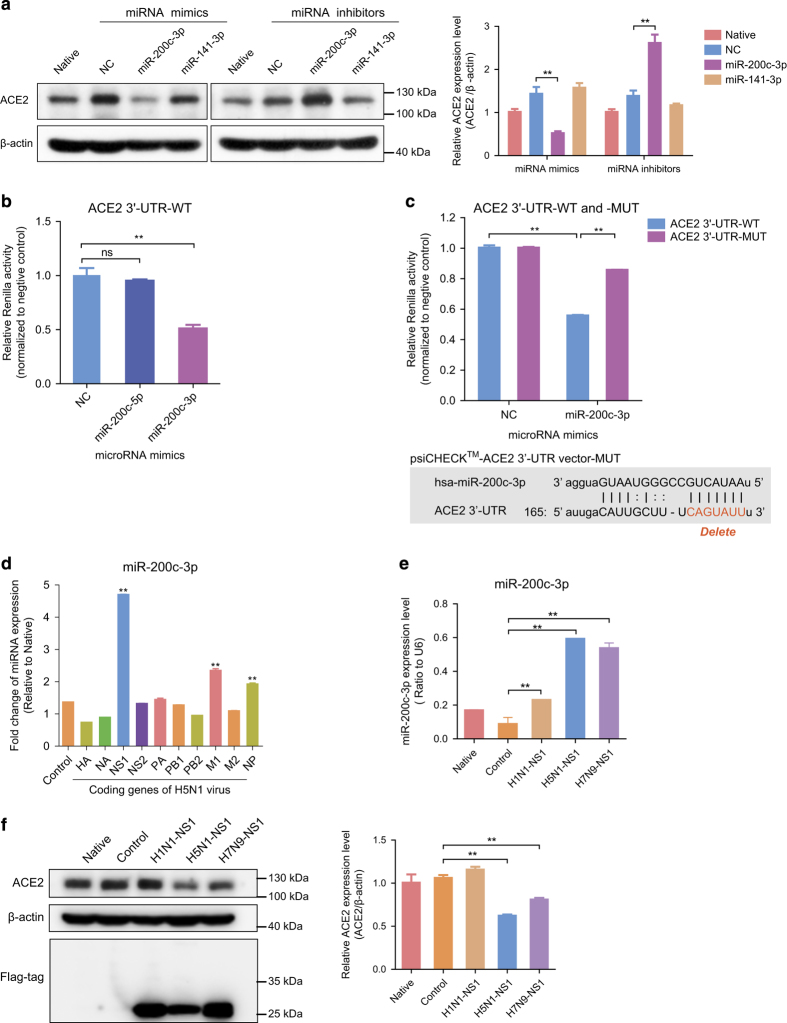
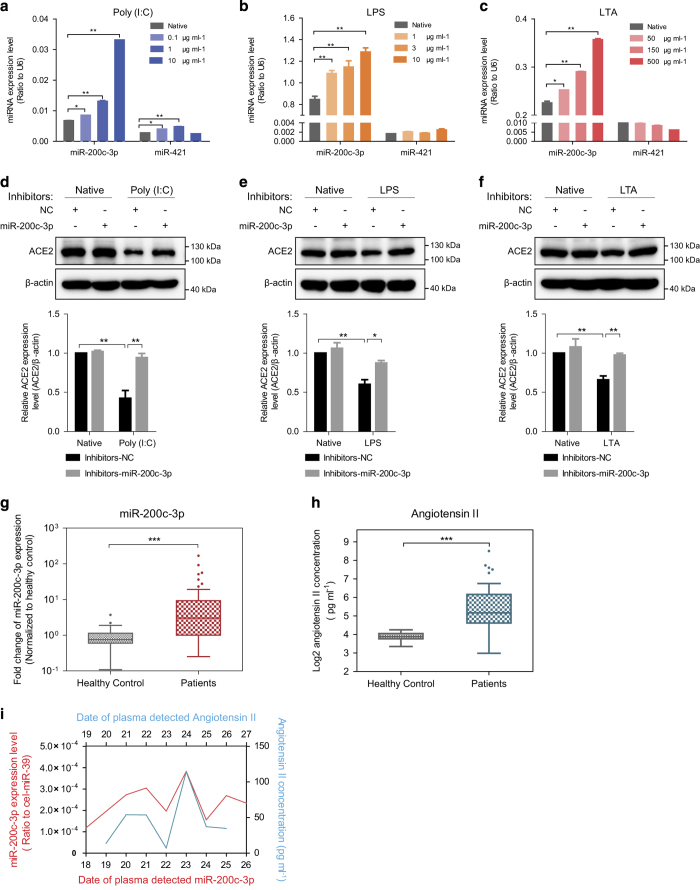
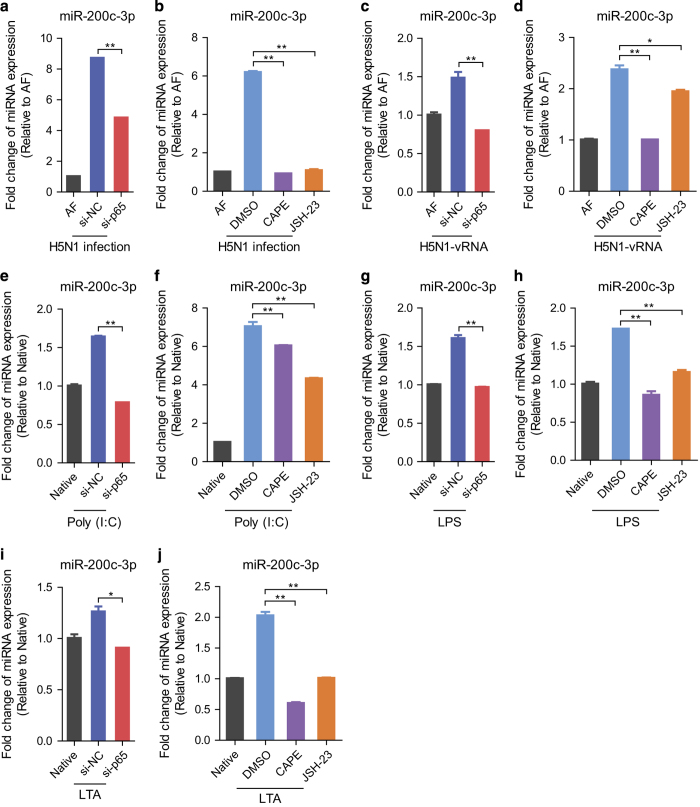
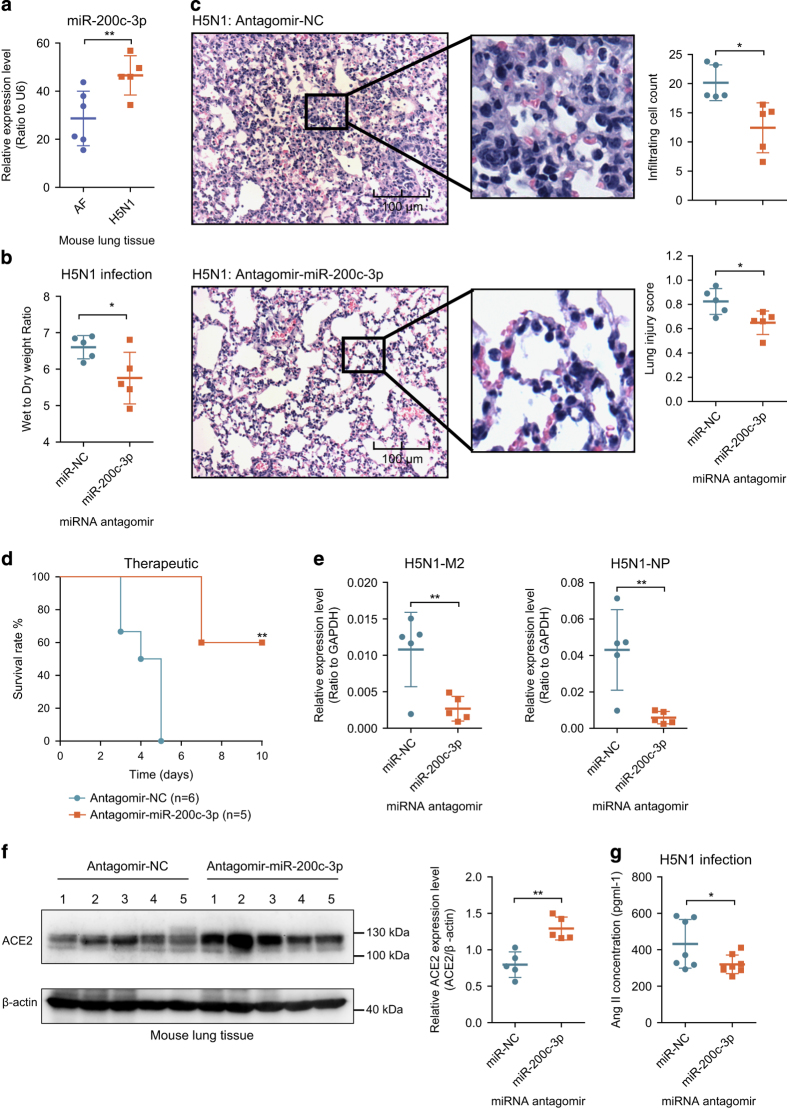
Influenza infection and pneumonia are known to cause much of their mortality by inducing acute respiratory distress syndrome (ARDS), which is the most severe form of acute lung injury (ALI). Angiotensin-converting enzyme 2 (ACE2), which is a negative regulator of angiotensin II in the renin-angiotensin system, has been reported to have a crucial role in ALI. Downregulation of ACE2 is always associated with the ALI or ARDS induced by avian influenza virus, severe acute respiratory syndrome-coronavirus, respiratory syncytial virus and sepsis. However, the molecular mechanism of the decreased expression of ACE2 in ALI is unclear. Here we show that avian influenza virus H5N1 induced the upregulation of miR-200c-3p, which was then demonstrated to target the 3'-untranslated region of ACE2. Then, we found that nonstructural protein 1 and viral RNA of H5N1 contributed to the induction of miR-200c-3p during viral infection. Additionally, the synthetic analog of viral double-stranded RNA (poly (I:C)), bacterial lipopolysaccharide and lipoteichoic acid can all markedly increase the expression of miR-200c-3p in a nuclear factorκB-dependent manner. Furthermore, markedly elevated plasma levels of miR-200c-3p were observed in severe pneumonia patients. The inhibition of miR-200c-3p ameliorated the ALI induced by H5N1 virus infection , indicating a potential therapeutic target. Therefore, we identify a shared mechanism of viral and bacterial lung infection-induced ALI/ARDS via nuclear factor-κB-dependent upregulation of miR-200c-3p to reduce ACE2 levels, which leads increased angiotensin II levels and subsequently causes lung injury.
众所周知,流感感染和肺炎导致的许多死亡是由急性呼吸窘迫综合征(ARDS)引起的,ARDS是急性肺损伤(ALI)最严重的形式。血管紧张素转换酶2(ACE2)是肾素-血管紧张素系统中血管紧张素II的负调节因子,据报道在ALI中起关键作用。ACE2的下调总是与禽流感病毒、严重急性呼吸综合征冠状病毒、呼吸道合胞病毒和脓毒症诱导的ALI或ARDS相关。然而,ALI中ACE2表达降低的分子机制尚不清楚。在此我们表明,禽流感病毒H5N1诱导miR-200c-3p上调,随后证明其靶向ACE2的3'-非翻译区。然后,我们发现H5N1的非结构蛋白1和病毒RNA在病毒感染期间促成了miR-200c-3p的诱导。此外,病毒双链RNA(聚肌苷酸:聚胞苷酸)的合成类似物、细菌脂多糖和脂磷壁酸都能以核因子κB依赖的方式显著增加miR-200c-3p的表达。此外,在重症肺炎患者中观察到血浆miR-200c-3p水平明显升高。抑制miR-200c-3p可改善H5N1病毒感染诱导的ALI,表明其为潜在的治疗靶点。因此,我们确定了病毒和细菌肺部感染诱导ALI/ARDS的共同机制,即通过核因子κB依赖的miR-200c-3p上调来降低ACE2水平,这导致血管紧张素II水平升高,进而引起肺损伤。