Noorafshan Ali, Karimi Fatemeh, Karbalay-Doust Saied, Kamali Ali Mohammad
Histomorphometry and Stereology Research Center, Shiraz University of Medical Sciences, Shiraz, Iran.
Anatomy Department, School of Medicine, Shiraz University of Medical Sciences, Shiraz, Iran.
EXCLI J. 2017 Apr 18;16:510-520. doi: 10.17179/excli2017-139. eCollection 2017.
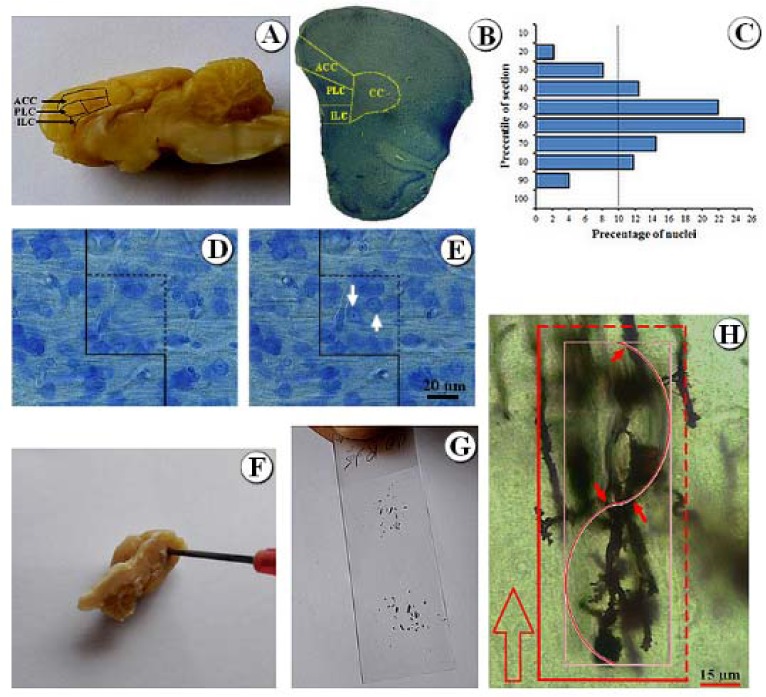
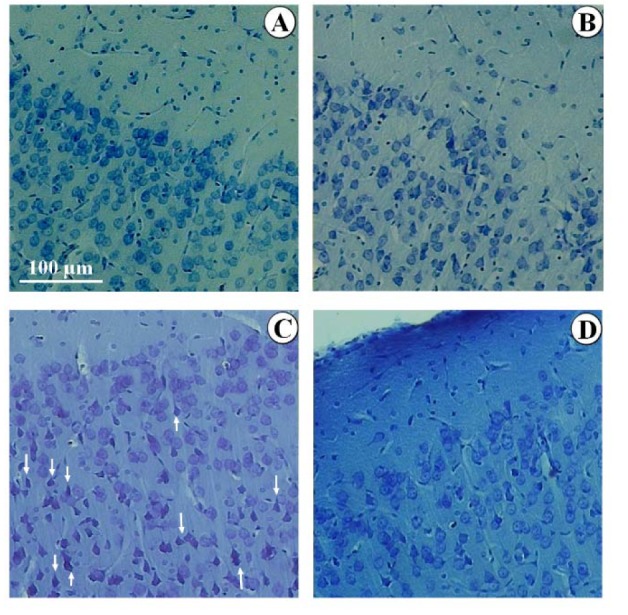
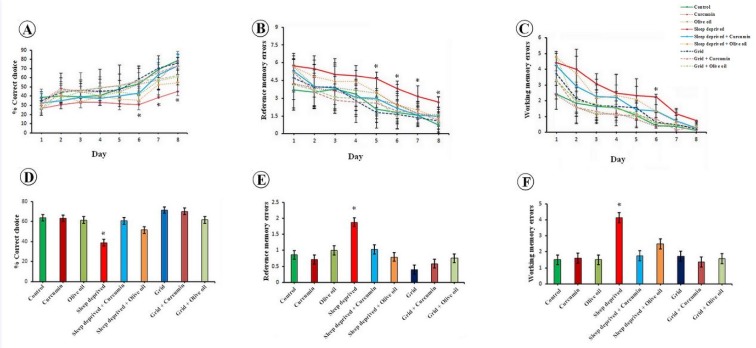
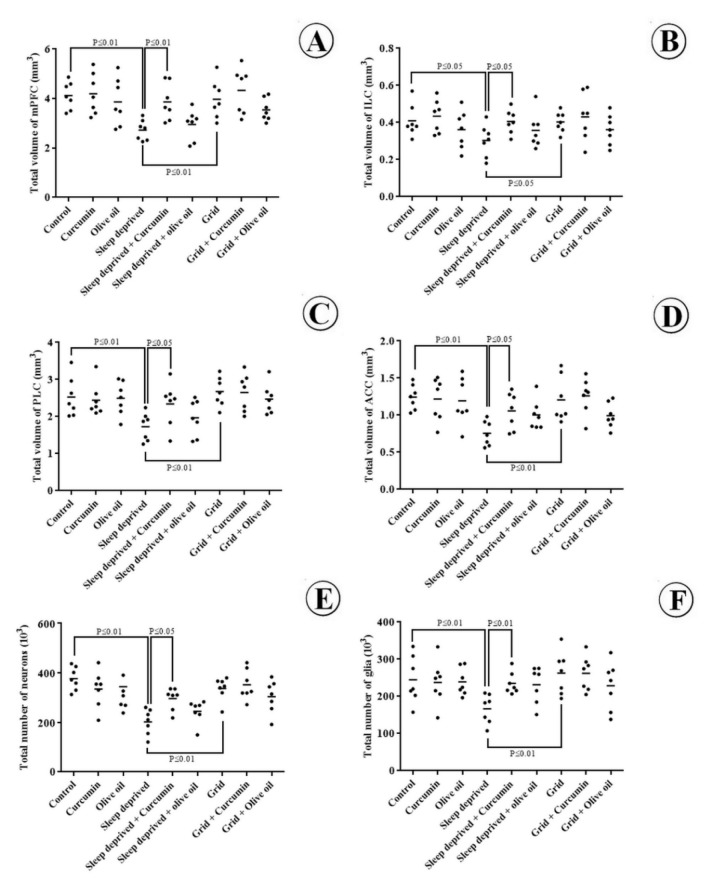
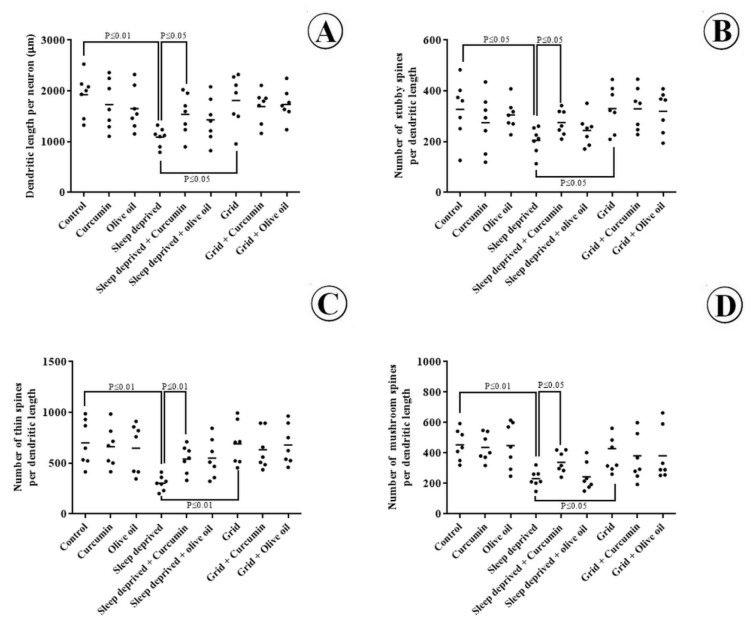
Sleep Deprivation (SD) is known to result in a range of neurological consequences in chronically-afflicted subjects. Curcumin, a natural substance, has neuroprotective properties. This study aimed to evaluate the effects of curcumin on the medial Prefrontal Cortex (mPFC) of SD rats. Male rats were arbitrarily assigned to nine groups, including control, curcumin (100 mg/kg/day), olive oil, SD, SD+curcumin, SD+olive oil, grid, grid+curcumin, and grid+olive oil groups. SD was induced by a multiplatform box containing water. After a period of 21 days, the learning and memory of the rats were tested in an eight-arm radial maze. Afterwards, their brains were evaluated using stereological methods. Concomitant treatment of curcumin during SD caused fewer errors during evaluation of the working and reference memory errors in the acquisition and retention phases. The overall volume of the mPFC, Infralimbic Cortex (ILC), Prelimbic Cortex (PLC), Anterior Cingulate Cortex (ACC) and the total number of neurons and glial cells reduced by 20 %-40 % on average in the SD animals in comparison to the control group. This indicated atrophic changes and cell loss in these areas (p < 0.01). The dendrites' length and the number of spines per dendrite also reduced by 35 %-55 % in the SD rats compared to the ones in the control group (p < 0.01). Yet, treatment of the SD animals with curcumin prevented the atrophic changes of the mPFC, cell loss, and dendritic changes (p < 0.05). SD induced structural changes in the mPFC and memory impairment in the rats. However, curcumin could protect their PFC.
众所周知,睡眠剥夺(SD)会给长期受其影响的受试者带来一系列神经学后果。姜黄素是一种天然物质,具有神经保护特性。本研究旨在评估姜黄素对睡眠剥夺大鼠内侧前额叶皮质(mPFC)的影响。雄性大鼠被随机分为九组,包括对照组、姜黄素组(100毫克/千克/天)、橄榄油组、睡眠剥夺组、睡眠剥夺+姜黄素组、睡眠剥夺+橄榄油组、网格组、网格+姜黄素组和网格+橄榄油组。通过装有水的多平台箱诱导大鼠睡眠剥夺。21天后,在八臂放射状迷宫中测试大鼠的学习和记忆能力。之后,采用体视学方法对其大脑进行评估。在睡眠剥夺期间同时给予姜黄素治疗,在获取和保留阶段评估工作记忆和参考记忆错误时,错误较少。与对照组相比,睡眠剥夺动物的mPFC、边缘下皮质(ILC)、边缘前皮质(PLC)、前扣带回皮质(ACC)的总体积以及神经元和神经胶质细胞总数平均减少了20%-40%。这表明这些区域出现萎缩性变化和细胞丢失(p<0.01)。与对照组相比,睡眠剥夺大鼠的树突长度和每个树突的棘突数量也减少了35%-55%(p<0.01)。然而,用姜黄素治疗睡眠剥夺动物可预防mPFC的萎缩性变化、细胞丢失和树突变化(p<0.05)。睡眠剥夺诱导大鼠mPFC发生结构变化并导致记忆障碍。然而,姜黄素可以保护它们的前额叶皮质。