Sorbonne Universités, UPMC Univ Paris 06 UM119, Centre National de la Recherche Scientifique (CNRS) UMR8246, Institut National de la Santé et de la Recherche Médicale (INSERM) UMR-S1130, Neuroscience Paris Seine, Institut de Biologie Paris-Seine, Paris, France.
Departamento de Ciencias Médicas, Facultad de Medicina, Instituto de Investigación en Discapacidades Neurológicas (IDINE), Universidad Castilla-La Mancha, Campus Biosanitario, Albacete, Spain.
Mol Psychiatry. 2018 Mar;23(3):691-700. doi: 10.1038/mp.2017.137. Epub 2017 Jul 11.
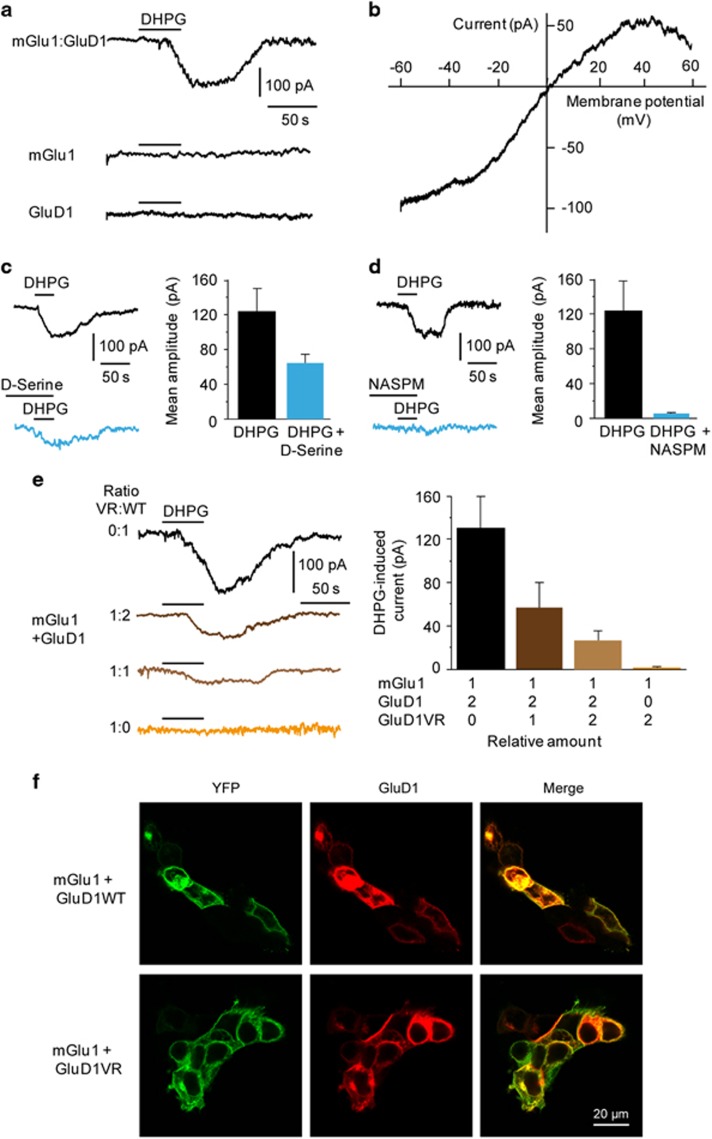
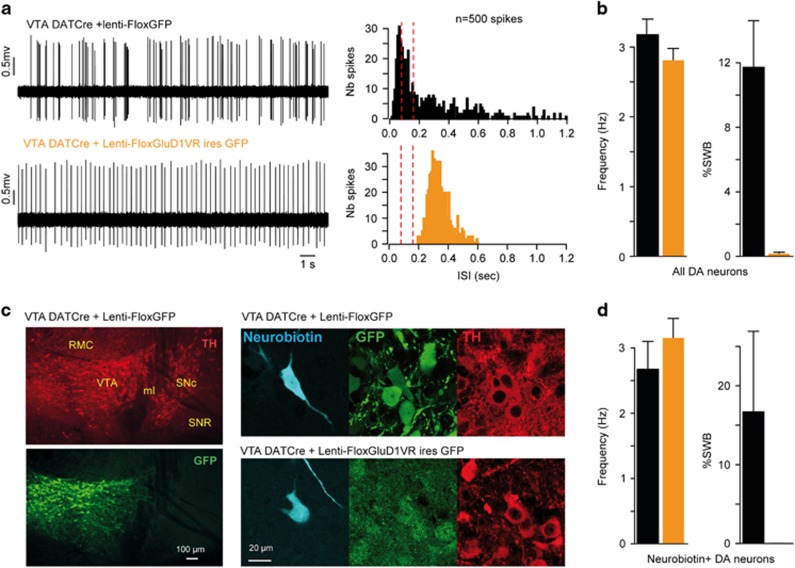
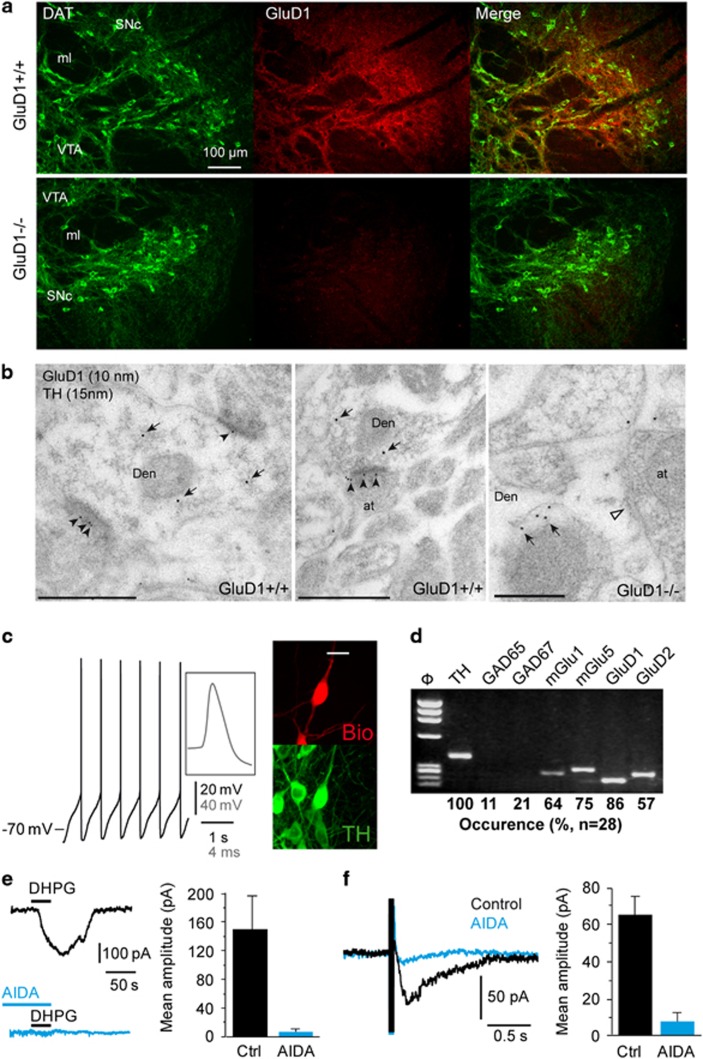
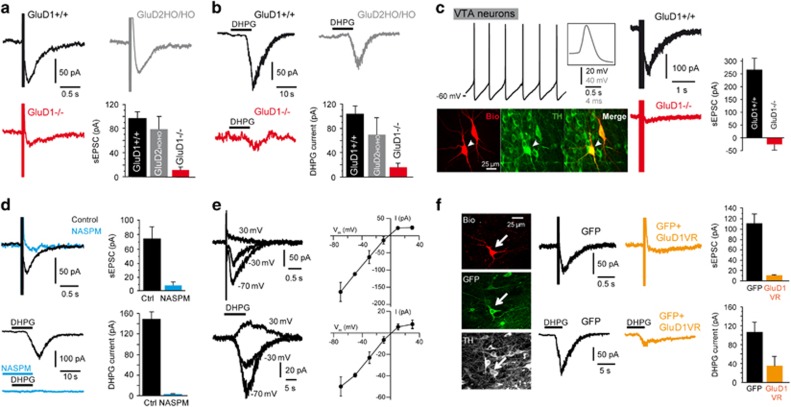
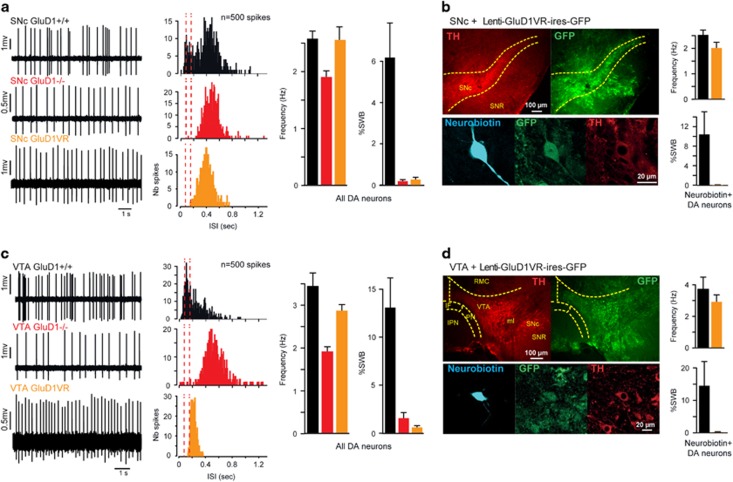
Human mutations of the GRID1 gene encoding the orphan delta1 glutamate receptor-channel (GluD1) are associated with schizophrenia but the explicit role of GluD1 in brain circuits is unknown. Based on the known function of its paralog GluD2 in cerebellum, we searched for a role of GluD1 in slow glutamatergic transmission mediated by metabotropic receptor mGlu1 in midbrain dopamine neurons, whose dysfunction is a hallmark of schizophrenia. We found that an mGlu1 agonist elicits a slow depolarizing current in HEK cells co-expressing mGlu1 and GluD1, but not in cells expressing mGlu1 or GluD1 alone. This current is abolished by additional co-expression of a dominant-negative GluD1 dead pore mutant. We then characterized mGlu1-dependent currents in dopamine neurons from midbrain slices. Both the agonist-evoked and the slow postsynaptic currents are abolished by expression of the dominant-negative GluD1 mutant, pointing to the involvement of native GluD1 channels in these currents. Likewise, both mGlu1-dependent currents are suppressed in GRID1 knockout mice, which reportedly display endophenotypes relevant for schizophrenia. It is known that mGlu1 activation triggers the transition from tonic to burst firing of dopamine neurons, which signals salient stimuli and encodes reward prediction. In vivo recordings of dopamine neurons showed that their spontaneous burst firing is abolished in GRID1 knockout mice or upon targeted expression of the dominant-negative GluD1 mutant in wild-type mice. Our results de-orphanize GluD1, unravel its key role in slow glutamatergic transmission and provide insights into how GRID1 gene alterations can lead to dopaminergic dysfunctions in schizophrenia.
人类 GRID1 基因突变,该基因编码孤儿 delta1 谷氨酸受体通道(GluD1),与精神分裂症有关,但 GluD1 在大脑回路中的明确作用尚不清楚。基于其在小脑中的同源物 GluD2 的已知功能,我们在中脑多巴胺神经元中搜索代谢型谷氨酸受体 mGlu1 介导的缓慢谷氨酸传递中 GluD1 的作用,该神经元的功能障碍是精神分裂症的标志。我们发现,mGlu1 激动剂在共表达 mGlu1 和 GluD1 的 HEK 细胞中引发缓慢去极化电流,但在单独表达 mGlu1 或 GluD1 的细胞中则没有。这种电流通过共表达显性负性 GluD1 失活突变体而被消除。然后,我们在中脑切片中的多巴胺神经元中对 mGlu1 依赖性电流进行了表征。激动剂诱发的和缓慢的突触后电流都被表达显性负性 GluD1 突变体所消除,这表明这些电流涉及天然的 GluD1 通道。同样,mGlu1 依赖性电流在 GRID1 基因敲除小鼠中也被抑制,这些小鼠据称显示出与精神分裂症相关的内表型。已知 mGlu1 激活触发多巴胺神经元从持续到爆发的放电转换,这标志着显著的刺激并编码奖励预测。体内多巴胺神经元记录显示,其自发爆发放电在 GRID1 基因敲除小鼠或在野生型小鼠中靶向表达显性负性 GluD1 突变体时被消除。我们的结果阐明了 GluD1 的孤儿身份,揭示了其在缓慢谷氨酸传递中的关键作用,并深入了解 GRID1 基因突变如何导致精神分裂症中的多巴胺功能障碍。