Department of Cell Biology, Microbiology and Molecular Biology, University of South Florida, Tampa, Florida 33620; email:
Laboratory of Molecular Biology, National Cancer Institute, National Institutes of Health, Bethesda, Maryland 20892-5132; email:
Annu Rev Microbiol. 2017 Sep 8;71:393-411. doi: 10.1146/annurev-micro-102215-095657. Epub 2017 Jul 11.
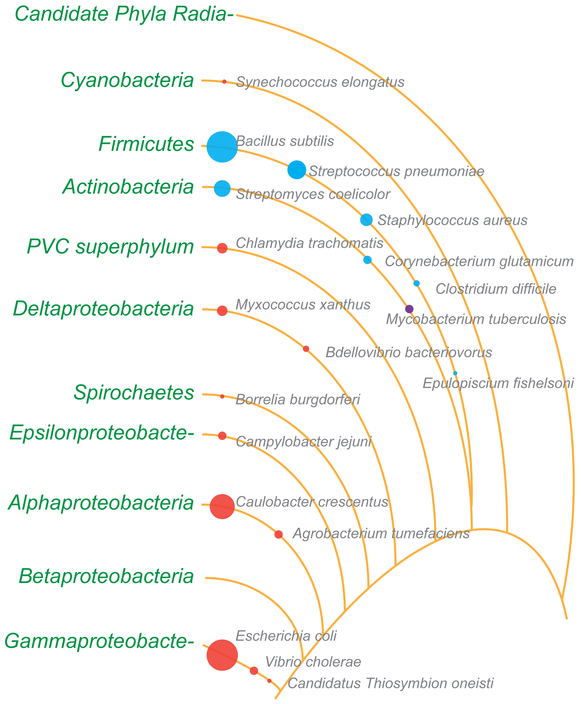
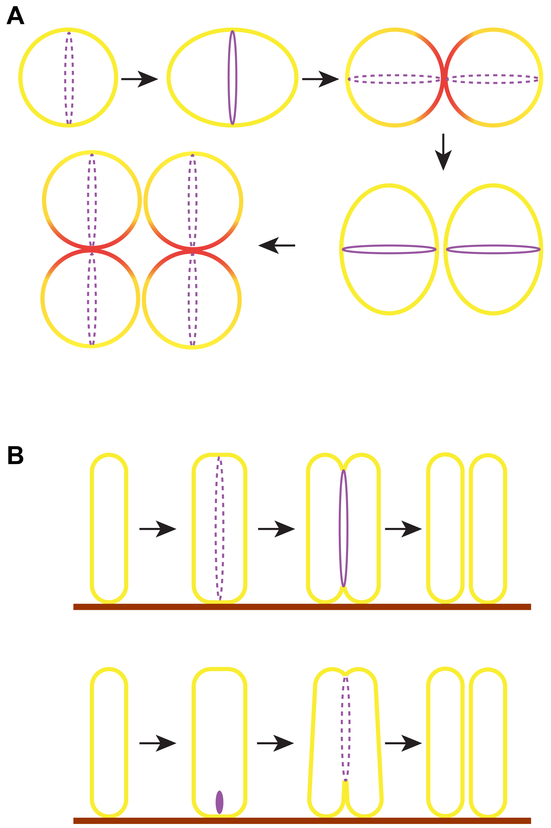
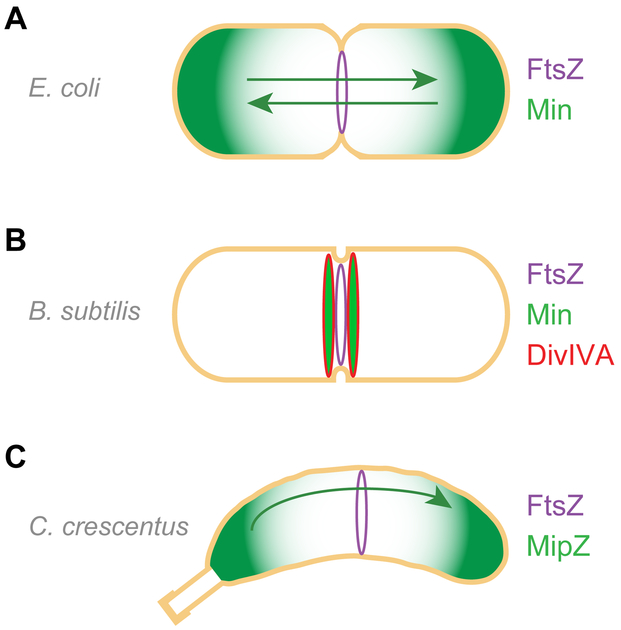
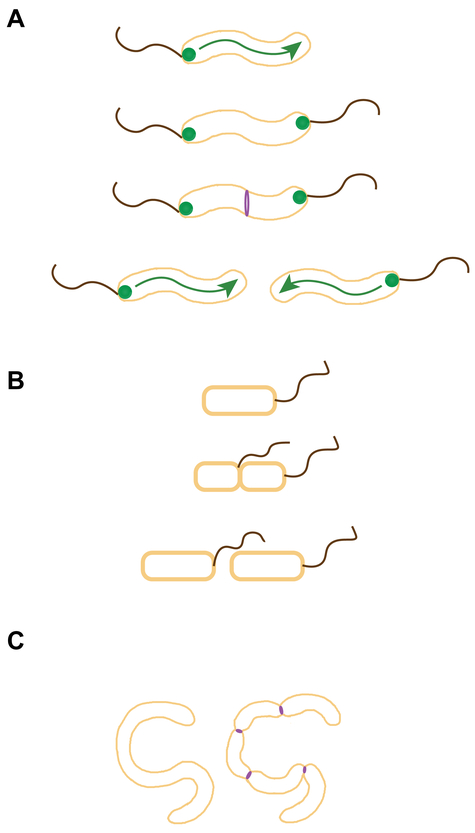
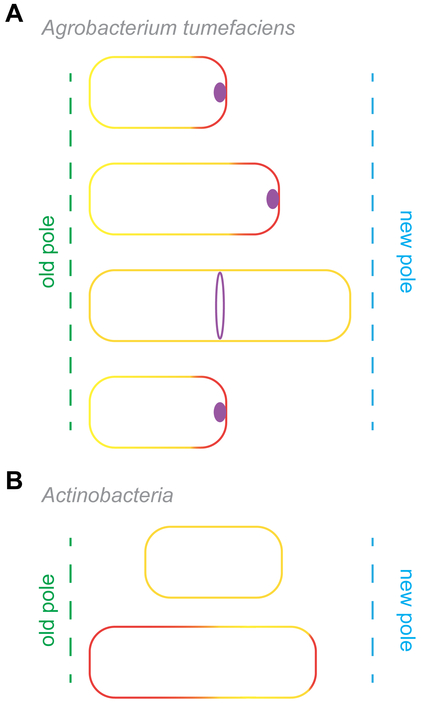
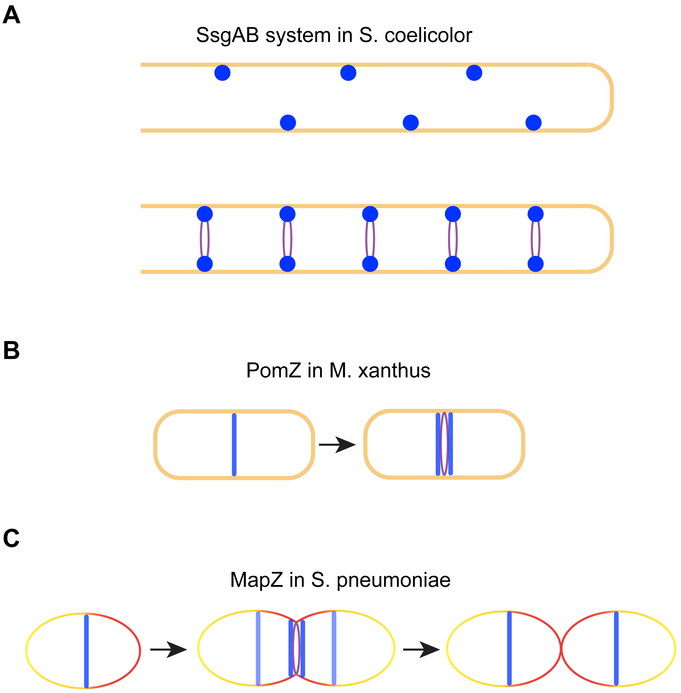
The last three decades have witnessed an explosion of discoveries about the mechanistic details of binary fission in model bacteria such as Escherichia coli, Bacillus subtilis, and Caulobacter crescentus. This was made possible not only by advances in microscopy that helped answer questions about cell biology but also by clever genetic manipulations that directly and easily tested specific hypotheses. More recently, research using understudied organisms, or nonmodel systems, has revealed several alternate mechanistic strategies that bacteria use to divide and propagate. In this review, we highlight new findings and compare these strategies to cell division mechanisms elucidated in model organisms.
过去三十年见证了在模式细菌(如大肠杆菌、枯草芽孢杆菌和新月柄杆菌)中对二元裂变机械细节的发现呈爆炸式增长。这不仅得益于帮助解答细胞生物学问题的显微镜技术的进步,也得益于巧妙的遗传操作,这些操作直接且轻松地检验了特定的假设。最近,利用研究较少的生物体或非模式系统的研究揭示了细菌用于分裂和繁殖的几种替代机制策略。在这篇综述中,我们强调了新的发现,并将这些策略与在模式生物中阐明的细胞分裂机制进行了比较。