Kobayashi Masaki, Sawada Kenjiro, Kimura Tadashi
Department of Obstetrics and Gynecology, Osaka University Graduate School of Medicine, 2-2, Yamadaoka Suita, Osaka 5650871, Japan.
Cancers (Basel). 2017 Jul 8;9(7):83. doi: 10.3390/cancers9070083.
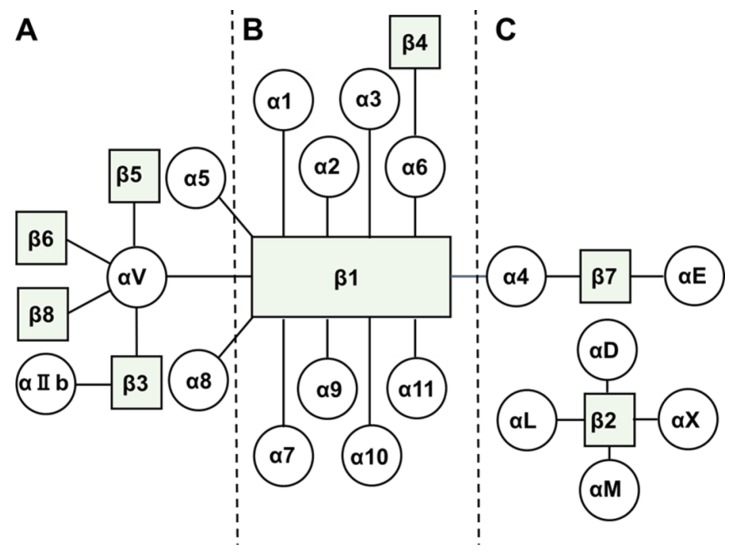
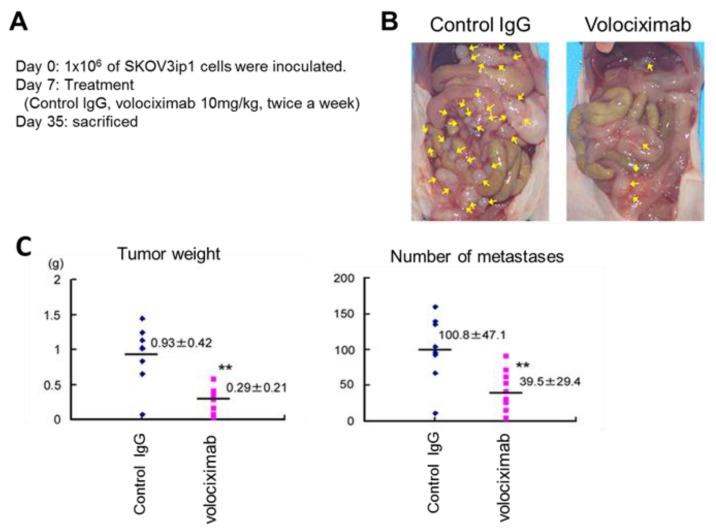
Epithelial ovarian cancer is a fatal disease, with a cure rate of only 30%. Several recent studies have targeted integrins for cancer treatment. Preclinical studies have shown the effectiveness of several integrin inhibitors for blocking cancer progression, especially by blocking angiogenesis. Because the initial critical step in ovarian cancer metastasis is the attachment of cancer cells to the peritoneum or omentum and because clinical trials have provided positive results for anti-angiogenic therapy, therapies targeting integrins may be the most feasible approach for treating cancer. This review summarizes the current understanding of integrin biology in ovarian cancer metastasis and various therapeutic approaches involving integrin inhibitors. However, no integrin inhibitor has shown favorable results thus far. However, conjugates of cytotoxic agents with the triplet sequence arginine-glycine-aspartate (RGD) peptides targeting α5β1-, αvβ3-, and αvβ6-integrins may be promising integrin-targeting therapies for further clinical investigation.
上皮性卵巢癌是一种致命疾病,治愈率仅为30%。最近的几项研究将整合素作为癌症治疗的靶点。临床前研究表明,几种整合素抑制剂在阻断癌症进展方面有效,尤其是通过阻断血管生成。由于卵巢癌转移的最初关键步骤是癌细胞附着于腹膜或大网膜,并且由于临床试验已为抗血管生成疗法提供了阳性结果,因此靶向整合素的疗法可能是治疗癌症最可行的方法。本综述总结了目前对整合素生物学在卵巢癌转移中的理解以及涉及整合素抑制剂的各种治疗方法。然而,迄今为止,尚无整合素抑制剂显示出良好的效果。不过,将细胞毒性药物与靶向α5β1、αvβ3和αvβ6整合素的三联体序列精氨酸-甘氨酸-天冬氨酸(RGD)肽偶联,可能是有前景的整合素靶向疗法,有待进一步临床研究。