
解锁基于外泌体的治疗诊断标志物:解读卵巢癌转移的秘密。
Unlocking Exosome-Based Theragnostic Signatures: Deciphering Secrets of Ovarian Cancer Metastasis.
作者信息
Mukherjee Sayantanee, Nag Sagnik, Mukerjee Nobendu, Maitra Swastika, Muthusamy Raman, Fuloria Neeraj Kumar, Fuloria Shivkanya, Adhikari Manab Deb, Anand Krishnan, Thorat Nanasaheb, Subramaniyan Vetriselvan, Gorai Sukhamoy
机构信息
Centre for Nanosciences and Molecular Medicine, Amrita Vishwa Vidyapeetham, Kochi 682041, Kerala, India.
Department of Bio-Sciences, School of Bio-Sciences & Technology, Vellore Institute of Technology (VIT), Tiruvalam Road, Tamil Nadu 632014, India.
出版信息
ACS Omega. 2023 Oct 1;8(40):36614-36627. doi: 10.1021/acsomega.3c02837. eCollection 2023 Oct 10.
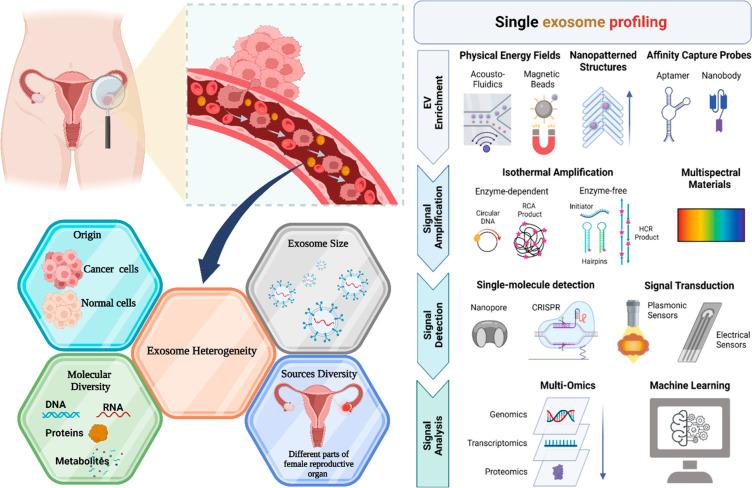
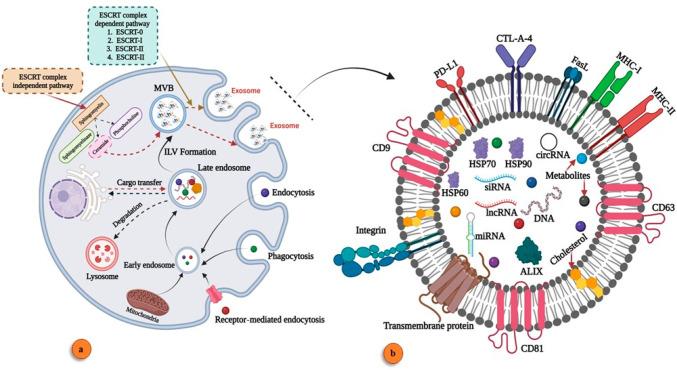
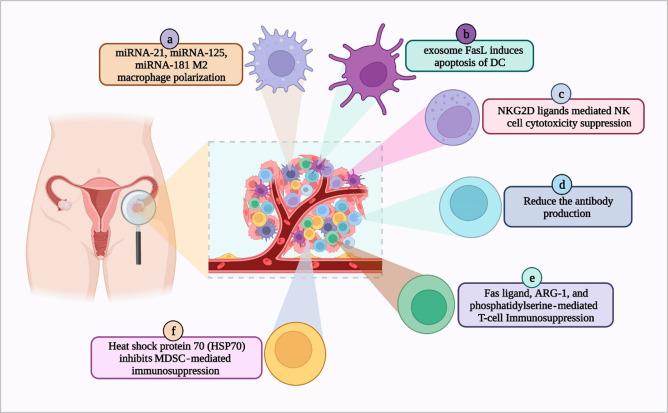
Ovarian cancer (OC) is a common gynecological cancer worldwide. Unfortunately, the lack of early detection methods translates into a substantial cohort of women grappling with the pressing health crisis. The discovery of extracellular vesicles (EVs) (their major subpopulation exosomes, microvesicles, and apoptotic bodies) has provided new insights into the understanding of cancer. Exosomes, a subpopulation of EVs, play a crucial role in cellular communication and reflect the cellular status under both healthy and pathological conditions. Tumor-derived exosomes (TEXs) dynamically influence ovarian cancer progression by regulating uncontrolled cell growth, immune suppression, angiogenesis, metastasis, and the development of drug and therapeutic resistance. In the field of OC diagnostics, TEXs offer potential biomarkers in various body fluids. On the other hand, exosomes have also shown promising abilities to cure ovarian cancer. In this review, we address the interlink between exosomes and ovarian cancer and explore their theragnostic signature. Finally, we highlight future directions of exosome-based ovarian cancer research.
卵巢癌(OC)是全球常见的妇科癌症。不幸的是,缺乏早期检测方法导致大量女性面临紧迫的健康危机。细胞外囊泡(EVs)(其主要亚群为外泌体、微囊泡和凋亡小体)的发现为癌症的理解提供了新的见解。外泌体作为EVs的一个亚群,在细胞通讯中起关键作用,并反映健康和病理状态下的细胞状况。肿瘤来源的外泌体(TEXs)通过调节失控的细胞生长、免疫抑制、血管生成、转移以及药物和治疗抗性的发展,动态影响卵巢癌的进展。在OC诊断领域,TEXs在各种体液中提供了潜在的生物标志物。另一方面,外泌体在治疗卵巢癌方面也显示出了有前景的能力。在本综述中,我们阐述了外泌体与卵巢癌之间的联系,并探索它们的诊疗特征。最后,我们强调了基于外泌体的卵巢癌研究的未来方向。
 Zotero 插件