Division of Structural Biology, Wellcome Trust Centre for Human Genetics, University of Oxford, Roosevelt Drive, Oxford, Oxfordshire OX3 7BN, UK.
Division of Infectious Disease, Boston Children's Hospital, Boston, Massachusetts 02115, USA.
Nat Commun. 2017 Jul 12;8:16060. doi: 10.1038/ncomms16060.
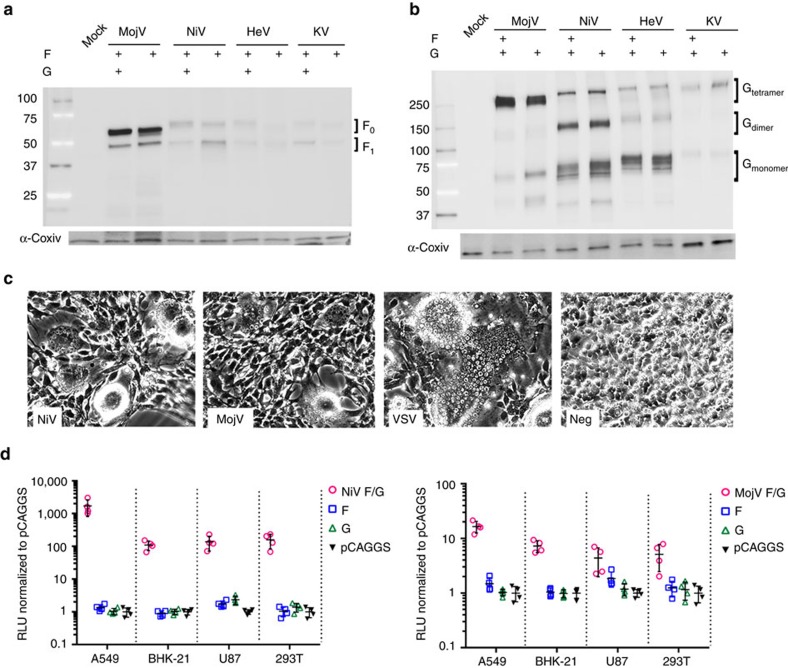
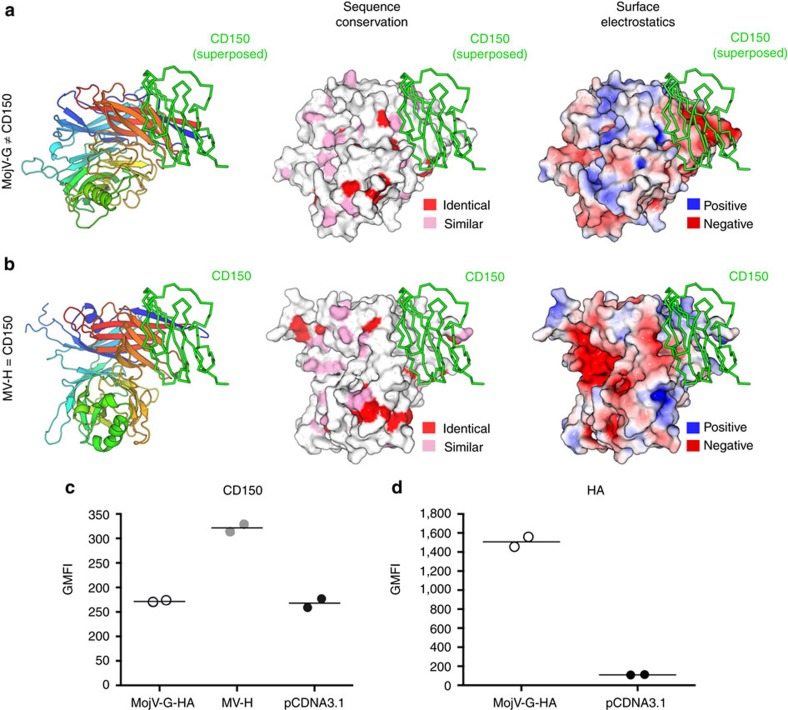
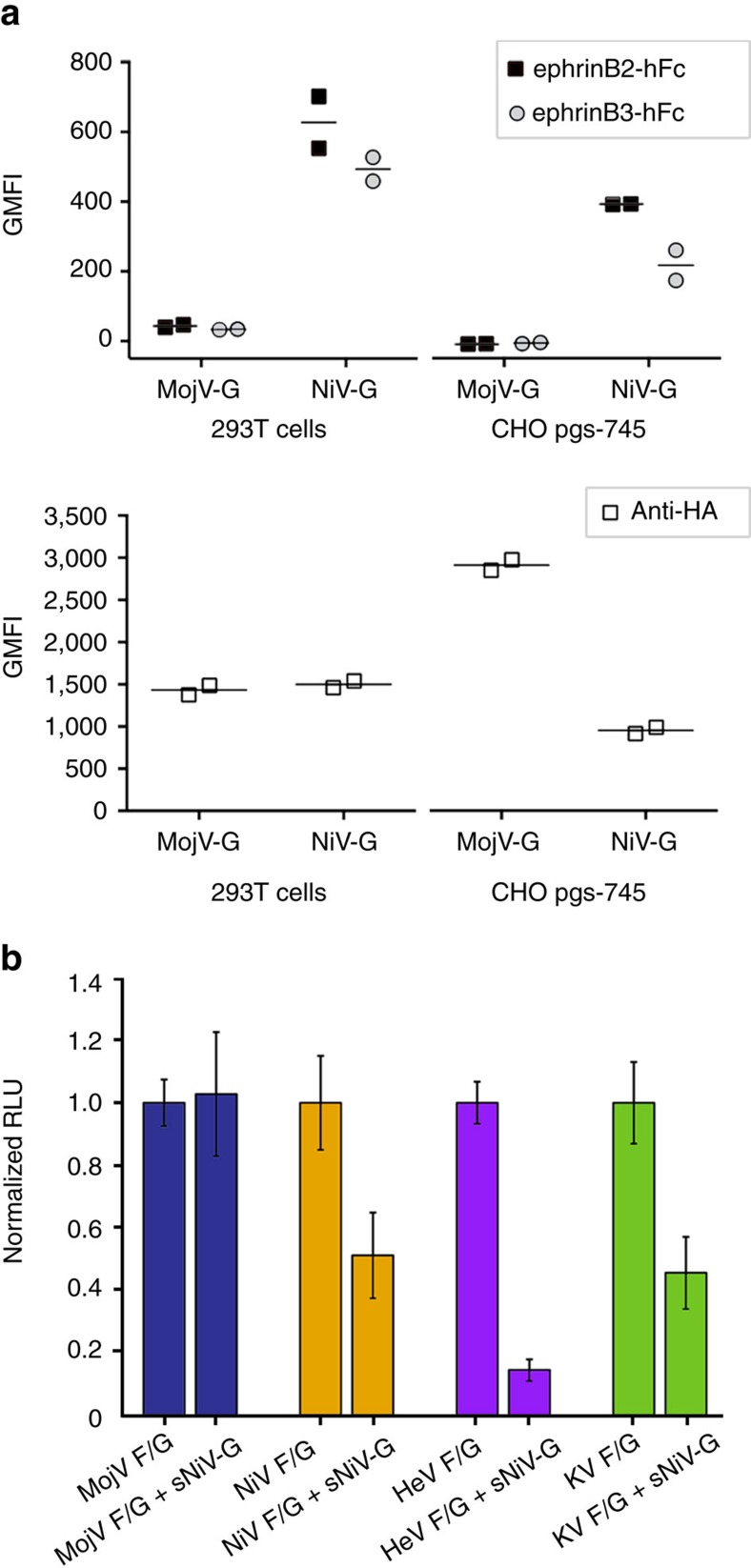
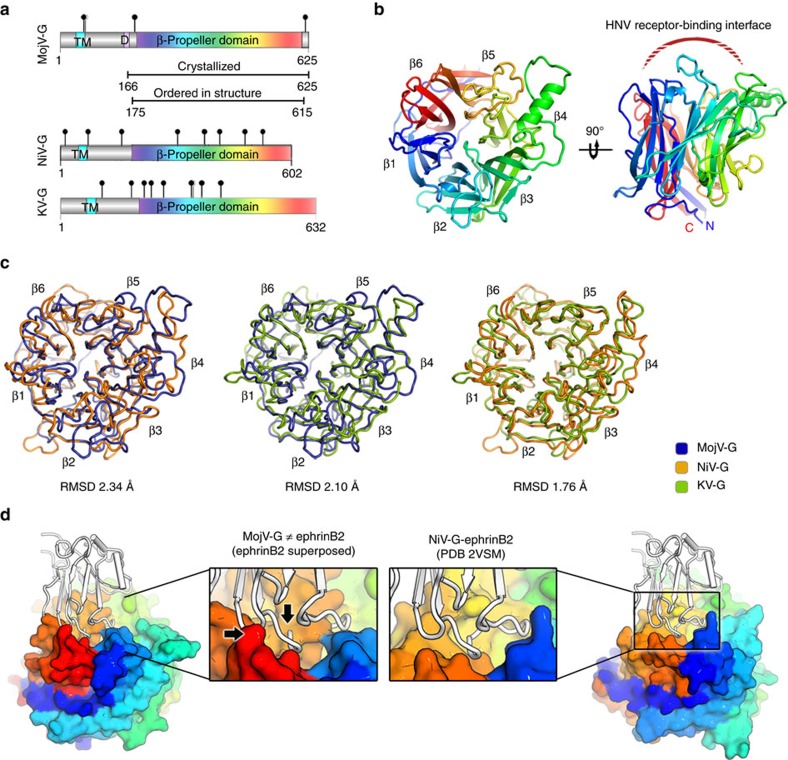
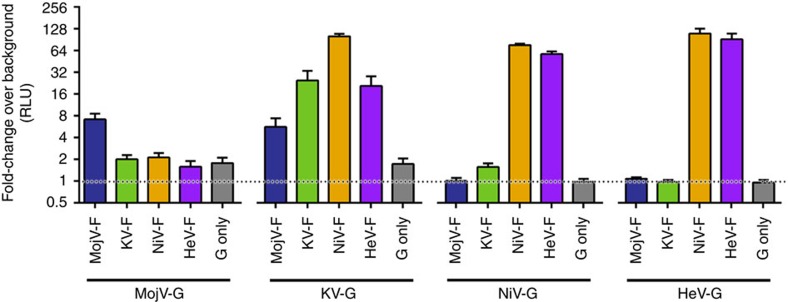
In 2012, cases of lethal pneumonia among Chinese miners prompted the isolation of a rat-borne henipavirus (HNV), Mòjiāng virus (MojV). Although MojV is genetically related to highly pathogenic bat-borne henipaviruses, the absence of a conserved ephrin receptor-binding motif in the MojV attachment glycoprotein (MojV-G) indicates a differing host-cell recognition mechanism. Here we find that MojV-G displays a six-bladed β-propeller fold bearing limited similarity to known paramyxoviral attachment glycoproteins, in particular at host receptor-binding surfaces. We confirm the inability of MojV-G to interact with known paramyxoviral receptors in vitro, indicating an independence from well-characterized ephrinB2/B3, sialic acid and CD150-mediated entry pathways. Furthermore, we find that MojV-G is antigenically distinct, indicating that MojV would less likely be detected in existing large-scale serological screening studies focused on well-established HNVs. Altogether, these data indicate a unique host-cell entry pathway for this emerging and potentially pathogenic HNV.
2012 年,中国矿工致命性肺炎病例促使人们分离出一种源自鼠类的亨尼帕病毒(HNV),即磨刀病毒(MojV)。尽管 MojV 在基因上与高致病性的蝙蝠源性亨尼帕病毒有关,但 MojV 附着糖蛋白(MojV-G)中缺乏保守的 Ephrin 受体结合基序,表明其具有不同的宿主细胞识别机制。在这里,我们发现 MojV-G 具有六叶β-螺旋桨折叠结构,与已知副黏病毒的附着糖蛋白具有有限的相似性,特别是在宿主受体结合表面。我们证实 MojV-G 无法在体外与已知副黏病毒的受体相互作用,表明它独立于已充分阐明的 EphrinB2/B3、唾液酸和 CD150 介导的进入途径。此外,我们发现 MojV-G 在抗原上具有明显的差异,表明 MojV 在现有的大规模血清学筛查研究中不太可能被检测到,这些研究主要针对已确立的 HNV。总的来说,这些数据表明,这种新兴的潜在致病性 HNV 具有独特的宿主细胞进入途径。