Dobrovolny Hana M, Beauchemin Catherine A A
Department of Physics & Astronomy, Texas Christian University, Fort Worth, TX, United States of America.
Department of Physics, Ryerson University, Toronto, ON, Canada.
PLoS One. 2017 Jul 10;12(7):e0180582. doi: 10.1371/journal.pone.0180582. eCollection 2017.
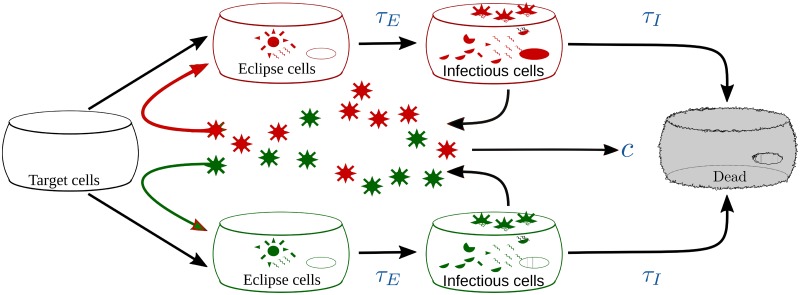
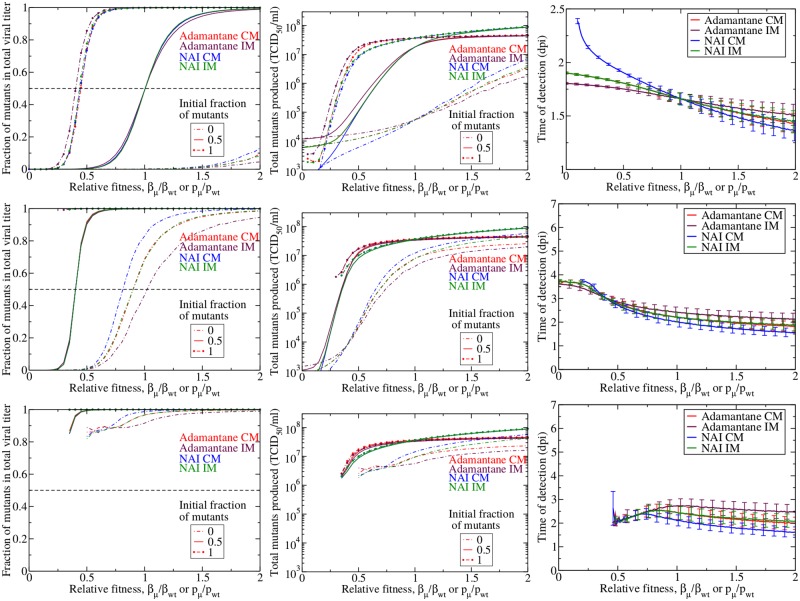
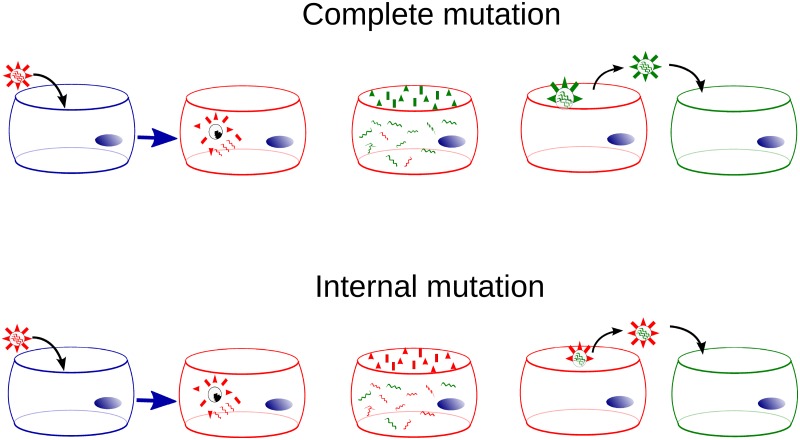
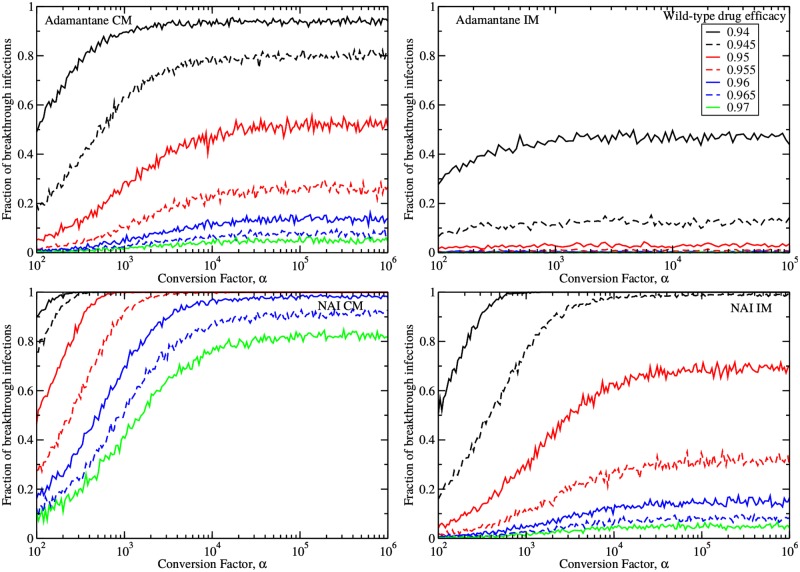
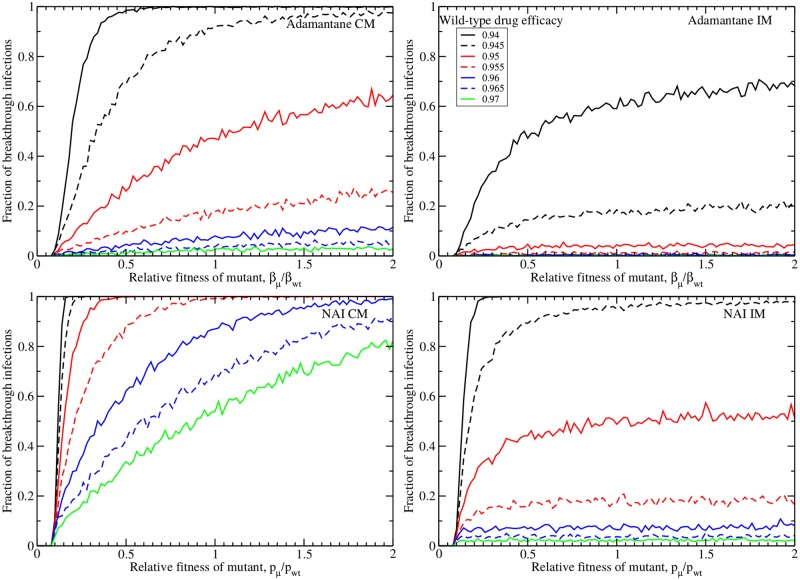
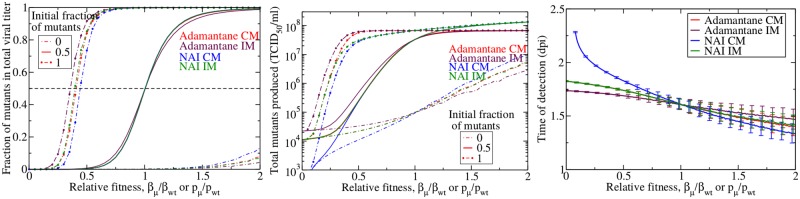
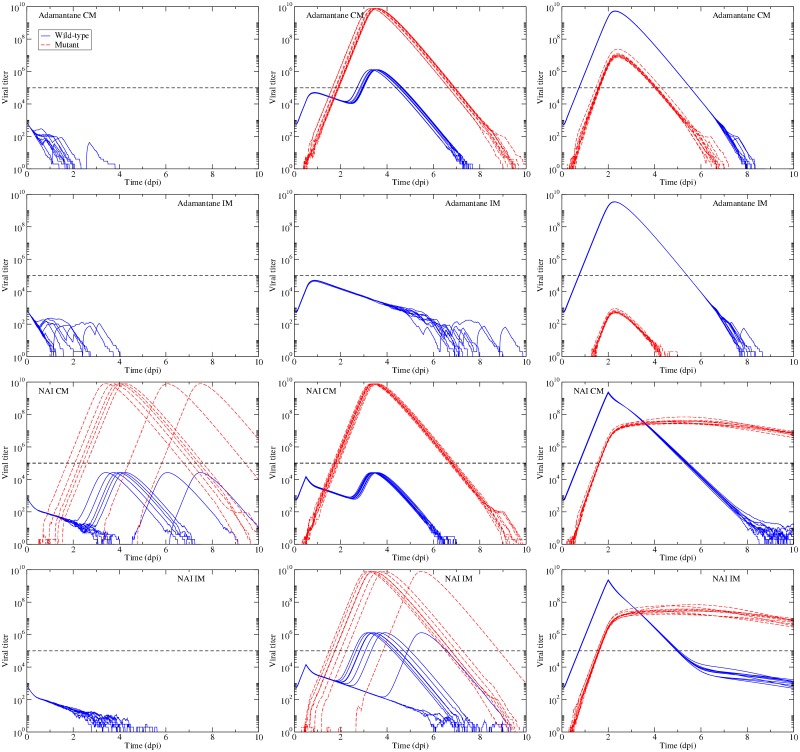
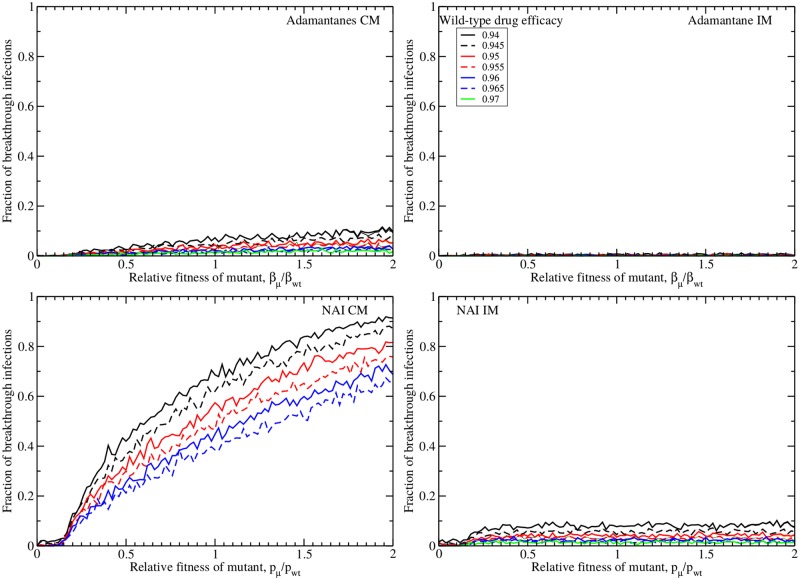
The emergence of influenza drug resistance has become of particular interest as current planning for an influenza pandemic involves using massive amounts of antiviral drugs. We use semi-stochastic simulations to examine the emergence of drug resistant mutants during the course of a single infection within a patient in the presence and absence of antiviral therapy. We specifically examine three factors and their effect on the emergence of drug-resistant mutants: antiviral mechanism, the immune response, and surface proteins. We find that adamantanes, because they act at the start of the replication cycle to prevent infection, are less likely to produce drug-resistant mutants than NAIs, which act at the end of the replication cycle. A mismatch between surface proteins and internal RNA results in drug-resistant mutants being less likely to emerge, and emerging later in the infection because the mismatch gives antivirals a second chance to prevent propagation of the mutation. The immune response subdues slow growing infections, further reducing the probability that a drug resistant mutant will emerge and yield a drug-resistant infection. These findings improve our understanding of the factors that contribute to the emergence of drug resistance during the course of a single influenza infection.
随着当前流感大流行预案涉及大量使用抗病毒药物,流感耐药性的出现已成为特别受关注的问题。我们使用半随机模拟方法,研究在有或没有抗病毒治疗的情况下,患者单次感染过程中耐药突变体的出现情况。我们特别研究了三个因素及其对耐药突变体出现的影响:抗病毒机制、免疫反应和表面蛋白。我们发现,金刚烷类药物作用于复制周期开始阶段以防止感染,与作用于复制周期结束阶段的神经氨酸酶抑制剂(NAIs)相比,产生耐药突变体的可能性较小。表面蛋白与内部RNA之间的不匹配导致耐药突变体出现的可能性降低,并且在感染后期出现,因为这种不匹配使抗病毒药物有第二次机会阻止突变的传播。免疫反应抑制生长缓慢的感染,进一步降低了耐药突变体出现并导致耐药感染的可能性。这些发现增进了我们对单一流感感染过程中导致耐药性出现的因素的理解。