Canini Laetitia, Conway Jessica M, Perelson Alan S, Carrat Fabrice
INSERM, UMR_S 1136, Institut Pierre Louis d'Epidémiologie et de Santé Publique, Paris, France; Sorbonne Universités, UPMC Univ Paris 06, UMR_S 1136, Institut Pierre Louis d'Epidémiologie et de Santé Publique, Paris, France; Theoretical Biology and Biophysics, Los Alamos National Laboratory, Los Alamos, New Mexico, United States of America.
Theoretical Biology and Biophysics, Los Alamos National Laboratory, Los Alamos, New Mexico, United States of America.
PLoS Comput Biol. 2014 Apr 17;10(4):e1003568. doi: 10.1371/journal.pcbi.1003568. eCollection 2014 Apr.
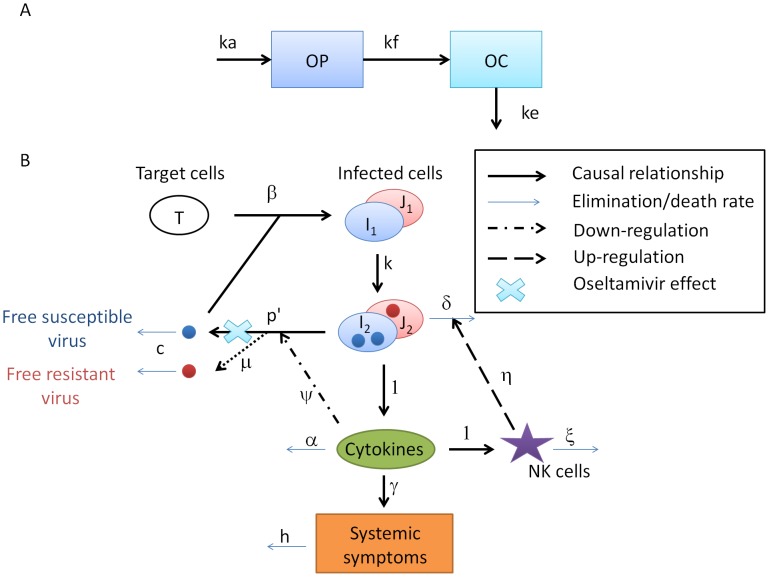
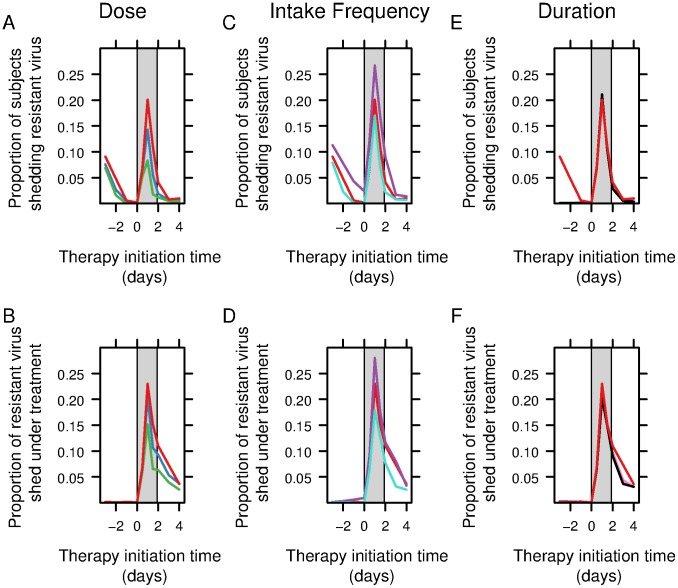
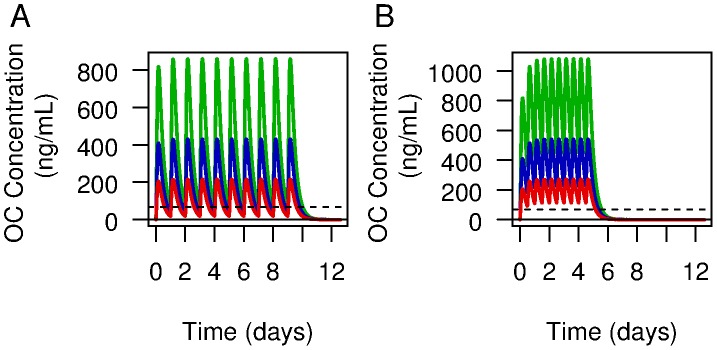
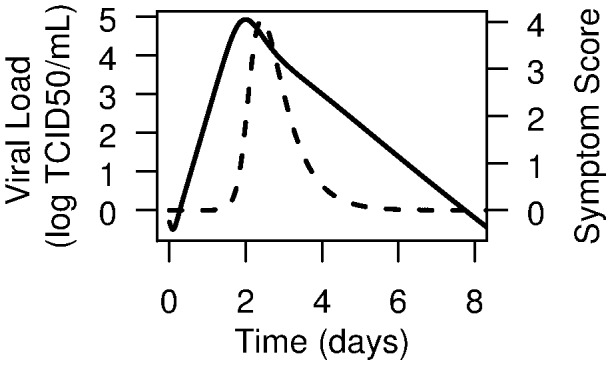
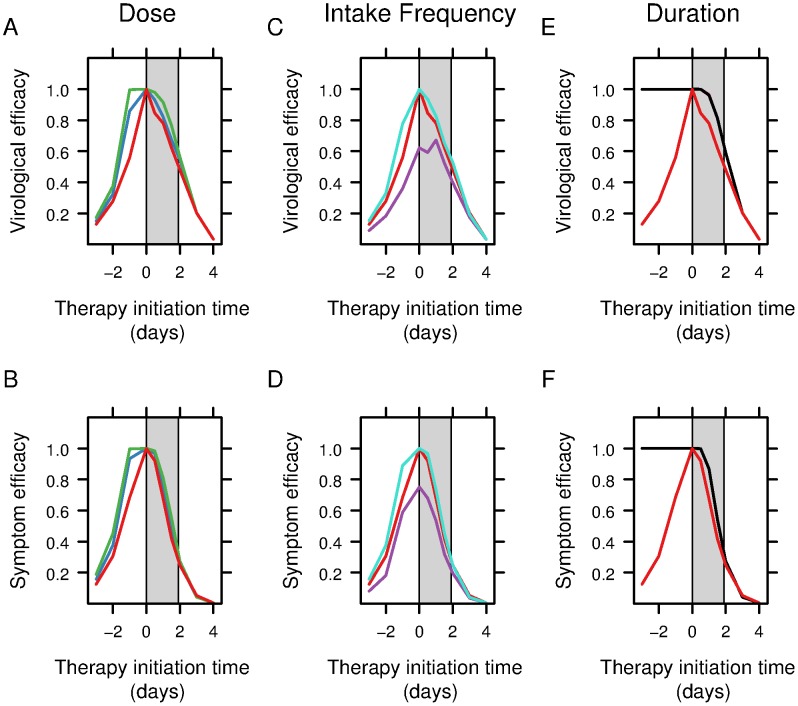
Several studies have proven oseltamivir to be efficient in reducing influenza viral titer and symptom intensity. However, the usefulness of oseltamivir can be compromised by the emergence and spread of drug-resistant virus. The selective pressure exerted by different oseltamivir therapy regimens have received little attention. Combining models of drug pharmacokinetics, pharmacodynamics, viral kinetics and symptom dynamics, we explored the efficacy of oseltamivir in reducing both symptoms (symptom efficacy) and viral load (virological efficacy). We simulated samples of 1000 subjects using previously estimated between-subject variability in viral and symptom dynamic parameters to describe the observed heterogeneity in a patient population. We simulated random mutations conferring resistance to oseltamivir. We explored the effect of therapy initiation time, dose, intake frequency and therapy duration on influenza infection, illness dynamics, and emergence of viral resistance. Symptom and virological efficacies were strongly associated with therapy initiation time. The proportion of subjects shedding resistant virus was 27-fold higher when prophylaxis was initiated during the incubation period compared with no treatment. It fell to below 1% when treatment was initiated after symptom onset for twice-a-day intakes. Lower doses and prophylaxis regimens led to lower efficacies and increased risk of resistance emergence. We conclude that prophylaxis initiated during the incubation period is the main factor leading to resistance emergence.
多项研究已证实,奥司他韦在降低流感病毒滴度和症状强度方面有效。然而,耐药病毒的出现和传播可能会削弱奥司他韦的效用。不同奥司他韦治疗方案所施加的选择压力很少受到关注。结合药物药代动力学、药效学、病毒动力学和症状动力学模型,我们探讨了奥司他韦在减轻症状(症状疗效)和病毒载量(病毒学疗效)方面的效果。我们使用先前估计的病毒和症状动态参数的个体间变异性模拟了1000名受试者的样本,以描述患者群体中观察到的异质性。我们模拟了赋予对奥司他韦耐药性的随机突变。我们探讨了治疗开始时间、剂量、服药频率和治疗持续时间对流感感染、疾病动态以及病毒耐药性出现的影响。症状和病毒学疗效与治疗开始时间密切相关。与不治疗相比,在潜伏期开始预防时排出耐药病毒的受试者比例高出27倍。对于每日两次服药,在症状出现后开始治疗时,该比例降至1%以下。较低的剂量和预防方案导致疗效降低和耐药性出现风险增加。我们得出结论,在潜伏期开始预防是导致耐药性出现的主要因素。