Cakmak Yusuf O, Apaydin Hülya, Kiziltan Güneş, Gündüz Ayşegül, Ozsoy Burak, Olcer Selim, Urey Hakan, Cakmak Ozgur O, Ozdemir Yasemin G, Ertan Sibel
Department of Anatomy, School of Medical Sciences, Otago UniversityDunedin, New Zealand.
Department of Neurology, Cerrahpasa School of Medicine, Istanbul UniversityIstanbul, Turkey.
Front Hum Neurosci. 2017 Jun 28;11:338. doi: 10.3389/fnhum.2017.00338. eCollection 2017.
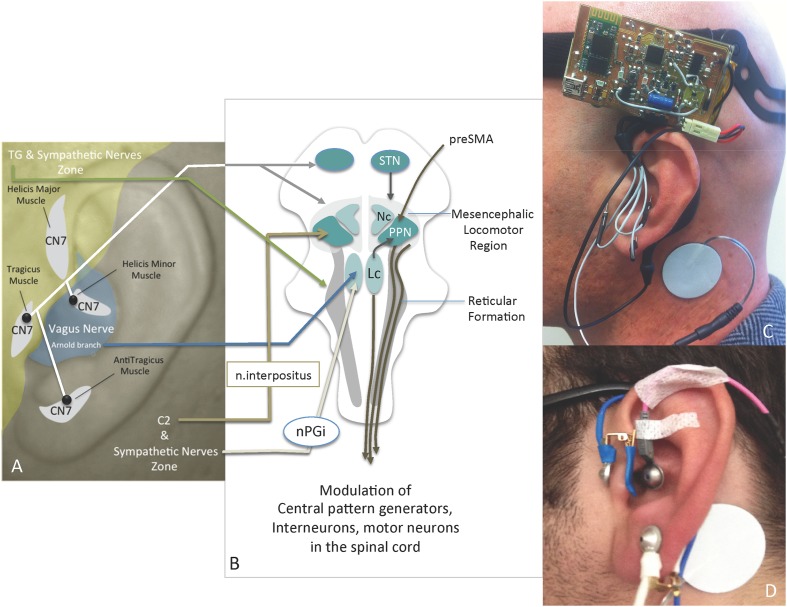
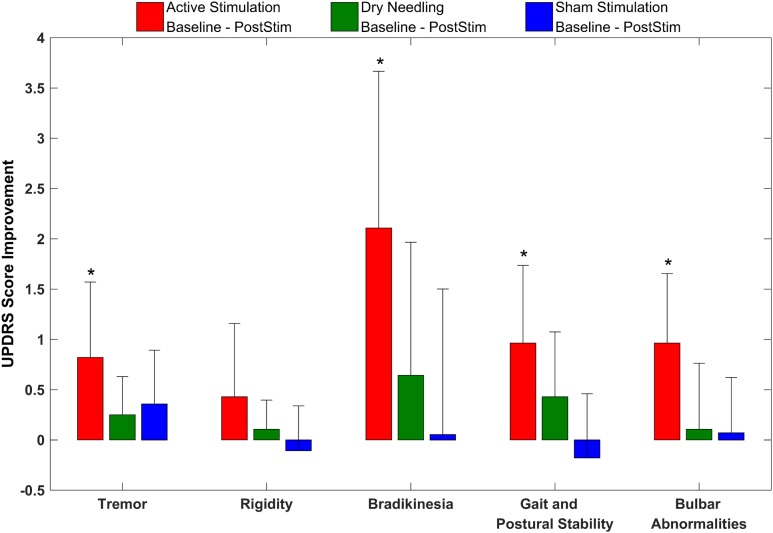
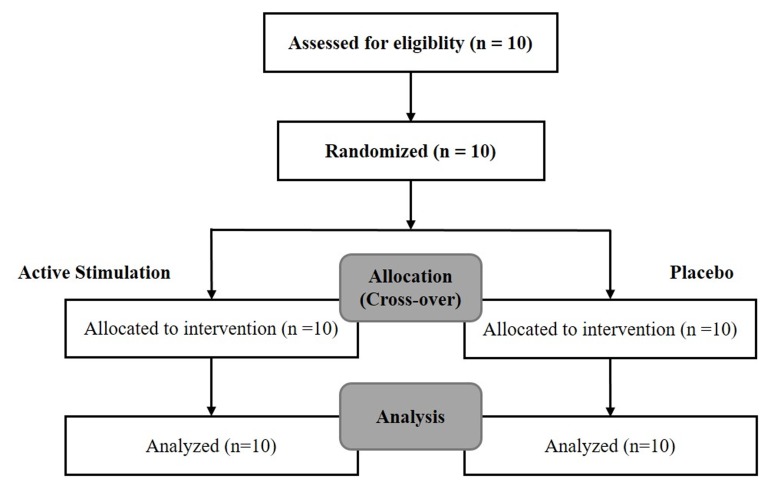
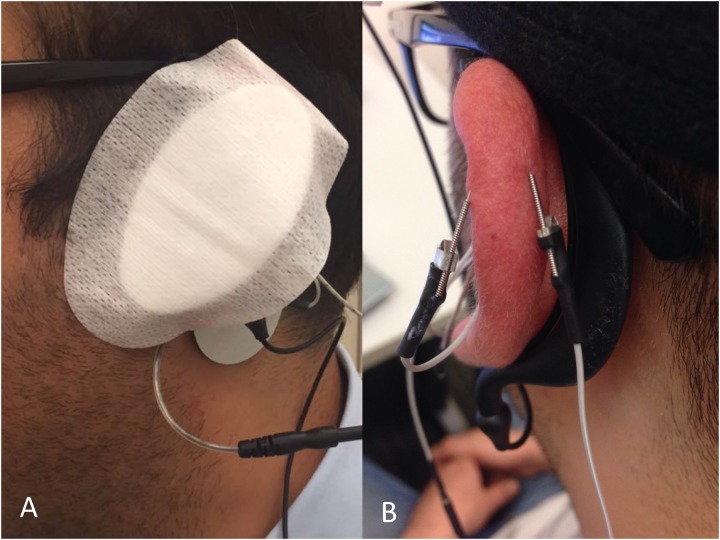
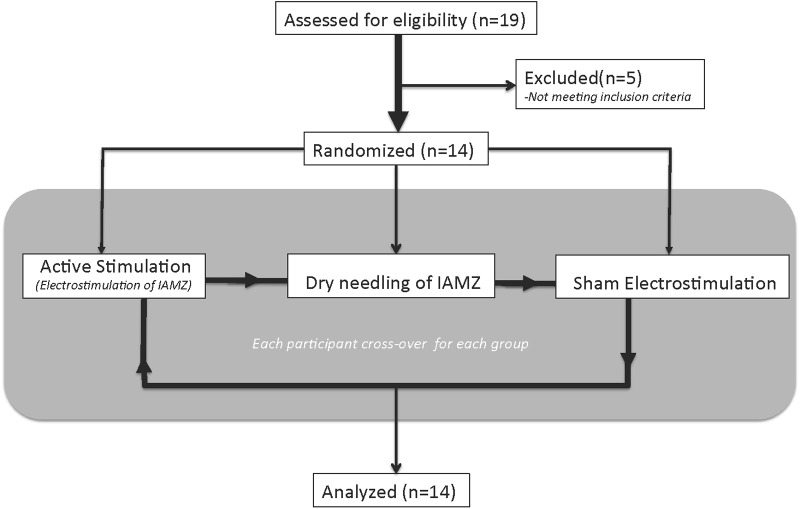
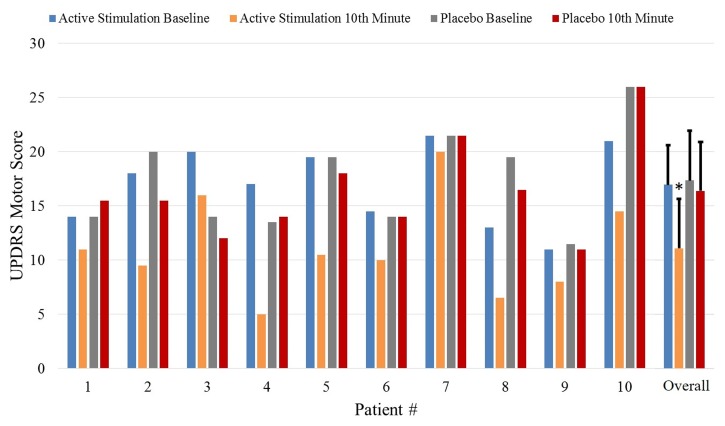
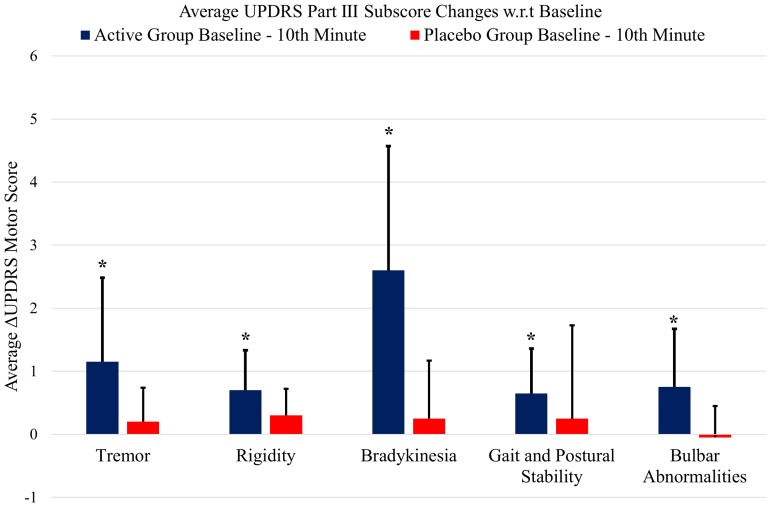
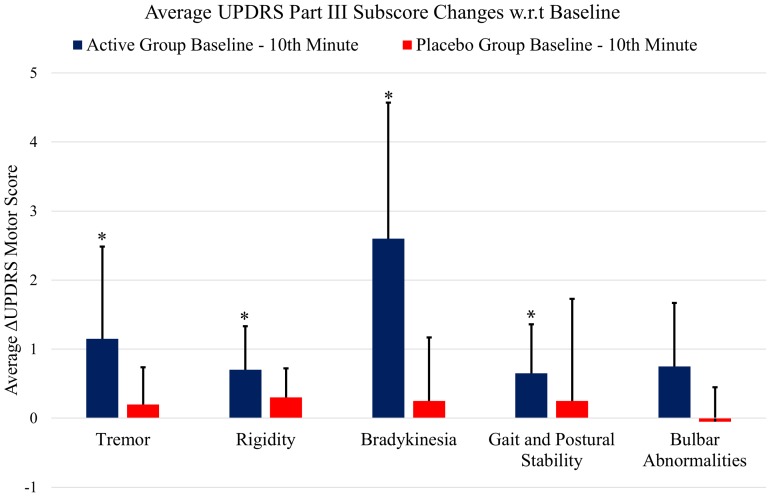
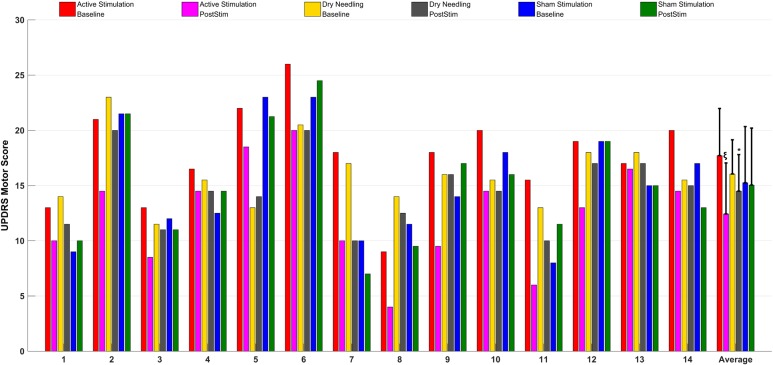
Deep brain stimulation of the subthalamic nucleus (STN-DBS) and the pedunculopontine nucleus (PPN) significantly improve cardinal motor symptoms and postural instability and gait difficulty, respectively, in Parkinson's disease (PD). Intrinsic auricular muscle zones (IAMZs) allow the potential to simultaneously stimulate the C2 spinal nerve, the trigeminal nerve, the facial nerve, and sympathetic and parasympathetic nerves in addition to providing muscle feedback and control areas including the STN, the PPN and mesencephalic locomotor regions. Our aim was to observe the clinical responses to IAMZ stimulation in PD patients. Unilateral stimulation of an IAMZ, which includes muscle fibers for proprioception, the facial nerve, and C2, trigeminal and autonomic nerve fibers, at 130 Hz was performed in a placebo- and sham-controlled, double-blinded, within design, two-armed study of 24 PD patients. The results of the first arm (10 patients) of the present study demonstrated a substantial improvement in Unified Parkinson's Disease Ratings Scale (UPDRS) motor scores due to 10 min of IAMZ electrostimulation ( = 0.0003, power: 0.99) compared to the placebo control ( = 0.130). A moderate to large clinical difference in the improvement in UPDRS motor scores was observed in the IAMZ electrostimulation group. The results of the second arm (14 patients) demonstrated significant improvements with dry needling ( = 0.011) and electrostimulation of the IAMZ ( < 0.001) but not with sham electrostimulation ( = 0.748). In addition, there was a significantly greater improvement in UPDRS motor scores in the IAMZ electrostimulation group compared to the IAMZ dry needling group ( < 0.001) and the sham electrostimulation ( < 0.001) groups. The improvement in UPDRS motor scores of the IAMZ electrostimulation group (ΔUPDRS = 5.29) reached moderate to high clinical significance, which was not the case for the dry needling group (ΔUPDRS = 1.54). In addition, both arms of the study demonstrated bilateral improvements in motor symptoms in response to unilateral IAMZ electrostimulation. The present study is the first demonstration of a potential role of IAMZ electrical stimulation in improving the clinical motor symptoms of PD patients in the short term.
对丘脑底核进行深部脑刺激(STN-DBS)和对脚桥核进行深部脑刺激(PPN-DBS),分别能显著改善帕金森病(PD)的主要运动症状以及姿势不稳和步态障碍。耳内固有肌区(IAMZs)除了能提供包括丘脑底核、脚桥核和中脑运动区在内的肌肉反馈和控制区域外,还具有同时刺激颈2脊髓神经、三叉神经、面神经以及交感和副交感神经的潜力。我们的目的是观察帕金森病患者对IAMZ刺激的临床反应。在一项针对24名帕金森病患者的安慰剂对照、假刺激对照、双盲、自身设计、双臂研究中,以130赫兹的频率对包含本体感觉肌纤维、面神经以及颈2、三叉神经和自主神经纤维的IAMZ进行单侧刺激。本研究第一组(10名患者)的结果表明,与安慰剂对照(P = 0.130)相比,10分钟的IAMZ电刺激使统一帕金森病评定量表(UPDRS)运动评分有显著改善(P = 0.0003,检验效能:0.99)。在IAMZ电刺激组中观察到UPDRS运动评分改善存在中度至较大的临床差异。第二组(14名患者)的结果表明,干针疗法(P = 0.011)和IAMZ电刺激(P < 0.001)有显著改善,但假电刺激(P = 0.748)无改善。此外,与IAMZ干针疗法组(P < 0.001)和假电刺激组(P < 0.001)相比,IAMZ电刺激组的UPDRS运动评分改善更显著。IAMZ电刺激组UPDRS运动评分的改善(ΔUPDRS = 5.29)达到中度至高临床显著性,而干针疗法组(ΔUPDRS = 1.54)并非如此。此外,研究的两组均显示,单侧IAMZ电刺激可使运动症状出现双侧改善。本研究首次证明了IAMZ电刺激在短期内改善帕金森病患者临床运动症状方面的潜在作用。