Department of Haematology, University of Cambridge, Cambridge Biomedical Campus, Cambridge CB2 0PT, UK.
National Health Service Blood and Transplant (NHSBT), Cambridge Biomedical Campus, Cambridge CB2 0PT, UK.
Nat Commun. 2017 Jul 13;8:16058. doi: 10.1038/ncomms16058.
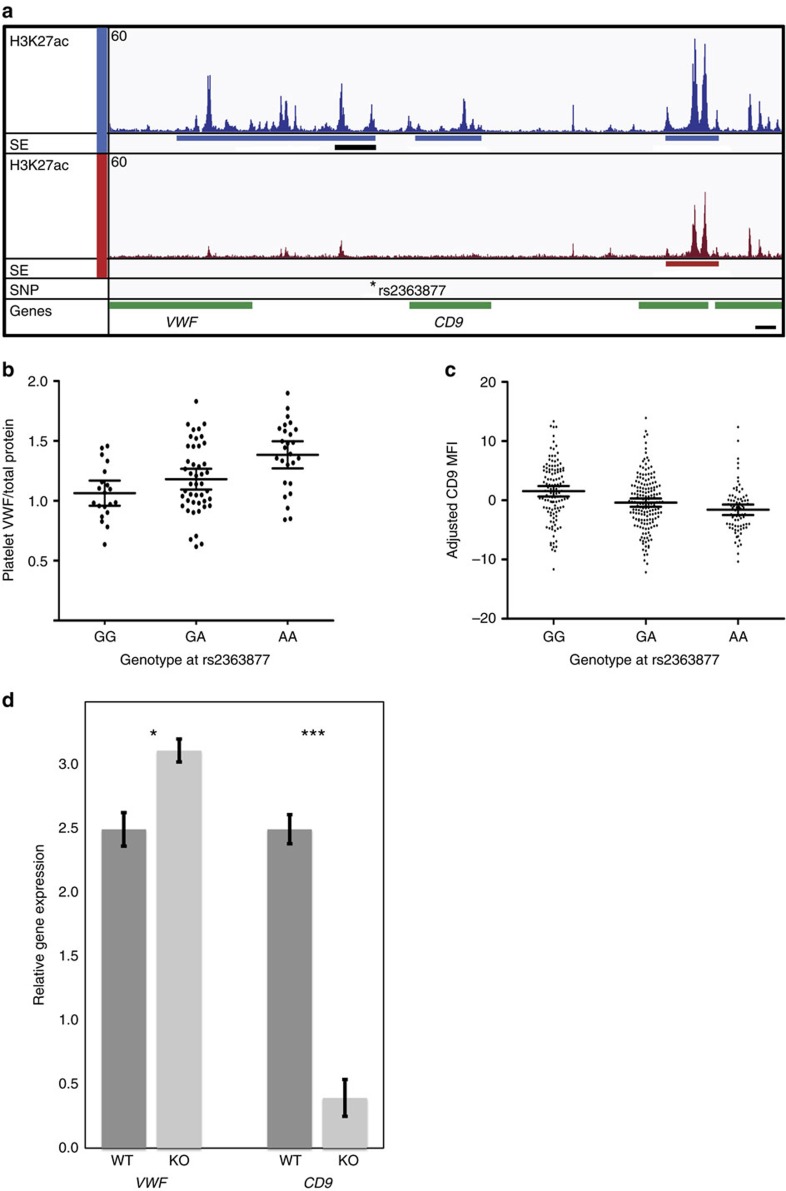
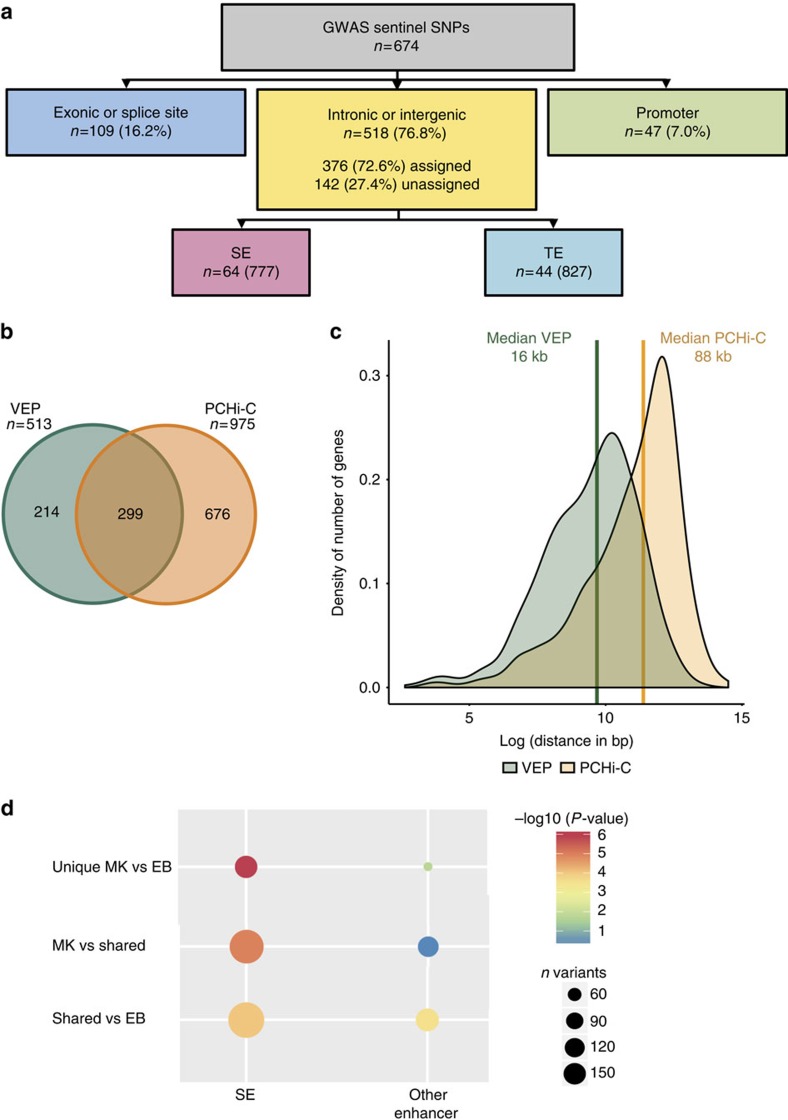
Linking non-coding genetic variants associated with the risk of diseases or disease-relevant traits to target genes is a crucial step to realize GWAS potential in the introduction of precision medicine. Here we set out to determine the mechanisms underpinning variant association with platelet quantitative traits using cell type-matched epigenomic data and promoter long-range interactions. We identify potential regulatory functions for 423 of 565 (75%) non-coding variants associated with platelet traits and we demonstrate, through ex vivo and proof of principle genome editing validation, that variants in super enhancers play an important role in controlling archetypical platelet functions.
将与疾病风险或疾病相关特征相关的非编码遗传变异与靶基因联系起来,是在精准医学引入中实现 GWAS 潜力的关键步骤。在这里,我们使用细胞类型匹配的表观基因组学数据和启动子长程相互作用,来确定与血小板数量性状相关的变异关联的潜在机制。我们确定了与血小板性状相关的 565 个非编码变异中的 423 个(75%)的潜在调节功能,并且通过体外和原理验证的基因组编辑验证,证明了超级增强子中的变异在控制典型血小板功能方面起着重要作用。