Stassen Q E M, Koskinen L L E, van Steenbeek F G, Seppälä E H, Jokinen T S, Prins P G M, Bok H G J, Zandvliet M M J M, Vos-Loohuis M, Leegwater P A J, Lohi H
Department of Clinical Sciences of Companion Animals, Faculty of Veterinary Medicine, Utrecht University, Utrecht, The Netherlands.
Department of Veterinary Biosciences, University of Helsinki, Helsinki, Finland.
J Vet Intern Med. 2017 Jul;31(4):1123-1131. doi: 10.1111/jvim.14731.
In the last decade, a disorder characterized by episodes of involuntary movements and dystonia has been recognized in Border Terriers.
To define clinical features of paroxysmal dyskinesia (PD) in a large number of Border Terriers and to study the genetics of the disease.
110 affected and 128 unaffected client-owned Border Terriers.
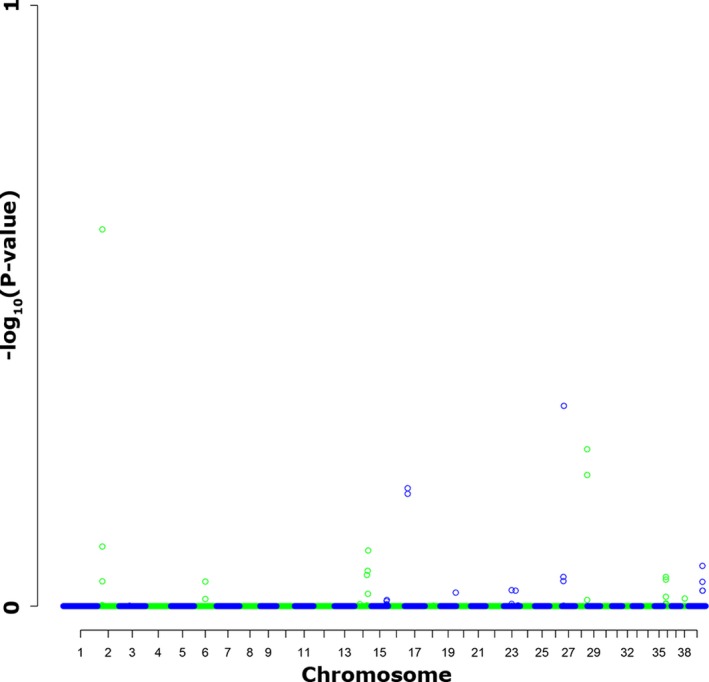
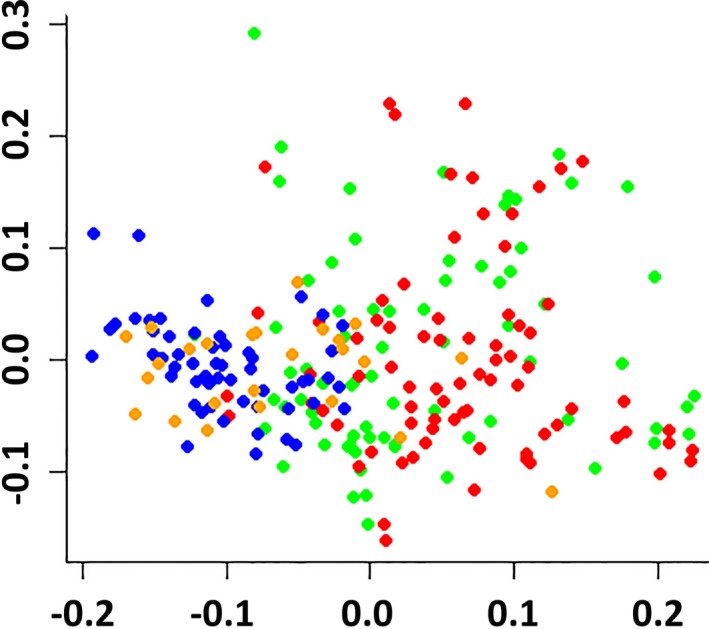
A questionnaire regarding clinical characteristics of PD was designed at Utrecht University and the University of Helsinki. Thirty-five affected Border Terriers underwent physical examination and blood testing (hematology and clinical biochemistry). Diagnostic imaging of the brain was performed in 17 affected dogs and electroencephalograms (EEG) between episodes were obtained in 10 affected dogs. A genomewide association study (GWAS) was performed with DNA of 110 affected and 128 unaffected dogs.
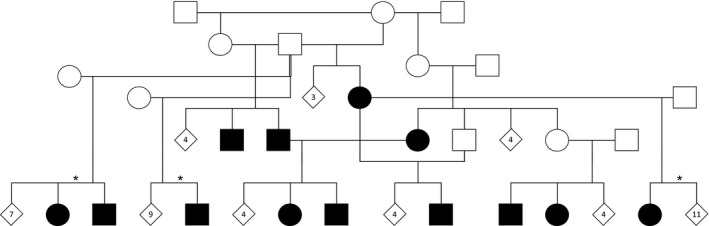
One hundred forty-seven questionnaires were included in the study. The most characteristic signs during episodes were dystonia, muscle fasciculations, and falling over. The majority of owners believed that their dogs remained conscious during the episodes. A beneficial effect of anti-epileptic therapy was observed in 29 of 43 dogs. Fifteen owners changed their dogs' diet to a hypoallergenic, gluten-free diet, and all reported reasonable to good improvement of signs. Clinical examinations and diagnostic test results were unremarkable. The GWAS did not identify significantly associated chromosome regions.
The survey results and EEG studies provided further evidence that the observed syndrome is a PD rather than epilepsy. Failure to achieve conclusive results by GWAS indicates that inheritance of PD in Border Terriers probably is complex.
在过去十年里,一种以不自主运动和肌张力障碍发作为特征的疾病在边境梗犬中被发现。
明确大量边境梗犬阵发性运动障碍(PD)的临床特征,并研究该疾病的遗传学。
110只患病和128只未患病的客户拥有的边境梗犬。
乌得勒支大学和赫尔辛基大学设计了一份关于PD临床特征的问卷。35只患病的边境梗犬接受了体格检查和血液检测(血液学和临床生物化学)。对17只患病犬进行了脑部诊断成像,对10只患病犬在发作间期进行了脑电图(EEG)检测。对110只患病犬和128只未患病犬的DNA进行了全基因组关联研究(GWAS)。
147份问卷纳入研究。发作期间最具特征性的体征是肌张力障碍、肌肉束颤和摔倒。大多数主人认为他们的狗在发作期间仍保持清醒。43只犬中有29只观察到抗癫痫治疗有有益效果。15位主人将他们的狗的饮食改为低敏、无麸质饮食,所有主人都报告症状有适度到良好的改善。临床检查和诊断测试结果均无异常。GWAS未发现显著相关的染色体区域。
调查结果和EEG研究进一步证明观察到的综合征是PD而非癫痫。GWAS未能得出确定性结果表明边境梗犬中PD的遗传可能很复杂。