Lim Yen Ching, Li Jie, Ni Yiyun, Liang Qi, Zhang Junjiao, Yeo George S H, Lyu Jianxin, Jin Shengnan, Ding Chunming
Key Laboratory of Laboratory Medicine, Ministry of Education of China, School of Laboratory Medicine and Life Science, Wenzhou Medical University, Wenzhou, Zhejiang, China.
KK Women's and Children's Hospital, Singapore, Singapore.
PLoS One. 2017 Jul 13;12(7):e0181155. doi: 10.1371/journal.pone.0181155. eCollection 2017.
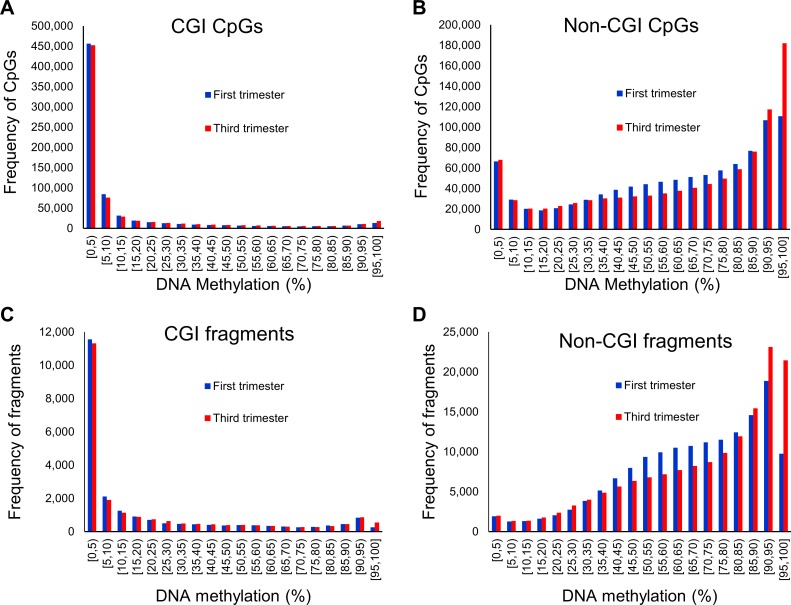
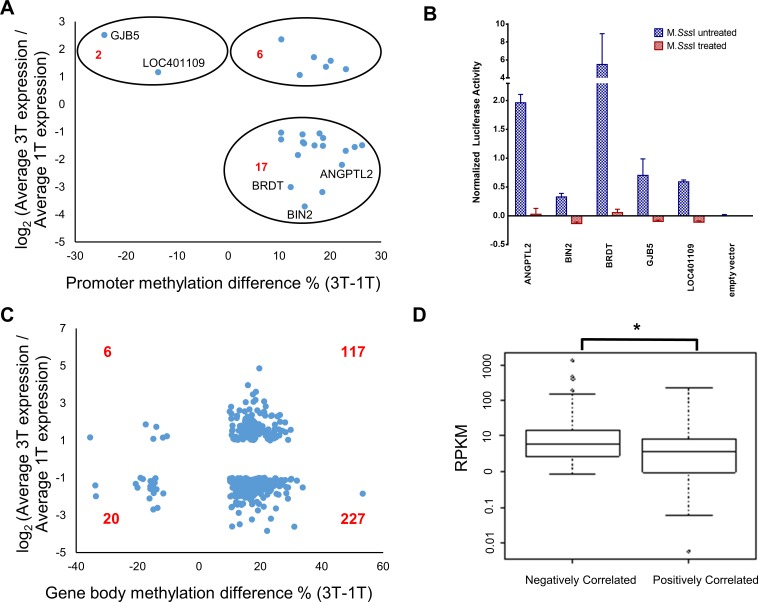
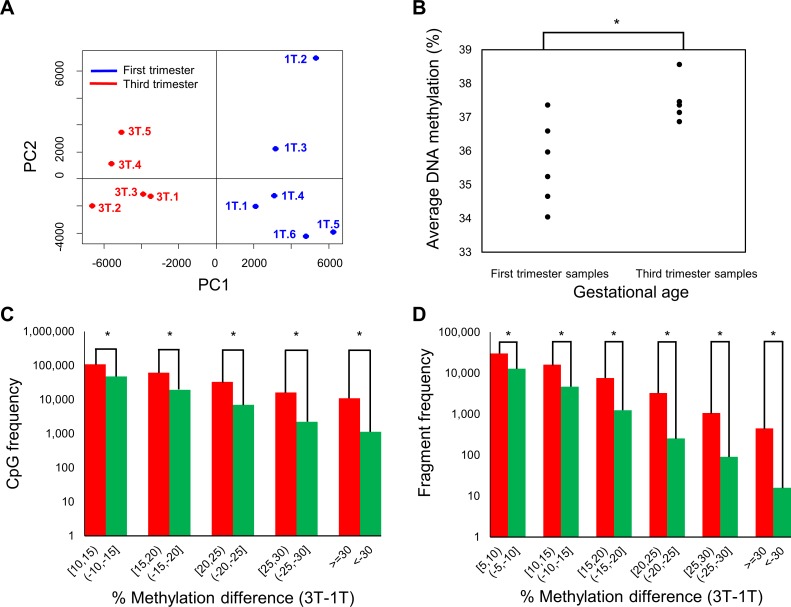
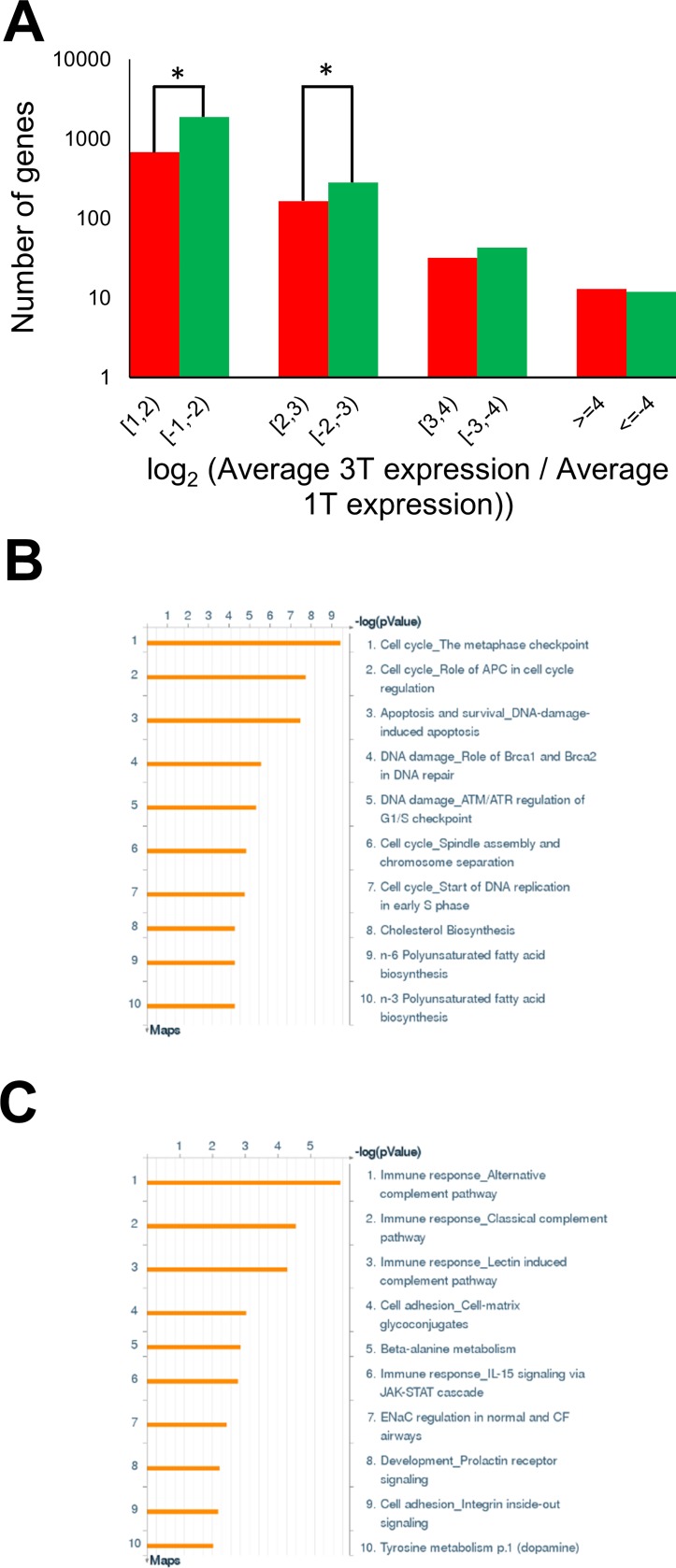
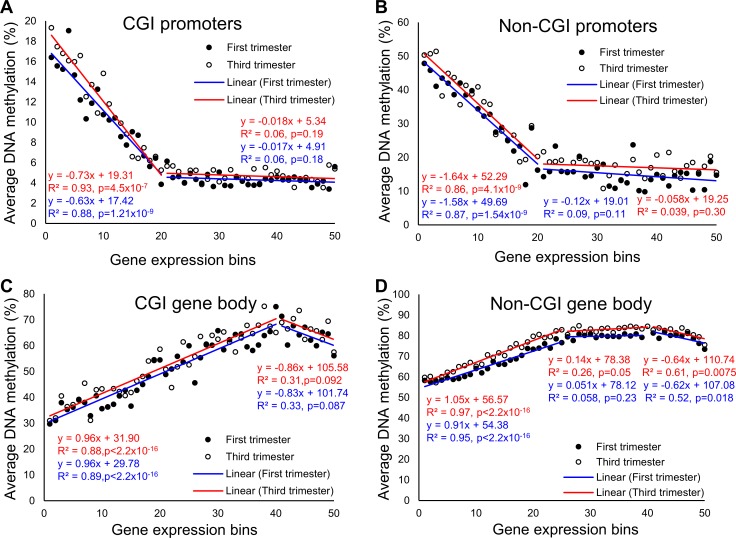
The human placenta is a maternal-fetal organ essential for normal fetal development and maternal health. During pregnancy, the placenta undergoes many structural and functional changes in response to fetal needs and environmental exposures. Previous studies have demonstrated widespread epigenetic and gene expression changes from early to late pregnancy. However, on the global level, how DNA methylation changes impact on gene expression in human placenta is not yet well understood. We performed DNA methylome analysis by reduced representation bisulfite sequencing (RRBS) and gene expression analysis by RNA-Seq for both first and third trimester human placenta tissues. From first to third trimester, 199 promoters (corresponding to 189 genes) and 2,297 gene bodies were differentially methylated, with a clear dominance of hypermethylation (96.8% and 93.0% for promoters and gene bodies, respectively). A total of 2,447 genes were differentially expressed, of which 77.2% were down-regulated. Gene ontology analysis using differentially expressed genes were enriched for cell cycle and immune response functions. The correlation between DNA methylation and gene expression was non-linear and complex, depending on the genomic context (promoter or gene body) and gene expression levels. A wide range of DNA methylation and gene expression changes were observed at different gestational ages. The non-linear association between DNA methylation and gene expression indicates that epigenetic regulation of placenta development is more complex than previously envisioned.
人类胎盘是一个对胎儿正常发育和母体健康至关重要的母胎器官。在孕期,胎盘会因应胎儿需求和环境暴露而经历许多结构和功能变化。先前的研究已证明从妊娠早期到晚期存在广泛的表观遗传和基因表达变化。然而,在整体层面上,DNA甲基化变化如何影响人类胎盘的基因表达尚未得到充分理解。我们对妊娠早期和晚期的人类胎盘组织进行了简化代表性亚硫酸氢盐测序(RRBS)的DNA甲基化组分析以及RNA测序的基因表达分析。从妊娠早期到晚期,199个启动子(对应189个基因)和2297个基因体存在差异甲基化,其中超甲基化占明显优势(启动子和基因体分别为96.8%和93.0%)。共有2447个基因存在差异表达,其中77.2%下调。利用差异表达基因进行的基因本体分析显示细胞周期和免疫反应功能富集。DNA甲基化与基因表达之间呈现非线性且复杂的关系,这取决于基因组背景(启动子或基因体)以及基因表达水平。在不同孕周观察到广泛的DNA甲基化和基因表达变化。DNA甲基化与基因表达之间的非线性关联表明胎盘发育的表观遗传调控比之前设想的更为复杂。