Imprinting and Cancer Group, Cancer Epigenetics and Biology Program, Bellvitge Biomedical Research Institute - IDIBELL, Av. Gran Via de L'Hospotalet 199-203, 08907 L'Hospitalet de Llobregat, Barcelona, Spain.
Leibniz Institute on Aging, Jena, Germany.
Clin Epigenetics. 2019 Feb 26;11(1):35. doi: 10.1186/s13148-019-0630-4.
Genome-wide studies have begun to link subtle variations in both allelic DNA methylation and parent-of-origin genetic effects with early development. Numerous reports have highlighted that the placenta plays a critical role in coordinating fetal growth, with many key functions regulated by genomic imprinting. With the recent description of wide-spread polymorphic placenta-specific imprinting, the molecular mechanisms leading to this curious polymorphic epigenetic phenomenon is unknown, as is their involvement in pregnancies complications.
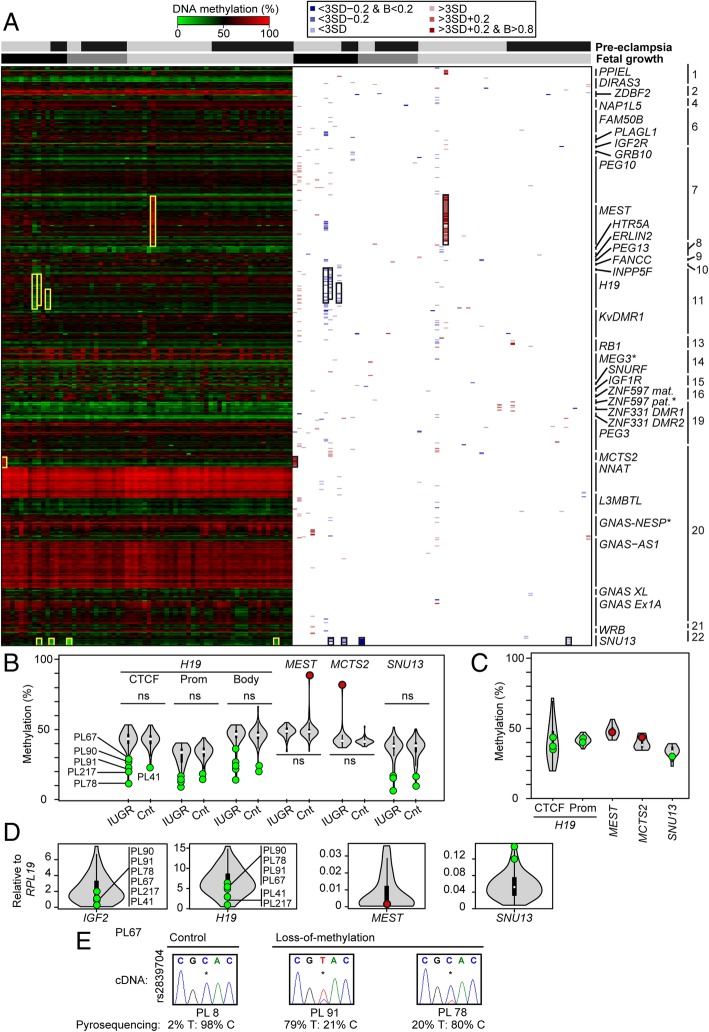
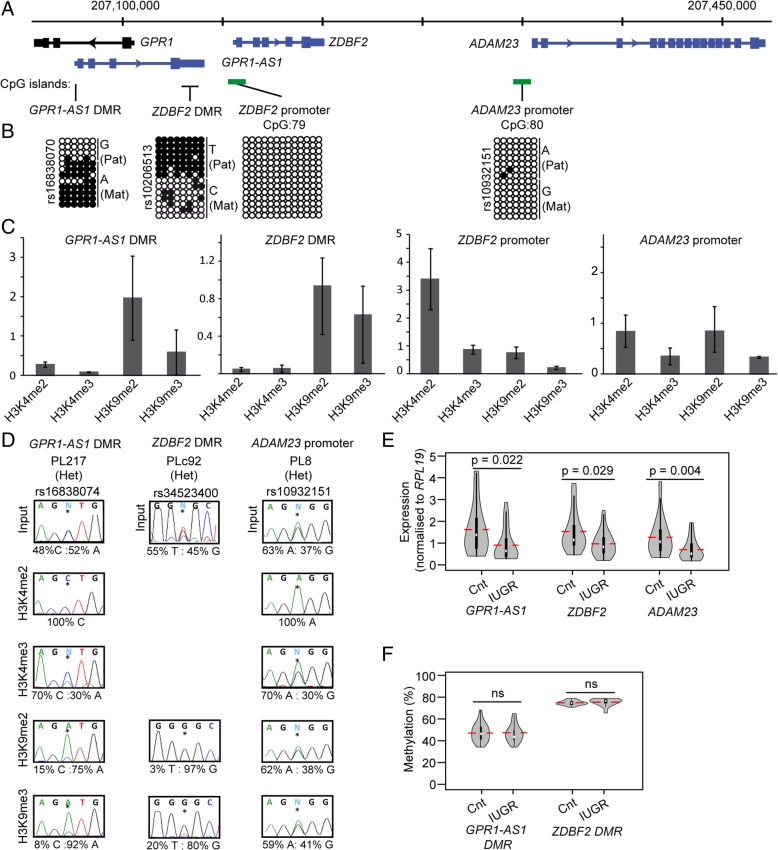
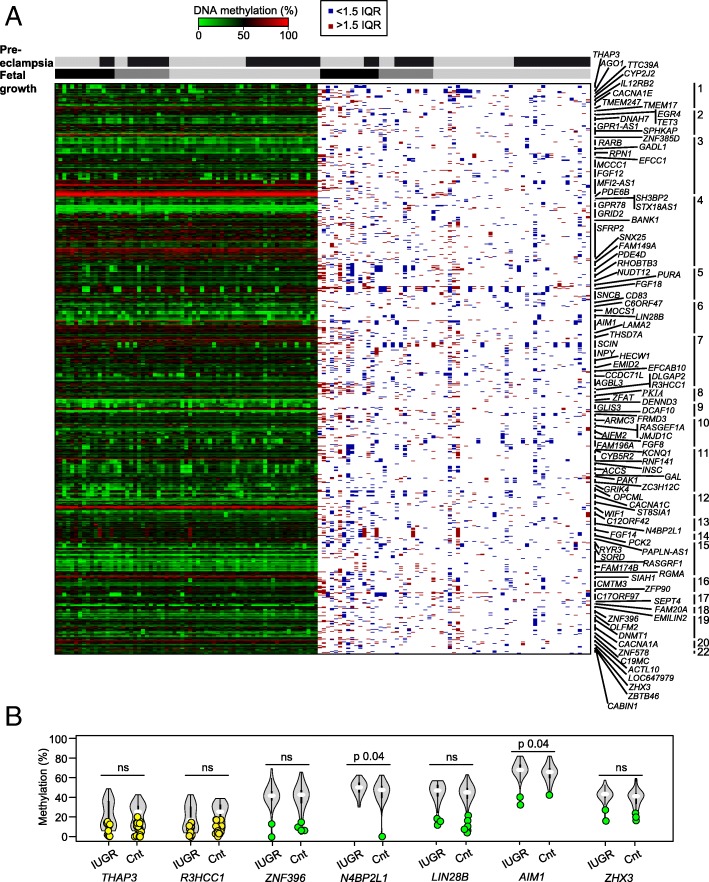
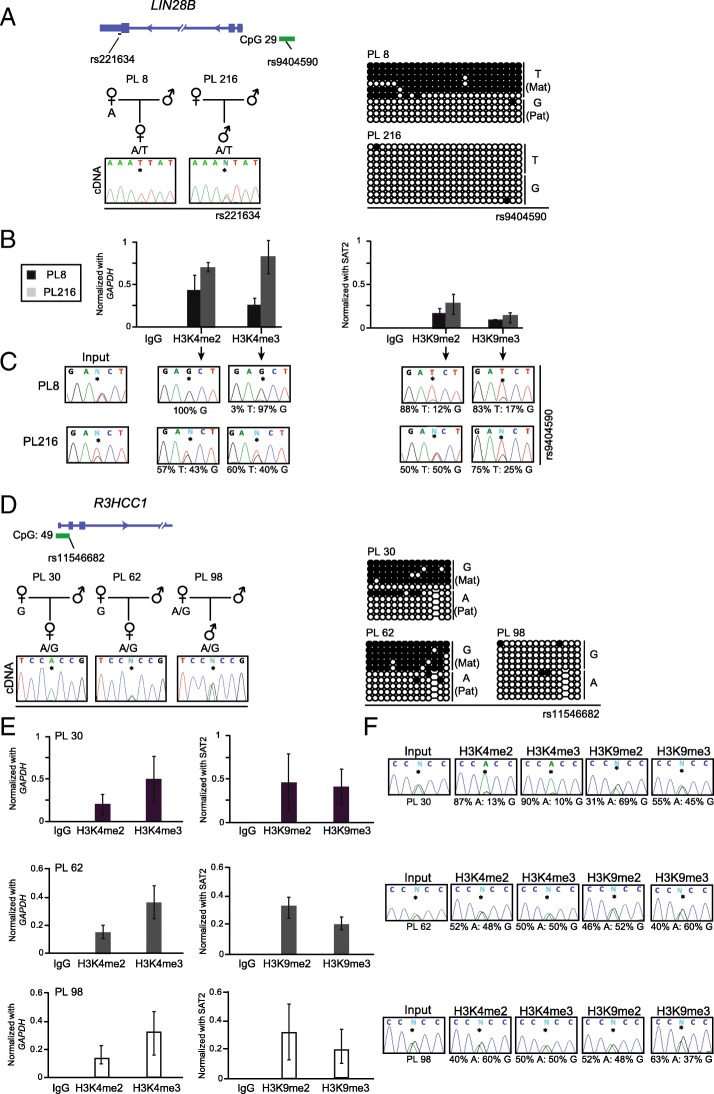
Profiling of 35 ubiquitous and 112 placenta-specific imprinted differentially methylated regions (DMRs) using high-density methylation arrays and pyrosequencing revealed isolated aberrant methylation at ubiquitous DMRs as well as abundant hypomethylation at placenta-specific DMRs. Analysis of the underlying chromatin state revealed that the polymorphic nature is not only evident at the level of allelic methylation, but DMRs can also adopt an unusual epigenetic signature where the underlying histones are biallelically enrichment of H3K4 methylation, a modification normally mutually exclusive with DNA methylation. Quantitative expression analysis in placenta identified two genes, GPR1-AS1 and ZDBF2, that were differentially expressed between IUGRs and control samples after adjusting for clinical factors, revealing coordinated deregulation at the chromosome 2q33 imprinted locus.
DNA methylation is less stable at placenta-specific imprinted DMRs compared to ubiquitous DMRs and contributes to privileged state of the placenta epigenome. IUGR-associated expression differences were identified for several imprinted transcripts independent of allelic methylation. Further work is required to determine if these differences are the cause IUGR or reflect unique adaption by the placenta to developmental stresses.
全基因组研究已经开始将等位基因 DNA 甲基化和亲本遗传效应的细微变化与早期发育联系起来。许多报告强调胎盘在协调胎儿生长方面起着关键作用,许多关键功能受基因组印迹调控。随着广泛存在的多态性胎盘特异性印迹的最近描述,导致这种奇特的多态性表观遗传现象的分子机制尚不清楚,其在妊娠并发症中的作用也不清楚。
使用高密度甲基化阵列和焦磷酸测序对 35 个普遍存在的和 112 个胎盘特异性印迹差异甲基化区域(DMR)进行分析,发现普遍存在的 DMR 存在孤立的异常甲基化,而胎盘特异性 DMR 存在丰富的低甲基化。对潜在染色质状态的分析表明,这种多态性不仅表现在等位基因甲基化水平上,而且 DMR 还可以采用一种不寻常的表观遗传特征,其中潜在的组蛋白 H3K4 甲基化呈双等位基因富集,这种修饰通常与 DNA 甲基化相互排斥。在胎盘中的定量表达分析中,在调整临床因素后,在 IUGR 和对照样本之间发现了两个基因,GPR1-AS1 和 ZDBF2,存在差异表达,揭示了 2q33 印迹基因座上的协调失调。
与普遍存在的 DMR 相比,胎盘特异性印迹 DMR 中的 DNA 甲基化稳定性较差,这有助于胎盘表观基因组的特权状态。在不依赖等位基因甲基化的情况下,鉴定了几个印迹转录本与 IUGR 相关的表达差异。需要进一步研究以确定这些差异是 IUGR 的原因还是胎盘对发育压力的独特适应。