1 Department of Anatomy and Cell Biology, University of Illinois at Chicago, IL, USA.
2 Department of Biostatistics, University of Kentucky, Lexington, KY, USA.
ASN Neuro. 2017 Jul-Aug;9(4):1759091417719201. doi: 10.1177/1759091417719201.
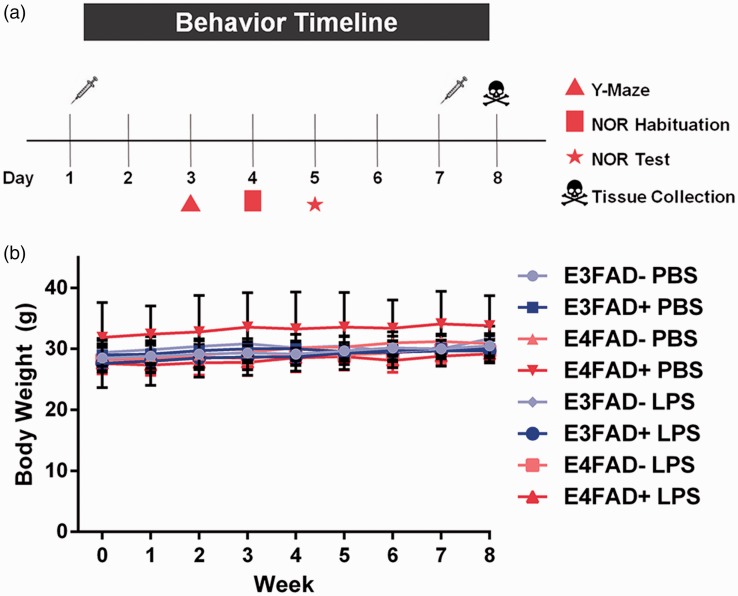
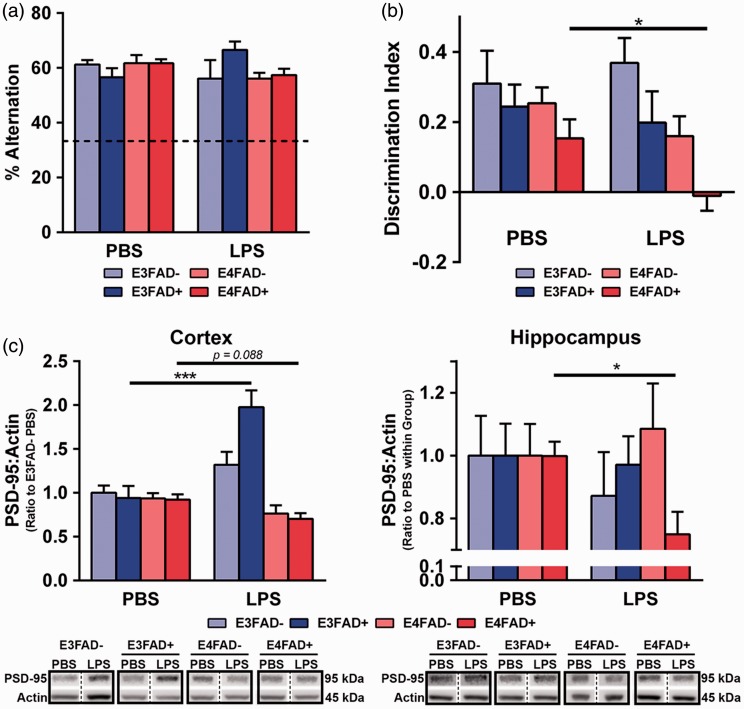
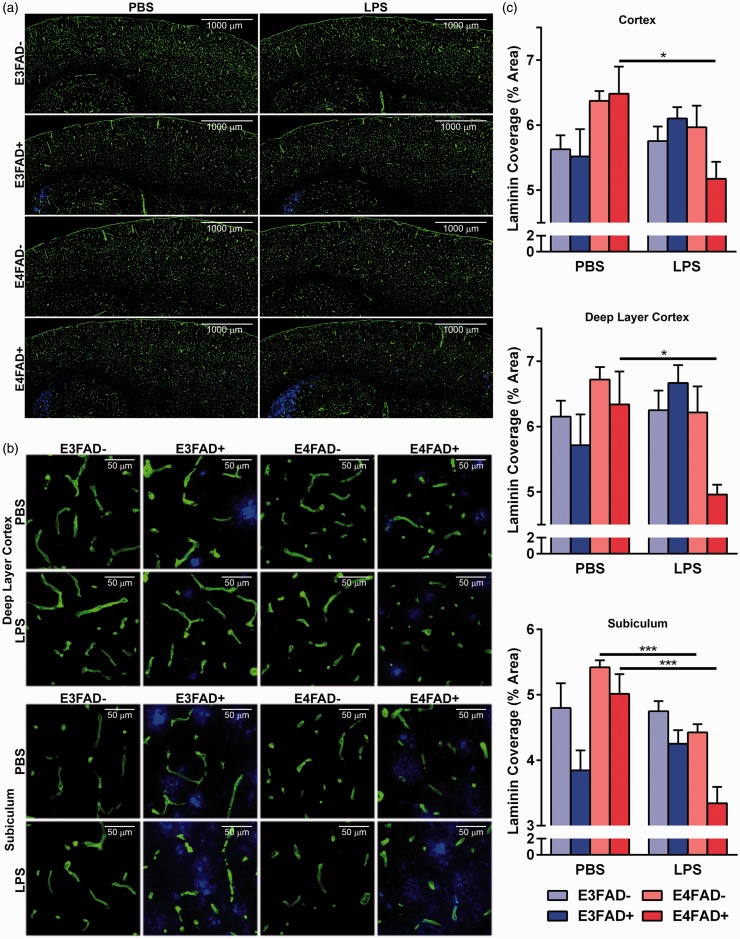
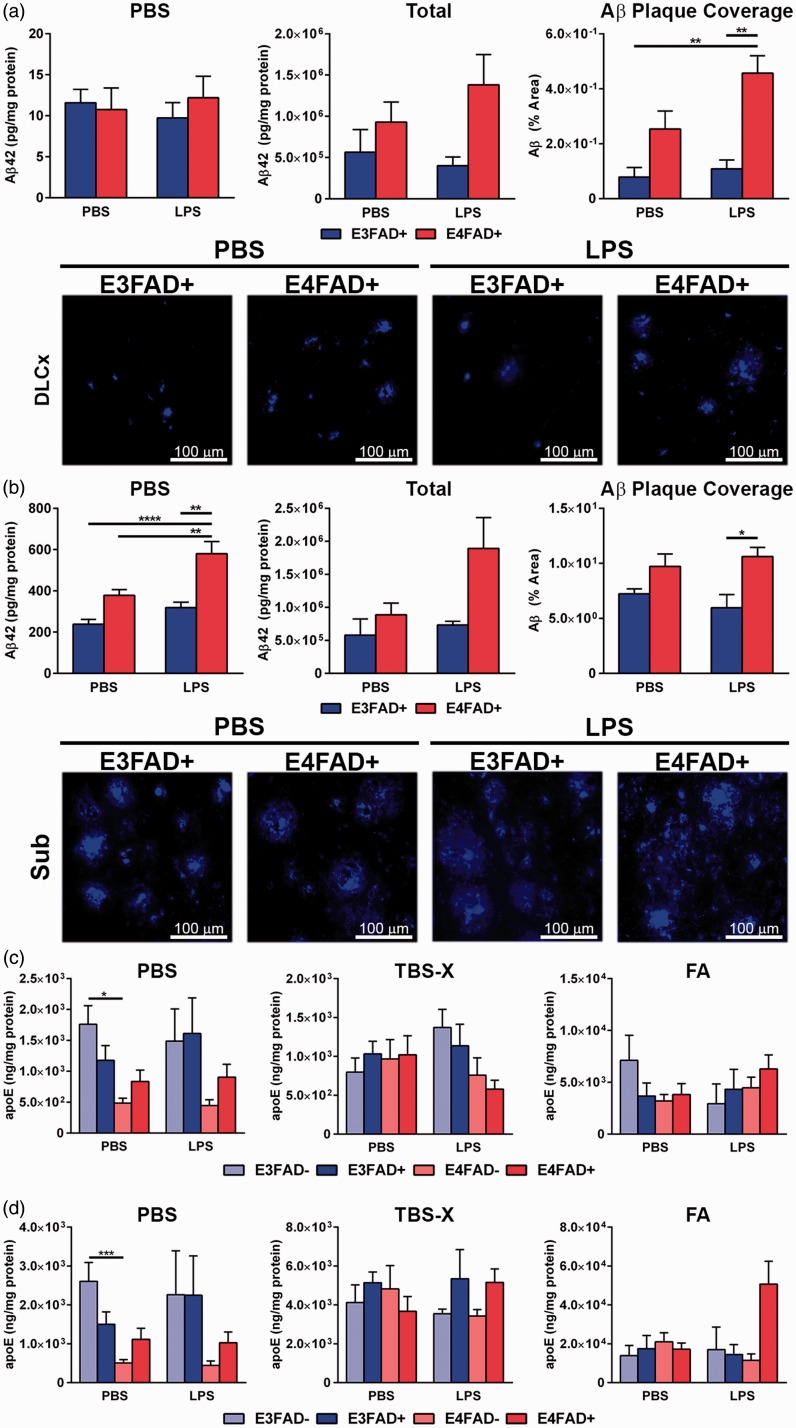
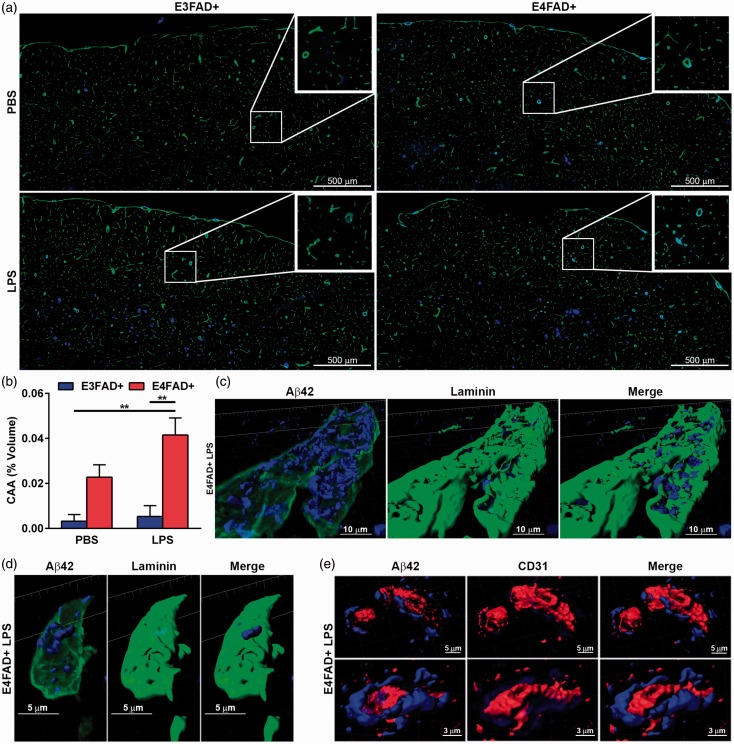
Cerebrovascular dysfunction is rapidly reemerging as a major process of Alzheimer's disease (AD). It is, therefore, crucial to delineate the roles of AD risk factors in cerebrovascular dysfunction. While apolipoprotein E4 ( APOE4), Amyloid-β (Aβ), and peripheral inflammation independently induce cerebrovascular damage, their collective effects remain to be elucidated. The goal of this study was to determine the interactive effect of APOE4, Aβ, and chronic repeated peripheral inflammation on cerebrovascular and cognitive dysfunction in vivo. EFAD mice are a well-characterized mouse model that express human APOE3 (E3FAD) or APOE4 (E4FAD) and overproduce human Aβ42 via expression of 5 Familial Alzheimer's disease (5xFAD) mutations. Here, we utilized EFAD carriers [5xFAD/ APOE (EFAD+)] and noncarriers [5xFAD/ APOE (EFAD-)] to compare the effects of peripheral inflammation in the presence or absence of human Aβ overproduction. Low-level, chronic repeated peripheral inflammation was induced in EFAD mice via systemic administration of lipopolysaccharide (LPS; 0.5 mg/kg/wk i.p.) from 4 to 6 months of age. In E4FAD+ mice, peripheral inflammation caused cognitive deficits and lowered post-synaptic protein levels. Importantly, cerebrovascular deficits were observed in LPS-challenged E4FAD+ mice, including cerebrovascular leakiness, lower vessel coverage, and cerebral amyloid angiopathy-like Aβ deposition. Thus, APOE4, Aβ, and peripheral inflammation interact to induce cerebrovascular damage and cognitive deficits.
脑血管功能障碍正在迅速成为阿尔茨海默病(AD)的主要发病机制。因此,阐明 AD 风险因素在脑血管功能障碍中的作用至关重要。虽然载脂蛋白 E4(APOE4)、β-淀粉样蛋白(Aβ)和外周炎症独立诱导脑血管损伤,但它们的共同作用仍有待阐明。本研究旨在确定 APOE4、Aβ 和慢性重复外周炎症对体内脑血管和认知功能障碍的相互作用。EFAD 小鼠是一种经过充分研究的小鼠模型,其表达人 APOE3(E3FAD)或 APOE4(E4FAD),并通过表达 5 种家族性阿尔茨海默病(5xFAD)突变来过度产生人 Aβ42。在这里,我们利用 EFAD 载体[5xFAD/APOE(EFAD+)]和非载体[5xFAD/APOE(EFAD-)]来比较在存在或不存在人 Aβ过度产生的情况下外周炎症的影响。通过腹腔内注射脂多糖(LPS;0.5mg/kg/周),从 4 到 6 个月大的 EFAD 小鼠中诱导低水平、慢性重复外周炎症。在 E4FAD+小鼠中,外周炎症引起认知缺陷和降低突触后蛋白水平。重要的是,在 LPS 挑战的 E4FAD+小鼠中观察到脑血管缺陷,包括脑血管通透性增加、血管覆盖率降低和类似脑淀粉样血管病的 Aβ沉积。因此,APOE4、Aβ 和外周炎症相互作用诱导脑血管损伤和认知缺陷。