Nicodemus-Johnson Jessie, Sinnott Robert A
USANA Health Sciences, 3838 W Parkway Boulevard, West Valley City, UT 84120, USA.
Nutrients. 2017 Jul 14;9(7):752. doi: 10.3390/nu9070752.
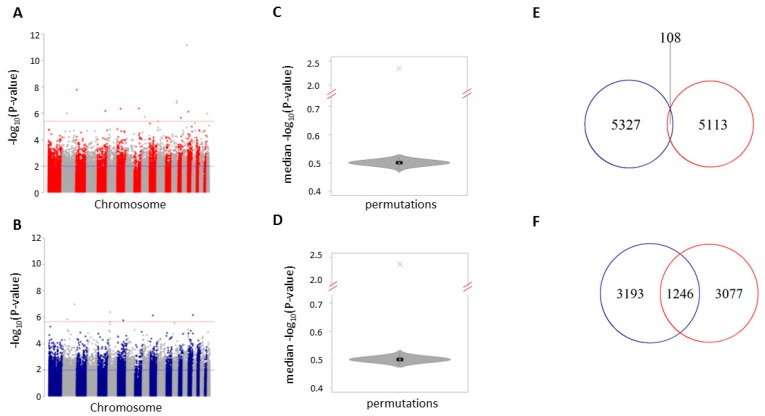
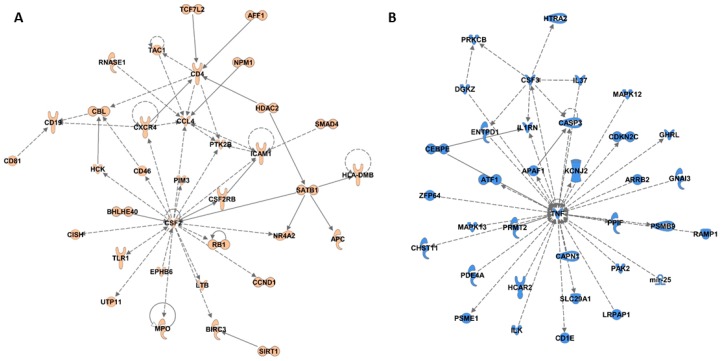
Epidemiological evidence strongly suggests that fruit consumption promotes many health benefits. Despite the general consensus that fruit and juice are nutritionally similar, epidemiological results for juice consumption are conflicting. Our objective was to use DNA methylation marks to characterize fruit and juice epigenetic signatures within PBMCs and identify shared and independent signatures associated with these groups. Genome-wide DNA methylation marks (Illumina Human Methylation 450k chip) for 2,148 individuals that participated in the Framingham Offspring exam 8 were analyzed for correlations between fruit or juice consumption using standard linear regression. CpG sites with low -values ( 0.01) were characterized using Gene Set Enrichment Analysis (GSEA), Ingenuity Pathway Analysis (IPA), and epigenetic Functional element Overlap analysis of the Results of Genome Wide Association Study Experiments (eFORGE). Fruit and juice-specific low -value epigenetic signatures were largely independent. Genes near the fruit-specific epigenetic signature were enriched among pathways associated with antigen presentation and chromosome or telomere maintenance, while the juice-specific epigenetic signature was enriched for proinflammatory pathways. IPA and eFORGE analyses implicate fruit and juice-specific epigenetic signatures in the modulation of macrophage (fruit) and B or T cell (juice) activities. These data suggest a role for epigenetic regulation in fruit and juice-specific health benefits and demonstrate independent associations with distinct immune functions and cell types, suggesting that these groups may not confer the same health benefits. Identification of such differences between foods is the first step toward personalized nutrition and ultimately the improvement of human health and longevity.
流行病学证据有力地表明,食用水果对健康有诸多益处。尽管人们普遍认为水果和果汁在营养上相似,但关于果汁消费的流行病学结果却相互矛盾。我们的目标是利用DNA甲基化标记来表征外周血单核细胞(PBMCs)内水果和果汁的表观遗传特征,并识别与这些组相关的共同和独立特征。对参与弗雷明汉后代第8次检查的2148名个体的全基因组DNA甲基化标记(Illumina Human Methylation 450k芯片)进行分析,使用标准线性回归研究水果或果汁消费之间的相关性。使用基因集富集分析(GSEA)、 Ingenuity通路分析(IPA)和全基因组关联研究实验结果的表观遗传功能元件重叠分析(eFORGE)对低P值(<0.01)的CpG位点进行表征。水果和果汁特有的低P值表观遗传特征在很大程度上是独立的。水果特有的表观遗传特征附近的基因在与抗原呈递以及染色体或端粒维持相关的通路中富集,而果汁特有的表观遗传特征在促炎通路中富集。IPA和eFORGE分析表明,水果和果汁特有的表观遗传特征参与调节巨噬细胞(水果)和B或T细胞(果汁)的活性。这些数据表明表观遗传调控在水果和果汁特有的健康益处中发挥作用,并证明与不同的免疫功能和细胞类型存在独立关联,这表明这些组可能不会带来相同的健康益处。识别食物之间的此类差异是迈向个性化营养的第一步,最终有助于改善人类健康和寿命。