Chen Yuanyuan, Wang Weiwei, Zhao Xin, Sha Miao, Liu Ya'nan, Zhang Xiong, Ma Jianguo, Ni Hongyan, Ming Dong
College of Microelectronics, Tianjin UniversityTianjin, China.
Tianjin International Joint Research Center for Neural Engineering, Academy of Medical Engineering and Translational Medicine, Tianjin UniversityTianjin, China.
Front Aging Neurosci. 2017 Jun 30;9:203. doi: 10.3389/fnagi.2017.00203. eCollection 2017.
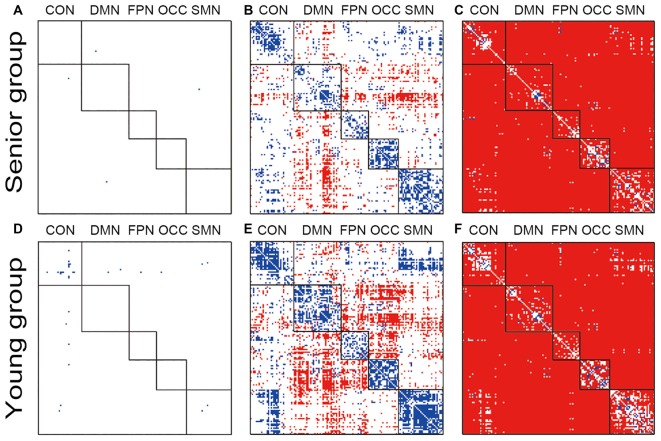
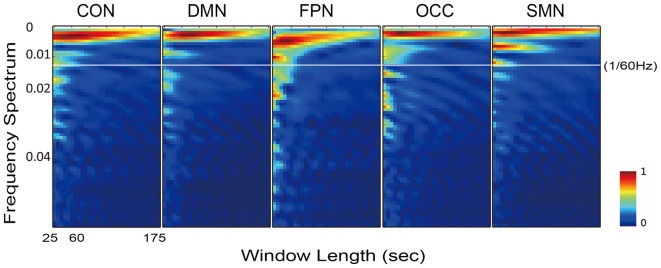
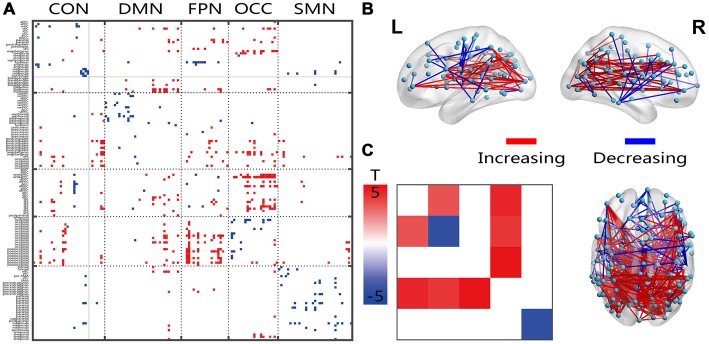
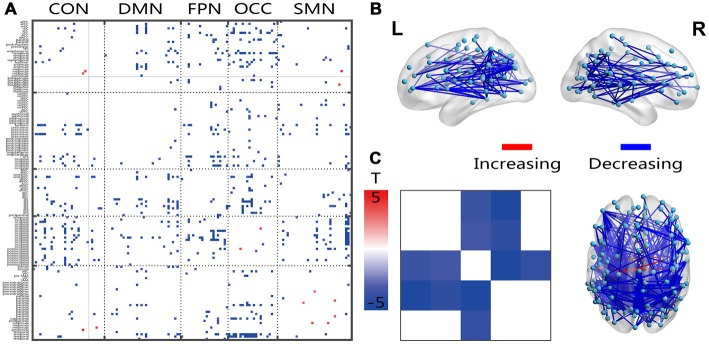
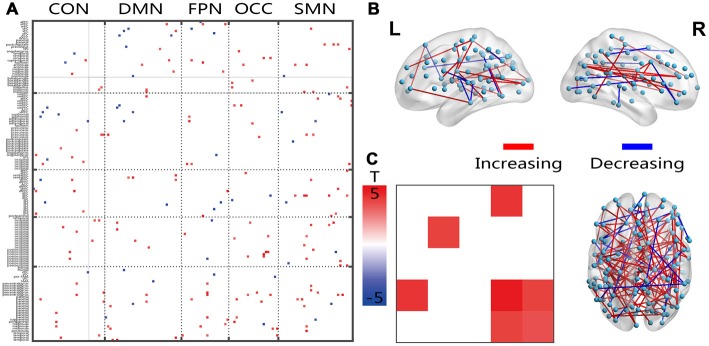
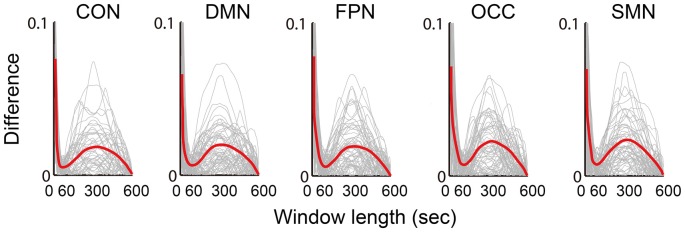
Normal aging is typically characterized by abnormal resting-state functional connectivity (FC), including decreasing connectivity within networks and increasing connectivity between networks, under the assumption that the FC over the scan time was stationary. In fact, the resting-state FC has been shown in recent years to vary over time even within minutes, thus showing the great potential of intrinsic interactions and organization of the brain. In this article, we assumed that the dynamic FC consisted of an intrinsic dynamic balance in the resting brain and was altered with increasing age. Two groups of individuals ( = 36, ages 20-25 for the young group; = 32, ages 60-85 for the senior group) were recruited from the public data of the Nathan Kline Institute. Phase randomization was first used to examine the reliability of the dynamic FC. Next, the variation in the dynamic FC and the energy ratio of the dynamic FC fluctuations within a higher frequency band were calculated and further checked for differences between groups by non-parametric permutation tests. The results robustly showed modularization of the dynamic FC variation, which declined with aging; moreover, the FC variation of the inter-network connections, which mainly consisted of the frontal-parietal network-associated and occipital-associated connections, decreased. In addition, a higher energy ratio in the higher FC fluctuation frequency band was observed in the senior group, which indicated the frequency interactions in the FC fluctuations. These results highly supported the basis of abnormality and compensation in the aging brain and might provide new insights into both aging and relevant compensatory mechanisms.
正常衰老通常以静息态功能连接(FC)异常为特征,包括网络内连接性降低和网络间连接性增加,前提是扫描期间的FC是稳定的。事实上,近年来研究表明,即使在几分钟内,静息态FC也会随时间变化,这显示了大脑内在相互作用和组织的巨大潜力。在本文中,我们假设动态FC由静息大脑中的内在动态平衡组成,并随着年龄增长而改变。从内森·克莱因研究所的公共数据中招募了两组个体(年轻组n = 36,年龄在20 - 25岁;老年组n = 32,年龄在60 - 85岁)。首先使用相位随机化来检验动态FC的可靠性。接下来,计算动态FC的变化以及高频带内动态FC波动的能量比,并通过非参数置换检验进一步检查两组之间的差异。结果有力地表明了动态FC变化的模块化,且这种模块化随衰老而下降;此外,主要由额顶叶网络相关连接和枕叶相关连接组成的网络间连接的FC变化减少。此外,在老年组中观察到较高FC波动频段的能量比更高,这表明了FC波动中的频率相互作用。这些结果有力地支持了衰老大脑中异常和补偿的基础,并可能为衰老及相关补偿机制提供新的见解。