Wang Yajuan, Iyengar Vijay, Hu Jianying, Kho David, Falconer Erin, Docherty John P, Yuen Gigi Y
Innovation and Foundational Technology, IBM Watson Health, Yorktown Heights, NY, United States.
IBM T.J. Watson Research Center, Yorktown Heights, NY, United States.
Front Psychiatry. 2017 Jun 30;8:114. doi: 10.3389/fpsyt.2017.00114. eCollection 2017.
The burden of serious and persistent mental illness such as schizophrenia is substantial and requires health-care organizations to have adequate risk adjustment models to effectively allocate their resources to managing patients who are at the greatest risk. Currently available models underestimate health-care costs for those with mental or behavioral health conditions.
The study aimed to develop and evaluate predictive models for identification of future high-cost schizophrenia patients using advanced supervised machine learning methods.
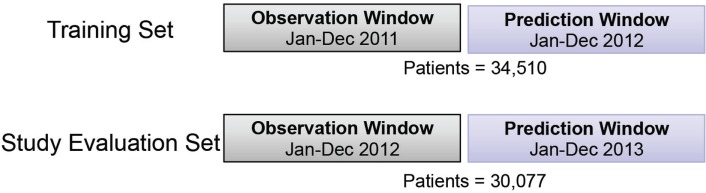
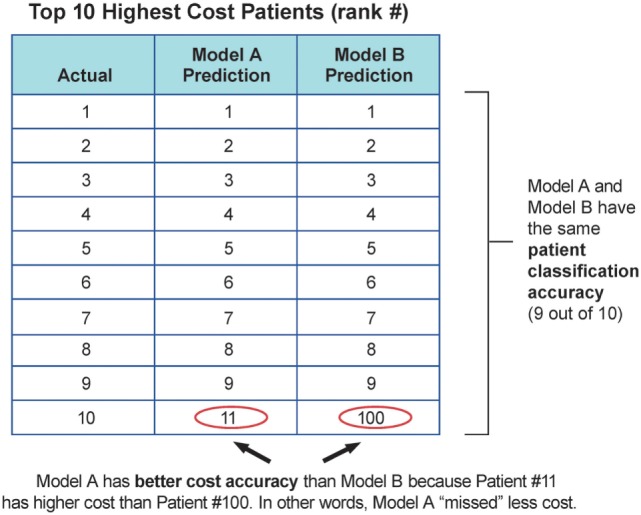
This was a retrospective study using a payer administrative database. The study cohort consisted of 97,862 patients diagnosed with schizophrenia (ICD9 code 295.*) from January 2009 to June 2014. Training ( = 34,510) and study evaluation ( = 30,077) cohorts were derived based on 12-month observation and prediction windows (PWs). The target was average total cost/patient/month in the PW. Three models (baseline, intermediate, final) were developed to assess the value of different variable categories for cost prediction (demographics, coverage, cost, health-care utilization, antipsychotic medication usage, and clinical conditions). Scalable orthogonal regression, significant attribute selection in high dimensions method, and random forests regression were used to develop the models. The trained models were assessed in the evaluation cohort using the regression , patient classification accuracy (PCA), and cost accuracy (CA). The model performance was compared to the Centers for Medicare & Medicaid Services Hierarchical Condition Categories (CMS-HCC) model.
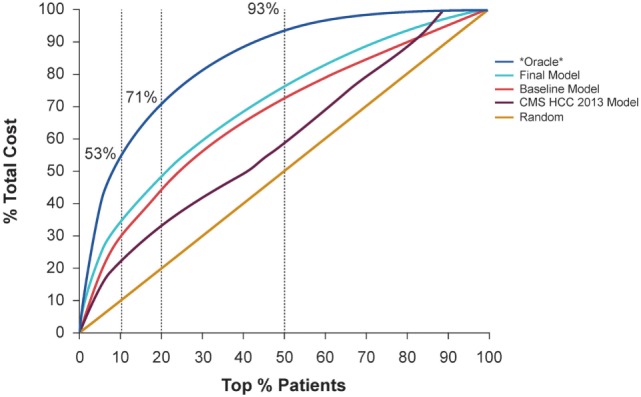
At top 10% cost cutoff, the final model achieved 0.23 , 43% PCA, and 63% CA; in contrast, the CMS-HCC model achieved 0.09 , 27% PCA with 45% CA. The final model and the CMS-HCC model identified 33 and 22%, respectively, of total cost at the top 10% cost cutoff.
Using advanced feature selection leveraging detailed health care, medication utilization features, and supervised machine learning methods improved the ability to predict and identify future high-cost patients with schizophrenia when compared with the CMS-HCC model.
精神分裂症等严重且持续性精神疾病的负担巨大,这要求医疗保健机构拥有适当的风险调整模型,以便有效地将资源分配给管理风险最大的患者。目前可用的模型低估了患有精神或行为健康状况患者的医疗保健成本。
本研究旨在使用先进的监督机器学习方法开发和评估用于识别未来高成本精神分裂症患者的预测模型。
这是一项使用支付方管理数据库的回顾性研究。研究队列包括2009年1月至2014年6月期间诊断为精神分裂症(ICD9编码295.*)的97862名患者。基于12个月的观察和预测窗口(PW)得出训练队列(n = 34510)和研究评估队列(n = 30077)。目标是PW期间的平均每位患者每月总成本。开发了三种模型(基线模型、中级模型、最终模型)以评估不同变量类别对成本预测的价值(人口统计学、保险范围、成本、医疗保健利用率、抗精神病药物使用情况和临床状况)。使用可扩展正交回归、高维显著属性选择方法和随机森林回归来开发模型。在评估队列中使用回归、患者分类准确率(PCA)和成本准确率(CA)对训练后的模型进行评估。将模型性能与医疗保险和医疗补助服务中心分层疾病类别(CMS-HCC)模型进行比较。
在成本截止值处于前10%时,最终模型的回归系数为0.23、PCA为43%、CA为63%;相比之下,CMS-HCC模型的回归系数为0.09、PCA为27%、CA为45%。最终模型和CMS-HCC模型在成本截止值处于前10%时分别识别出总成本的33%和22%。
与CMS-HCC模型相比,利用详细的医疗保健、药物使用特征和监督机器学习方法进行先进的特征选择,提高了预测和识别未来高成本精神分裂症患者的能力。