Chong Huey Yi, Teoh Siew Li, Wu David Bin-Chia, Kotirum Surachai, Chiou Chiun-Fang, Chaiyakunapruk Nathorn
School of Pharmacy, Monash University Malaysia, Selangor, Malaysia.
Janssen Pharmaceutical Companies Asia Pacific, Singapore.
Neuropsychiatr Dis Treat. 2016 Feb 16;12:357-73. doi: 10.2147/NDT.S96649. eCollection 2016.
Schizophrenia is one of the top 25 leading causes of disability worldwide in 2013. Despite its low prevalence, its health, social, and economic burden has been tremendous, not only for patients but also for families, caregivers, and the wider society. The magnitude of disease burden investigated in an economic burden study is an important source to policymakers in decision making. This study aims to systematically identify studies focusing on the economic burden of schizophrenia, describe the methods and data sources used, and summarize the findings of economic burden of schizophrenia.
A systematic review was performed for economic burden studies in schizophrenia using four electronic databases (Medline, EMBASE, PsycINFO, and EconLit) from inception to August 31, 2014.
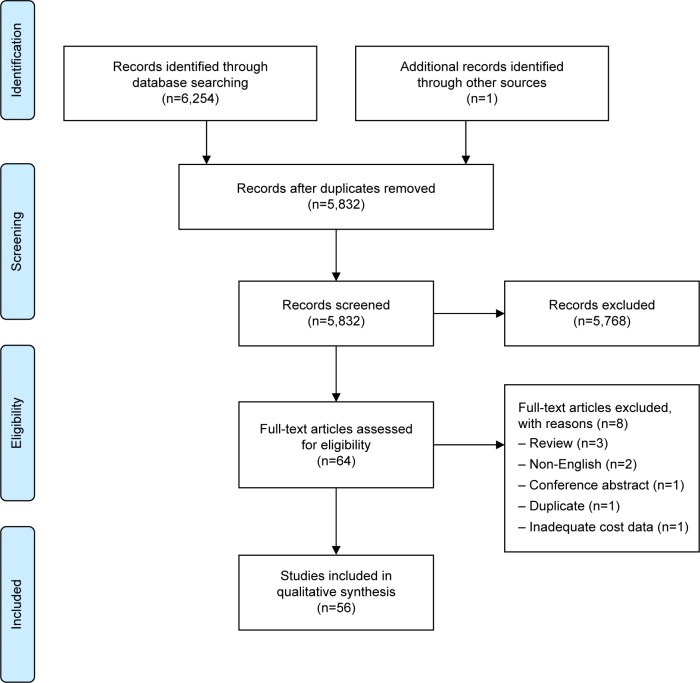
A total of 56 articles were included in this review. More than 80% of the studies were conducted in high-income countries. Most studies had undertaken a retrospective- and prevalence-based study design. The bottom-up approach was commonly employed to determine cost, while human capital method was used for indirect cost estimation. Database and literature were the most commonly used data sources in cost estimation in high-income countries, while chart review and interview were the main data sources in low and middle-income countries. Annual costs for the schizophrenia population in the country ranged from US$94 million to US$102 billion. Indirect costs contributed to 50%-85% of the total costs associated with schizophrenia. The economic burden of schizophrenia was estimated to range from 0.02% to 1.65% of the gross domestic product.
The enormous economic burden in schizophrenia is suggestive of the inadequate provision of health care services to these patients. An informed decision is achievable with the increasing recognition among public and policymakers that schizophrenia is burdensome. This results in better resource allocation and the development of policy-oriented research for this highly disabling yet under-recognized mental health disease.
精神分裂症是2013年全球导致残疾的25大主要原因之一。尽管其患病率较低,但其对健康、社会和经济造成的负担却是巨大的,不仅对患者如此,对家庭、护理人员以及更广泛的社会亦是如此。经济负担研究中所调查的疾病负担规模是政策制定者决策的重要依据。本研究旨在系统地识别聚焦于精神分裂症经济负担的研究,描述所使用的方法和数据来源,并总结精神分裂症经济负担的研究结果。
对从起始至2014年8月31日期间有关精神分裂症经济负担研究的文献进行了系统综述,通过四个电子数据库(医学期刊数据库、荷兰医学文摘数据库、心理学文摘数据库和经济文献数据库)进行检索。
本综述共纳入56篇文章。超过80%的研究在高收入国家开展。大多数研究采用了基于回顾性和患病率的研究设计。自下而上的方法通常用于确定成本,而人力资本法用于间接成本估算。数据库和文献是高收入国家成本估算中最常用的数据来源,而图表审查和访谈是低收入和中等收入国家的主要数据来源。该国精神分裂症患者群体的年度成本从9400万美元到1.02万亿美元不等。间接成本占与精神分裂症相关的总成本的50% - 85%。精神分裂症的经济负担估计占国内生产总值的0.02%至1.65%。
精神分裂症巨大的经济负担表明对这些患者的医疗服务提供不足。随着公众和政策制定者越来越认识到精神分裂症是一种负担沉重的疾病,做出明智的决策是可以实现的。这将带来更好的资源分配,并针对这种高度致残但未得到充分认识的精神疾病开展以政策为导向的研究。