Centro de Investigación en Biotecnología, Universidad Autónoma del Estado de Morelos, Cuernavaca, Morelos, México.
Centro de Investigación en Dinámica Celular del Instituto de Investigación en Ciencias Básicas y Aplicadas, Universidad Autónoma del Estado de Morelos, Cuernavaca, Morelos, México.
Microbiologyopen. 2017 Oct;6(5). doi: 10.1002/mbo3.507. Epub 2017 Jul 17.
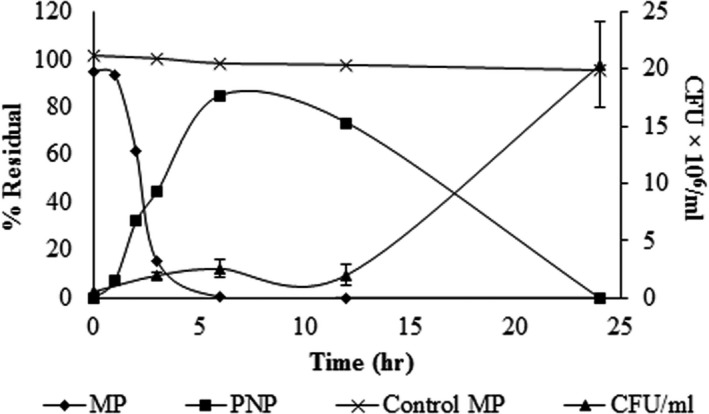
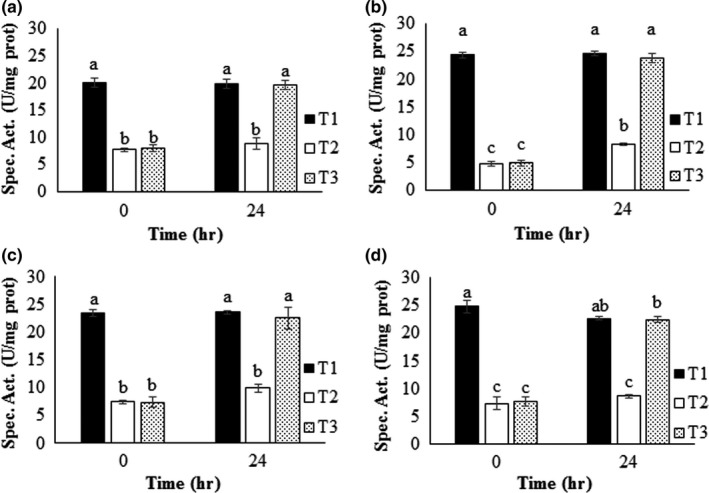
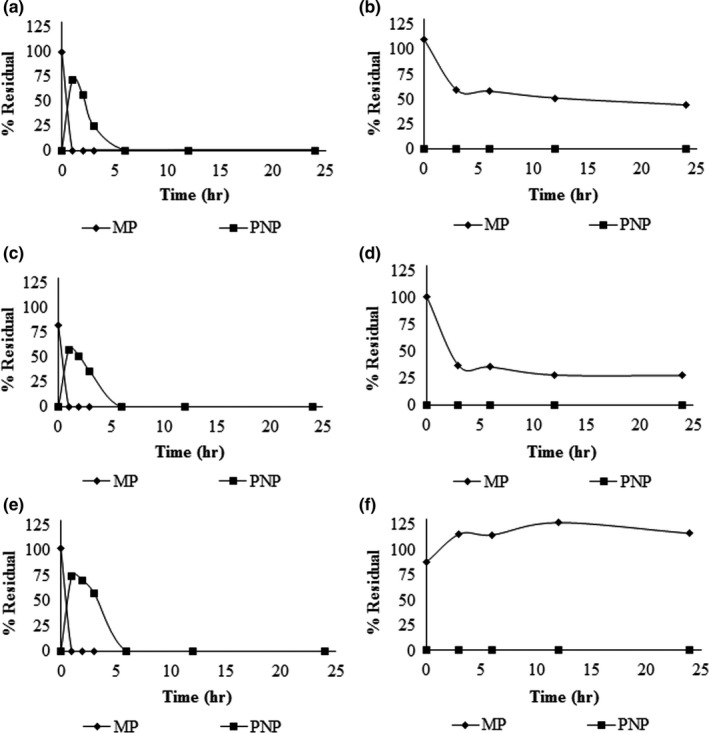
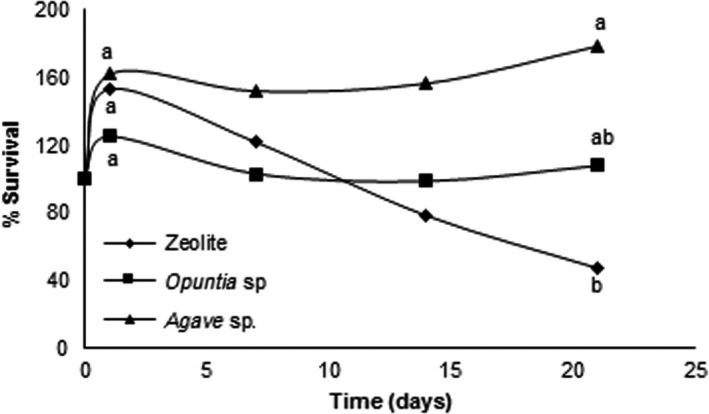
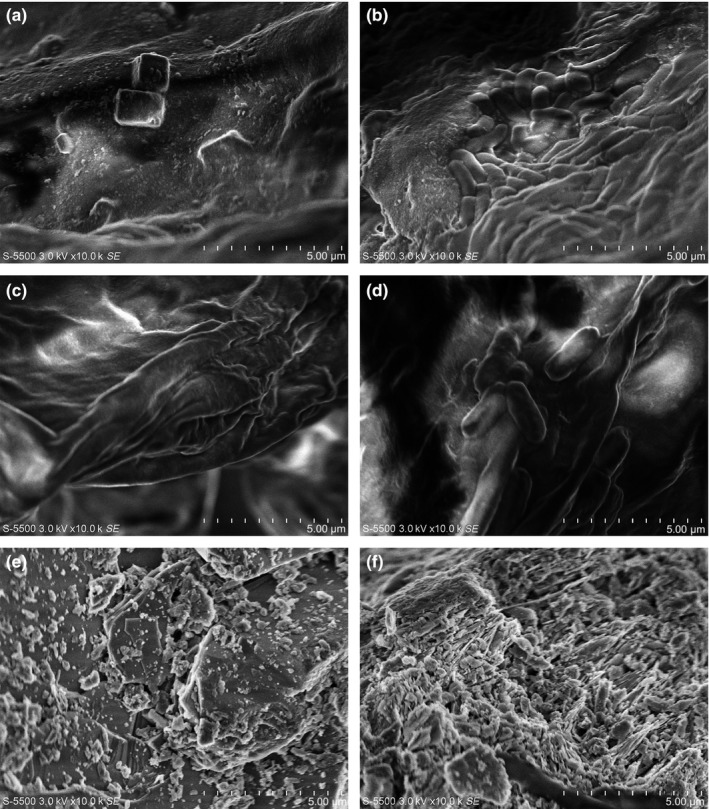
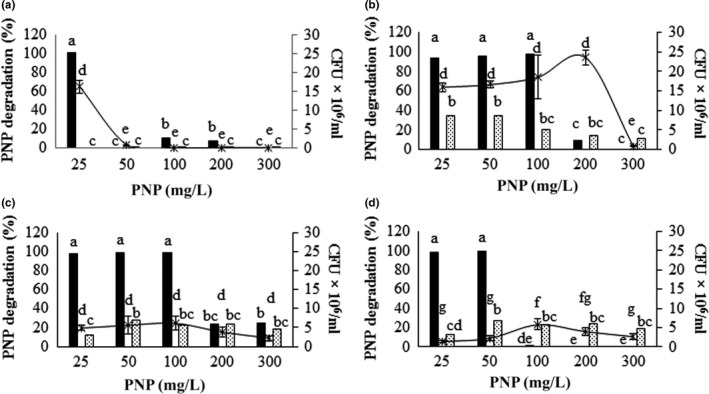
Organophosphate pesticides are of great interest for research because they are currently the most commonly used pesticides. In this study, a bacterial strain capable of completely degrading methyl parathion (MP) was isolated from agricultural soils in central Mexico. This strain was designated strain S5-2 and was identified as Burkholderia cenocepacia. To increase degradation yields, cells were immobilized on three different supports: powdered zeolite and Opuntia sp. and Agave sp. fibers. The results indicated a significant increase in MP hydrolysis and p-nitrophenol (PNP) degradation with immobilized cells compared to free cell cultures. Furthermore, immobilized cells were capable of withstanding and degrading higher concentrations of PNP compared to cell suspension cultures. The cell viability in the free cell cultures, as well as PNP degradation, was affected at concentrations greater than 25 mg/L. In contrast, cells immobilized on Opuntia sp. and Agave sp. fibers completely degraded PNP at concentrations of 100 mg/L. To verify that MP solution toxicity was decreased by B. cenocepacia strain S5-2 via pesticide degradation, we measured the acetylcholinesterase activity, both before and after treatment with bacteria. The results demonstrate that the activity of acetylcholinesterase was unaffected after MP degradation by bacteria.
有机磷农药因其目前是最常用的农药而备受研究关注。本研究从墨西哥中部农业土壤中分离到一株能够完全降解甲基对硫磷(MP)的细菌菌株。该菌株被命名为 S5-2 菌株,被鉴定为洋葱伯克霍尔德菌。为了提高降解产率,将细胞固定在三种不同的载体上:沸石粉、仙人掌和龙舌兰纤维。结果表明,与游离细胞培养物相比,固定化细胞显著提高了 MP 水解和对硝基苯酚(PNP)的降解。此外,与悬浮细胞培养物相比,固定化细胞能够耐受并降解更高浓度的 PNP。游离细胞培养物中的细胞活力以及 PNP 的降解在浓度大于 25mg/L 时受到影响。相比之下,仙人掌和龙舌兰纤维固定化的细胞在 100mg/L 的浓度下完全降解了 PNP。为了验证 B. 洋葱伯克霍尔德菌 S5-2 通过农药降解降低了 MP 溶液的毒性,我们测量了处理前后的乙酰胆碱酯酶活性。结果表明,在细菌降解 MP 后,乙酰胆碱酯酶的活性不受影响。