Rashad Hend, Metwally Fateheya M, Ezzat Shahira M, Salama Maha M, Hasheesh Adel, Abdel Motaal Amira
a Department of Environmental and Occupational Medicine , National Research Center , Dokki , Egypt.
b Department of Pharmacognosy, Faculty of Pharmacy , Cairo University , Giza , Egypt.
Pharm Biol. 2017 Dec;55(1):1954-1961. doi: 10.1080/13880209.2017.1354388.
Balanites aegyptiaca Del. (Zygophyllaceae) fruits are traditionally known for the treatment of hyperglycaemia. Several in vitro and in vivo studies proposed some mechanisms of action. However, clinical trials in human beings were never reported to date.
To investigate the antidiabetic efficacy of the 70% ethanol extract of the pericarps of B. aegyptiaca (BE) within a nutritional intervention in elderly people.
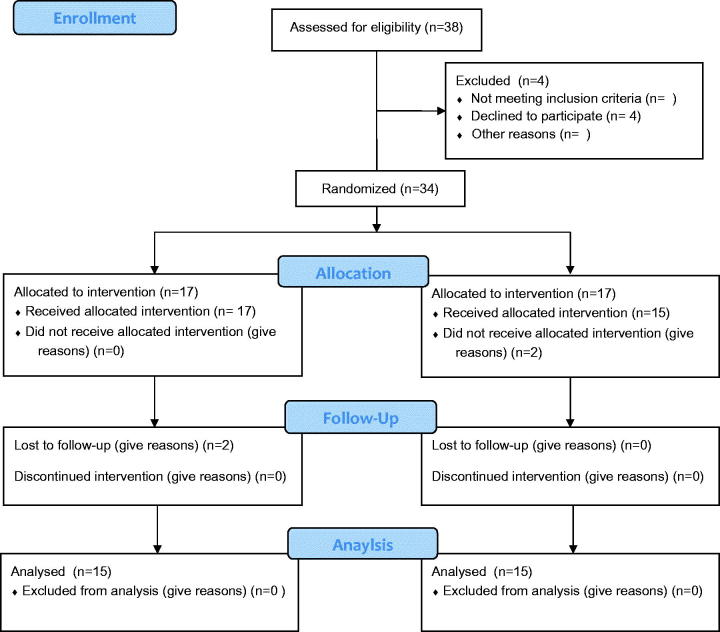
Ultra-performance electrospray ionization-mass spectroscopy (UPLC-ESI-MS/MS) analysis was used for metabolic profiling of BE which was incorporated in hard gelatine capsules (400 mg/day) and tested on 30 type 2 diabetes (T2D) Egyptian patients for 8 weeks. According to sex, age and body mass index participants were divided into two equivalent groups, placebo and treatment.
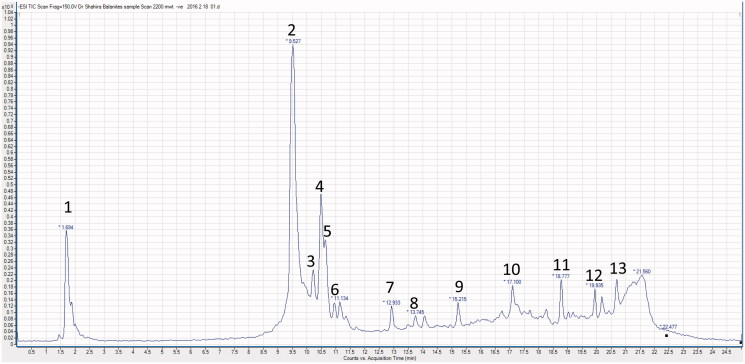
Thirteen compounds were identified in BE using UPLC-ESI-MS/MS analysis among which five steroidal saponins, seven phenolic compounds and a sterol glucoside. At the end of the 8-week treatment, the treated group showed 26.88% decrease in 2 h postprandial plasma glucose relative to 2.6% increase in the placebo group, while fasting plasma glucose was reduced to 10.3%. Treatment with BE capsules for 8 weeks produced significant reduction in the plasma triglyceride, total cholesterol and low-density lipoprotein cholesterol by 9.0, 12.76 and 21.35%, respectively, with 29.8% increase in the high-density lipoprotein cholesterol. Plasma alanine transaminase and aspartate transaminase were reduced by 42.6 and 43.3%, respectively.
Administration of the BE capsules to T2D resulted in significant improvements in the glycaemic markers and the lipid profile, without adverse effects or hypoglycaemia.
埃及蒺藜(蒺藜科)果实传统上被认为可用于治疗高血糖症。多项体外和体内研究提出了一些作用机制。然而,迄今为止尚未有关于人体临床试验的报道。
在老年人营养干预中研究埃及蒺藜果皮70%乙醇提取物(BE)的抗糖尿病功效。
采用超高效电喷雾电离质谱(UPLC-ESI-MS/MS)分析对BE进行代谢谱分析,将其制成硬明胶胶囊(400毫克/天),并在30名埃及2型糖尿病(T2D)患者中进行为期8周的测试。根据性别、年龄和体重指数,参与者被分为两个相等的组,即安慰剂组和治疗组。
使用UPLC-ESI-MS/MS分析在BE中鉴定出13种化合物,其中包括5种甾体皂苷、7种酚类化合物和1种甾醇糖苷。在8周治疗结束时,治疗组餐后2小时血浆葡萄糖下降了26.88%,而安慰剂组增加了2.6%,同时空腹血糖降至10.3%。服用BE胶囊8周可使血浆甘油三酯、总胆固醇和低密度脂蛋白胆固醇分别显著降低9.0%、12.76%和21.35%,高密度脂蛋白胆固醇增加29.8%。血浆丙氨酸转氨酶和天冬氨酸转氨酶分别降低了42.6%和43.3%。
给T2D患者服用BE胶囊可显著改善血糖指标和血脂状况,且无不良反应或低血糖发生。