Center for Nanomedicine and Department of Anesthesiology, Brigham and Women's Hospital, Harvard Medical School, Boston, MA, 02115, USA.
Division of Cardiology, Department of Medicine, Marc and Ruti Bell Program in Vascular Biology, New York University School of Medicine, New York, NY, 10016, USA.
Adv Healthc Mater. 2017 Oct;6(20). doi: 10.1002/adhm.201700313. Epub 2017 Jul 21.
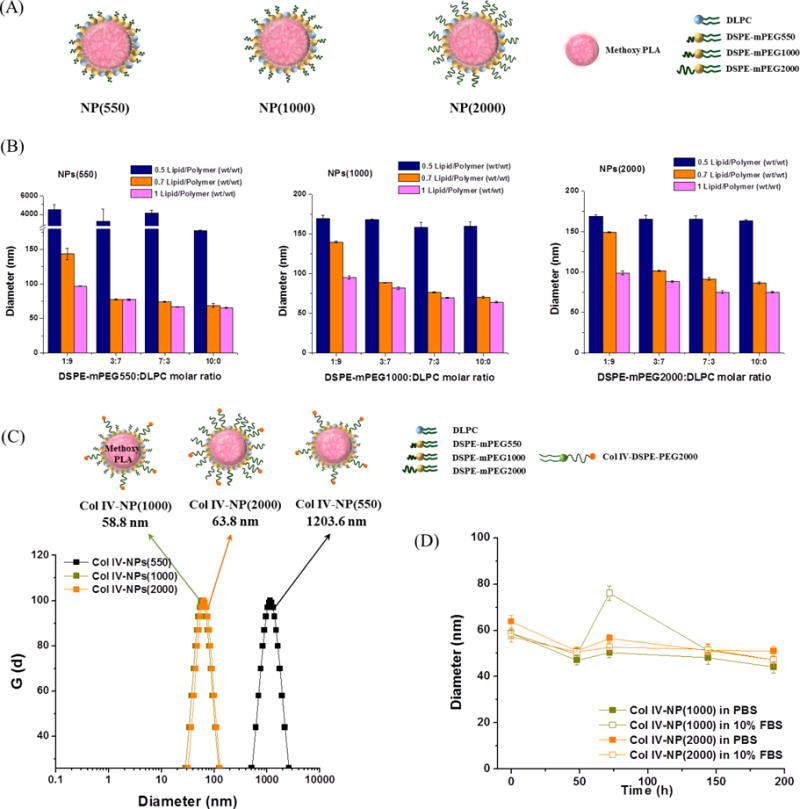
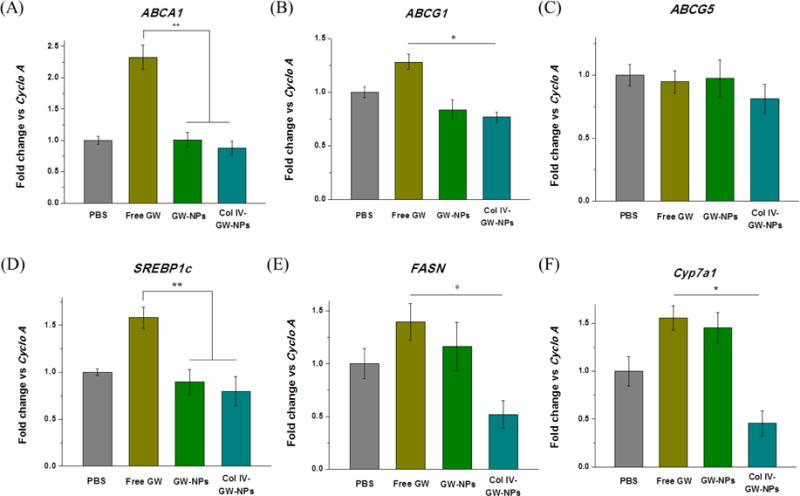
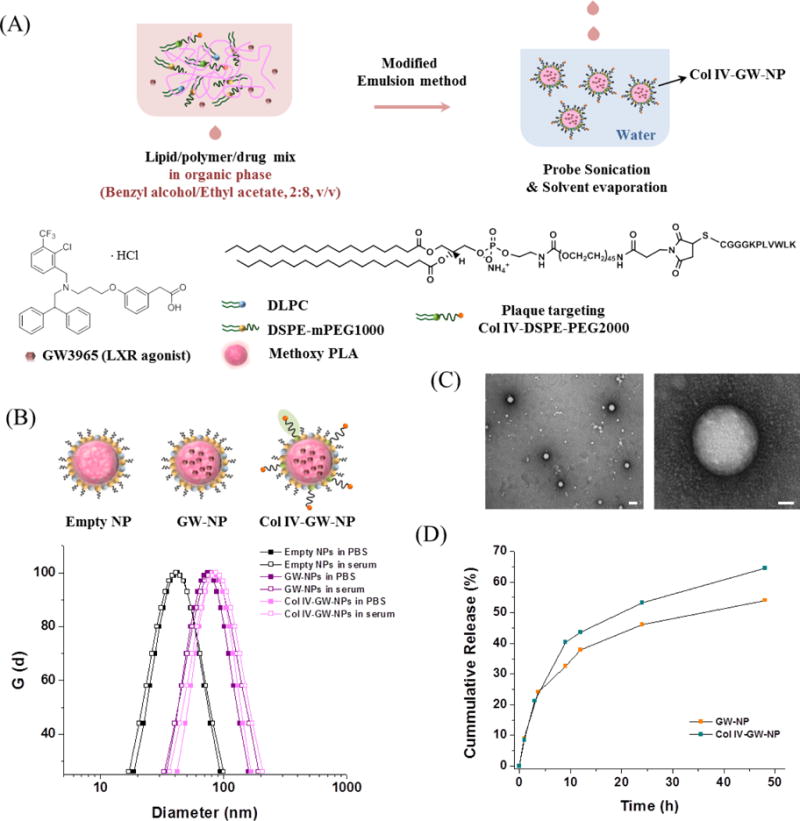
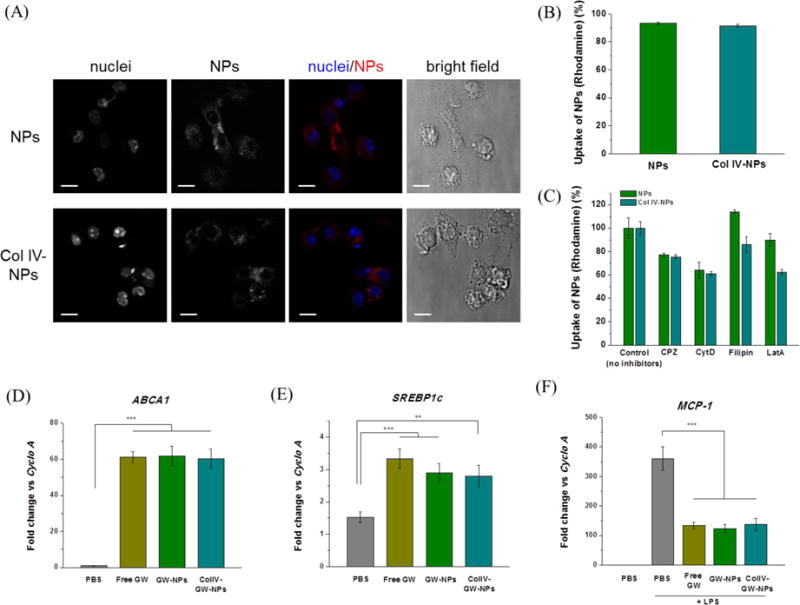
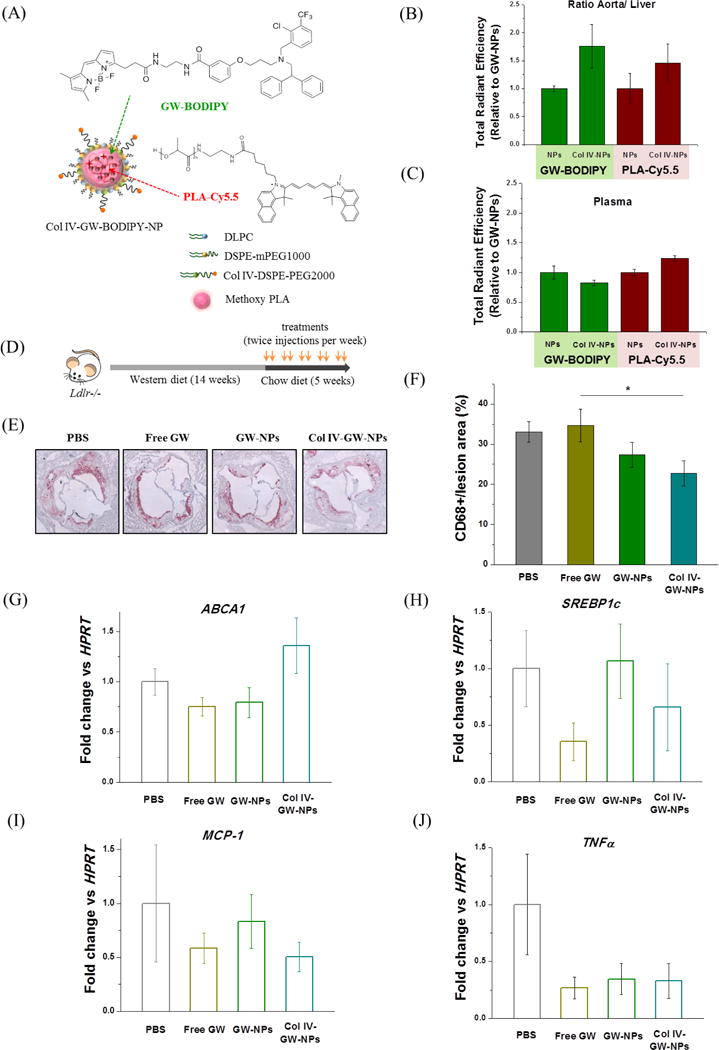
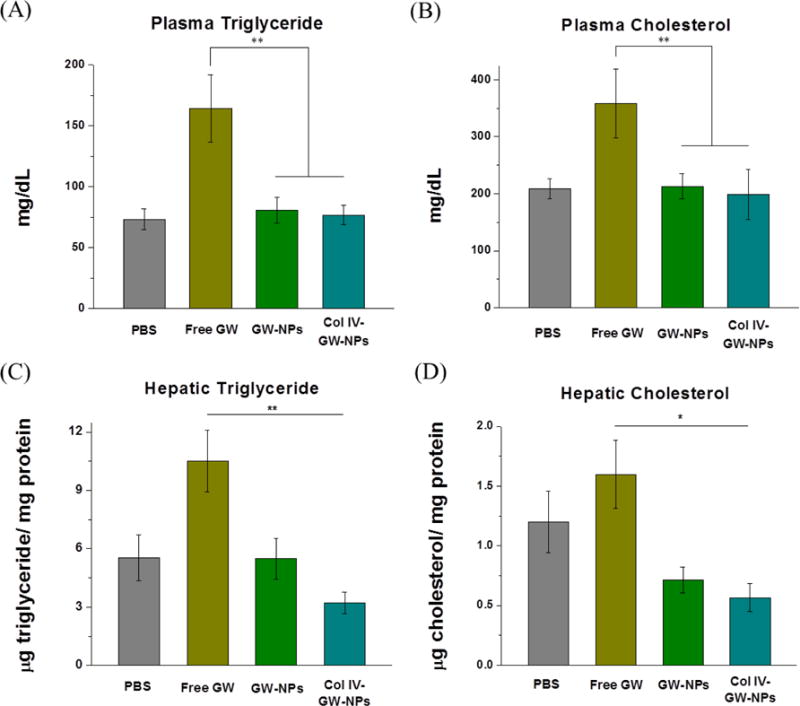
The pharmacological manipulation of liver X receptors (LXRs) has been an attractive therapeutic strategy for atherosclerosis treatment as they control reverse cholesterol transport and inflammatory response. This study presents the development and efficacy of nanoparticles (NPs) incorporating the synthetic LXR agonist GW3965 (GW) in targeting atherosclerotic lesions. Collagen IV (Col IV) targeting ligands are employed to functionalize the NPs to improve targeting to the atherosclerotic plaque, and formulation parameters such as the length of the polyethylene glycol (PEG) coating molecules are systematically optimized. In vitro studies indicate that the GW-encapsulated NPs upregulate the LXR target genes and downregulate proinflammatory mediator in macrophages. The Col IV-targeted NPs encapsulating GW (Col IV-GW-NPs) successfully reaches atherosclerotic lesions when administered for 5 weeks to mice with preexisting lesions, substantially reducing macrophage content (≈30%) compared to the PBS group, which is with greater efficacy versus nontargeting NPs encapsulating GW (GW-NPs) (≈18%). In addition, mice administered the Col IV-GW-NPs do not demonstrate increased hepatic lipid biosynthesis or hyperlipidemia during the treatment period, unlike mice injected with the free GW. These findings suggest a new form of LXR-based therapeutics capable of enhanced delivery of the LXR agonist to atherosclerotic lesions without altering hepatic lipid metabolism.
肝脏 X 受体 (LXR) 的药理学操纵一直是治疗动脉粥样硬化的一种有吸引力的治疗策略,因为它们可以控制胆固醇逆转运和炎症反应。本研究提出了将合成 LXR 激动剂 GW3965 (GW) 包载于纳米颗粒 (NPs) 中以靶向动脉粥样硬化病变的方法。采用 IV 型胶原 (Col IV) 靶向配体对 NPs 进行功能化,以提高对动脉粥样硬化斑块的靶向性,并系统优化制剂参数,如聚乙二醇 (PEG) 涂层分子的长度。体外研究表明,包载 GW 的 NPs 上调 LXR 靶基因,并下调巨噬细胞中的促炎介质。在已存在病变的小鼠中给予 5 周后,靶向 Col IV 的 NPs 成功到达动脉粥样硬化病变部位,与 PBS 组相比,巨噬细胞含量显著减少(约 30%),其疗效优于包载 GW 的非靶向 NPs(GW-NPs)(约 18%)。此外,与注射游离 GW 的小鼠相比,给予 Col IV-GW-NPs 的小鼠在治疗期间没有表现出肝脂质生物合成增加或高血脂。这些发现表明,一种新形式的基于 LXR 的治疗方法能够增强 LXR 激动剂向动脉粥样硬化病变的递呈,而不改变肝脂质代谢。