Katoh Masuko, Katoh Masaru
M&M Medical BioInformatics, Tokyo 113-0033, Japan.
Department of Omics Network, National Cancer Center, Tokyo 104-0045, Japan.
Int J Mol Med. 2017 Sep;40(3):587-606. doi: 10.3892/ijmm.2017.3071. Epub 2017 Jul 19.
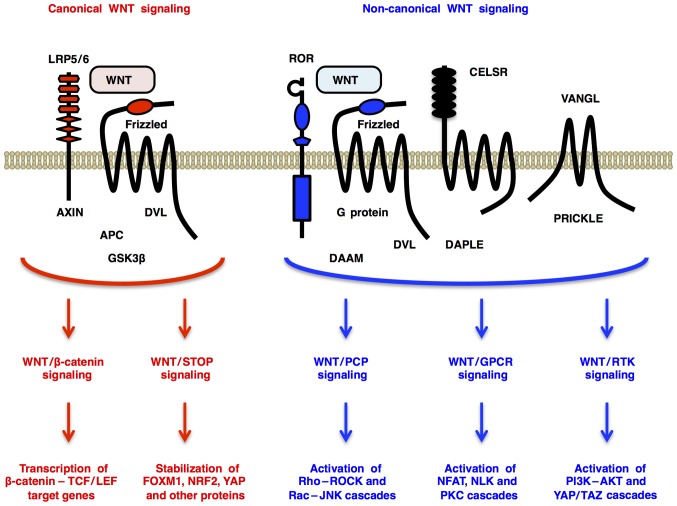
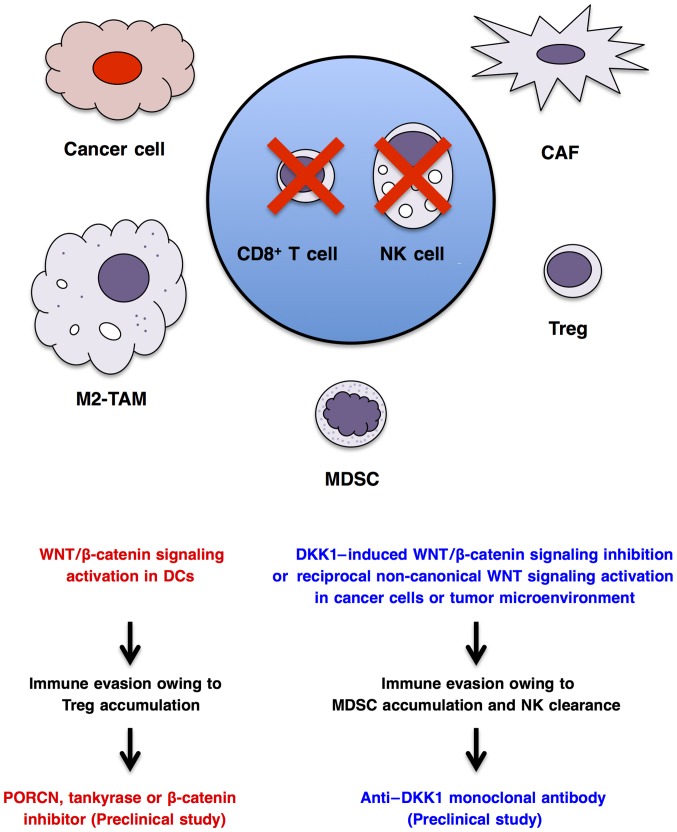
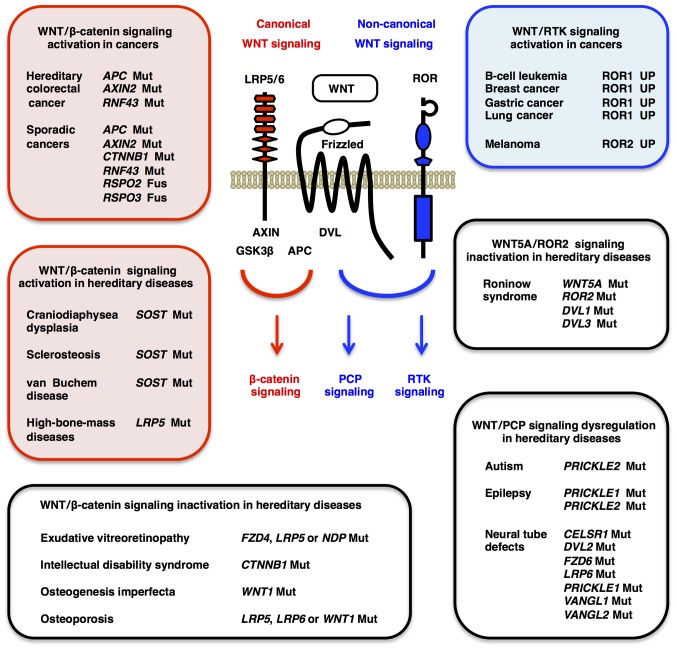
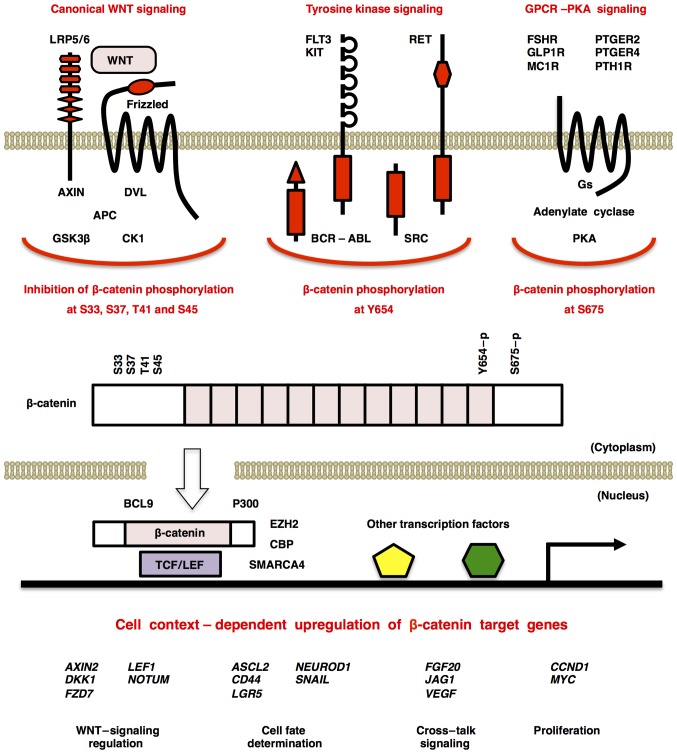
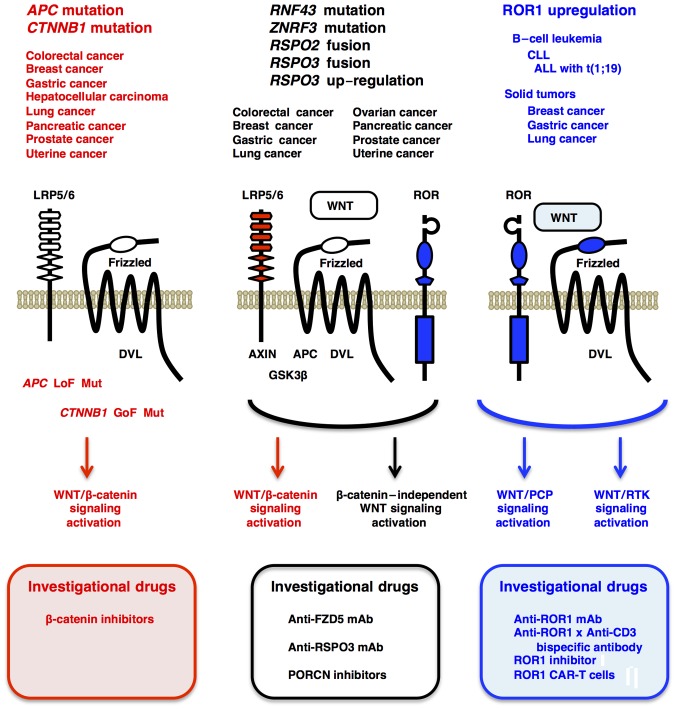
Canonical WNT signaling through Frizzled and LRP5/6 receptors is transduced to the WNT/β-catenin and WNT/stabilization of proteins (STOP) signaling cascades to regulate cell fate and proliferation, whereas non-canonical WNT signaling through Frizzled or ROR receptors is transduced to the WNT/planar cell polarity (PCP), WNT/G protein-coupled receptor (GPCR) and WNT/receptor tyrosine kinase (RTK) signaling cascades to regulate cytoskeletal dynamics and directional cell movement. WNT/β-catenin signaling cascade crosstalks with RTK/SRK and GPCR-cAMP-PKA signaling cascades to regulate β-catenin phosphorylation and β-catenin-dependent transcription. Germline mutations in WNT signaling molecules cause hereditary colorectal cancer, bone diseases, exudative vitreoretinopathy, intellectual disability syndrome and PCP-related diseases. APC or CTNNB1 mutations in colorectal, endometrial and prostate cancers activate the WNT/β-catenin signaling cascade. RNF43, ZNRF3, RSPO2 or RSPO3 alterations in breast, colorectal, gastric, pancreatic and other cancers activate the WNT/β-catenin, WNT/STOP and other WNT signaling cascades. ROR1 upregulation in B-cell leukemia and solid tumors and ROR2 upregulation in melanoma induce invasion, metastasis and therapeutic resistance through Rho-ROCK, Rac-JNK, PI3K-AKT and YAP signaling activation. WNT signaling in cancer, stromal and immune cells dynamically orchestrate immune evasion and antitumor immunity in a cell context-dependent manner. Porcupine (PORCN), RSPO3, WNT2B, FZD5, FZD10, ROR1, tankyrase and β-catenin are targets of anti-WNT signaling therapy, and ETC-159, LGK974, OMP-18R5 (vantictumab), OMP-54F28 (ipafricept), OMP-131R10 (rosmantuzumab), PRI-724 and UC-961 (cirmtuzumab) are in clinical trials for cancer patients. Different classes of anti-WNT signaling therapeutics are necessary for the treatment of APC/CTNNB1-, RNF43/ZNRF3/RSPO2/RSPO3- and ROR1-types of human cancers. By contrast, Dickkopf-related protein 1 (DKK1), SOST and glycogen synthase kinase 3β (GSK3β) are targets of pro-WNT signaling therapy, and anti-DKK1 (BHQ880 and DKN-01) and anti-SOST (blosozumab, BPS804 and romosozumab) monoclonal antibodies are being tested in clinical trials for cancer patients and osteoporotic post-menopausal women. WNT-targeting therapeutics have also been applied as reagents for in vitro stem-cell processing in the field of regenerative medicine.
通过卷曲蛋白(Frizzled)和低密度脂蛋白受体相关蛋白5/6(LRP5/6)受体的经典WNT信号转导至WNT/β-连环蛋白和WNT/蛋白质稳定化(STOP)信号级联,以调节细胞命运和增殖,而通过卷曲蛋白或受体酪氨酸激酶样孤儿受体(ROR)受体的非经典WNT信号转导至WNT/平面细胞极性(PCP)、WNT/G蛋白偶联受体(GPCR)和WNT/受体酪氨酸激酶(RTK)信号级联,以调节细胞骨架动力学和细胞定向运动。WNT/β-连环蛋白信号级联与RTK/丝裂原活化蛋白激酶(SRK)和GPCR-环磷酸腺苷-蛋白激酶A(cAMP-PKA)信号级联相互作用,以调节β-连环蛋白磷酸化和β-连环蛋白依赖性转录。WNT信号分子的种系突变会导致遗传性结直肠癌、骨疾病、渗出性玻璃体视网膜病变、智力残疾综合征和PCP相关疾病。结直肠癌、子宫内膜癌和前列腺癌中的腺瘤性息肉病基因(APC)或β-连环蛋白(CTNNB1)突变会激活WNT/β-连环蛋白信号级联。乳腺癌、结直肠癌、胃癌、胰腺癌和其他癌症中的RNF43、ZNRF3、RSPO2或RSPO3改变会激活WNT/β-连环蛋白、WNT/STOP和其他WNT信号级联。B细胞白血病和实体瘤中ROR1上调以及黑色素瘤中ROR2上调通过Rho-ROCK、Rac-JNK、PI3K-AKT和Yes相关蛋白(YAP)信号激活诱导侵袭、转移和治疗抗性。癌症、基质细胞和免疫细胞中的WNT信号以细胞背景依赖的方式动态协调免疫逃逸和抗肿瘤免疫。刺猬蛋白(PORCN)、RSPO3、WNT2B、卷曲蛋白5(FZD5)、卷曲蛋白10(FZD10)、ROR1、端锚聚合酶和β-连环蛋白是抗WNT信号疗法的靶点,而ETC-159、LGK974、OMP-18R5(凡替西单抗)、OMP-54F28(伊帕西普)、OMP-131R10(罗斯曼图单抗)、PRI-724和UC-961(西妥昔单抗)正在针对癌症患者进行临床试验。不同类别的抗WNT信号疗法对于治疗APC/CTNNB1型、RNF43/ZNRF3/RSPO2/RSPO3型和ROR1型人类癌症是必要的。相比之下,Dickkopf相关蛋白1(DKK1)、硬化蛋白(SOST)和糖原合酶激酶3β(GSK3β)是促WNT信号疗法的靶点,抗DKK1(BHQ880和DKN-01)和抗SOST(布洛索单抗、BPS804和罗莫索单抗)单克隆抗体正在针对癌症患者和绝经后骨质疏松妇女进行临床试验。靶向WNT的疗法也已作为再生医学领域体外干细胞处理的试剂应用。