Barnes Richard H, Akama Takeshi, Öhman Miina K, Woo Moon-Sook, Bahr Julian, Weiss Stephen J, Eitzman Daniel T, Chun Tae-Hwa
Division of Metabolism, Endocrinology and Diabetes, Department of Internal Medicine, University of Michigan Medical School, Ann Arbor, MI.
Biointerfaces Institute, University of Michigan, Ann Arbor, MI.
J Am Heart Assoc. 2017 Jul 22;6(7):e003693. doi: 10.1161/JAHA.116.003693.
The MMP (matrix metalloproteinase) family plays diverse and critical roles in directing vascular wall remodeling in atherosclerosis. Unlike secreted-type MMPs, a member of the membrane-type MMP family, MT1-MMP (membrane-type 1 MMP; MMP14), mediates pericellular extracellular matrix degradation that is indispensable for maintaining physiological extracellular matrix homeostasis. However, given the premature mortality exhibited by MT1-MMP-null mice, the potential role of the proteinase in atherogenesis remains elusive. We sought to determine the effects of both MT1-MMP heterozygosity and tissue-specific gene targeting on atherogenesis in APOE (apolipoprotein E)-null mice.
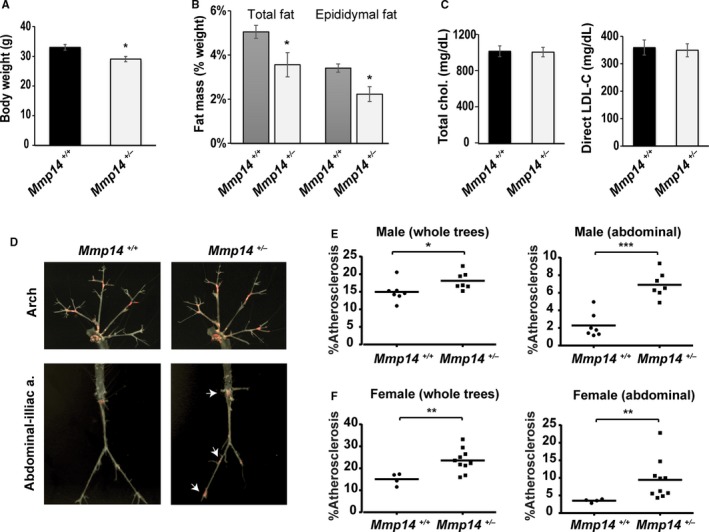
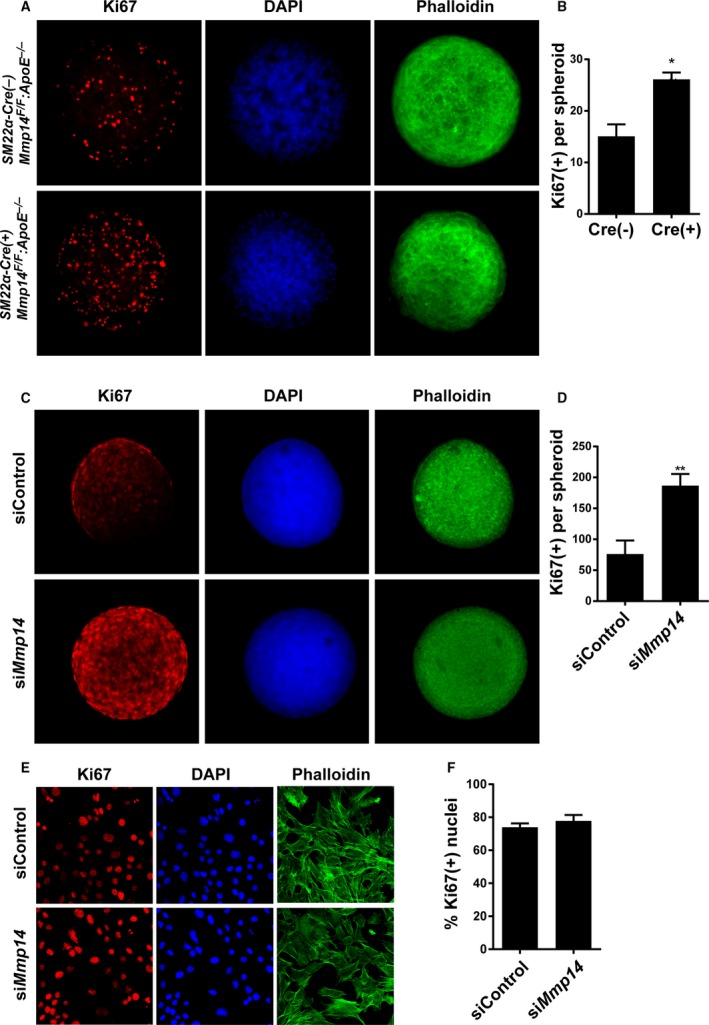
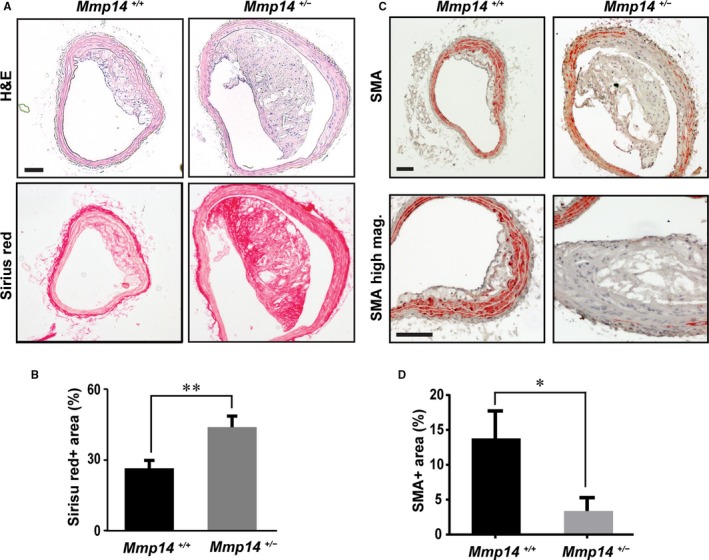
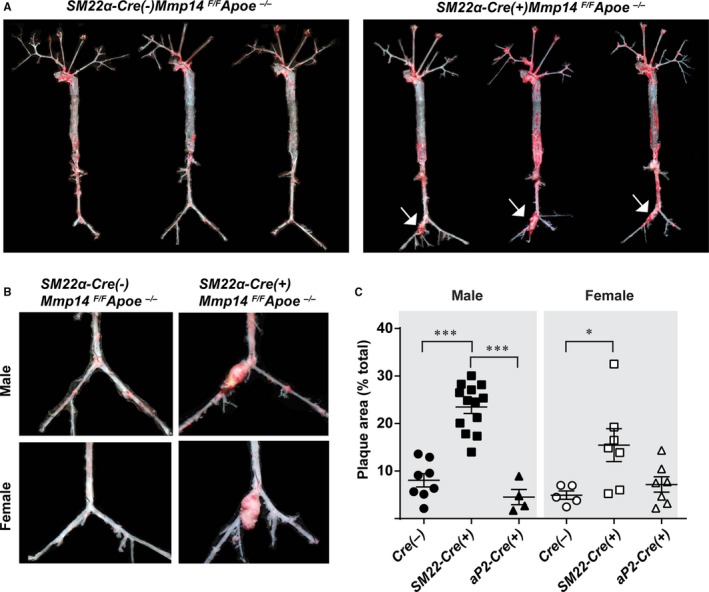
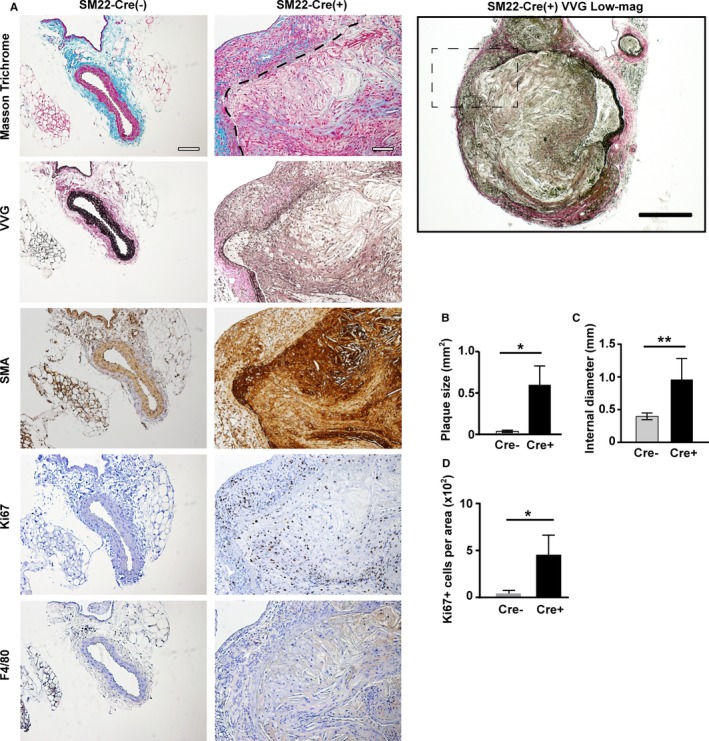
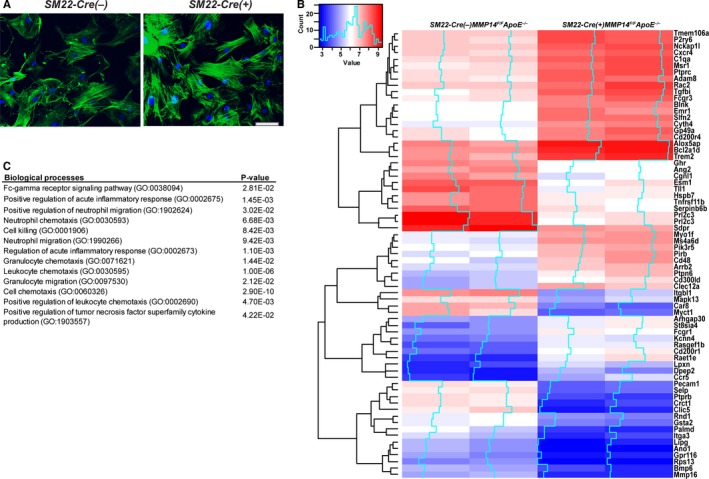
MT1-MMP heterozygosity in the APOE-null background ( ) significantly promoted atherogenesis relative to mice. Furthermore, the tissue-specific deletion of MT1-MMP from vascular smooth muscle cells (VSMCs) in SM22α-Cre(+) (VSMC-knockout) mice likewise increased the severity of atherosclerotic lesions. Although VSMC-knockout mice also developed progressive atherosclerotic aneurysms in their iliac arteries, macrophage- and adipose-specific MT1-MMP-knockout mice did not display this sensitized phenotype. In VSMC-knockout mice, atherosclerotic lesions were populated by hyperproliferating VSMCs (smooth muscle actin- and Ki67-double-positive cells) that were characterized by a proinflammatory gene expression profile. Finally, MT1-MMP-null VSMCs cultured in a 3-dimensional spheroid model system designed to mimic in vivo-like cell-cell and cell-extracellular matrix interactions, likewise displayed markedly increased proliferative potential.
MT1-MMP expressed by VSMCs plays a key role in limiting the progression of atherosclerosis in APOE-null mice by regulating proliferative responses and inhibiting the deterioration of VSMC function in atherogenic vascular walls.
基质金属蛋白酶(MMP)家族在动脉粥样硬化中指导血管壁重塑过程中发挥着多样且关键的作用。与分泌型MMP不同,膜型MMP家族成员之一,MT1-MMP(膜型1 MMP;MMP14)介导细胞周围细胞外基质降解,这对于维持生理性细胞外基质稳态不可或缺。然而,鉴于MT1-MMP基因敲除小鼠出现过早死亡,该蛋白酶在动脉粥样硬化发生中的潜在作用仍不明确。我们试图确定MT1-MMP杂合性和组织特异性基因靶向对载脂蛋白E(APOE)基因敲除小鼠动脉粥样硬化发生的影响。
与野生型小鼠相比,APOE基因敲除背景下的MT1-MMP杂合性( )显著促进了动脉粥样硬化的发生。此外,通过SM22α-Cre(+)(血管平滑肌细胞敲除)小鼠的血管平滑肌细胞(VSMC)特异性缺失MT1-MMP同样增加了动脉粥样硬化病变的严重程度。尽管血管平滑肌细胞敲除小鼠在其髂动脉中也出现了进行性动脉粥样硬化动脉瘤,但巨噬细胞和脂肪特异性MT1-MMP敲除小鼠并未表现出这种敏感表型。在血管平滑肌细胞敲除小鼠中,动脉粥样硬化病变由过度增殖的血管平滑肌细胞(平滑肌肌动蛋白和Ki67双阳性细胞)构成,这些细胞具有促炎基因表达谱。最后,在设计用于模拟体内细胞间和细胞与细胞外基质相互作用的三维球体模型系统中培养的MT1-MMP基因敲除血管平滑肌细胞同样显示出明显增加的增殖潜能。
血管平滑肌细胞表达的MT1-MMP通过调节增殖反应和抑制动脉粥样硬化血管壁中血管平滑肌细胞功能的恶化,在限制APOE基因敲除小鼠动脉粥样硬化进展中起关键作用。