Priority Research Centre for Reproductive Science, School of Environmental and Life Sciences, University of Newcastle, Callaghan, New South Wales, Australia.
School of Biological Sciences, University of Auckland, Auckland, New Zealand.
Sci Rep. 2017 Jul 24;7(1):6247. doi: 10.1038/s41598-017-06372-z.
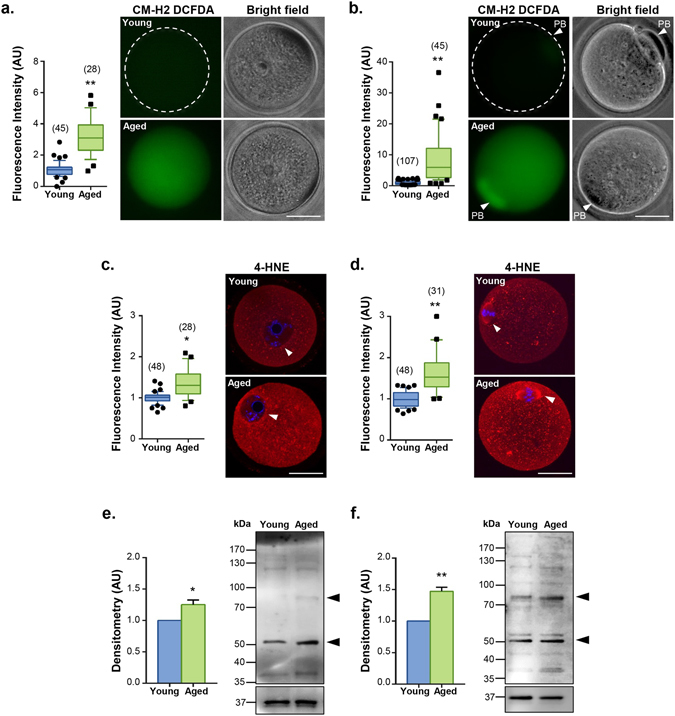
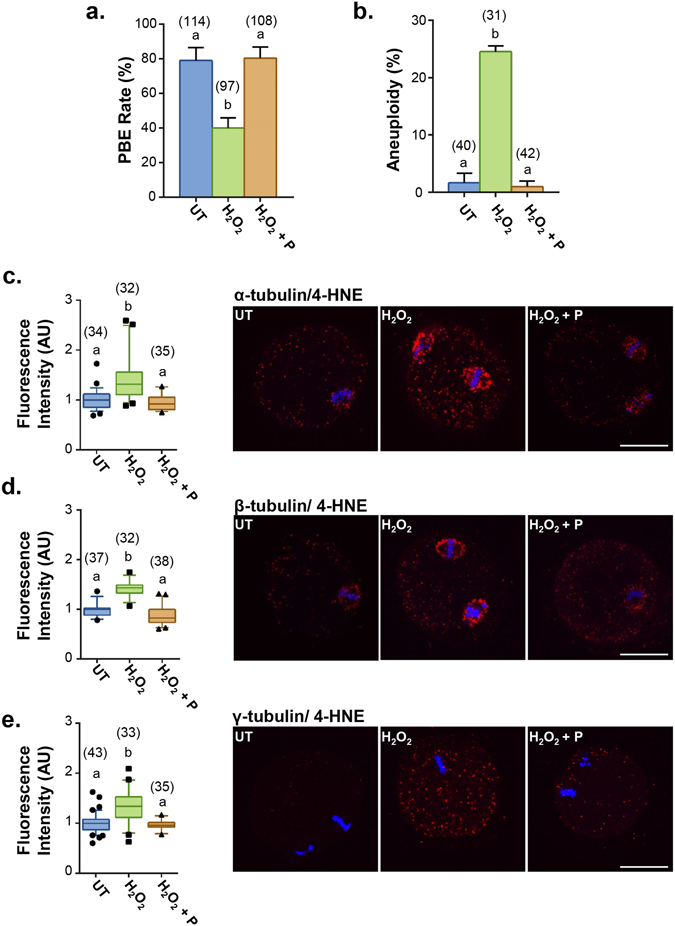
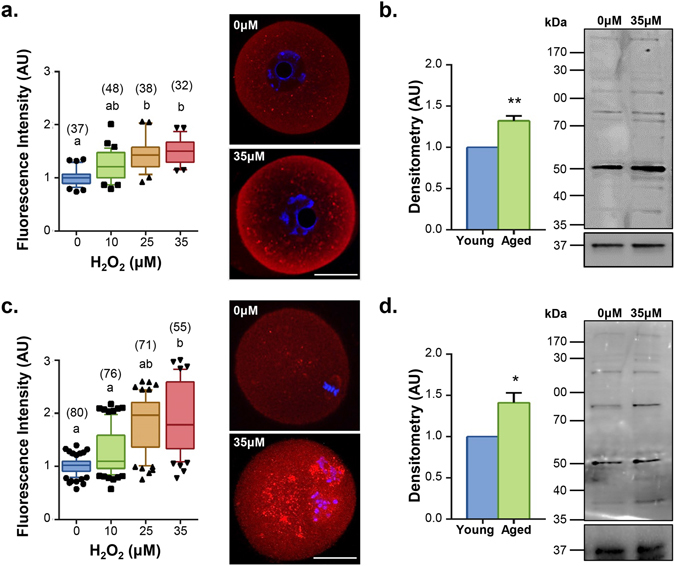
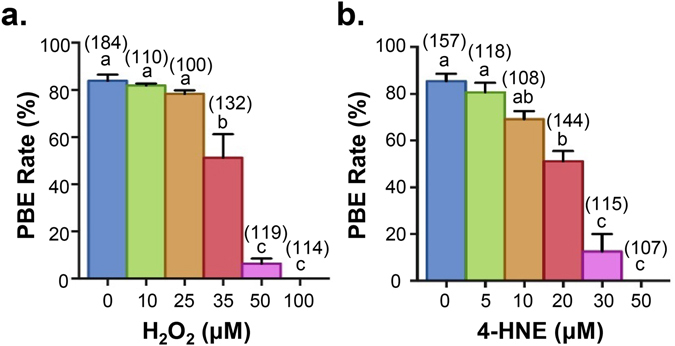
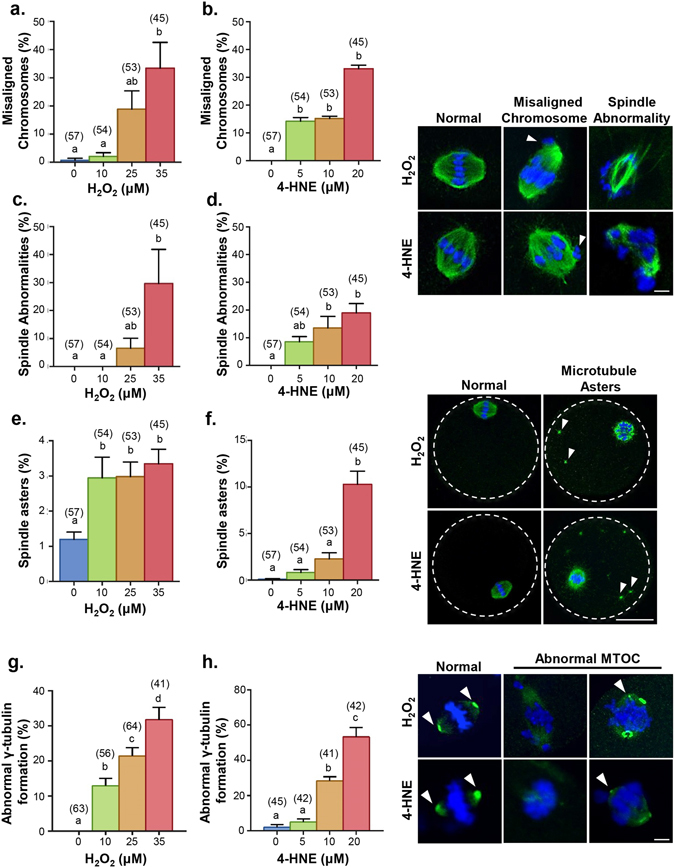
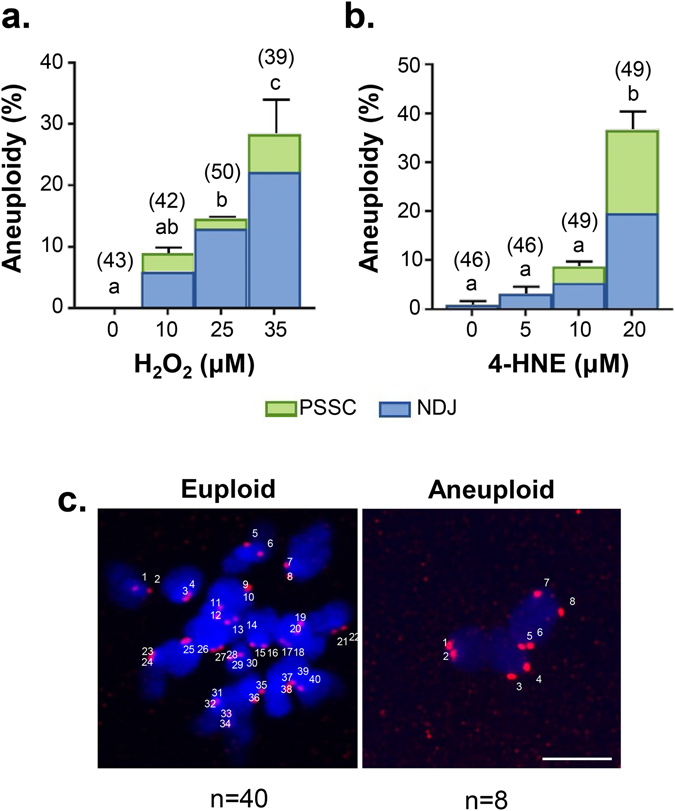
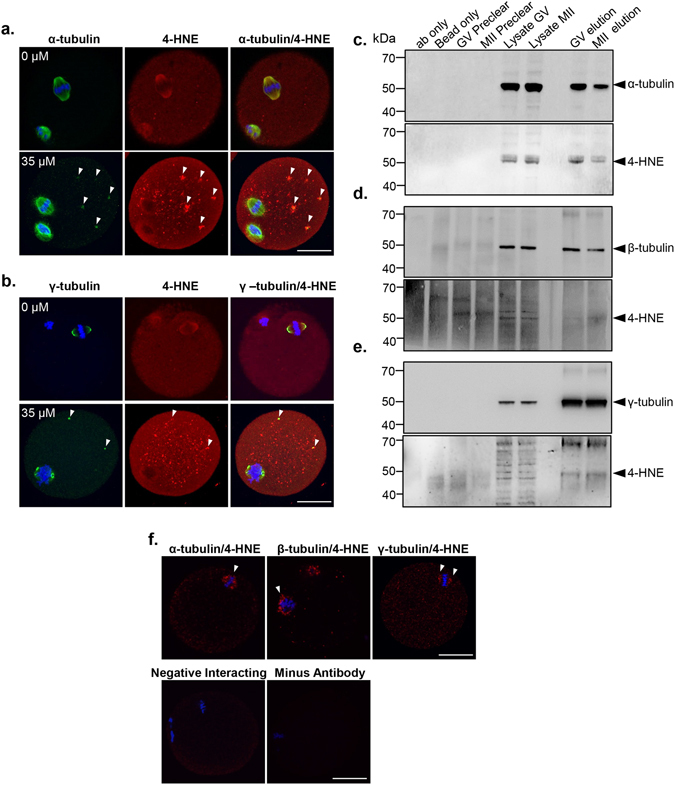
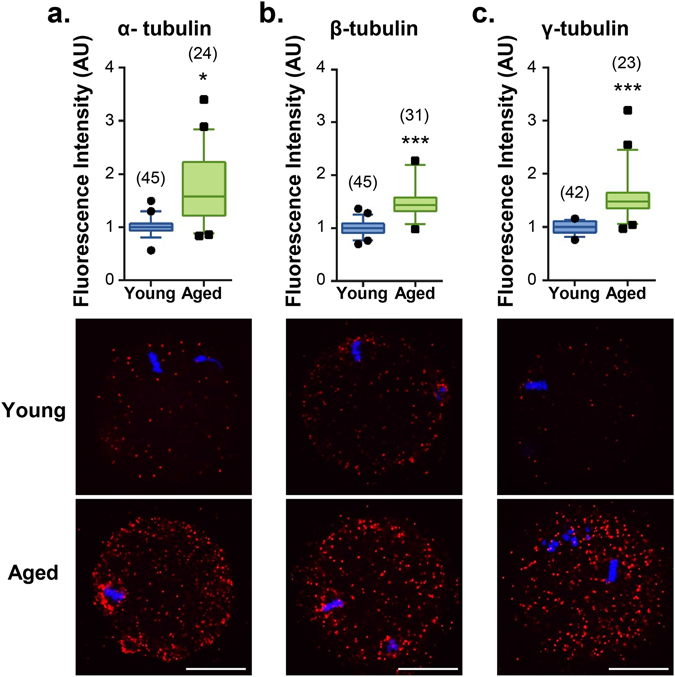
An increase in intraovarian reactive oxygen species (ROS) has long been implicated in the decline in oocyte quality associated with maternal ageing. Oxidative stress (OS)-induced lipid peroxidation and the consequent generation of highly electrophilic aldehydes, such as 4-hydroxynonenal (4-HNE), represents a potential mechanism by which ROS can inflict damage in the ageing oocyte. In this study, we have established that aged oocytes are vulnerable to damage by 4-HNE resulting from increased cytosolic ROS production within the oocyte itself. Further, we demonstrated that the age-related induction of OS can be recapitulated by exposure of germinal vesicle (GV) oocytes to exogenous HO. Such treatments stimulated an increase in 4-HNE generation, which remained elevated during in vitro oocyte maturation to metaphase II. Additionally, exposure of GV oocytes to either HO or 4-HNE resulted in decreased meiotic completion, increased spindle abnormalities, chromosome misalignments and aneuploidy. In seeking to account for these data, we revealed that proteins essential for oocyte health and meiotic development, namely α-, β-, and γ-tubulin are vulnerable to adduction via 4-HNE. Importantly, 4-HNE-tubulin adduction, as well as increased aneuploidy rates, were resolved by co-treatment with the antioxidant penicillamine, demonstrating a possible therapeutic mechanism to improve oocyte quality in older females.
卵巢内活性氧(ROS)的增加长期以来一直与母体衰老相关的卵母细胞质量下降有关。氧化应激(OS)诱导的脂质过氧化以及由此产生的高反应性醛,如 4-羟基壬烯醛(4-HNE),代表了 ROS 可以在衰老卵母细胞中造成损伤的潜在机制。在这项研究中,我们已经确定,由于卵母细胞内细胞溶质 ROS 产生增加,衰老的卵母细胞容易受到 4-HNE 的损伤。此外,我们证明,通过将生发泡(GV)卵暴露于外源性 HO,可以再现与年龄相关的 OS 诱导。这种处理刺激了 4-HNE 的产生增加,在体外卵母细胞成熟为中期 II 时仍保持升高。此外,将 GV 卵暴露于 HO 或 4-HNE 都会导致减数分裂完成减少、纺锤体异常增加、染色体错位和非整倍体。为了解释这些数据,我们揭示了对卵母细胞健康和减数分裂发育至关重要的蛋白质,即α-、β-和γ-微管蛋白,容易通过 4-HNE 加合。重要的是,抗氧化剂青霉素胺的共同处理可解决 4-HNE-微管蛋白加合物以及非整倍体率的增加,这表明了一种可能的治疗机制,可以改善老年女性的卵母细胞质量。