Department of Food Science and Human Nutrition, Michigan State University, 469 Wilson Road, East Lansing, MI 48824, USA.
Department of Epidemiology and Biostatistics, Michigan State University, 909 Fee Road, East Lansing, MI 48824, USA.
Sci Rep. 2017 Jul 24;7(1):6335. doi: 10.1038/s41598-017-05785-0.
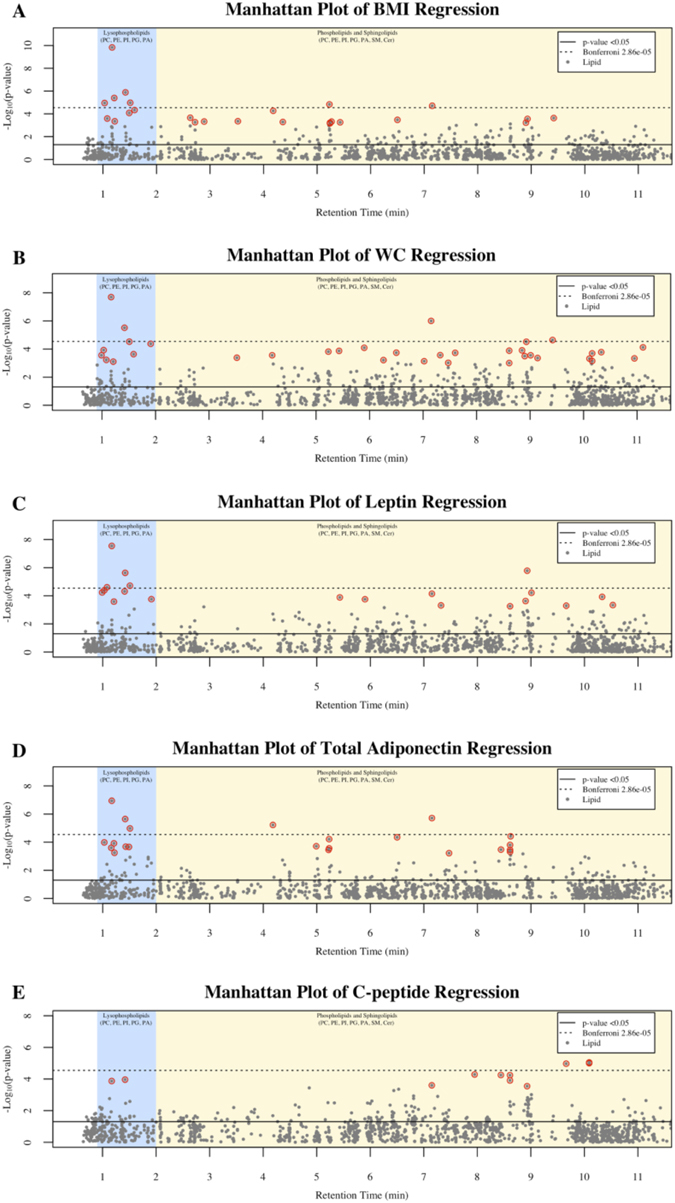
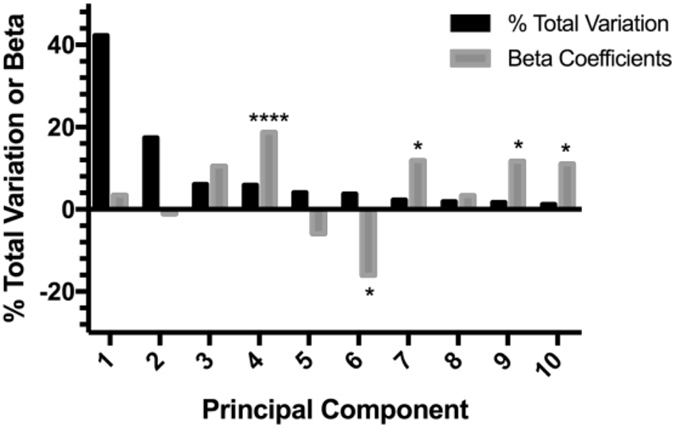
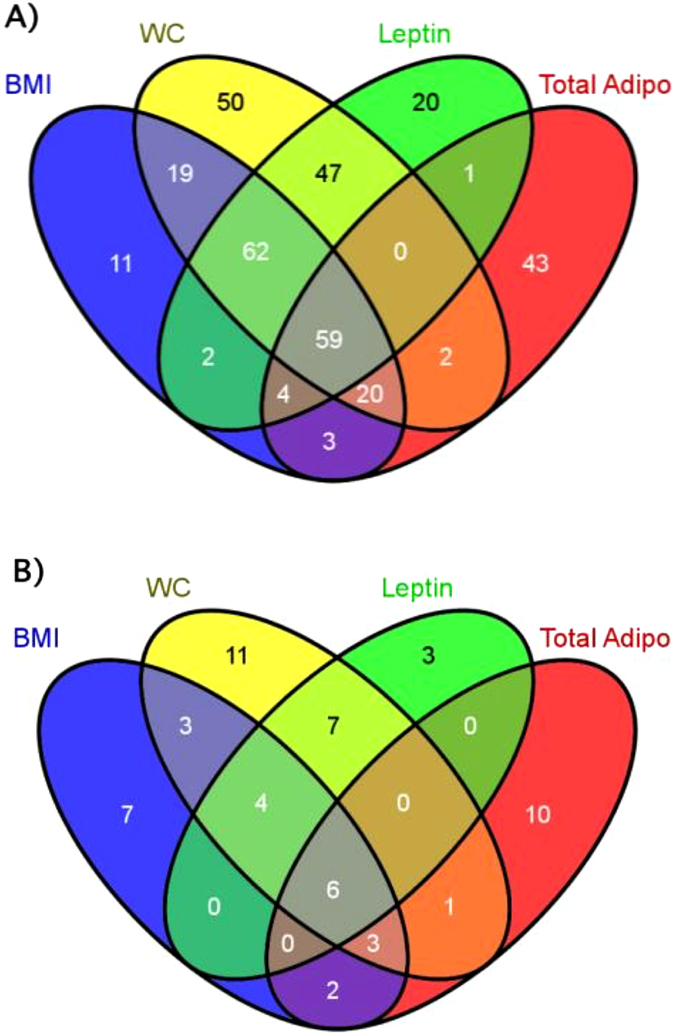
Obesity is associated with dysregulated lipid metabolism and adipokine secretion. Our group has previously reported obesity and adipokines are associated with % total fatty acid (FA) differences in plasma phospholipids. The objective of our current study was to identify in which complex lipid species (i.e., phosphatidylcholine, sphingolipids, etc) these FA differences occur. Plasma lipidomic profiling (n = 126, >95% Caucasian, 48-65 years) was performed using chromatographic separation and high resolution tandem mass spectrometry. The responses used in the statistical analyses were body mass index (BMI), waist circumference (WC), serum adipokines, cytokines, and a glycemic marker. High-dimensional statistical analyses were performed, all models were adjusted for age and smoking, and p-values were adjusted for false discovery. In Bayesian models, the lipidomic profiles (over 1,700 lipids) accounted for >60% of the inter-individual variation of BMI, WC, and leptin in our population. Across statistical analyses, we report 51 individual plasma lipids were significantly associated with obesity. Obesity was inversely associated lysophospholipids and ether linked phosphatidylcholines. In addition, we identify several unreported lipids associated with obesity that are not present in lipid databases. Taken together, these results provide new insights into the underlying biology associated with obesity and reveal new potential pathways for therapeutic targeting.
肥胖与脂质代谢失调和脂肪因子分泌有关。我们的研究小组之前曾报道过肥胖和脂肪因子与血浆磷脂中总脂肪酸(FA)差异的相关性。我们目前的研究目的是确定这些 FA 差异发生在哪些复杂脂质种类(即磷脂酰胆碱、鞘脂等)中。采用色谱分离和高分辨串联质谱法对 126 名(>95%为白种人,年龄 48-65 岁)参与者的血浆脂质组学进行了分析。在统计分析中使用的响应变量包括体重指数(BMI)、腰围(WC)、血清脂肪因子、细胞因子和血糖标志物。进行了高维统计分析,所有模型均调整了年龄和吸烟因素,p 值也进行了假发现率的调整。在贝叶斯模型中,脂质组学图谱(超过 1700 种脂质)解释了我们人群中 BMI、WC 和瘦素个体间差异的>60%。在所有的统计分析中,我们报告了 51 种个体血浆脂质与肥胖显著相关。肥胖与溶血磷脂和醚键连接的磷脂酰胆碱呈负相关。此外,我们还确定了一些与肥胖相关的未报道的脂质,这些脂质在脂质数据库中不存在。总之,这些结果为肥胖相关的潜在生物学提供了新的见解,并揭示了新的潜在治疗靶点途径。