Department of PET Center and Institute of Anesthesiology and Pain, Taihe Hospital, Hubei University of Medicine, Shiyan, Hubei, 442000, China.
Department of Infection Control, Taihe Hospital, Hubei University of Medicine, Shiyan, Hubei, 442000, China.
Sci Rep. 2017 Jul 24;7(1):6296. doi: 10.1038/s41598-017-06571-8.
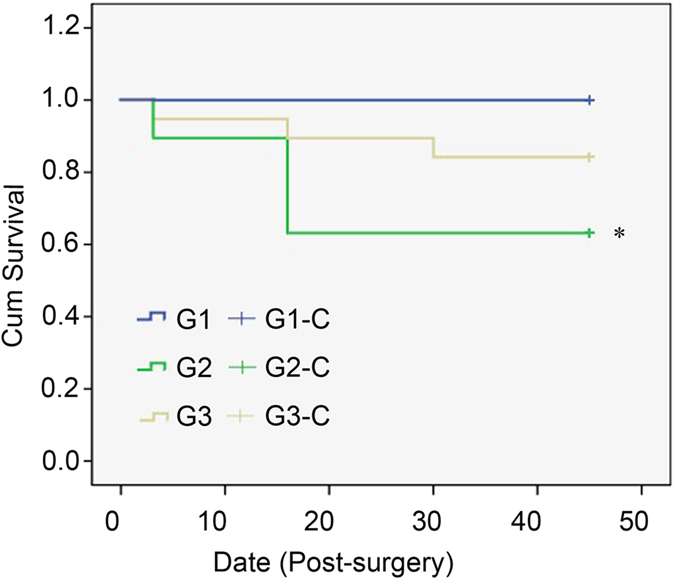
Here, we used a noninvasive multimodality imaging approach to monitor differentiation of transplanted bone marrow mesenchymal stem cells (BMSCs) and recovery of cardiac function in an in vivo model of myocardial infarction (MI). We established a rat MI model by coronary artery ligation. Ninety rats were randomly assigned into four groups: sham-operated, MI model, and α-MHC-HSV1-tk-transfected or un-transfected BMSCs-treated MI model. We used F-Fluro-deoxyglucose (F-FDG) positron emission tomography (PET) to monitor recovery of cardiac function, and F-FHBG PET/CT imaging to monitor transplanted BMSCs differentiation 24 h after F-FDG imaging. The uptake of F-FDG at 3, 16, 30 and 45 days after BMSCs injection was 0.39 ± 0.03, 0.57 ± 0.05, 0.59 ± 0.04, and 0.71 ± 0.05% ID/g, respectively. Uptake of F-FHBG increased significantly in large areas in the BMSCs-treated group over time. Ex vivo experiments indicated that expression of the cardiomyocyte markers GATA-4 and cardiac troponin I markedly increased in the BMSCs-treated group. Additionally, immunohistochemistry revealed that HSV-tk-labelled BMSCs-derived cells were positive for cardiac troponin I. Multimodal imaging systems combining an α-MHC-HSV1-tk/F-FHBG reporter gene and F-FDG metabolism imaging could be used to track differentiation of transplanted BMSCs and recovery of cardiac function in MI.
在这里,我们使用一种非侵入性的多模态成像方法来监测移植骨髓间充质干细胞(BMSCs)的分化和体内心肌梗死(MI)模型中心功能的恢复。我们通过冠状动脉结扎建立了大鼠 MI 模型。90 只大鼠被随机分为四组:假手术组、MI 模型组、α-MHC-HSV1-tk 转染或未转染 BMSCs 治疗的 MI 模型组。我们使用 F-Fluro-脱氧葡萄糖(F-FDG)正电子发射断层扫描(PET)来监测心脏功能的恢复,并使用 F-FHBG PET/CT 成像来监测 F-FDG 成像后 24 小时移植的 BMSCs 分化情况。在 BMSCs 注射后 3、16、30 和 45 天,F-FDG 的摄取量分别为 0.39±0.03、0.57±0.05、0.59±0.04 和 0.71±0.05% ID/g。随着时间的推移,BMSCs 治疗组中 F-FHBG 的摄取量在大片区域内显著增加。离体实验表明,BMSCs 治疗组中心肌细胞标志物 GATA-4 和心肌肌钙蛋白 I 的表达显著增加。此外,免疫组织化学显示 HSV-tk 标记的 BMSCs 衍生细胞对心肌肌钙蛋白 I 呈阳性。结合α-MHC-HSV1-tk/F-FHBG 报告基因和 F-FDG 代谢成像的多模态成像系统可用于跟踪移植 BMSCs 的分化和 MI 中心功能的恢复。