Key Laboratory for Organic Electronics and Information Displays & Institute of Advanced Materials, Jiangsu National Synergetic Innovation Center for Advanced Materials, Nanjing University of Posts and Telecommunications, Wenyuan Road, Nanjing, 210023, P.R. China.
Key Laboratory of Flexible Electronics & Institute of Advanced Materials, National Synergetic Innovation Center for Advanced Materials, Nanjing Tech University, 30 South Puzhu Road, Nanjing, 211816, P.R. China.
Sci Rep. 2017 Jul 24;7(1):6225. doi: 10.1038/s41598-017-05339-4.
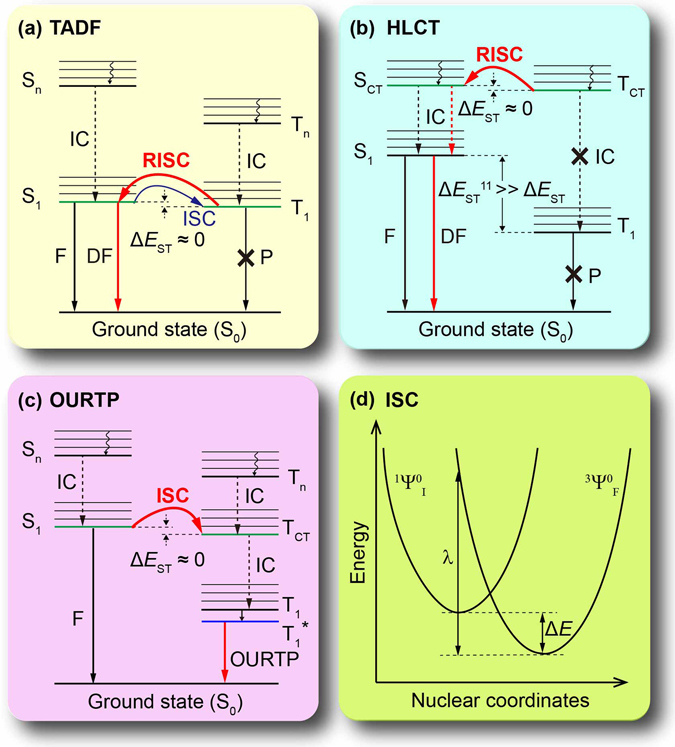
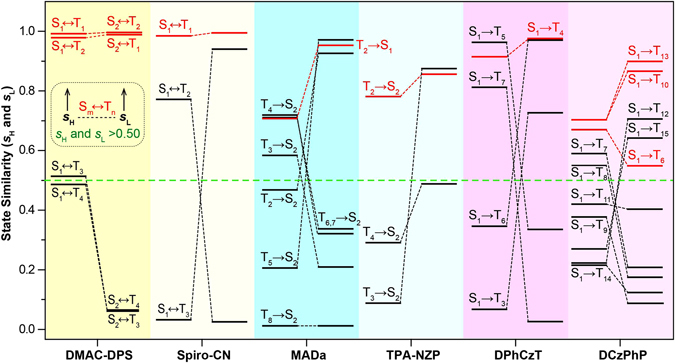
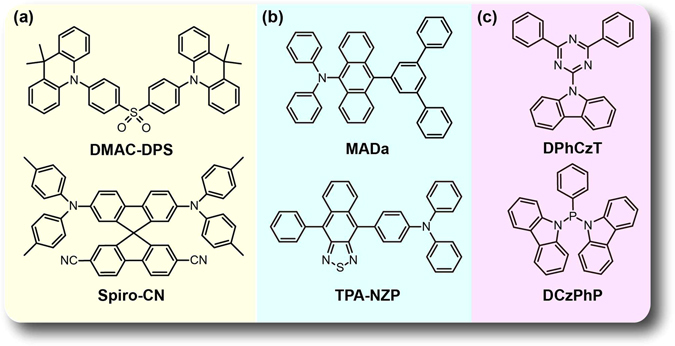
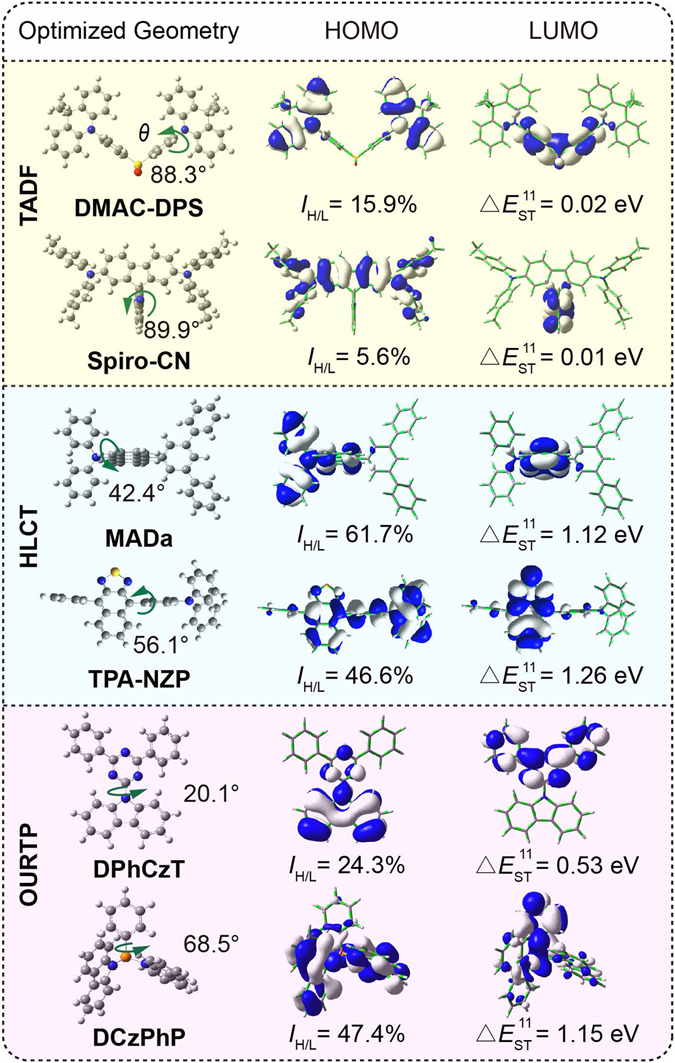
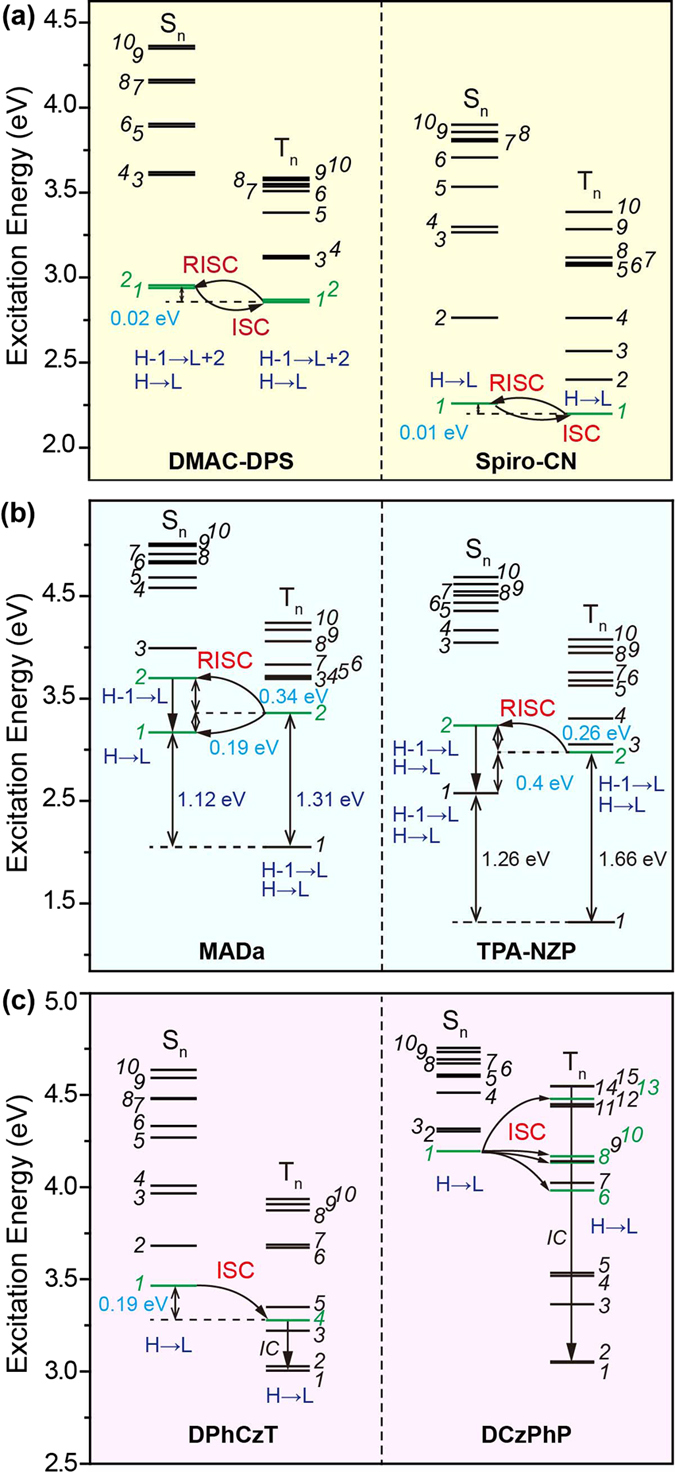
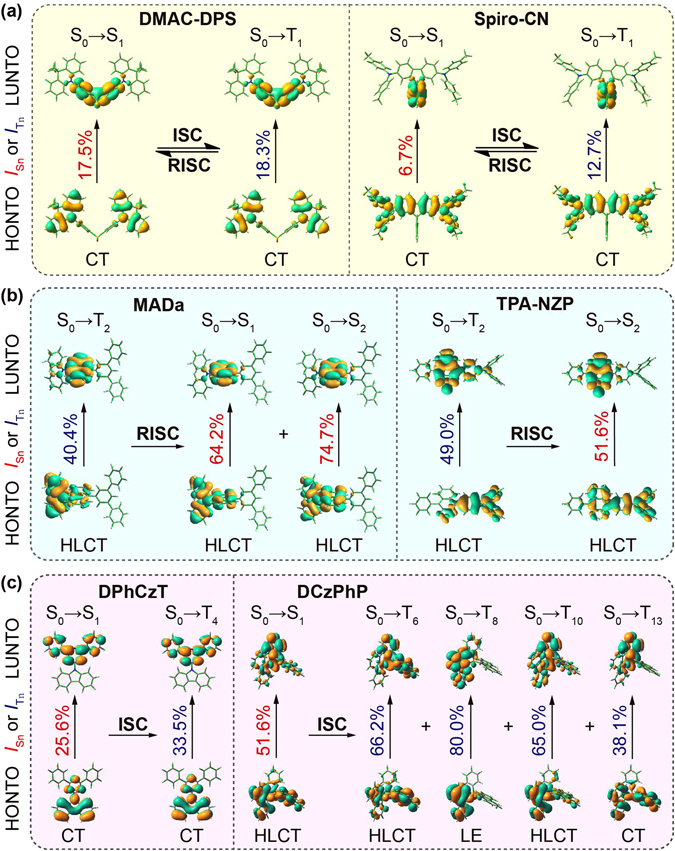
Exciton transformation, a non-radiative process in changing the spin multiplicity of an exciton usually between singlet and triplet forms, has received much attention recently due to its crucial effects in manipulating optoelectronic properties for various applications. However, current understanding of exciton transformation mechanism does not extend far beyond a thermal equilibrium of two states with different multiplicity and it is a significant challenge to probe what exactly control the transformation between the highly active excited states. Here, based on the recent developments of three types of purely organic molecules capable of efficient spin-flipping, we perform ab initio structure/energy optimization and similarity/overlap extent analysis to theoretically explore the critical factors in controlling the transformation process of the excited states. The results suggest that the states having close energy levels and similar exciton characteristics with same transition configurations and high heteroatom participation are prone to facilitating exciton transformation. A basic guideline towards the molecular design of purely organic materials with facile exciton transformation ability is also proposed. Our discovery highlights systematically the critical importance of vertical transition configuration of excited states in promoting the singlet/triplet exciton transformation, making a key step forward in excited state tuning of purely organic optoelectronic materials.
激子转变,一种非辐射过程,通常在单重态和三重态之间改变激子的自旋多重性,由于其在操纵各种应用的光电性质方面的关键作用,最近受到了广泛关注。然而,目前对激子转变机制的理解远远超出了两种不同多重态的热平衡范围,探测是什么确切地控制了高活性激发态之间的转变仍然是一个重大挑战。在这里,基于三种能够高效自旋翻转的纯有机分子的最新发展,我们进行了从头算结构/能量优化和相似性/重叠程度分析,从理论上探索了控制激发态转变过程的关键因素。结果表明,能级相近、激子特征相似、跃迁构型相同且杂原子参与度高的状态更容易促进激子转变。还提出了一种具有易于激子转变能力的纯有机材料的分子设计的基本准则。我们的发现系统地强调了激发态垂直跃迁构型在促进单重态/三重态激子转变方面的关键重要性,为纯有机光电材料的激发态调控迈出了关键的一步。