Mutale Wilbroad, Vardoy-Mutale Anne-Thora, Kachemba Arthur, Mukendi Roman, Clarke Kupela, Mulenga Dennis
University of Zambia School of Medicine, Department of Public Health, Lusaka, Zambia.
University of Zambia, School of Humanities, Department of Development Studies, Lusaka, Zambia.
PLoS One. 2017 Jul 25;12(7):e0174536. doi: 10.1371/journal.pone.0174536. eCollection 2017.
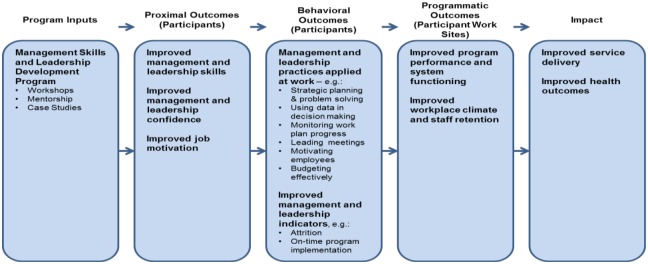
Research has shown that the modes of leadership and management may influence health outcomes. However, majority of health leaders and managers in many low-income countries are promoted on account of clinical expertise. It has been recognised that these new managers are often ill-prepared for managing complex health systems. In response to this challenge, the Zambian Ministry of Health (MoH) has developed the Governance and Management Capacity Building (GMCB) Strategic Plan (2012-2016), whose overarching goal is to improve health sector governance and create an environment that is result-oriented, accountable and transparent. This led to the introduction of a new in-service leadership and management course, which has come to be known as the Zambia Management and Leadership Academy (ZMLA). This paper presents the results of an impact evaluation of the ZMLA programme conducted in 2014.
This was a cross-sectional mixed method study. The study targeted health workers, stakeholders and course implementers. ZMLA trainees were targeted to gain perspectives on the extent to which the programme affected levels of self-confidence resulting from knowledge gained. Perspectives were sought from both ZMLA and non ZMLA trainees to measure changes in the work environment. Stakeholder perspectives were collected from trainers and key informants involved in providing ZMLA training.
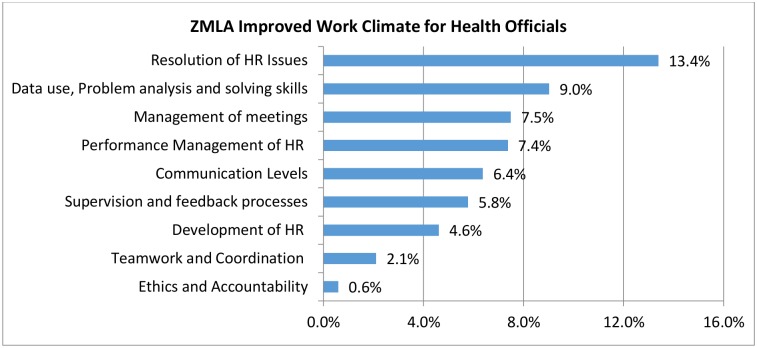
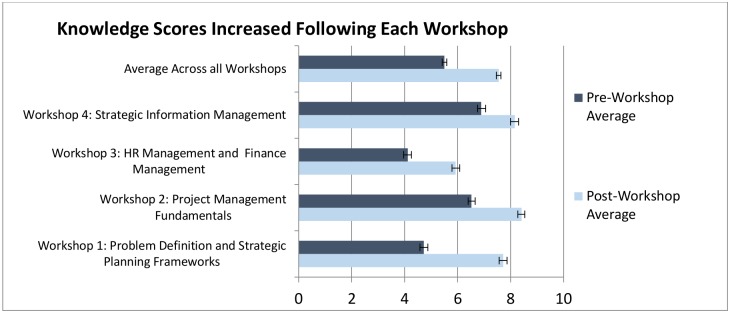
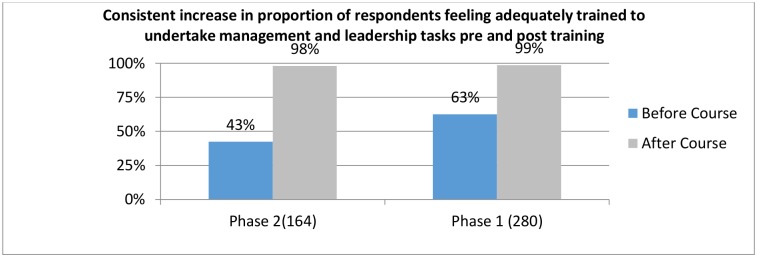
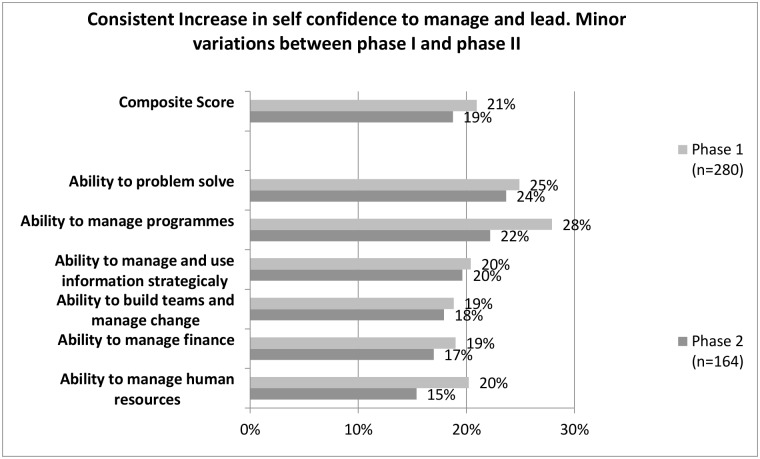
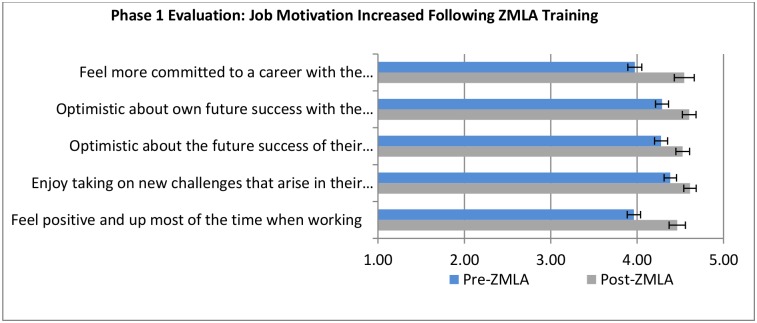
On average, knowledge levels increased by 38% after each workshop. A comparison of the average self-rated scores from 444 management and leadership survey responses before ZMLA and after ZMLA training showed a significant increase in the proportion of participants that felt adequately trained to undertake management and leadership, from 63% (before) to 99% (after) in phase 1 and 43% (before) to 98% (after) in the phase II cohort. The calculated before and after percentage change for work environment themes ranged from 5.8% to 13.4%. Majority of respondents perceived improvements in the workplace environment, especially in handling human resource management matters. The smallest improvement was noted in ethics and accountability. Qualitative interviews showed improvements in the meeting culture and a greater appreciation for the importance of meetings. Shared vision, teamwork and coordination seemed to have improved more in work places where the overall manager had received ZMLA training.
Leadership and management training will be a key ingredient in health system strengthening in low-income settings. The ZMLA model was found to be acceptable and effective in improving knowledge and skills for health system managers with minimal disruption to health services.
研究表明,领导和管理模式可能会影响健康结果。然而,许多低收入国家的大多数卫生领导人和管理人员是因其临床专业知识而得到晋升。人们已经认识到,这些新管理者往往对管理复杂的卫生系统准备不足。为应对这一挑战,赞比亚卫生部制定了治理与管理能力建设(GMCB)战略计划(2012 - 2016年),其总体目标是改善卫生部门治理,并营造一个注重结果、问责和透明的环境。这导致引入了一门新的在职领导与管理课程,即后来为人所知的赞比亚管理与领导力学院(ZMLA)。本文介绍了2014年对ZMLA项目进行的影响评估结果。
这是一项横断面混合方法研究。该研究的目标群体是卫生工作者、利益相关者和课程实施者。以ZMLA学员为对象,以了解该项目在多大程度上因所学知识而影响自信心水平。同时征求ZMLA学员和非ZMLA学员的意见,以衡量工作环境的变化。从参与提供ZMLA培训的培训师和关键信息提供者那里收集利益相关者的意见。
每次研讨会后,知识水平平均提高38%。对ZMLA培训前后444份管理与领导力调查回复的平均自评分数进行比较,结果显示,认为自己接受了足够管理与领导培训的参与者比例大幅增加,第一阶段从63%(培训前)增至99%(培训后),第二阶段队列从43%(培训前)增至98%(培训后)。工作环境主题的前后计算百分比变化范围为5.8%至13.4%。大多数受访者认为工作场所环境有所改善,尤其是在处理人力资源管理事务方面。在道德和问责方面改善最小。定性访谈表明会议文化有所改善,人们对会议重要性的认识也有所提高。在整体管理者接受过ZMLA培训的工作场所,共同愿景、团队合作和协调似乎改善得更多。
领导与管理培训将是低收入环境下加强卫生系统的关键要素。研究发现,ZMLA模式在提高卫生系统管理者的知识和技能方面是可接受且有效的,同时对卫生服务的干扰最小。