Red Sea Research Center, Division of Biological and Environmental Science and Engineering (BESE), King Abdullah University of Science and Technology (KAUST), Thuwal, 23955-6900, Saudi Arabia.
Sci Rep. 2017 Jul 25;7(1):6442. doi: 10.1038/s41598-017-05572-x.
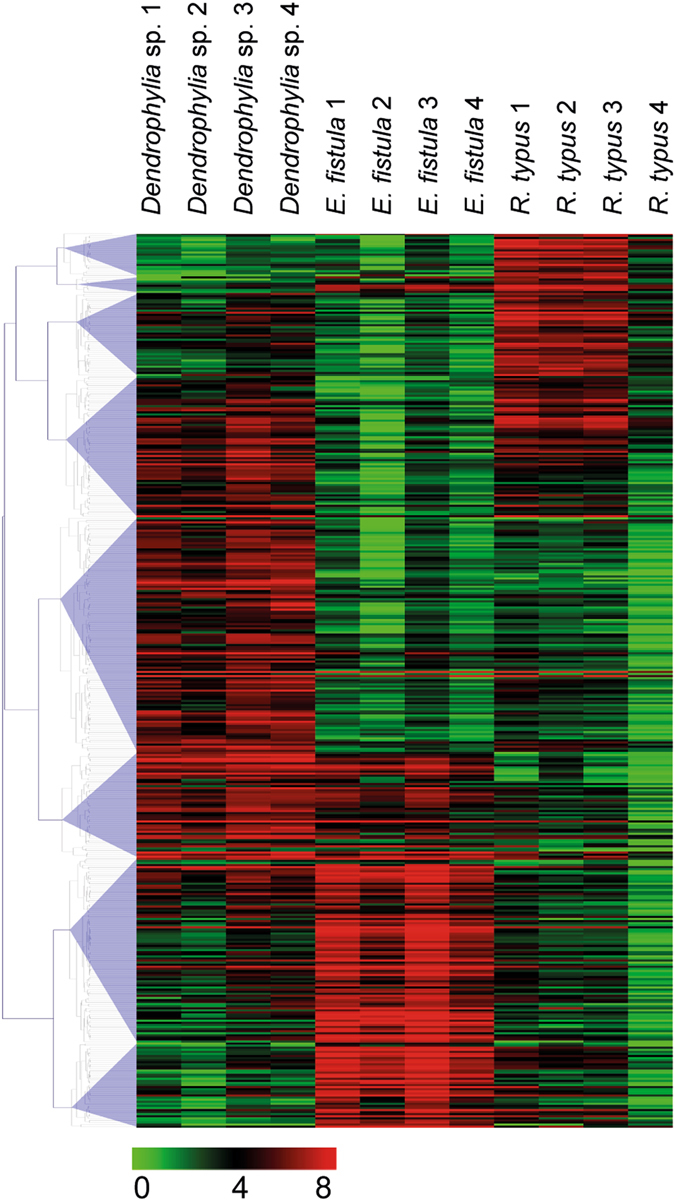
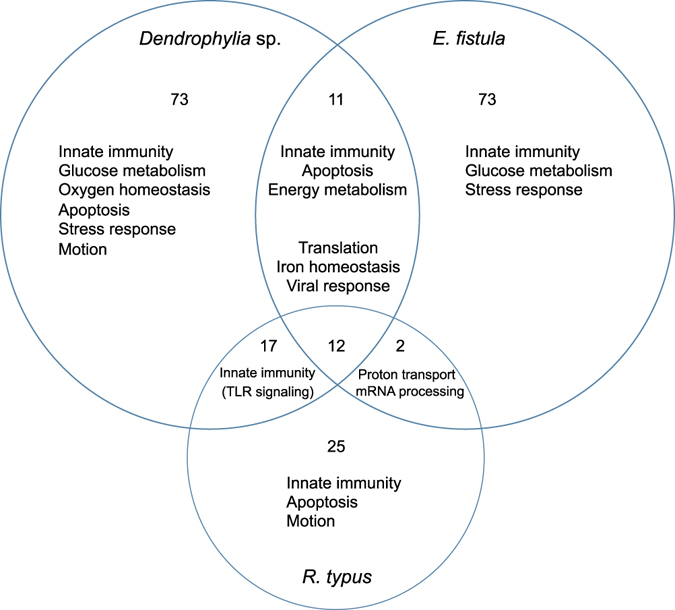
Despite the importance of deep-sea corals, our current understanding of their ecology and evolution is limited due to difficulties in sampling and studying deep-sea environments. Moreover, a recent re-evaluation of habitat limitations has been suggested after characterization of deep-sea corals in the Red Sea, where they live at temperatures of above 20 °C at low oxygen concentrations. To gain further insight into the biology of deep-sea corals, we produced reference transcriptomes and studied gene expression of three deep-sea coral species from the Red Sea, i.e. Dendrophyllia sp., Eguchipsammia fistula, and Rhizotrochus typus. Our analyses suggest that deep-sea coral employ mitochondrial hypometabolism and anaerobic glycolysis to manage low oxygen conditions present in the Red Sea. Notably, we found expression of genes related to surface cilia motion that presumably enhance small particle transport rates in the oligotrophic deep-sea environment. This is the first study to characterize transcriptomes and in situ gene expression for deep-sea corals. Our work offers several mechanisms by which deep-sea corals might cope with the distinct environmental conditions present in the Red Sea As such, our data provide direction for future research and further insight to organismal response of deep-sea coral to environmental change and ocean warming.
尽管深海珊瑚非常重要,但由于深海环境采样和研究困难,我们目前对它们的生态学和进化的了解有限。此外,在对红海深海珊瑚进行特征描述后,人们最近重新评估了其栖息地的限制,因为这些珊瑚生活在温度高于 20°C、氧气浓度较低的环境中。为了更深入地了解深海珊瑚的生物学特性,我们生成了参考转录组,并研究了来自红海的三种深海珊瑚物种(即枝状软珊瑚、Eugenia fistula 和 Rhizotrochus typus)的基因表达。我们的分析表明,深海珊瑚通过线粒体低代谢和无氧糖酵解来应对红海低氧条件。值得注意的是,我们发现了与表面纤毛运动相关的基因表达,这可能会增强贫营养深海环境中微小颗粒的输送速率。这是首次对深海珊瑚的转录组和原位基因表达进行特征描述的研究。我们的工作提供了深海珊瑚应对红海特有环境条件的几种机制。因此,我们的数据为未来的研究提供了方向,并进一步深入了解深海珊瑚对环境变化和海洋变暖的适应机制。