• 文献检索
  • 文档翻译
  • 深度研究
  • 学术资讯
  • Suppr Zotero 插件Zotero 插件
  • 邀请有礼
  • 套餐&价格
  • 历史记录
应用&插件
Suppr Zotero 插件Zotero 插件浏览器插件Mac 客户端Windows 客户端微信小程序
定价
高级版会员购买积分包购买API积分包
服务
文献检索文档翻译深度研究API 文档MCP 服务
关于我们
关于 Suppr公司介绍联系我们用户协议隐私条款
关注我们

Suppr 超能文献

核心技术专利:CN118964589B侵权必究
粤ICP备2023148730 号-1Suppr @ 2026

文献检索

告别复杂PubMed语法,用中文像聊天一样搜索,搜遍4000万医学文献。AI智能推荐,让科研检索更轻松。

立即免费搜索

文件翻译

保留排版,准确专业,支持PDF/Word/PPT等文件格式,支持 12+语言互译。

免费翻译文档

深度研究

AI帮你快速写综述,25分钟生成高质量综述,智能提取关键信息,辅助科研写作。

立即免费体验

骨骼发育不良的骨盆X线片:一种方法。

Pelvic radiograph in skeletal dysplasias: An approach.

作者信息

Jana Manisha, Nair Nikhil, Gupta Arun K, Kabra Madhulika, Gupta Neerja

机构信息

Department of Radiodiagnosis, All India Institute of Medical Sciences, New Delhi, India.

Department of Pediatrics, All India Institute of Medical Sciences, New Delhi, India.

出版信息

Indian J Radiol Imaging. 2017 Apr-Jun;27(2):187-199. doi: 10.4103/ijri.IJRI_367_16.

DOI:10.4103/ijri.IJRI_367_16
PMID:28744080
原文链接:https://pmc.ncbi.nlm.nih.gov/articles/PMC5510317/
Abstract

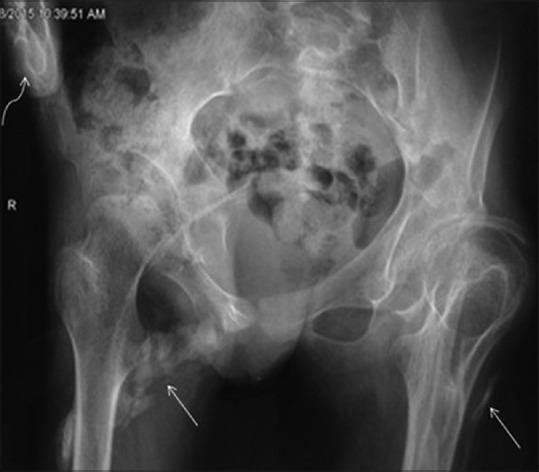
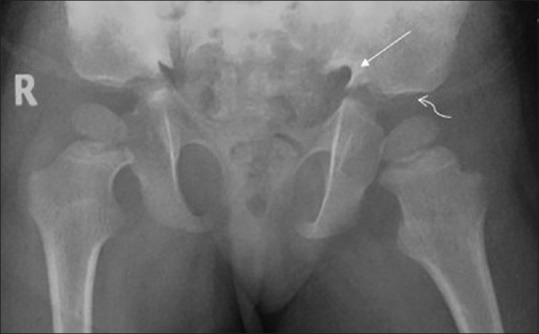
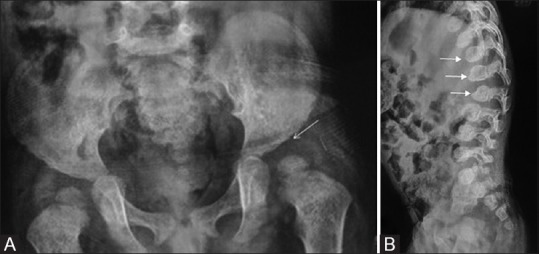
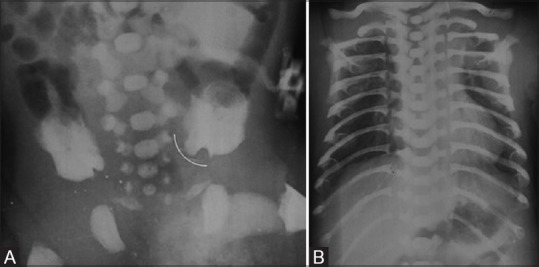
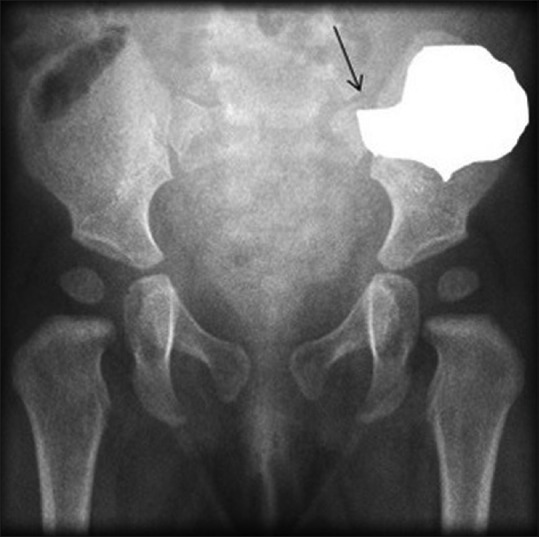
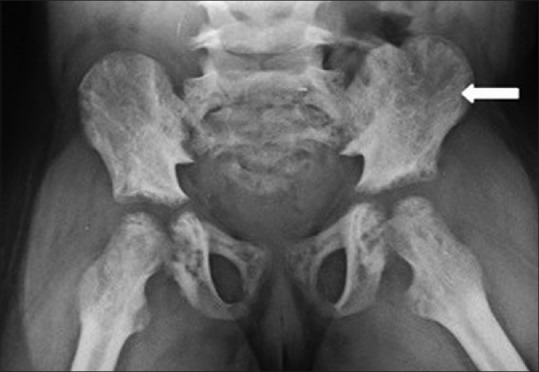
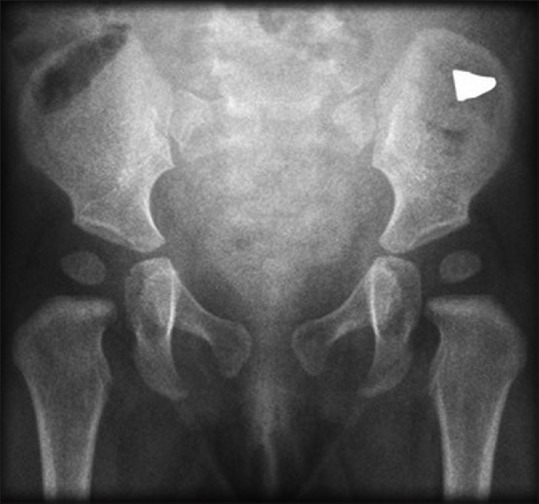
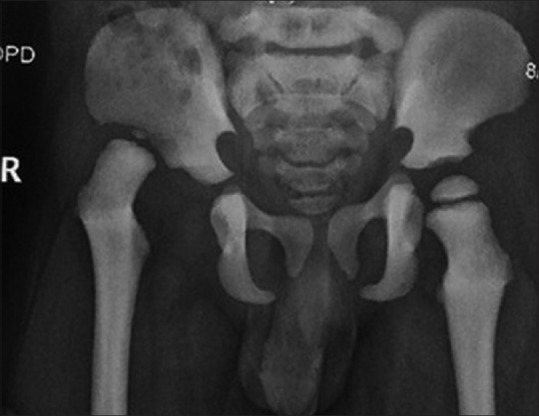
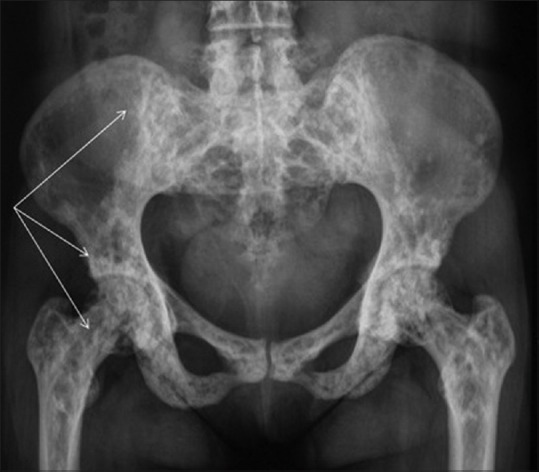
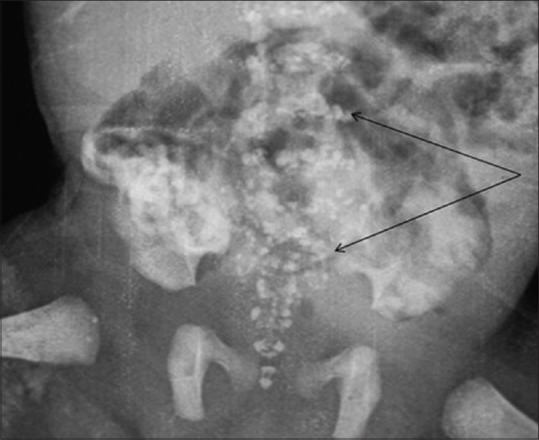
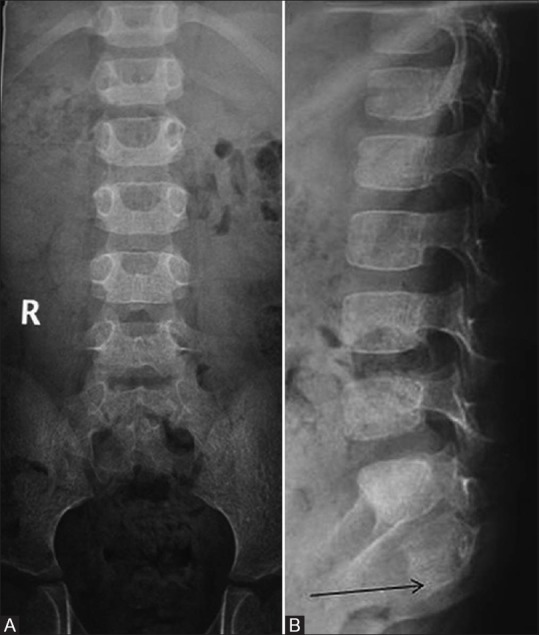
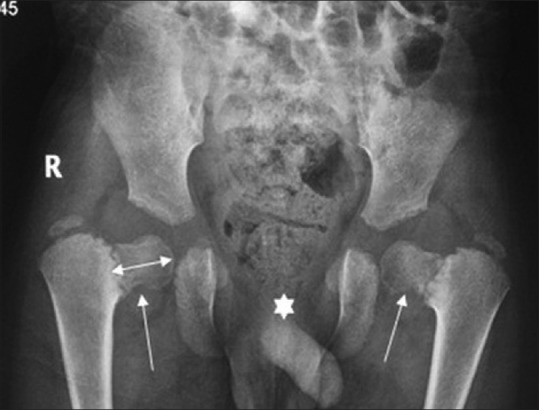
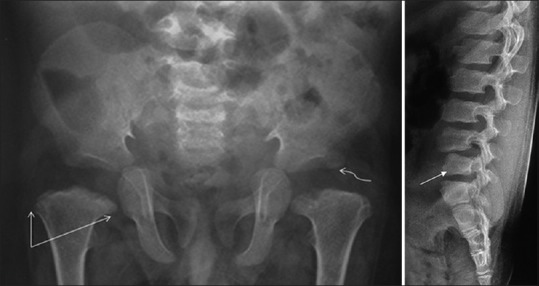
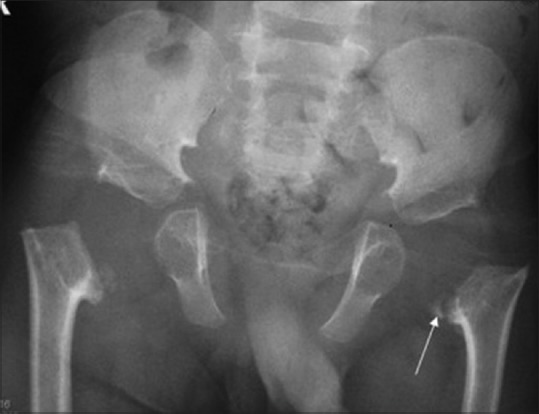
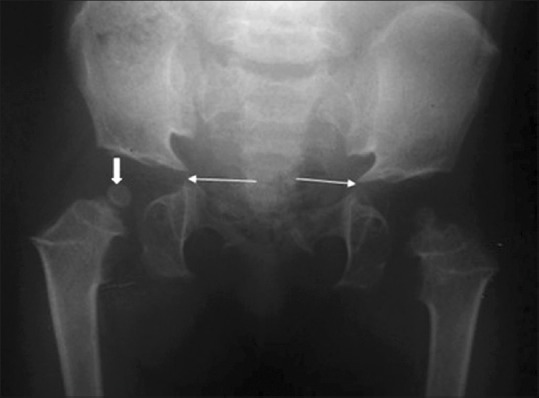
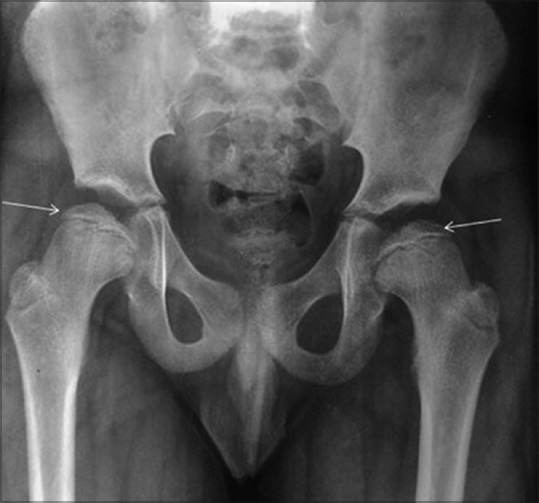
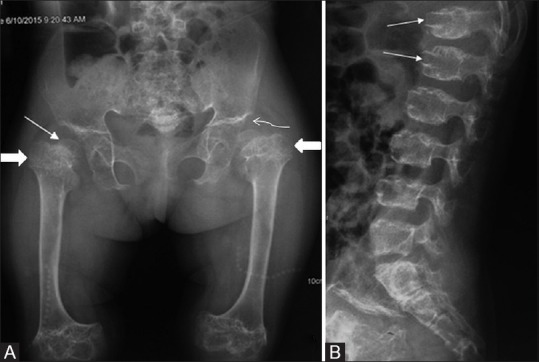
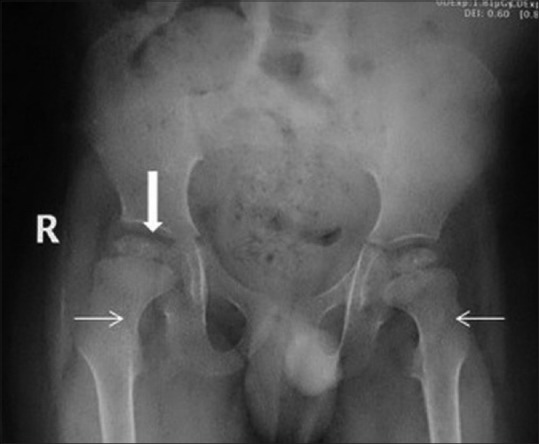
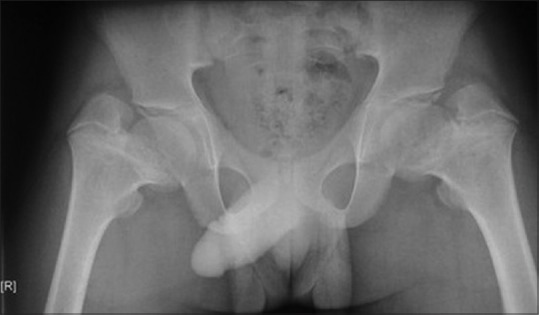
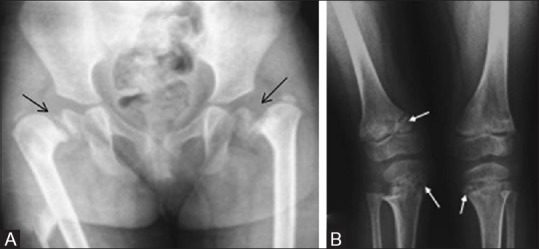
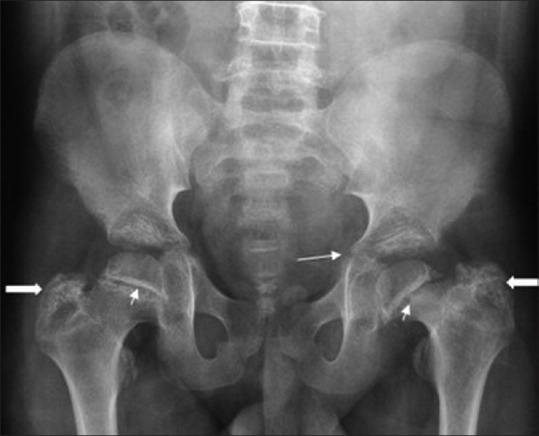
The bony pelvis is constituted by the ilium, ischium, pubis, and sacrum. The pelvic radiograph is an important component of the skeletal survey performed in suspected skeletal dysplasia. Most of the common skeletal dysplasias have either minor or major radiological abnormalities; hence, knowledge of the normal radiological appearance of bony pelvis is vital for recognizing the early signs of various skeletal dysplasias. This article discusses many common and some uncommon radiological findings on pelvic radiographs along with the specific dysplasia in which they are seen; common differential diagnostic considerations are also discussed.

摘要

骨盆由髂骨、坐骨、耻骨和骶骨组成。骨盆X线片是疑似骨骼发育异常患者进行骨骼检查的重要组成部分。大多数常见的骨骼发育异常都有轻微或严重的放射学异常;因此,了解骨盆的正常放射学表现对于识别各种骨骼发育异常的早期迹象至关重要。本文讨论了骨盆X线片上许多常见和一些不常见的放射学表现及其所对应的特定发育异常;还讨论了常见的鉴别诊断要点。
https://cdn.ncbi.nlm.nih.gov/pmc/blobs/381b/5510317/540db8eaaa30/IJRI-27-187-g027.jpg
https://cdn.ncbi.nlm.nih.gov/pmc/blobs/381b/5510317/3148ab800ddc/IJRI-27-187-g002.jpg
https://cdn.ncbi.nlm.nih.gov/pmc/blobs/381b/5510317/c9ebef3f62f8/IJRI-27-187-g003.jpg
https://cdn.ncbi.nlm.nih.gov/pmc/blobs/381b/5510317/d0c3ded94ac4/IJRI-27-187-g004.jpg
https://cdn.ncbi.nlm.nih.gov/pmc/blobs/381b/5510317/ebfc2d04b3d8/IJRI-27-187-g005.jpg
https://cdn.ncbi.nlm.nih.gov/pmc/blobs/381b/5510317/92b7558acbe7/IJRI-27-187-g006.jpg
https://cdn.ncbi.nlm.nih.gov/pmc/blobs/381b/5510317/abff54211bca/IJRI-27-187-g007.jpg
https://cdn.ncbi.nlm.nih.gov/pmc/blobs/381b/5510317/c7b1b654d261/IJRI-27-187-g008.jpg
https://cdn.ncbi.nlm.nih.gov/pmc/blobs/381b/5510317/098e289900e3/IJRI-27-187-g009.jpg
https://cdn.ncbi.nlm.nih.gov/pmc/blobs/381b/5510317/916f6c73488e/IJRI-27-187-g010.jpg
https://cdn.ncbi.nlm.nih.gov/pmc/blobs/381b/5510317/4d9c6bb4b43f/IJRI-27-187-g011.jpg
https://cdn.ncbi.nlm.nih.gov/pmc/blobs/381b/5510317/126549489cd9/IJRI-27-187-g012.jpg
https://cdn.ncbi.nlm.nih.gov/pmc/blobs/381b/5510317/6db997f9faed/IJRI-27-187-g013.jpg
https://cdn.ncbi.nlm.nih.gov/pmc/blobs/381b/5510317/317f4d6c8f3b/IJRI-27-187-g014.jpg
https://cdn.ncbi.nlm.nih.gov/pmc/blobs/381b/5510317/2ea1fe2bb2bb/IJRI-27-187-g015.jpg
https://cdn.ncbi.nlm.nih.gov/pmc/blobs/381b/5510317/1e0c0711dab4/IJRI-27-187-g016.jpg
https://cdn.ncbi.nlm.nih.gov/pmc/blobs/381b/5510317/9ab26ab901c4/IJRI-27-187-g017.jpg
https://cdn.ncbi.nlm.nih.gov/pmc/blobs/381b/5510317/e23f4a3952f0/IJRI-27-187-g018.jpg
https://cdn.ncbi.nlm.nih.gov/pmc/blobs/381b/5510317/0137dae8e15e/IJRI-27-187-g019.jpg
https://cdn.ncbi.nlm.nih.gov/pmc/blobs/381b/5510317/960e49cb1f1f/IJRI-27-187-g020.jpg
https://cdn.ncbi.nlm.nih.gov/pmc/blobs/381b/5510317/b35ea873da55/IJRI-27-187-g021.jpg
https://cdn.ncbi.nlm.nih.gov/pmc/blobs/381b/5510317/a80b92189cb3/IJRI-27-187-g022.jpg
https://cdn.ncbi.nlm.nih.gov/pmc/blobs/381b/5510317/b23a7b2e81d2/IJRI-27-187-g023.jpg
https://cdn.ncbi.nlm.nih.gov/pmc/blobs/381b/5510317/981fca5ab826/IJRI-27-187-g024.jpg
https://cdn.ncbi.nlm.nih.gov/pmc/blobs/381b/5510317/b440c47184f8/IJRI-27-187-g025.jpg
https://cdn.ncbi.nlm.nih.gov/pmc/blobs/381b/5510317/6c2e883b4a8a/IJRI-27-187-g026.jpg
https://cdn.ncbi.nlm.nih.gov/pmc/blobs/381b/5510317/540db8eaaa30/IJRI-27-187-g027.jpg
https://cdn.ncbi.nlm.nih.gov/pmc/blobs/381b/5510317/3148ab800ddc/IJRI-27-187-g002.jpg
https://cdn.ncbi.nlm.nih.gov/pmc/blobs/381b/5510317/c9ebef3f62f8/IJRI-27-187-g003.jpg
https://cdn.ncbi.nlm.nih.gov/pmc/blobs/381b/5510317/d0c3ded94ac4/IJRI-27-187-g004.jpg
https://cdn.ncbi.nlm.nih.gov/pmc/blobs/381b/5510317/ebfc2d04b3d8/IJRI-27-187-g005.jpg
https://cdn.ncbi.nlm.nih.gov/pmc/blobs/381b/5510317/92b7558acbe7/IJRI-27-187-g006.jpg
https://cdn.ncbi.nlm.nih.gov/pmc/blobs/381b/5510317/abff54211bca/IJRI-27-187-g007.jpg
https://cdn.ncbi.nlm.nih.gov/pmc/blobs/381b/5510317/c7b1b654d261/IJRI-27-187-g008.jpg
https://cdn.ncbi.nlm.nih.gov/pmc/blobs/381b/5510317/098e289900e3/IJRI-27-187-g009.jpg
https://cdn.ncbi.nlm.nih.gov/pmc/blobs/381b/5510317/916f6c73488e/IJRI-27-187-g010.jpg
https://cdn.ncbi.nlm.nih.gov/pmc/blobs/381b/5510317/4d9c6bb4b43f/IJRI-27-187-g011.jpg
https://cdn.ncbi.nlm.nih.gov/pmc/blobs/381b/5510317/126549489cd9/IJRI-27-187-g012.jpg
https://cdn.ncbi.nlm.nih.gov/pmc/blobs/381b/5510317/6db997f9faed/IJRI-27-187-g013.jpg
https://cdn.ncbi.nlm.nih.gov/pmc/blobs/381b/5510317/317f4d6c8f3b/IJRI-27-187-g014.jpg
https://cdn.ncbi.nlm.nih.gov/pmc/blobs/381b/5510317/2ea1fe2bb2bb/IJRI-27-187-g015.jpg
https://cdn.ncbi.nlm.nih.gov/pmc/blobs/381b/5510317/1e0c0711dab4/IJRI-27-187-g016.jpg
https://cdn.ncbi.nlm.nih.gov/pmc/blobs/381b/5510317/9ab26ab901c4/IJRI-27-187-g017.jpg
https://cdn.ncbi.nlm.nih.gov/pmc/blobs/381b/5510317/e23f4a3952f0/IJRI-27-187-g018.jpg
https://cdn.ncbi.nlm.nih.gov/pmc/blobs/381b/5510317/0137dae8e15e/IJRI-27-187-g019.jpg
https://cdn.ncbi.nlm.nih.gov/pmc/blobs/381b/5510317/960e49cb1f1f/IJRI-27-187-g020.jpg
https://cdn.ncbi.nlm.nih.gov/pmc/blobs/381b/5510317/b35ea873da55/IJRI-27-187-g021.jpg
https://cdn.ncbi.nlm.nih.gov/pmc/blobs/381b/5510317/a80b92189cb3/IJRI-27-187-g022.jpg
https://cdn.ncbi.nlm.nih.gov/pmc/blobs/381b/5510317/b23a7b2e81d2/IJRI-27-187-g023.jpg
https://cdn.ncbi.nlm.nih.gov/pmc/blobs/381b/5510317/981fca5ab826/IJRI-27-187-g024.jpg
https://cdn.ncbi.nlm.nih.gov/pmc/blobs/381b/5510317/b440c47184f8/IJRI-27-187-g025.jpg
https://cdn.ncbi.nlm.nih.gov/pmc/blobs/381b/5510317/6c2e883b4a8a/IJRI-27-187-g026.jpg
https://cdn.ncbi.nlm.nih.gov/pmc/blobs/381b/5510317/540db8eaaa30/IJRI-27-187-g027.jpg

相似文献

1
Pelvic radiograph in skeletal dysplasias: An approach.骨骼发育不良的骨盆X线片:一种方法。
Indian J Radiol Imaging. 2017 Apr-Jun;27(2):187-199. doi: 10.4103/ijri.IJRI_367_16.
2
The Radiograph of the Pelvis as a Window to Skeletal Dysplasias.骨盆X线片:骨骼发育不良的一扇窗口
Indian J Pediatr. 2016 Jun;83(6):543-52. doi: 10.1007/s12098-015-1919-8. Epub 2016 Jan 29.
3
Skeletal dysplasias: A radiographic approach and review of common non-lethal skeletal dysplasias.骨骼发育异常:影像学方法及常见非致死性骨骼发育异常综述
World J Radiol. 2014 Oct 28;6(10):808-25. doi: 10.4329/wjr.v6.i10.808.
4
Pediatric pelvis: radiographic appearance in various congenital disorders.
Radiographics. 1992 May;12(3):467-84. doi: 10.1148/radiographics.12.3.1609139.
5
Spine radiograph in dysplasias: A pictorial essay.发育异常性疾病的脊柱X线片:图文综述。
Indian J Radiol Imaging. 2020 Oct-Dec;30(4):436-447. doi: 10.4103/ijri.IJRI_395_20. Epub 2021 Jan 13.
6
Avian pelvis originates from lateral plate mesoderm and its development requires signals from both ectoderm and paraxial mesoderm.鸟类骨盆起源于侧板中胚层,其发育需要来自外胚层和轴旁中胚层的信号。
Cell Tissue Res. 2008 Mar;331(3):595-604. doi: 10.1007/s00441-007-0556-6. Epub 2007 Dec 18.
7
The evolution, development and skeletal identity of the crocodylian pelvis: revisiting a forgotten scientific debate.鳄类骨盆的演化、发育及骨骼特征:重温一场被遗忘的科学争论
J Morphol. 2012 Oct;273(10):1185-98. doi: 10.1002/jmor.20059. Epub 2012 Jul 21.
8
Prenatal sonographic diagnosis of skeletal dysplasias.产前超声诊断骨骼发育不良。
Ultrasound Obstet Gynecol. 2009 Aug;34(2):160-70. doi: 10.1002/uog.6359.
9
Radiologic pelvic asymmetry in unilateral late-diagnosed developmental dysplasia of the hip.
J Pediatr Orthop. 1995 Nov-Dec;15(6):753-62. doi: 10.1097/01241398-199511000-00007.
10
Skeletal dysplasias: 38 prenatal cases.骨骼发育异常:38例产前病例。
Genet Couns. 2008;19(3):267-75.

引用本文的文献

1
The pelvic radiograph: lines, arcs and stripes.骨盆X光片:线、弧和条纹。
Singapore Med J. 2021 Jul;62(7):333-340. doi: 10.11622/smedj.2021091.
2
Morphometric study of the primary ossification center of the fibular shaft in the human fetus.人胎儿腓骨干初级骨化中心的形态计量学研究。
Surg Radiol Anat. 2019 Mar;41(3):297-305. doi: 10.1007/s00276-018-2147-5. Epub 2018 Dec 12.
3
Quantitative anatomy of the ulna's shaft primary ossification center in the human fetus.人类胎儿尺骨干初级骨化中心的定量解剖学研究

本文引用的文献

1
Brachytelephalangic chondrodysplasia punctata: A difficult diagnosis.短指(趾)型点状软骨发育不良:一项疑难诊断。
Radiol Case Rep. 2015 Nov 6;5(1):308. doi: 10.2484/rcr.v5i1.308. eCollection 2010.
2
Spondylometaphyseal Dysplasia Corner Fracture (Sutcliffe) Type.脊椎干骺端发育不良角状骨折(萨克利夫)型
Indian J Pediatr. 2016 Oct;83(10):1191-4. doi: 10.1007/s12098-016-2121-3. Epub 2016 Apr 30.
3
Thanatophoric Dysplasia: A Case Report.致死性骨发育不全:一例报告。
Surg Radiol Anat. 2019 Apr;41(4):431-439. doi: 10.1007/s00276-018-2121-2. Epub 2018 Oct 31.
4
Quantitative anatomy of the ilium's primary ossification center in the human fetus.人类胎儿髂骨初级骨化中心的定量解剖学
Surg Radiol Anat. 2018 Sep;40(9):1047-1054. doi: 10.1007/s00276-018-2018-0. Epub 2018 Apr 19.
J Clin Diagn Res. 2015 Nov;9(11):QD01-3. doi: 10.7860/JCDR/2015/13201.6702. Epub 2015 Nov 1.
4
Radiographic findings in the nail-patella syndrome.指甲-髌骨综合征的影像学表现。
Proc (Bayl Univ Med Cent). 2015 Jul;28(3):334-6. doi: 10.1080/08998280.2015.11929265.
5
Osteopetrosis: radiological & radionuclide imaging.骨硬化症:放射学与放射性核素成像
Indian J Nucl Med. 2015 Jan-Mar;30(1):55-8. doi: 10.4103/0972-3919.147544.
6
Fibrodysplasia ossificans progressiva - radiological findings: a case report.进行性骨化性纤维发育不良——影像学表现:病例报告
Oman Med J. 2014 Sep;29(5):368-70. doi: 10.5001/omj.2014.97.
7
Dyggve melchior clausen syndrome.迪格夫·梅尔基奥尔·克劳森综合征。
Indian Pediatr. 2010 Nov;47(11):973-5. doi: 10.1007/s13312-010-0151-x.
8
Dyggve-Melchior-Clausen syndrome: clinical, genetic, and radiological study of 15 Egyptian patients from nine unrelated families.迪格维-梅尔基奥尔-克劳森综合征:来自九个无关家庭的15例埃及患者的临床、遗传学及放射学研究
J Child Orthop. 2009 Dec;3(6):451-8. doi: 10.1007/s11832-009-0211-8. Epub 2009 Oct 9.
9
Pseudoachondroplasia: A rare cause of rhizomelic dwarfism.假性软骨发育不全:肢根性侏儒症的罕见病因。
Indian J Orthop. 2008 Oct;42(4):477-9. doi: 10.4103/0019-5413.43400.
10
Advanced ossification of the carpal bones, and monkey wrench appearance of the femora, features suggestive of a propable mild form of desbeqious dysplasia: a case report and review of the literature.腕骨的晚期骨化,以及股骨的猴扳钳样外观,提示可能为轻度的德贝基发育异常:一例报告及文献复习
Cases J. 2009 Jan 13;2(1):45. doi: 10.1186/1757-1626-2-45.