Sabeti Parvin, Amidi Fardin, Kalantar Seyed Mahdi, Sedighi Gilani Mohammad Ali, Pourmasumi Soheila, Najafi Atefeh, Talebi Ali Reza
Department of Anatomy, School of Medicine, Kurdistan University of Medical Sciences, Sanandaj, Iran.
Department Of Anatomy, School of Medicine, Tehran University of Medical Sciences, Tehran, Iran.
Int J Reprod Biomed. 2017 May;15(5):279-286.
Teratoasthenozoospermia (TA) is a severe form of male infertility with no clear etiology.
To compare the level of intracellular anion superoxide (O-), heat shock protein A2 (HSPA2) and protamine deficiencies in ejaculated spermatozoa between teratoasthenozoospermic and normozoospermic men.
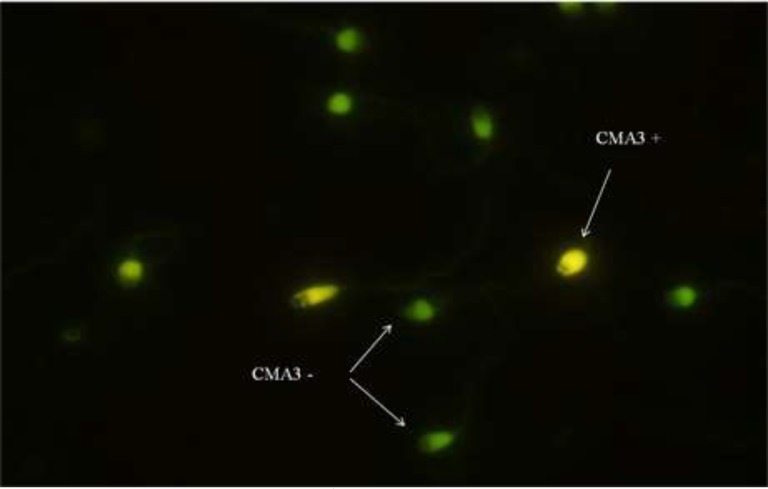
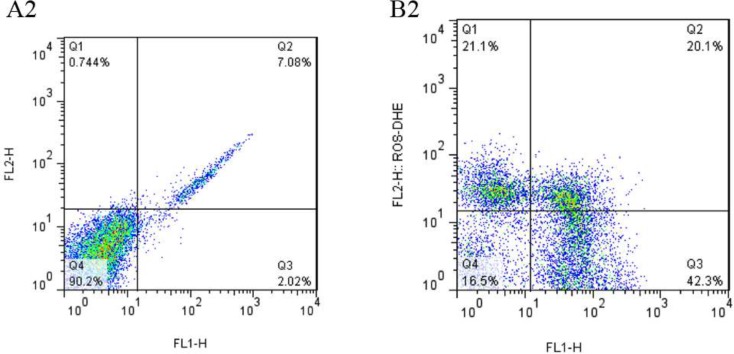
In this case- control study, semen samples of 20 infertile men, with TA (with normal morphology lower than 4%_ and total motility lower than 40% ) as the case group and 20 normozoospermic fertile men as the control group were evaluated for intracellular O and HSPA2 by flow cytometry and protamine deficiency by Chromomycin A3 (CMA3) test.
The rate of CMA3+ spermatozoa in the case group was higher than controls (p=0.001). The percentages of HSPA2+ spermatozoa in the cases were significantly lower than controls (p=0.001). Also, intracellular O levels in the case group were significantly higher than controls (p=0.001) and had positive correlations with sperm apoptosis (r=0.79, p=0.01) and CMA3 positive sperm (r=0.76, p=0.01), but negative correlations with normal morphology (r=-0.81, p=0.01) and motility (r=-0.81, p=0.01). There was no significant correlation between intracellular O and HSPA2 in the case group (r=0.041, p=0.79).
We suggest that the increase in intracellular O, decrease in spermatozoa HSPA2, and high percentages of spermatozoa with immature chromatin might be considered as etiologies of infertility in TA patients.
畸形弱精子症(TA)是一种严重的男性不育症,病因尚不明确。
比较畸形弱精子症患者与正常精子症男性射精精子中细胞内阴离子超氧化物(O-)、热休克蛋白A2(HSPA2)水平及鱼精蛋白缺乏情况。
在本病例对照研究中,以20例不育男性为研究对象,其中TA患者(正常形态精子低于4%且总活力低于40%)作为病例组,20例正常精子症的可育男性作为对照组。通过流式细胞术评估细胞内O和HSPA2,并通过放线菌素A3(CMA3)试验评估鱼精蛋白缺乏情况。
病例组CMA3+精子率高于对照组(p = 0.001)。病例组中HSPA2+精子的百分比显著低于对照组(p = 0.001)。此外,病例组细胞内O水平显著高于对照组(p = 0.001),且与精子凋亡(r = 0.79,p = 0.01)和CMA3阳性精子(r = 0.76,p = 0.01)呈正相关,但与正常形态(r = -0.81,p = 0.01)和活力(r = -0.81,p = 0.01)呈负相关。病例组细胞内O与HSPA2之间无显著相关性(r = 0.041,p = 0.79)。
我们认为细胞内O增加、精子HSPA2减少以及染色质未成熟精子的高比例可能是TA患者不育的病因。