Phan My V T, Anh Pham Hong, Cuong Nguyen Van, Munnink Bas B Oude, van der Hoek Lia, My Phuc Tran, Tri Tue Ngo, Bryant Juliet E, Baker Stephen, Thwaites Guy, Woolhouse Mark, Kellam Paul, Rabaa Maia A, Cotten Matthew
Virus Genomics, Wellcome Trust Sanger Institute, Hinxton, Cambridge CB10 1SA, UK.
Oxford University Clinical Research Unit, Ho Chi Minh City, Vietnam.
Virus Evol. 2016 Oct 3;2(2):vew027. doi: 10.1093/ve/vew027. eCollection 2016 Jul.
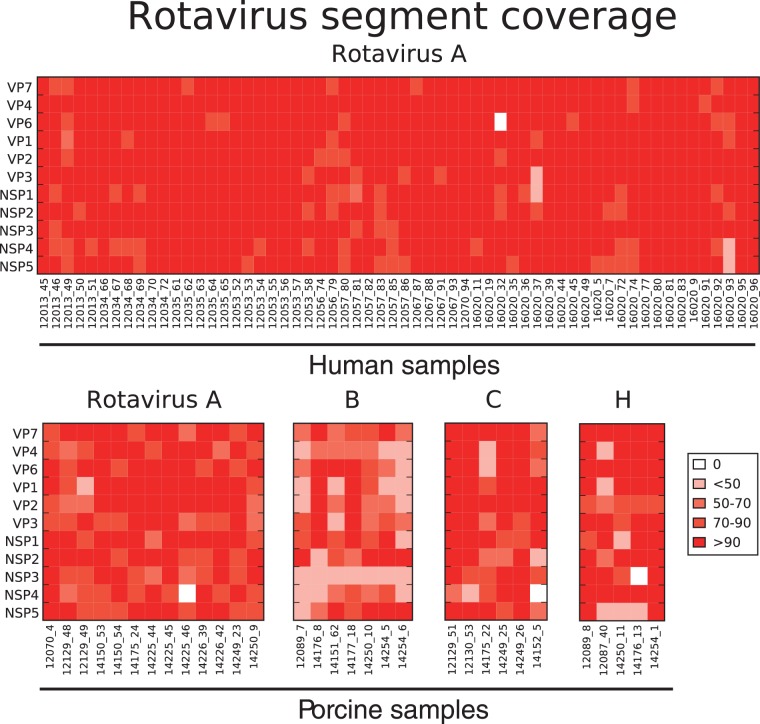
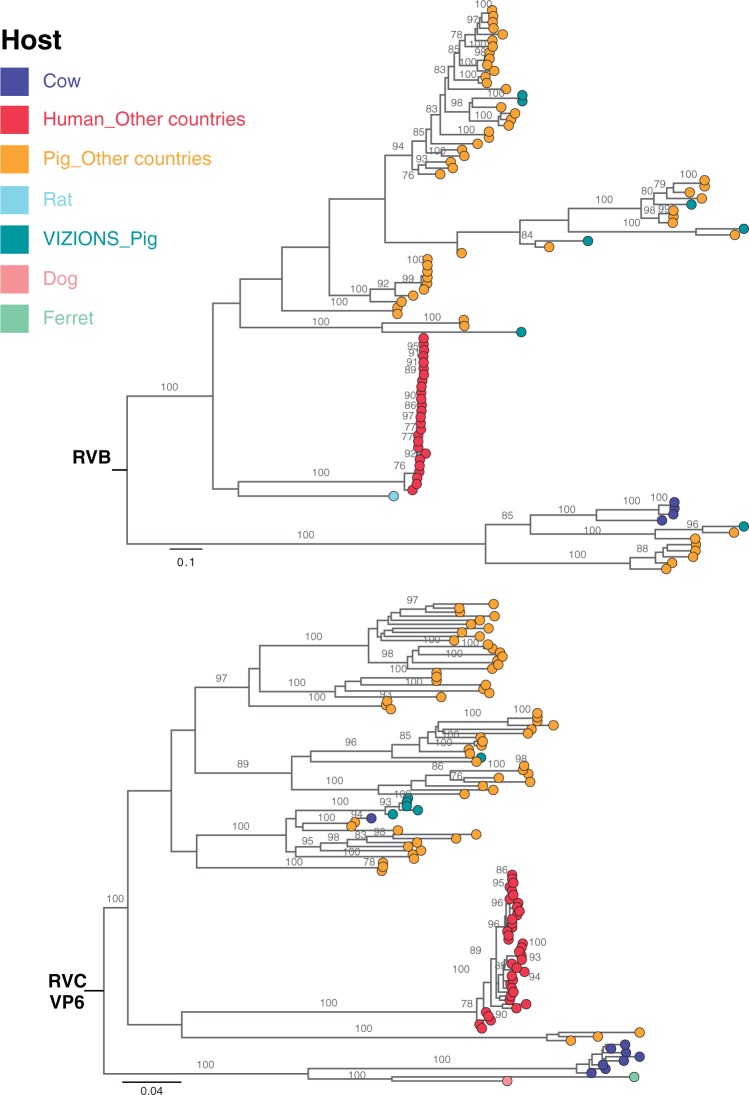
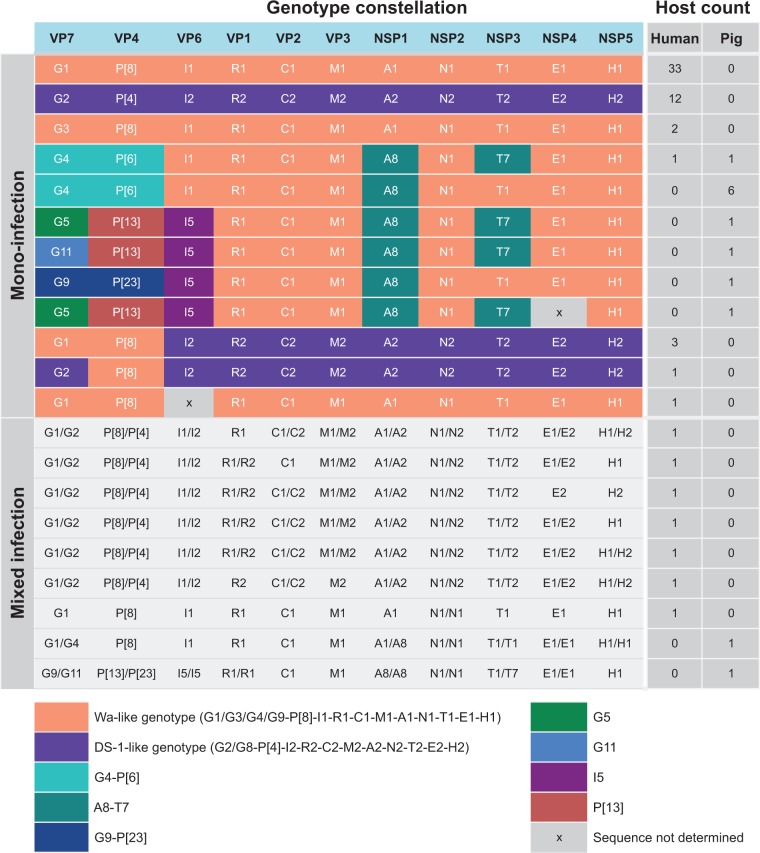
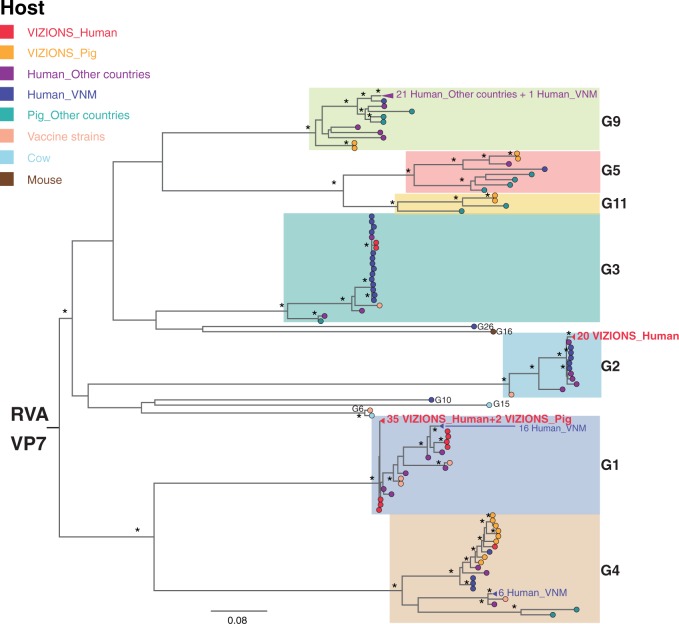
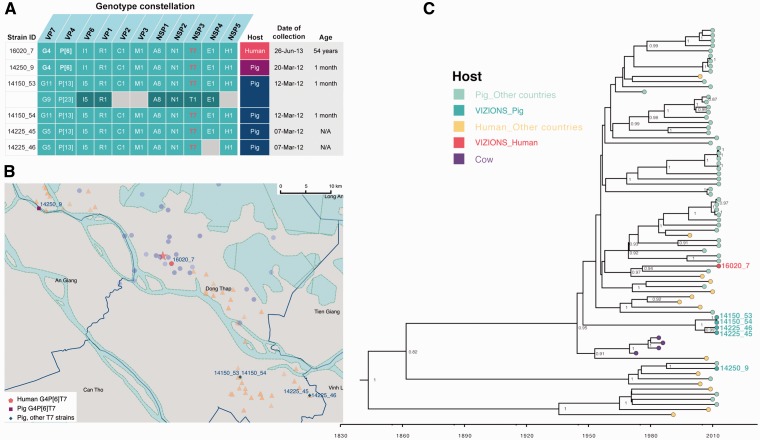
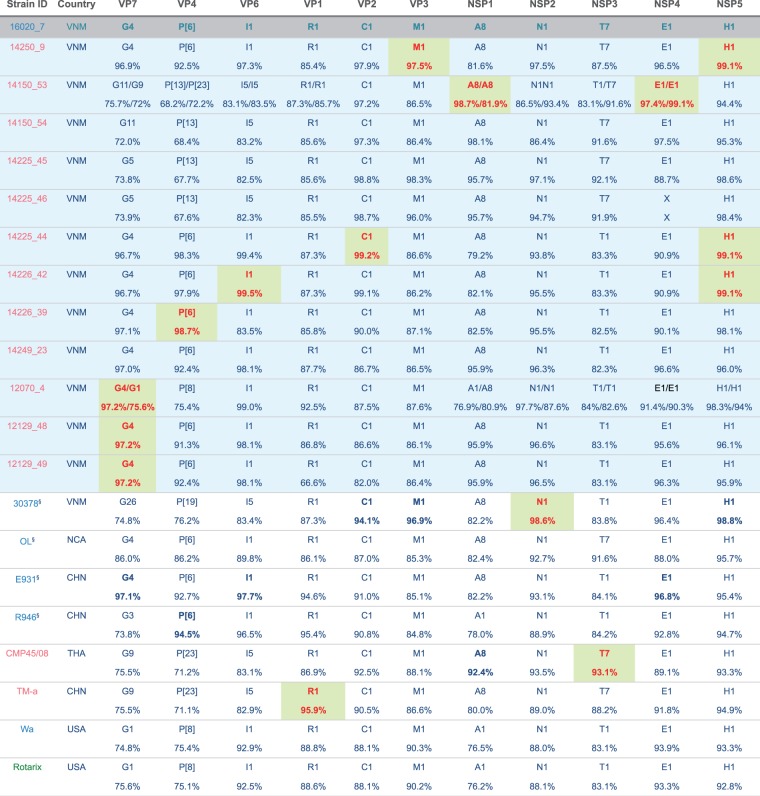
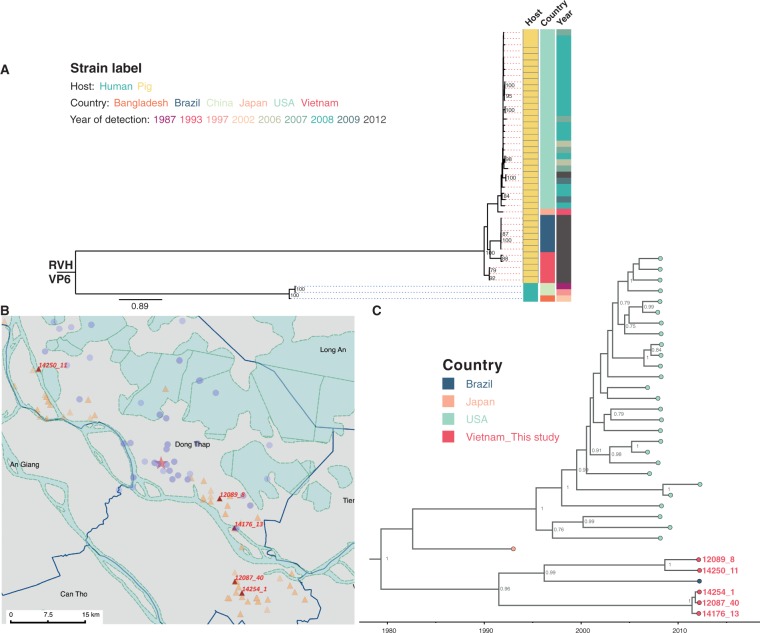
Coordinated and synchronous surveillance for zoonotic viruses in both human clinical cases and animal reservoirs provides an opportunity to identify interspecies virus movement. Rotavirus (RV) is an important cause of viral gastroenteritis in humans and animals. In this study, we document the RV diversity within co-located humans and animals sampled from the Mekong delta region of Vietnam using a primer-independent, agnostic, deep sequencing approach. A total of 296 stool samples (146 from diarrhoeal human patients and 150 from pigs living in the same geographical region) were directly sequenced, generating the genomic sequences of sixty human rotaviruses (all group A) and thirty-one porcine rotaviruses (thirteen group A, seven group B, six group C, and five group H). Phylogenetic analyses showed the co-circulation of multiple distinct RV group A (RVA) genotypes/strains, many of which were divergent from the strain components of licensed RVA vaccines, as well as considerable virus diversity in pigs including full genomes of rotaviruses in groups B, C, and H, none of which have been previously reported in Vietnam. Furthermore, the detection of an atypical RVA genotype constellation (G4-P[6]-I1-R1-C1-M1-A8-N1-T7-E1-H1) in a human patient and a pig from the same region provides some evidence for a zoonotic event.
对人类临床病例和动物宿主中的人畜共患病毒进行协调同步监测,为识别病毒在物种间的传播提供了契机。轮状病毒(RV)是人和动物病毒性肠胃炎的重要病因。在本研究中,我们采用一种不依赖引物、无偏向性的深度测序方法,记录了从越南湄公河三角洲地区采集的同处一地的人类和动物体内的RV多样性。共对296份粪便样本(146份来自腹泻人类患者,150份来自生活在同一地理区域的猪)进行了直接测序,获得了60株人类轮状病毒(均为A组)和31株猪轮状病毒(13株A组、7株B组、6株C组和5株H组)的基因组序列。系统发育分析显示,多种不同的RV A组(RVA)基因型/毒株共同流行,其中许多与已获许可的RVA疫苗的毒株成分不同,猪体内也存在相当多的病毒多样性,包括B组、C组和H组轮状病毒的全基因组,此前在越南均未报道过。此外,在同一地区的一名人类患者和一头猪中检测到非典型RVA基因型组合(G4-P[6]-I1-R1-C1-M1-A8-N1-T7-E1-H1),为一次人畜共患事件提供了一些证据。