Li Lan-Hui, Ju Tz-Chuen, Hsieh Chih-Yu, Dong Wei-Chih, Chen Wan-Tze, Hua Kuo-Feng, Chen Wei-Jung
Department of Laboratory Medicine, Lisen, Chinese Medicine and Kunming Branch, Taipei City Hospital, Taipei, Taiwan.
Department of Nursing, St. Mary's Junior College of Medicine, Nursing and Management, Ilan, Taiwan.
PLoS One. 2017 Jul 27;12(7):e0182057. doi: 10.1371/journal.pone.0182057. eCollection 2017.
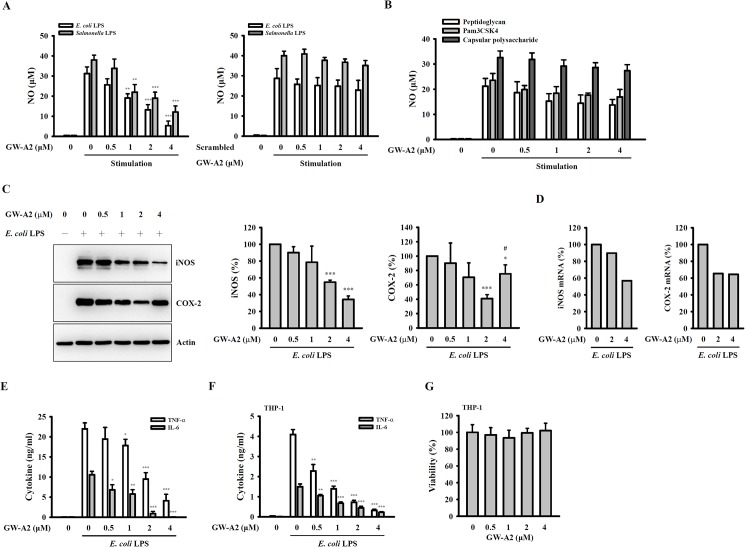
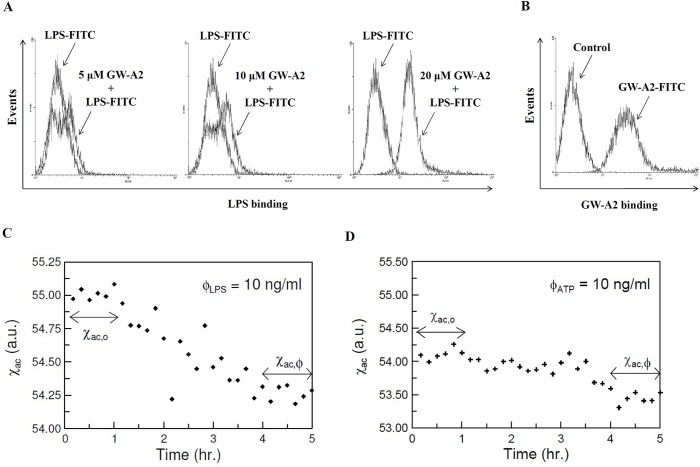
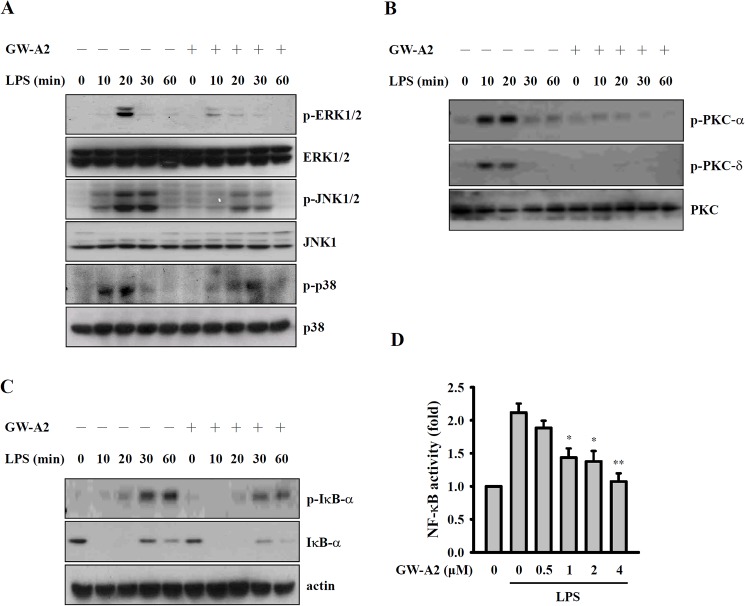
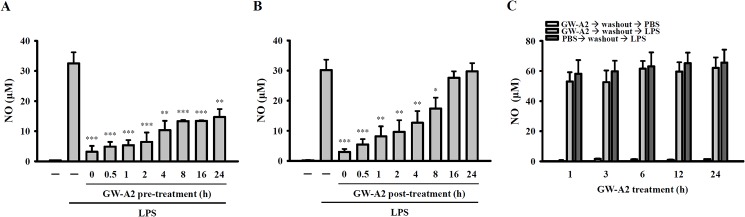
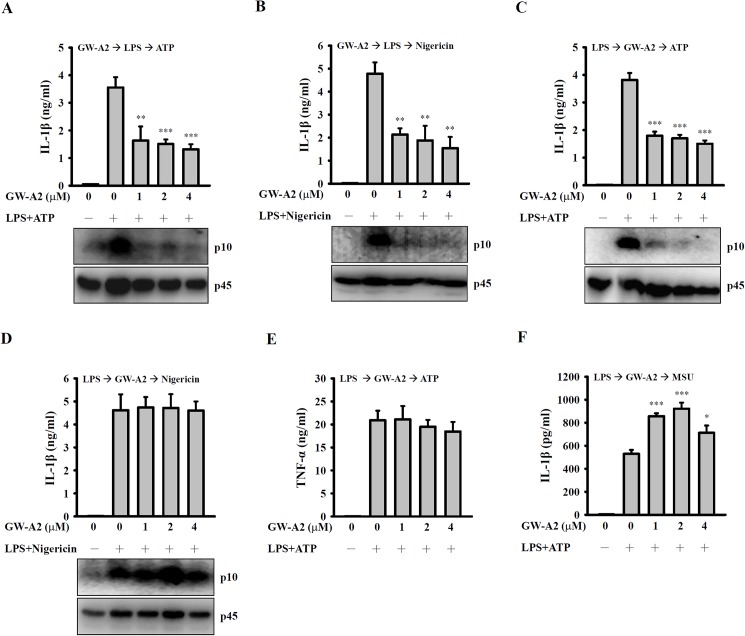
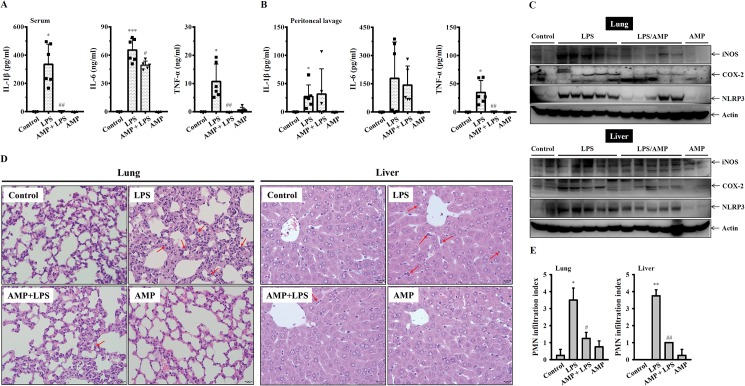
Antimicrobial peptides (AMPs) are one of the most important defense mechanisms against bacterial infections in insects, plants, non-mammalian vertebrates, and mammals. In the present study, a class of synthetic AMPs was evaluated for anti-inflammatory activity. One cationic AMP, GW-A2, demonstrated the ability to inhibit the expression levels of nitric oxide (NO), inducible NO synthase (iNOS), cyclooxygenase-2 (COX-2), tumor necrosis factor-α (TNF-α) and interleukin-6 (IL-6) in lipopolysaccharide (LPS)-activated macrophages. GW-A2 reduced LPS-induced increases in the phosphorylation of mitogen-activated protein kinase and protein kinase C-α/δ and the activation of NF-κB. GW-A2 also inhibited NLRP3 inflammasome activation induced by LPS and ATP. Furthermore, in the mice injected with LPS, GW-A2 reduced (1) the concentration of IL-1β, IL-6 and TNF-α in the serum; (2) the concentration of TNF-α in the peritoneal lavage; (3) the expression levels of iNOS, COX-2 and NLRP3 in the liver and lung; (4) the infiltration of polymorphonuclear neutrophils in the liver and lung. The underlying mechanisms for the anti-inflammatory activity of GW-A2 were found to be partially due to LPS and ATP neutralization. These results provide insights into how GW-A2 inhibits inflammation and the NLRP3 inflammasome and provide a foundation for the design of rational therapeutics for inflammation-related diseases.
抗菌肽(AMPs)是昆虫、植物、非哺乳动物脊椎动物和哺乳动物抵御细菌感染的最重要防御机制之一。在本研究中,对一类合成抗菌肽的抗炎活性进行了评估。一种阳离子抗菌肽GW-A2表现出能够抑制脂多糖(LPS)激活的巨噬细胞中一氧化氮(NO)、诱导型NO合酶(iNOS)、环氧化酶-2(COX-2)、肿瘤坏死因子-α(TNF-α)和白细胞介素-6(IL-6)的表达水平。GW-A2降低了LPS诱导的丝裂原活化蛋白激酶和蛋白激酶C-α/δ磷酸化增加以及NF-κB的激活。GW-A2还抑制了LPS和ATP诱导的NLRP3炎性小体激活。此外,在注射LPS的小鼠中,GW-A2降低了:(1)血清中IL-1β、IL-6和TNF-α的浓度;(2)腹腔灌洗液中TNF-α的浓度;(3)肝脏和肺中iNOS、COX-2和NLRP3的表达水平;(4)肝脏和肺中多形核中性粒细胞的浸润。发现GW-A2抗炎活性的潜在机制部分归因于LPS和ATP的中和作用。这些结果为GW-A2如何抑制炎症和NLRP3炎性小体提供了见解,并为设计针对炎症相关疾病的合理治疗方法奠定了基础。