Chittajallu R, Wester J C, Craig M T, Barksdale E, Yuan X Q, Akgül G, Fang C, Collins D, Hunt S, Pelkey K A, McBain C J
Section on Cellular and Synaptic Physiology, Eunice Kennedy-Shriver National Institute of Child Health and Human Development, National Institutes of Health, Bethesda, Maryland, 20892, USA.
Institute of Biomedical and Clinical Sciences, University of Exeter Medical School, Hatherly Laboratories, University of Exeter, Exeter, EX4 4PS, UK.
Nat Commun. 2017 Jul 28;8(1):152. doi: 10.1038/s41467-017-00218-y.
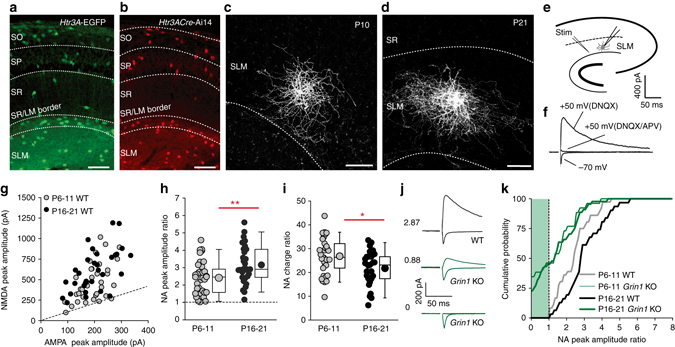
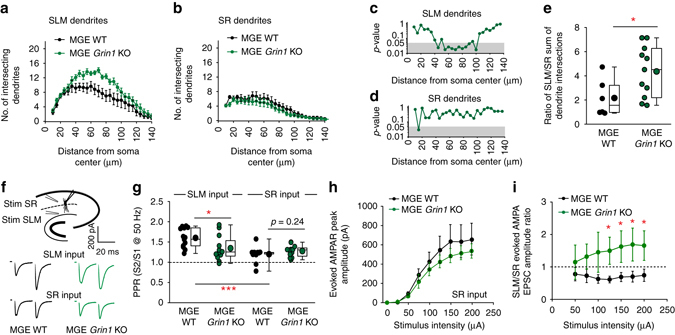
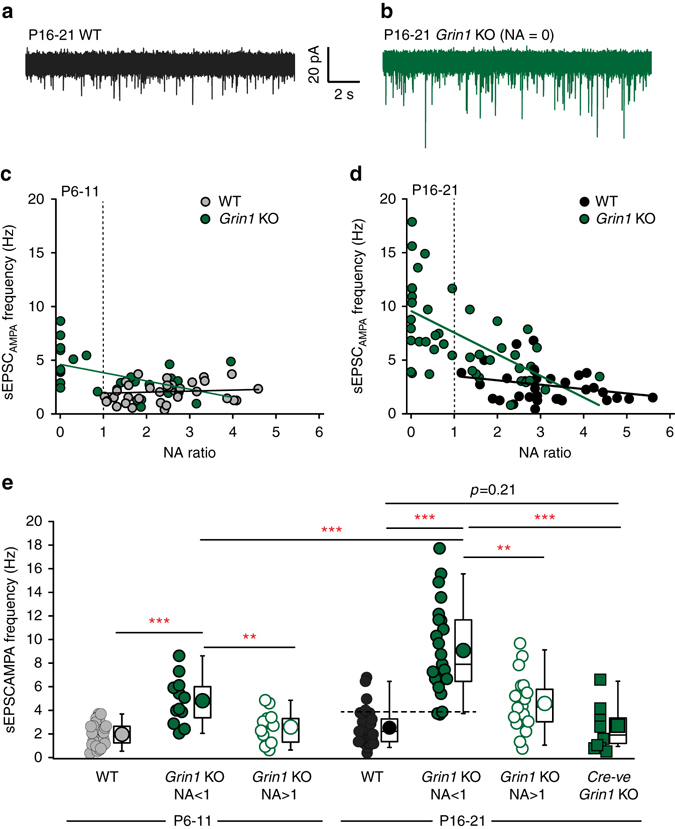
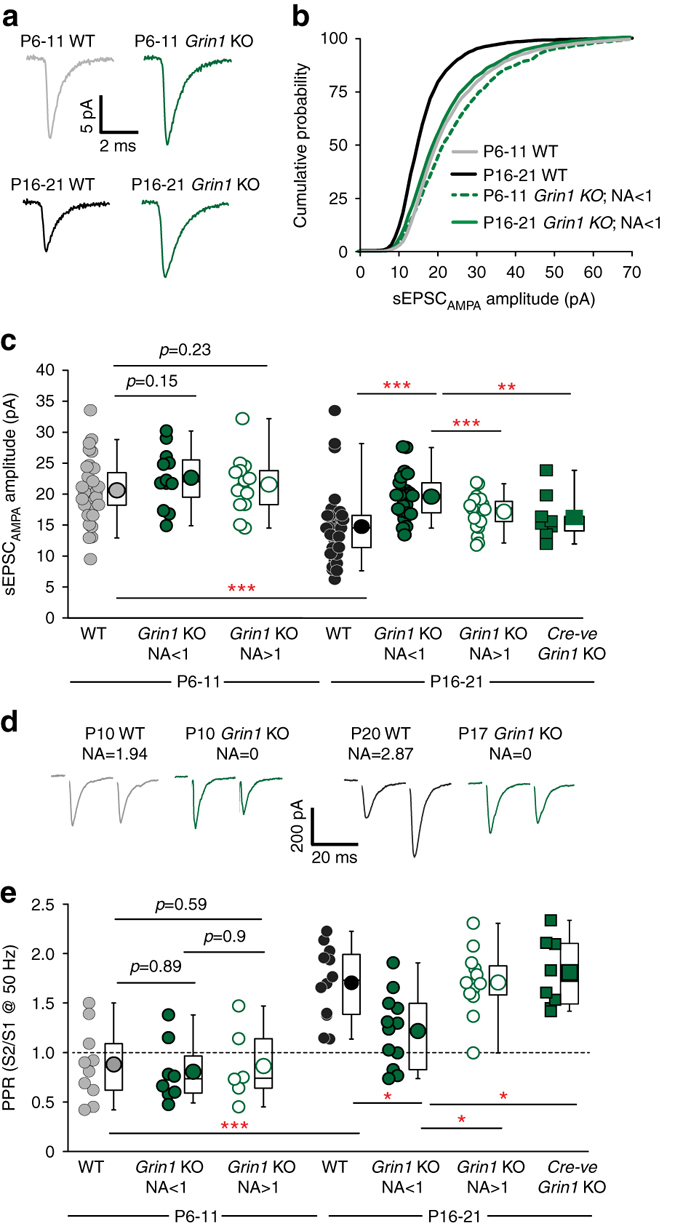
Appropriate integration of GABAergic interneurons into nascent cortical circuits is critical for ensuring normal information processing within the brain. Network and cognitive deficits associated with neurological disorders, such as schizophrenia, that result from NMDA receptor-hypofunction have been mainly attributed to dysfunction of parvalbumin-expressing interneurons that paradoxically express low levels of synaptic NMDA receptors. Here, we reveal that throughout postnatal development, thalamic, and entorhinal cortical inputs onto hippocampal neurogliaform cells are characterized by a large NMDA receptor-mediated component. This NMDA receptor-signaling is prerequisite for developmental programs ultimately responsible for the appropriate long-range AMPAR-mediated recruitment of neurogliaform cells. In contrast, AMPAR-mediated input at local Schaffer-collateral synapses on neurogliaform cells remains normal following NMDA receptor-ablation. These afferent specific deficits potentially impact neurogliaform cell mediated inhibition within the hippocampus and our findings reveal circuit loci implicating this relatively understudied interneuron subtype in the etiology of neurodevelopmental disorders characterized by NMDA receptor-hypofunction.Proper brain function depends on the correct assembly of excitatory and inhibitory neurons into neural circuits. Here the authors show that during early postnatal development in mice, NMDAR signaling via activity of long-range synaptic inputs onto neurogliaform cells is required for their appropriate integration into the hippocampal circuitry.
将γ-氨基丁酸能中间神经元适当地整合到新生的皮质回路中,对于确保大脑内正常的信息处理至关重要。与神经疾病(如精神分裂症)相关的网络和认知缺陷,是由NMDA受体功能低下导致的,主要归因于表达小白蛋白的中间神经元功能障碍,而这些中间神经元反常地表达低水平的突触NMDA受体。在这里,我们揭示在出生后发育过程中,丘脑和内嗅皮质对海马神经胶质样细胞的输入以大量NMDA受体介导的成分为特征。这种NMDA受体信号传导是发育程序的先决条件,这些程序最终负责神经胶质样细胞通过AMPAR介导的适当的长程募集。相反,在NMDA受体缺失后,神经胶质样细胞上局部Schaffer侧支突触处的AMPAR介导的输入仍保持正常。这些传入特异性缺陷可能会影响海马内神经胶质样细胞介导的抑制作用,我们的研究结果揭示了在以NMDA受体功能低下为特征的神经发育障碍病因中涉及这种相对研究较少的中间神经元亚型的回路位点。正常的脑功能依赖于兴奋性和抑制性神经元正确组装成神经回路。在这里,作者表明,在小鼠出生后早期发育过程中,通过对神经胶质样细胞的长程突触输入活动进行的NMDAR信号传导,是它们适当地整合到海马回路中的必要条件。