Department of Orthopedic Surgery, Academic Medical Center, University of Amsterdam, Meibergdreef 9, 1105 AZ, Amsterdam, The Netherlands.
Academic Center for Evidence Based Sports Medicine (ACES), Meibergdreef 9, 1105 AZ, Amsterdam, The Netherlands.
Knee Surg Sports Traumatol Arthrosc. 2018 Jul;26(7):2177-2182. doi: 10.1007/s00167-017-4654-z. Epub 2017 Jul 27.
Arthroscopic bone marrow stimulation (BMS) has been considered the primary surgical treatment for osteochondral defects (OCDs) of the talus. However, fixation has been considered as a good alternative. Recently, a new arthroscopic fixation technique was described: the lift, drill, fill and fix procedure (LDFF). The purpose of this study was to evaluate the clinical and radiological results between arthroscopic LDFF and arthroscopic BMS in primary fixable talar OCDs at 1-year follow-up.
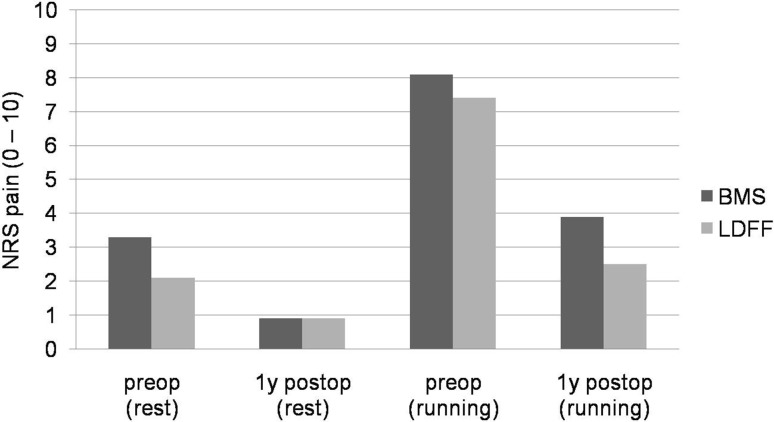
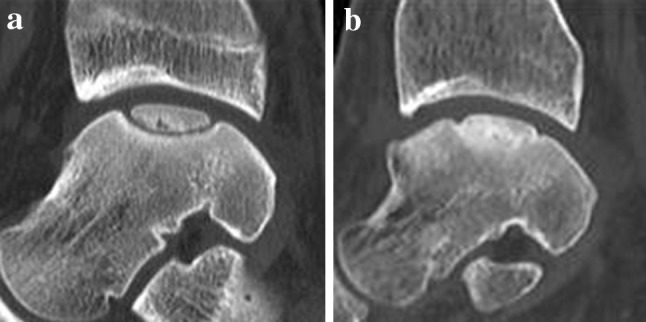
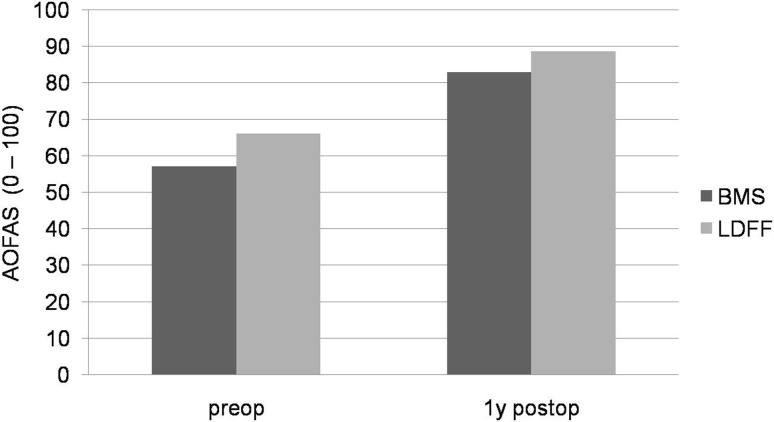
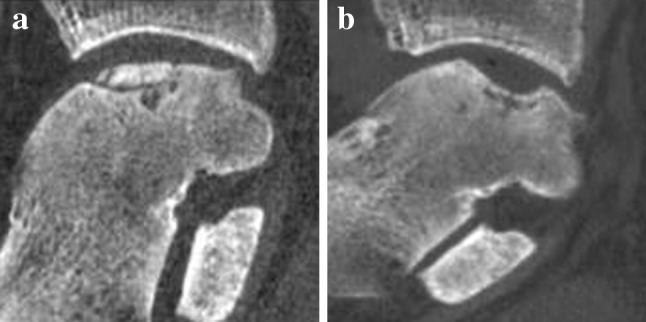
In a prospective comparative study, 14 patients were treated with arthroscopic BMS and 14 patients with arthroscopic LDFF. Pre- and postoperative clinical assessment included the American Orthopaedic Foot and Ankle Society (AOFAS) score and the numeric rating scales (NRSs) of pain at rest and running. Additionally, the level of the subchondral plate (flush or depressed) was analysed on the 1 year postoperative computed tomography scans.
No significant differences in the AOFAS and NRS pain at rest and running were found between both groups at 1-year follow-up. After LDFF the level of the subchondral bone plate was flush in 10 patients and after BMS in three patients (p = 0.02).
No clinical differences were found between arthroscopic LDFF and arthroscopic BMS in the treatment of talar OCDs at 1-year follow-up. However, the subchondral bone plate restores significantly superior after arthroscopic LDFF compared to arthroscopic BMS. It may therefore give less progression of ankle osteoarthritis in the future with a thus potential better long-term outcome.
III.
关节镜下骨髓刺激(BMS)已被认为是治疗距骨骨软骨缺损(OCD)的主要手术治疗方法。然而,固定已被认为是一种很好的替代方法。最近,一种新的关节镜固定技术被描述:提升、钻孔、填充和固定(LDFF)程序。本研究的目的是在 1 年随访时评估原发性可固定距骨 OCD 关节镜下 LDFF 和 BMS 之间的临床和影像学结果。
在一项前瞻性对比研究中,14 例患者接受关节镜 BMS 治疗,14 例患者接受关节镜 LDFF 治疗。术前和术后临床评估包括美国矫形足踝协会(AOFAS)评分和静息及跑步时疼痛的数字评分量表(NRS)。此外,还分析了术后 1 年 CT 扫描的软骨下板水平(平齐或凹陷)。
1 年随访时,两组 AOFAS 和 NRS 静息和跑步疼痛均无显著差异。LDFF 后,10 例患者软骨下骨板平齐,BMS 后 3 例患者(p=0.02)。
在距骨 OCD 的治疗中,关节镜下 LDFF 和 BMS 在 1 年随访时没有发现临床差异。然而,与关节镜 BMS 相比,关节镜下 LDFF 后软骨下骨板的恢复明显更好。因此,在未来可能会有更少的踝关节骨关节炎进展,从而有更好的长期结果。
III。