Meek Stephen, Mashimo Tomoji, Burdon Tom
The Roslin Institute and R(D)VS, University of Edinburgh, Easter Bush, Midlothian, EH25 9RG, UK.
Institute of Experimental Animal Sciences, Graduate School of Medicine, Osaka University, Osaka, 565-0871, Japan.
Mamm Genome. 2017 Aug;28(7-8):302-314. doi: 10.1007/s00335-017-9705-8. Epub 2017 Jul 27.
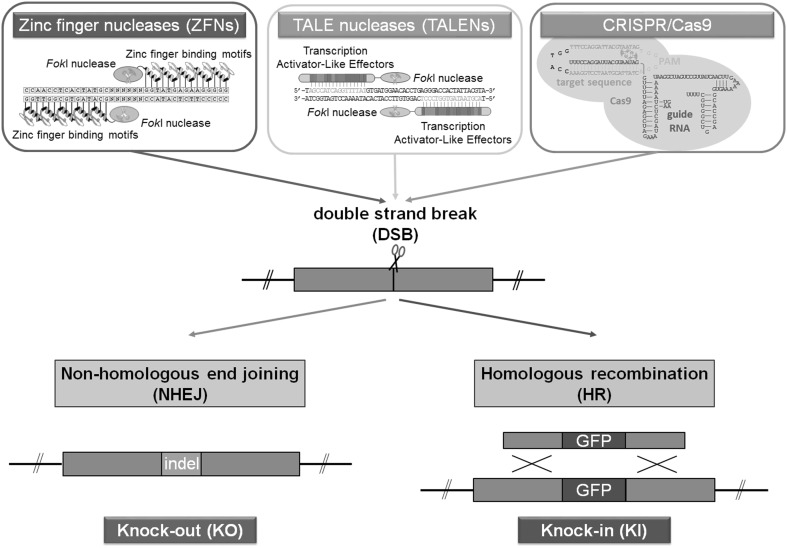
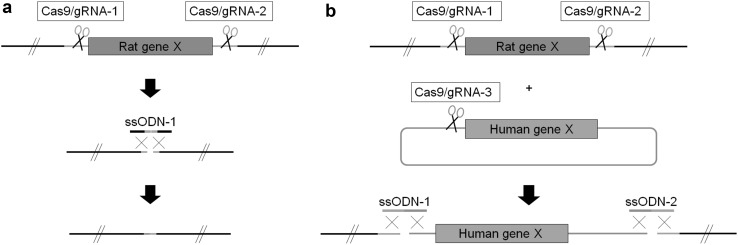
Since its domestication over 100 years ago, the laboratory rat has been the preferred experimental animal in many areas of biomedical research (Lindsey and Baker The laboratory rat. Academic, New York, pp 1-52, 2006). Its physiology, size, genetics, reproductive cycle, cognitive and behavioural characteristics have made it a particularly useful animal model for studying many human disorders and diseases. Indeed, through selective breeding programmes numerous strains have been derived that are now the mainstay of research on hypertension, obesity and neurobiology (Okamoto and Aoki Jpn Circ J 27:282-293, 1963; Zucker and Zucker J Hered 52(6):275-278, 1961). Despite this wealth of genetic and phenotypic diversity, the ability to manipulate and interrogate the genetic basis of existing phenotypes in rat strains and the methodology to generate new rat models has lagged significantly behind the advances made with its close cousin, the laboratory mouse. However, recent technical developments in stem cell biology and genetic engineering have again brought the rat to the forefront of biomedical studies and enabled researchers to exploit the increasingly accessible wealth of genome sequence information. In this review, we will describe how a breakthrough in understanding the molecular basis of self-renewal of the pluripotent founder cells of the mammalian embryo, embryonic stem (ES) cells, enabled the derivation of rat ES cells and their application in transgenesis. We will also describe the remarkable progress that has been made in the development of gene editing enzymes that enable the generation of transgenic rats directly through targeted genetic modifications in the genomes of zygotes. The simplicity, efficiency and cost-effectiveness of the CRISPR/Cas gene editing system, in particular, mean that the ability to engineer the rat genome is no longer a limiting factor. The selection of suitable targets and gene modifications will now become a priority: a challenge where ES culture and gene editing technologies can play complementary roles in generating accurate bespoke rat models for studying biological processes and modelling human disease.
自100多年前被驯化以来,实验大鼠一直是生物医学研究许多领域中首选的实验动物(林赛和贝克,《实验大鼠》。学术出版社,纽约,第1 - 52页,2006年)。其生理学、体型、遗传学、生殖周期、认知和行为特征使其成为研究许多人类疾病和病症的特别有用的动物模型。事实上,通过选择性育种计划已经培育出了众多品系,这些品系如今是高血压、肥胖症和神经生物学研究的支柱(冈本和青木,《日本循环杂志》27:282 - 293,1963年;朱克和朱克,《遗传学杂志》52(6):275 - 278,1961年)。尽管有如此丰富的遗传和表型多样性,但在大鼠品系中操纵和探究现有表型的遗传基础的能力以及生成新的大鼠模型的方法,却显著落后于其近亲实验小鼠所取得的进展。然而,干细胞生物学和基因工程领域最近的技术发展再次使大鼠成为生物医学研究的前沿,并使研究人员能够利用日益丰富且易于获取的基因组序列信息。在这篇综述中,我们将描述在理解哺乳动物胚胎多能性起始细胞即胚胎干细胞自我更新的分子基础方面取得的突破如何促成了大鼠胚胎干细胞的获得及其在转基因中的应用。我们还将描述在基因编辑酶开发方面取得的显著进展,这些酶能够通过对受精卵基因组进行靶向基因修饰直接生成转基因大鼠。特别是CRISPR/Cas基因编辑系统的简便性、高效性和成本效益意味着对大鼠基因组进行工程改造的能力不再是一个限制因素。现在,选择合适的靶点和基因修饰将成为首要任务:这是一个挑战,在其中胚胎干细胞培养和基因编辑技术可以在生成用于研究生物学过程和模拟人类疾病的精确定制大鼠模型方面发挥互补作用。