Chen Dandan, Sitaraman Divya, Chen Nan, Jin Xin, Han Caihong, Chen Jie, Sun Mengshi, Baker Bruce S, Nitabach Michael N, Pan Yufeng
The Key Laboratory of Developmental Genes and Human Disease, Institute of Life Sciences, Southeast University, Nanjing, 210096, China.
Janelia Research Campus, Howard Hughes Medical Institute, 19700 Helix Drive, Ashburn, Virginia, 20147, USA.
Nat Commun. 2017 Jul 28;8(1):154. doi: 10.1038/s41467-017-00087-5.
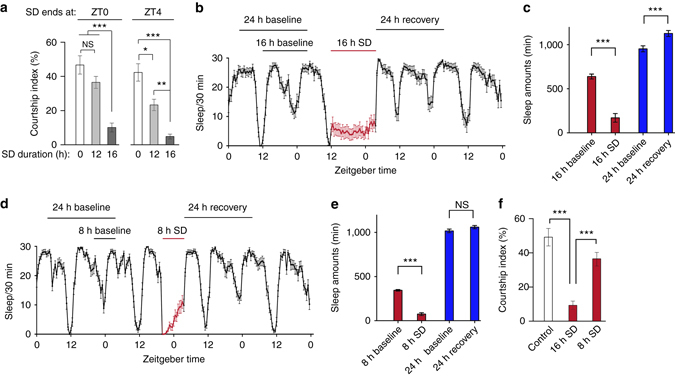
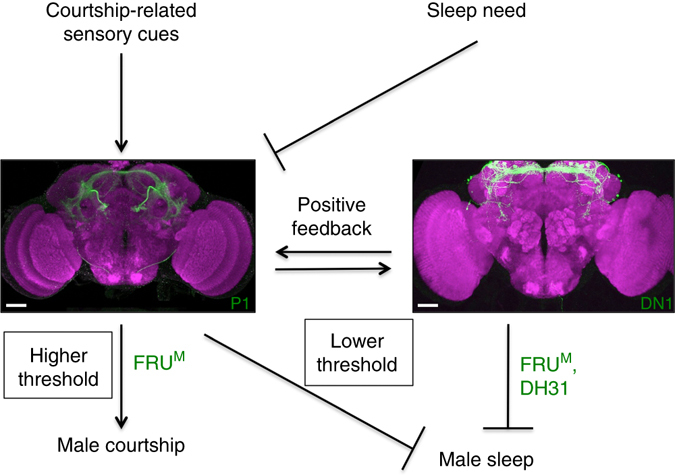
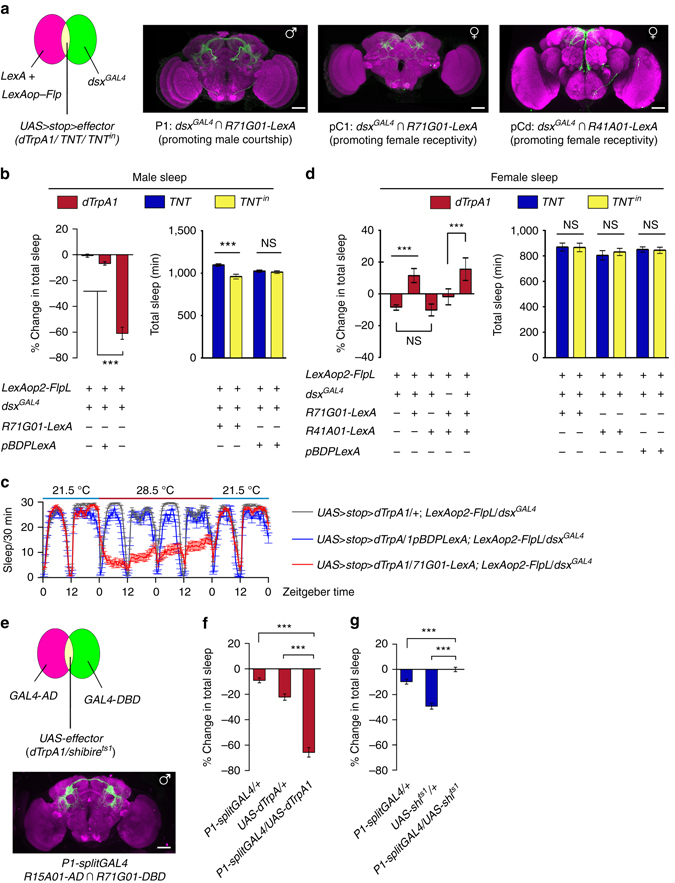
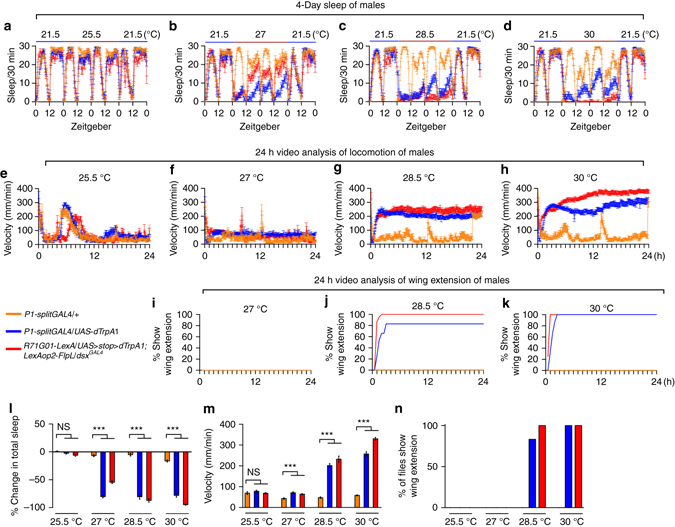
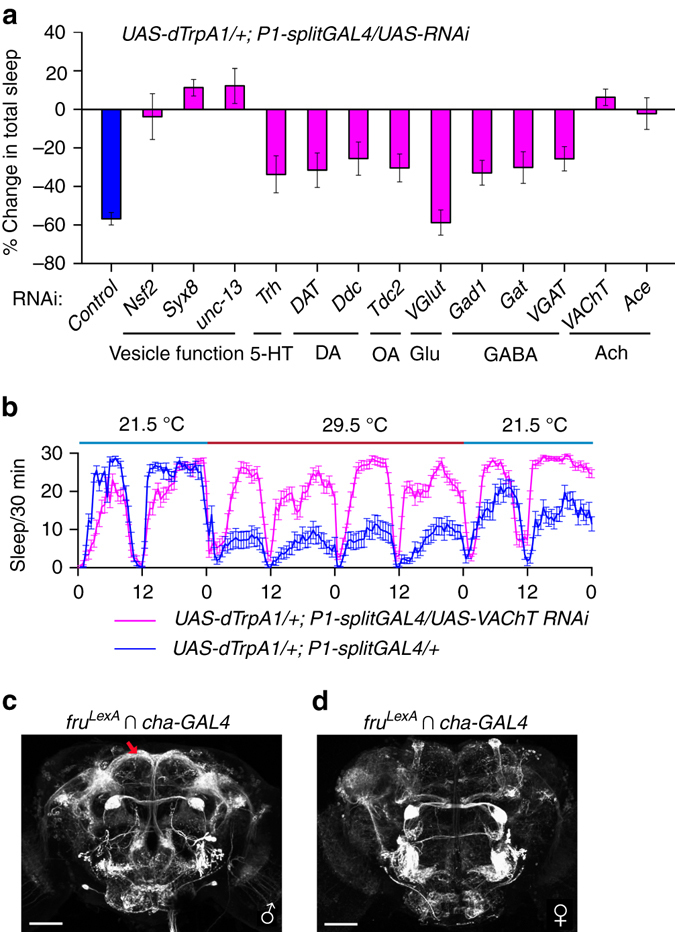
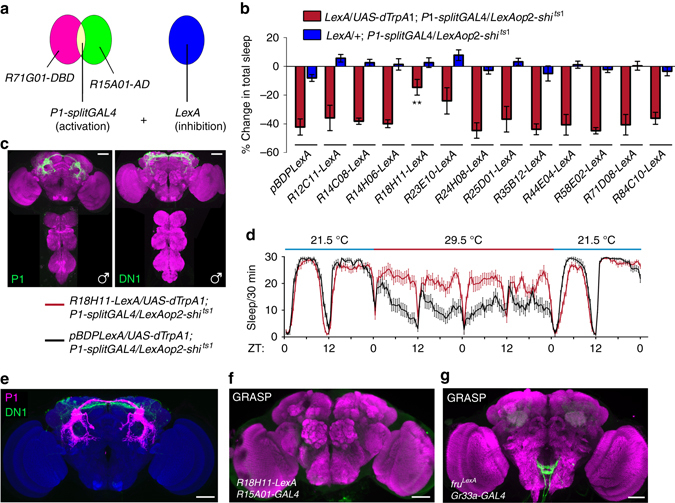
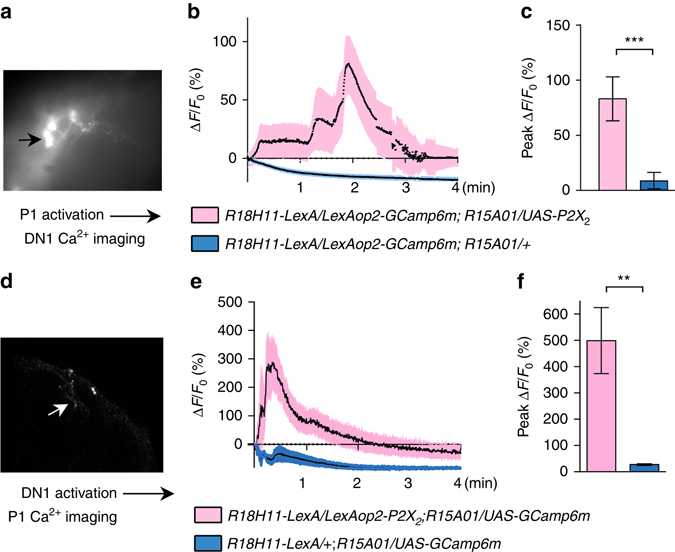
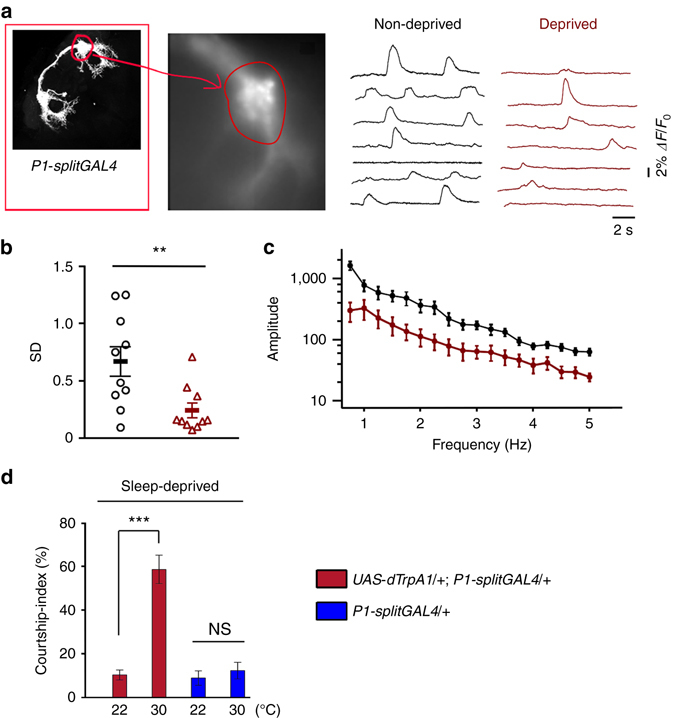
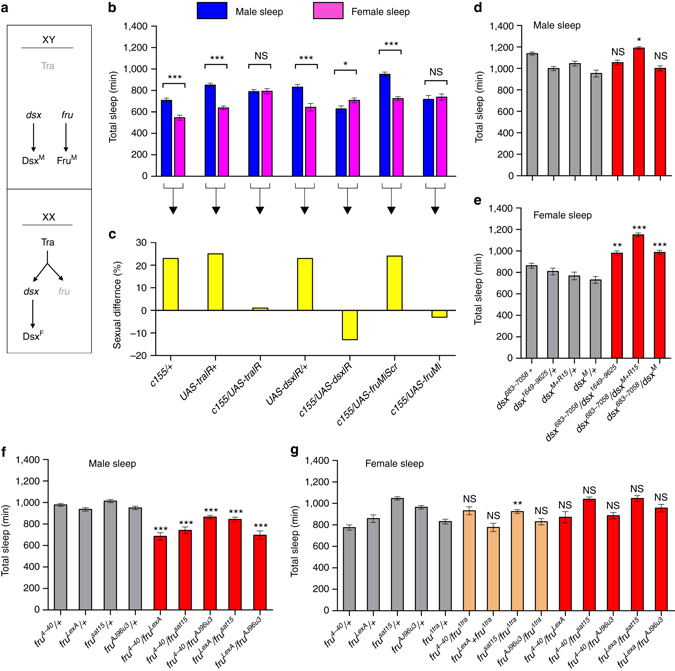
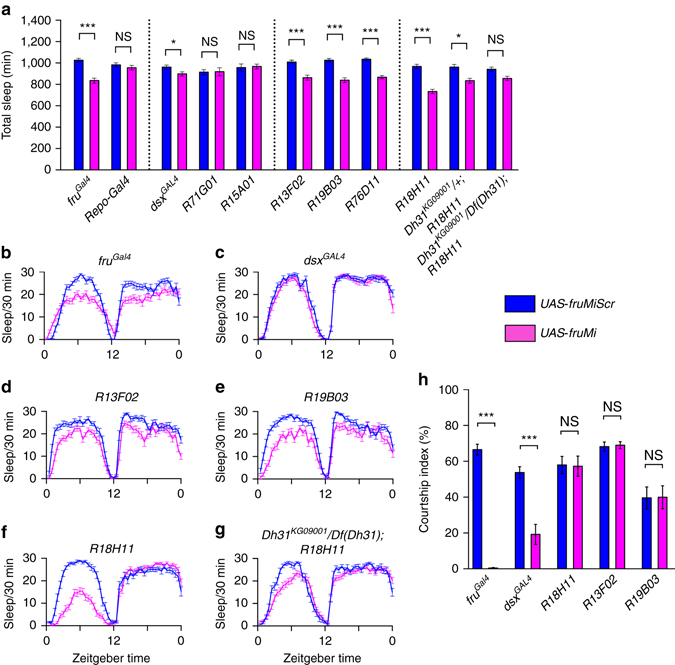
Animals execute one particular behavior among many others in a context-dependent manner, yet the mechanisms underlying such behavioral choice remain poorly understood. Here we studied how two fundamental behaviors, sex and sleep, interact at genetic and neuronal levels in Drosophila. We show that an increased need for sleep inhibits male sexual behavior by decreasing the activity of the male-specific P1 neurons that coexpress the sex determination genes fru and dsx, but does not affect female sexual behavior. Further, we delineate a sex-specific neuronal circuit wherein the P1 neurons encoding increased courtship drive suppressed male sleep by forming mutually excitatory connections with the fru -positive sleep-controlling DN1 neurons. In addition, we find that FRU regulates male courtship and sleep through distinct neural substrates. These studies reveal the genetic and neuronal basis underlying the sex-specific interaction between sleep and sexual behaviors in Drosophila, and provide insights into how competing behaviors are co-regulated.Genes and circuits involved in sleep and sexual arousal have been extensively studied in Drosophila. Here the authors identify the sex determination genes fruitless and doublesex, and a sex-specific P1-DN1 neuronal feedback that governs the interaction between these competing behaviors.
动物在多种行为中会根据具体情境执行某一特定行为,然而这种行为选择背后的机制仍知之甚少。在此,我们研究了果蝇中两种基本行为——性行为和睡眠,在基因和神经元水平上是如何相互作用的。我们发现,对睡眠需求的增加会通过降低共同表达性别决定基因fru和dsx的雄性特异性P1神经元的活性来抑制雄性性行为,但不影响雌性性行为。此外,我们描绘了一个性别特异性的神经元回路,其中编码求偶驱动力增强的P1神经元通过与fru阳性的睡眠控制DN1神经元形成相互兴奋性连接来抑制雄性睡眠。另外,我们发现FRU通过不同的神经基质调节雄性求偶行为和睡眠。这些研究揭示了果蝇中睡眠与性行为之间性别特异性相互作用的遗传和神经元基础,并为竞争行为如何共同调节提供了见解。在果蝇中,参与睡眠和性唤起的基因和回路已得到广泛研究。本文作者鉴定出性别决定基因无果基因和双性基因,以及一种性别特异性的P1-DN1神经元反馈机制,该机制控制着这些竞争行为之间的相互作用。