Simko Fedor, Pechanova Olga, Repova Kristina, Aziriova Silvia, Krajcirovicova Kristina, Celec Peter, Tothova Lubomira, Vrankova Stanislava, Balazova Lucia, Zorad Stefan, Adamcova Michaela
Institute of Pathophysiology, Faculty of Medicine, Comenius University, Sasinkova 4, 81108 Bratislava, Slovakia.
3rd Clinic of Internal Medicine, Faculty of Medicine, Comenius University, 83305 Bratislava, Slovakia.
Int J Mol Sci. 2017 Jul 25;18(8):1612. doi: 10.3390/ijms18081612.
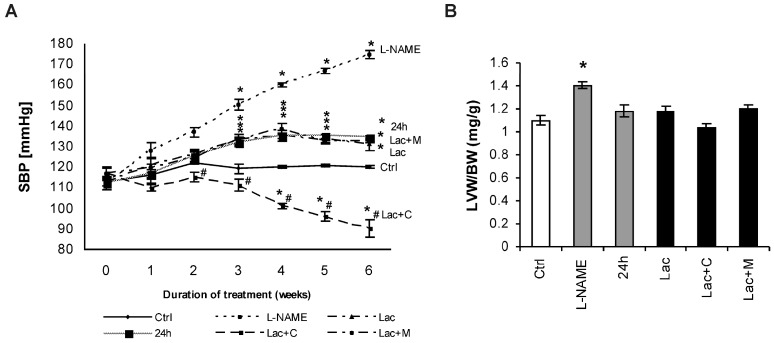
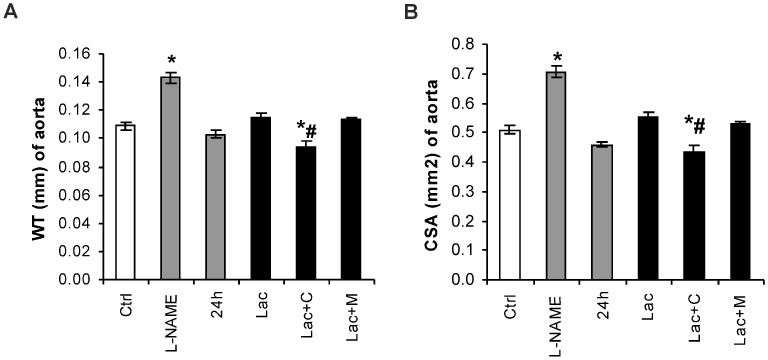
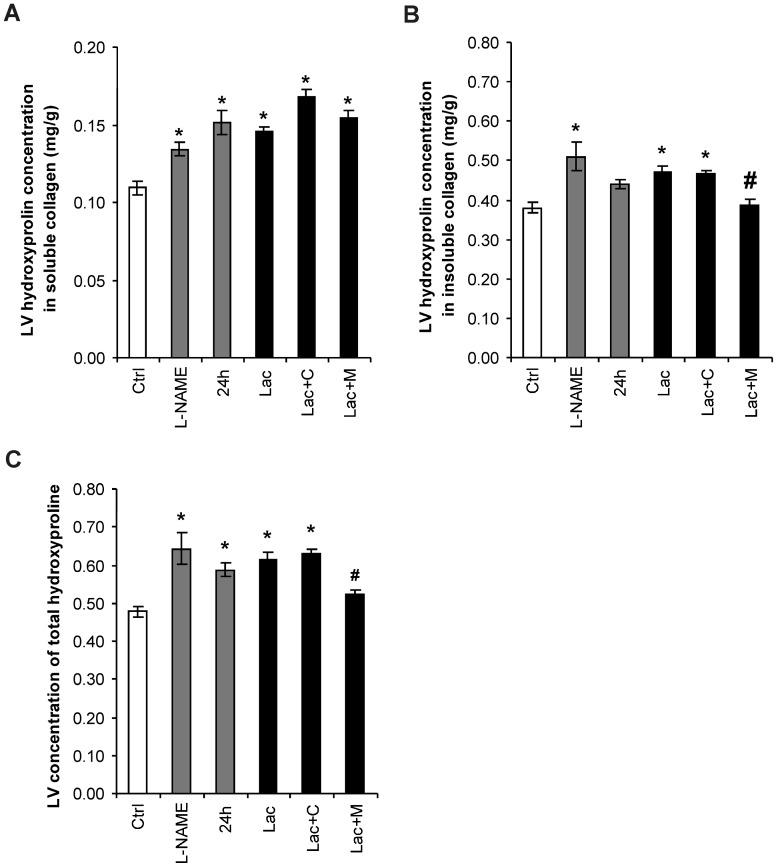
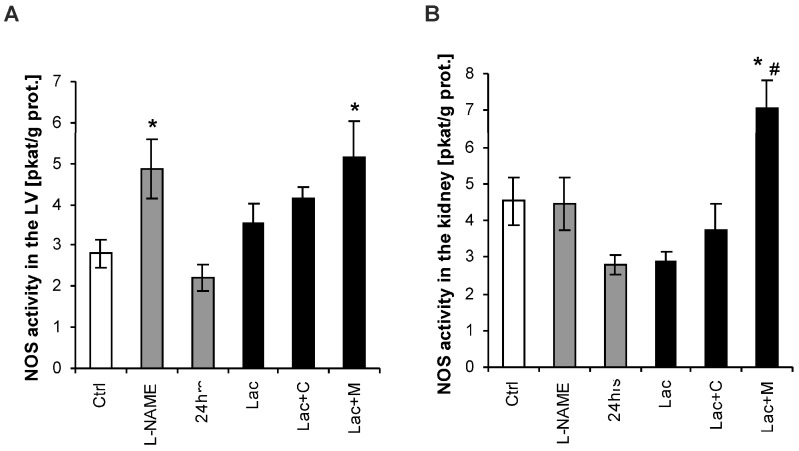
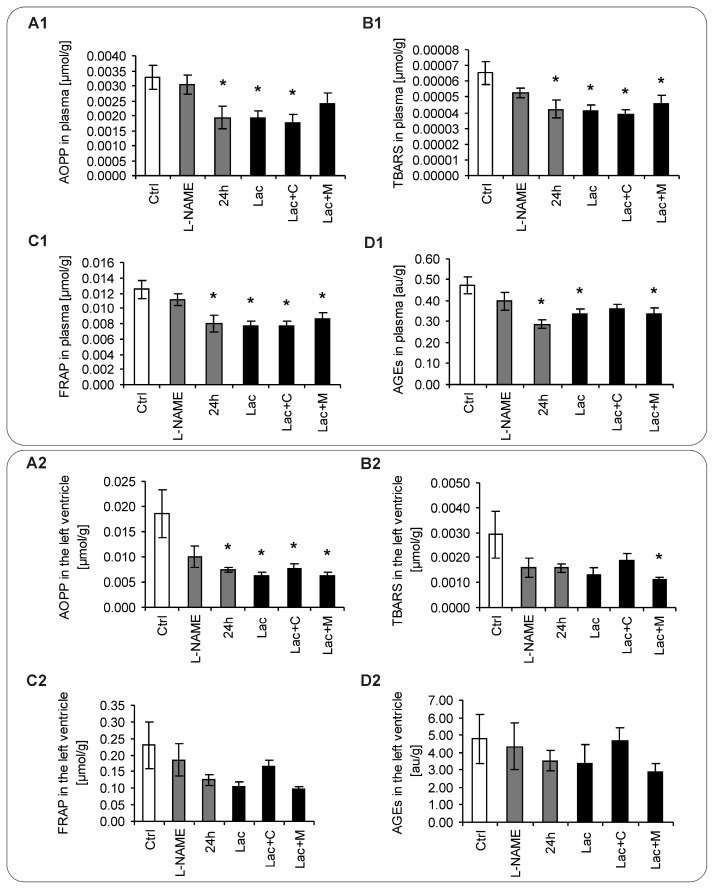
Lactacystin is a proteasome inhibitor that interferes with several factors involved in heart remodelling. The aim of this study was to investigate whether the chronic administration of lactacystin induces hypertension and heart remodelling and whether these changes can be modified by captopril or melatonin. In addition, the lactacystin-model was compared with N-nitro-l-arginine-methyl ester (L-NAME)- and continuous light-induced hypertension. Six groups of three-month-old male Wistar rats (11 per group) were treated for six weeks as follows: control (vehicle), L-NAME (40 mg/kg/day), continuous light (24 h/day), lactacystin (5 mg/kg/day) alone, and lactacystin with captopril (100 mg/kg/day), or melatonin (10 mg/kg/day). Lactacystin treatment increased systolic blood pressure (SBP) and induced fibrosis of the left ventricle (LV), as observed in L-NAME-hypertension and continuous light-hypertension. LV weight and the cross-sectional area of the aorta were increased only in L-NAME-induced hypertension. The level of oxidative load was preserved or reduced in all three models of hypertension. Nitric oxide synthase (NOS) activity in the LV and kidney was unchanged in the lactacystin group. Nuclear factor-kappa B (NF-κB) protein expression in the LV was increased in all treated groups in the cytoplasm, however, in neither group in the nucleus. Although melatonin had no effect on SBP, only this indolamine (but not captopril) reduced the concentration of insoluble and total collagen in the LV and stimulated the NO-pathway in the lactacystin group. We conclude that chronic administration of lactacystin represents a novel model of hypertension with collagenous rebuilding of the LV, convenient for testing antihypertensive drugs or agents exerting a cardiovascular benefit beyond blood pressure reduction.
乳胞素是一种蛋白酶体抑制剂,可干扰心脏重塑过程中的多种因素。本研究旨在探讨长期给予乳胞素是否会诱发高血压和心脏重塑,以及这些变化是否可被卡托普利或褪黑素所改善。此外,将乳胞素模型与N-硝基-L-精氨酸甲酯(L-NAME)诱导的高血压模型和持续光照诱导的高血压模型进行了比较。将六组三个月大的雄性Wistar大鼠(每组11只)进行如下为期六周的治疗:对照组(赋形剂)、L-NAME(40毫克/千克/天)、持续光照(24小时/天)、单独使用乳胞素(5毫克/千克/天),以及乳胞素与卡托普利(100毫克/千克/天)或褪黑素(10毫克/千克/天)联合使用。与L-NAME诱导的高血压和持续光照诱导的高血压情况一样,乳胞素治疗可升高收缩压(SBP)并诱发左心室(LV)纤维化。仅在L-NAME诱导的高血压中,LV重量和主动脉横截面积增加。在所有三种高血压模型中,氧化负荷水平均保持不变或有所降低。乳胞素组LV和肾脏中的一氧化氮合酶(NOS)活性未发生变化。在所有治疗组的细胞质中,LV中的核因子-κB(NF-κB)蛋白表达均增加,但在细胞核中,两组均未增加。尽管褪黑素对SBP无影响,但仅这种吲哚胺(而非卡托普利)可降低乳胞素组LV中不溶性胶原蛋白和总胶原蛋白的浓度,并刺激NO途径。我们得出结论,长期给予乳胞素代表了一种伴有LV胶原重建的新型高血压模型,便于测试降压药物或具有血压降低以外心血管益处的药物。