Feng Yue, Feng Yue-Mei, Lu Caixia, Han Yuanyuan, Liu Li, Sun Xiaomei, Dai Jiejie, Xia Xueshan
Faculty of Life Science and Technology, Yunnan Provincial Center for Molecular Medicine, Kunming University of Science and Technology, Kunming, Yunnan 650500, PR China.
Academy of Public Health, Kunming Medical University, Kunming, Yunnan 650500, PR China.
J Gen Virol. 2017 Aug;98(8):2069-2078. doi: 10.1099/jgv.0.000869. Epub 2017 Jul 31.
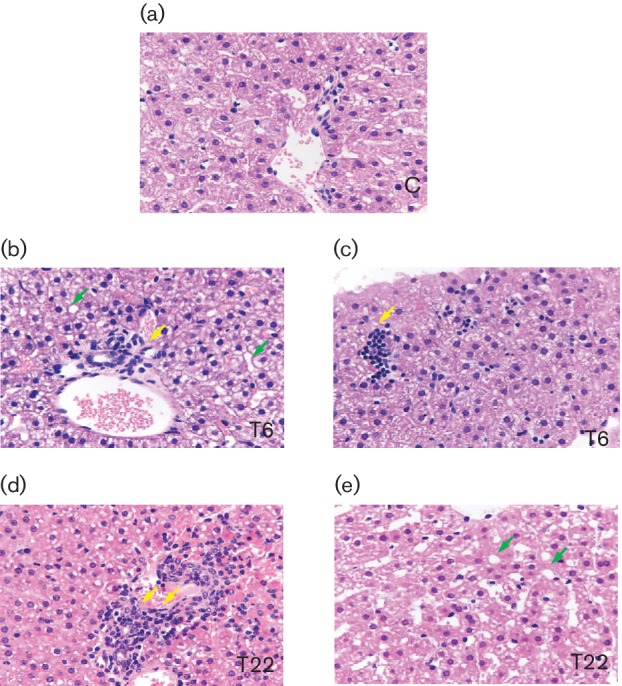
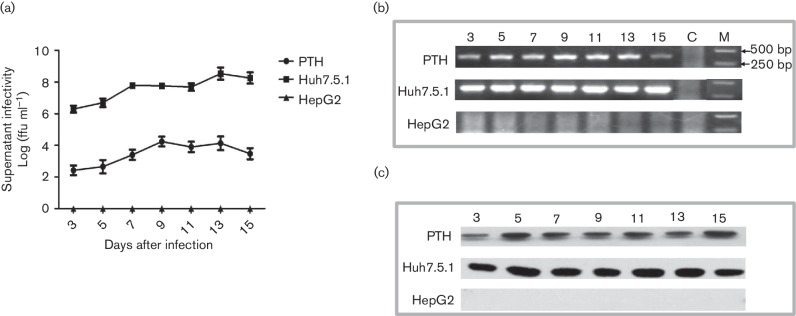
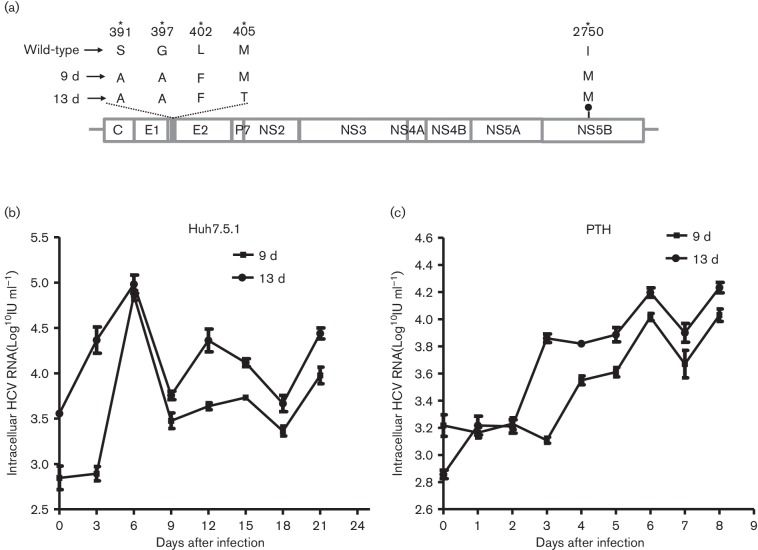
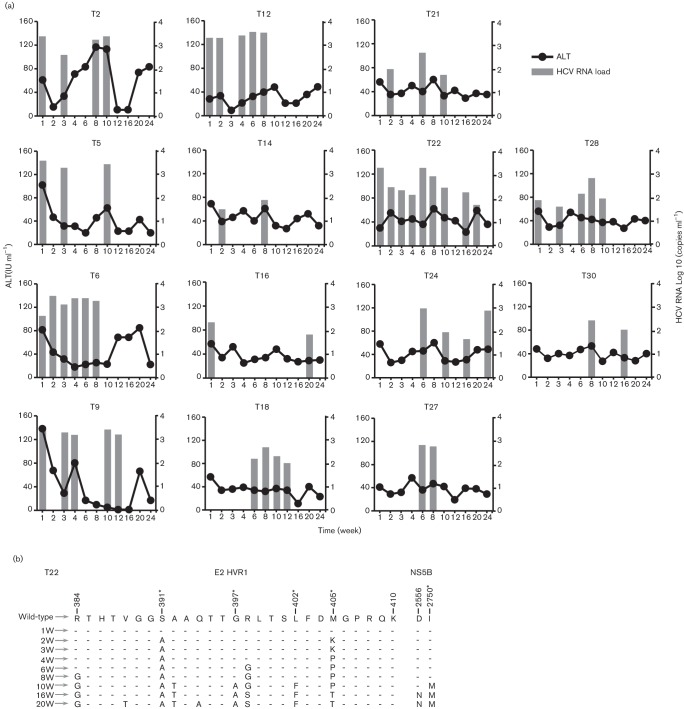
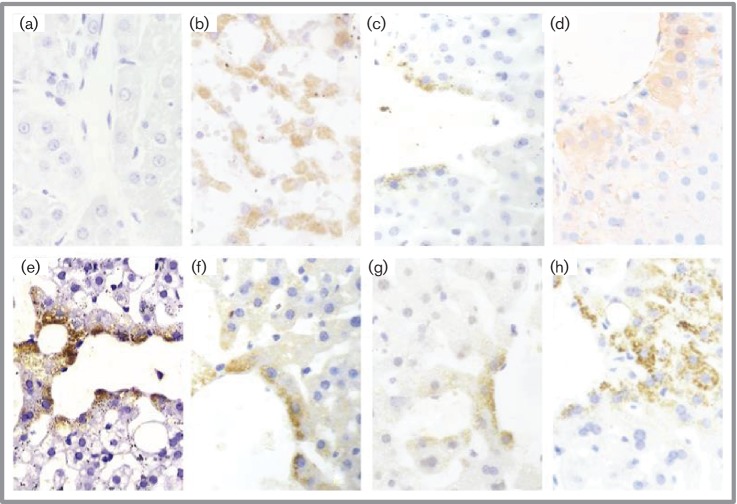
The tree shrew (Tupaia belangeri chinensis), a small animal widely distributed in Southeast Asia and southwest China, has the potential to be developed as an animal model for hepatitis C. To determine the susceptibility of the tree shrew to hepatitis C virus (HCV) infection in vitro and in vivo, a well-established HCV, produced from the J6/JFH1-Huh7.5.1 culture system, was used to infect cultured primary tupaia hepatocytes (PTHs) and tree shrews. The in vitro results showed that HCV genomic RNA and HCV-specific nonstructural protein 5A (NS5A) could be detected in the PTH cell culture from days 3-15 post-infection, although the viral load was lower than that observed in Huh7.5.1 cell culture. The occurrence of five sense mutations [S391A, G397A, L402F and M405T in the hypervariable region 1 (HVR1) of envelope glycoprotein 2 and I2750M in NS5B] suggested that HCV undergoes genetic evolution during culture. Fourteen of the 30 experimental tree shrews (46.7 %) were found to be infected, although the HCV viremia was intermittent in vivo. A positive test for HCV RNA in liver tissue provided stronger evidence for HCV infection and replication in tree shrews. The results of an immunohistochemistry assay also demonstrated the presence of four HCV-specific proteins (Core, E2, NS3/4 and NS5A) in the hepatocytes of infected tree shrews. The pathological changes observed in the liver tissue of infected tree shrews could be considered to be representative symptoms of mild hepatitis. These results revealed that the tree shrew can be used as an animal model supporting the infection and replication of HCV in vitro and in vivo.
树鼩(Tupaia belangeri chinensis)是一种广泛分布于东南亚和中国西南部的小型动物,有潜力被开发为丙型肝炎动物模型。为了确定树鼩在体外和体内对丙型肝炎病毒(HCV)感染的易感性,使用从J6/JFH1-Huh7.5.1培养系统产生的成熟HCV感染原代树鼩肝细胞(PTH)培养物和树鼩。体外实验结果显示,感染后第3至15天,在PTH细胞培养物中可检测到HCV基因组RNA和HCV特异性非结构蛋白5A(NS5A),尽管病毒载量低于在Huh7.5.1细胞培养物中观察到的水平。5个有义突变的出现[包膜糖蛋白2高变区1(HVR1)中的S391A、G397A、L402F和M405T以及NS5B中的I2750M]表明HCV在培养过程中发生了基因进化。30只实验树鼩中有14只(46.7%)被发现感染,尽管HCV病毒血症在体内是间歇性的。肝组织中HCV RNA检测呈阳性为HCV在树鼩中的感染和复制提供了更有力的证据。免疫组织化学分析结果也证明,在感染树鼩的肝细胞中存在4种HCV特异性蛋白(核心蛋白、E2、NS3/4和NS5A)。在感染树鼩的肝组织中观察到的病理变化可被视为轻度肝炎的典型症状。这些结果表明,树鼩可作为支持HCV在体外和体内感染与复制的动物模型。